










19+ Inspiring Barndominium Landscaping Ideas to Transform Your Property
What Makes Barndominium Landscaping Unique
Barndominiums represent a fascinating intersection of rustic agricultural heritage and modern residential living. Unlike traditional homes, these hybrid structures carry a distinctive visual weight — often featuring large metal or wood facades, expansive rooflines, and an honest, utilitarian character that demands a landscaping approach equally bold and thoughtful. The surrounding land is not merely decoration; it becomes an extension of the home’s story, grounding the structure in its natural environment while softening its industrial edges with organic beauty.
The landscaping surrounding a barndominium needs to bridge two worlds simultaneously. On one hand, you want to honor the working-farm aesthetic that gives barndominiums their soul — the idea that beauty can coexist with practicality, that a garden can also be productive, and that simplicity carries its own kind of elegance. On the other hand, you want the exterior to feel curated and intentional, signaling that this is a home that has been loved and considered, not simply dropped onto a patch of land without thought about what surrounds it.
One of the most liberating aspects of barndominium landscaping is the sheer scale of possibility. Many barndominiums sit on generous rural or semi-rural lots, offering acreage that suburban homeowners can only dream about. This space allows for layered landscaping zones — a formal garden near the entrance, a transitional native planting zone further out, and a wild or agricultural zone at the property’s edges — creating a living landscape that rewards exploration and changes with the seasons throughout the year.
Choosing the Right Plants for a Barndominium Setting
Plant selection is arguably the most important decision you will make in your barndominium landscaping project. The goal is to choose species that feel native or naturalized to your region, that can handle the microclimates created by large metal buildings, and that deliver visual impact proportional to the scale of the structure. Tiny, fussy ornamentals planted against a massive barn wall will simply disappear. Instead, think in bold strokes — large ornamental grasses, sweeping native wildflower meadows, and substantial shrubs that can hold their own against the architecture.
Native plants deserve special attention in any barndominium landscape. Because these properties often sit in rural or transitional zones where local ecosystems are more intact, there is a genuine opportunity — and arguably a responsibility — to choose plants that support local pollinators, birds, and wildlife. Native coneflowers, black-eyed Susans, native grasses like switchgrass and big bluestem, and flowering shrubs like buttonbush and native viburnums provide year-round interest while requiring far less water, fertilizer, and maintenance than their exotic counterparts once established and settled in.
For those who want a more structured, formal look along pathways and entrances, consider plants that offer both flower and foliage interest across multiple seasons. Ornamental alliums, Russian sage, lavender, and Karl Foerster feather reed grass are all excellent choices that bridge the gap between cultivated garden and naturalistic planting. Mixing these with wilder native species creates the layered, textured look that suits barndominiums perfectly — organized enough to feel intentional, relaxed enough to feel rooted in the landscape around it and connected to the surrounding land.
- Native wildflowers such as coneflowers, black-eyed Susans, and prairie blazing star for meadow-style plantings
- Ornamental grasses including Karl Foerster, switchgrass, and fountain grass for movement and texture
- Hardy shrubs like native viburnums, buttonbush, and elderberry for structure and wildlife value
- Lavender, Russian sage, and catmint for fragrant, low-maintenance border planting near pathways
- Climbing roses or native clematis on fence lines and trellises to soften hard structural edges

Designing Pathways and Entryways That Make a Statement
The entry sequence to a barndominium is one of the most powerful landscape design opportunities you have. A well-designed driveway and entryway does more than provide access — it tells the story of the property before a guest ever steps out of their vehicle. For barndominiums, gravel driveways lined with split-rail fencing and native plantings create an immediate sense of place, evoking the agrarian spirit of the building while providing a genuinely beautiful arrival experience that feels both welcoming and distinctive in its character.
Pathways connecting the main entry to outbuildings, gardens, or other functional areas of the property should feel deliberate but not stiff. Decomposed granite, flagstone set in sand, or even mown grass paths through a wildflower meadow are all materials that suit the barndominium aesthetic while being durable enough to handle the kind of foot and light equipment traffic these properties often see. Edging pathways with low ornamental grasses or creeping thyme softens the transition between path and planting bed, creating a cohesive, finished look that feels lived in and loved over time.
Entryway focal points — a pair of large planters flanking the front door, a statement tree anchoring the corner of the building, or a water feature near the main walkway — give the eye somewhere to land and communicate that the landscape has been thoughtfully composed. For barndominiums with a wide, barn-style front facade, consider flanking the entrance with matching ornamental trees like serviceberry, redbud, or ornamental apple to frame the doors and create vertical interest that complements the building’s horizontal mass and broad architectural sweep in a satisfying way.
Integrating Functional Outdoor Spaces
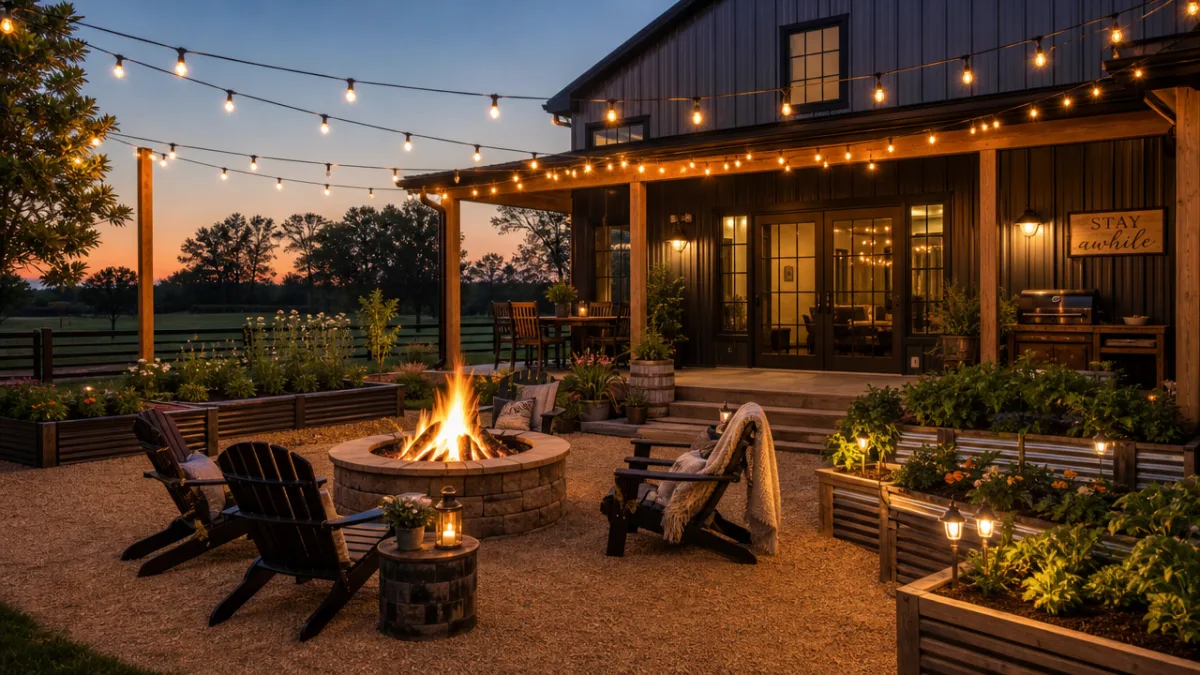
Barndominiums are built for living, and the landscape should be equally functional. Outdoor kitchens, fire pits, gathering areas, and covered patios are all natural extensions of the barndominium lifestyle, and when well-designed, they blur the line between indoor and outdoor living in the most satisfying possible way. A covered porch with a ceiling fan, string lights, and comfortable furniture overlooking a fire pit and native garden creates an outdoor living room that can be enjoyed from spring through fall, even in climates with variable weather patterns and temperatures.
Vegetable and herb gardens are another wonderful way to honor the working heritage of the barndominium while making the landscape productive and meaningful. Raised garden beds built from weathered wood, galvanized metal, or reclaimed lumber fit perfectly within the barndominium aesthetic. Positioning them near the kitchen in a sunny spot makes them practical as well as beautiful. Surrounding the beds with pollinator-friendly herbs like basil, dill, and fennel attracts beneficial insects that will help keep the entire garden healthy throughout the growing season.
Water features deserve serious consideration in barndominium landscapes, particularly for larger properties. A stock tank pond — using repurposed galvanized livestock tanks — is a wonderfully on-brand feature that provides habitat for wildlife while creating a cooling focal point in the summer. For those with acreage, a naturalized pond with native plantings along its edges can become the ecological heart of the property, attracting birds, frogs, and dragonflies and giving the landscape a sense of permanence and depth that no purely ornamental planting can match or replicate.
- Design a covered porch or pergola as a primary outdoor gathering space with comfortable, weather-resistant furniture
- Install a fire pit area with a gravel or flagstone surround and built-in seating for evening entertaining
- Create raised vegetable and herb beds using materials that match the barndominium’s exterior aesthetic
- Consider a stock tank pond or naturalized water feature to attract wildlife and add ecological value
- Add a dedicated workshop or equipment area screened with native shrubs to maintain visual tidiness
Fencing, Structures, and Hardscaping Elements
No barndominium landscape is complete without thoughtful hardscaping that ties the outdoor spaces together and provides structure through every season. Fencing is one of the most impactful hardscaping elements at this scale. Split-rail fencing with wire mesh backing is a classic choice that provides both a visual boundary and practical containment for gardens or livestock, while maintaining an open, airy feel that suits the rural setting. Black metal pipe fencing, cedar privacy sections near outdoor living areas, and reclaimed wood panels offer additional options depending on the desired aesthetic and functional requirements of your specific property.
Pergolas, arbors, and shade structures bring vertical interest and practical function to outdoor living spaces that might otherwise feel exposed under wide-open rural skies. A cedar or steel pergola positioned over a patio or outdoor dining area creates an immediate sense of enclosure and intimacy, while climbing vines like native wisteria, Virginia creeper, or climbing hydrangea transform the structure over time into a living architectural feature that changes with the seasons. These structures also provide the perfect anchor point for outdoor lighting, ceiling fans, and hanging planters that collectively make the space feel finished and inviting.
Stone or concrete retaining walls, low border walls, and decorative boulders are powerful tools for managing grade changes common on rural properties while simultaneously adding sculptural interest to the landscape. Dry-stacked limestone or fieldstone walls feel deeply at home in a barndominium setting, evoking the agricultural landscape of earlier generations while providing practical function. Large boulders sourced locally can anchor planting beds, define garden edges, or create natural-looking seating areas that require no maintenance and only improve with age as mosses and lichens slowly colonize their surfaces over the coming years.
Lighting Strategies to Enhance Barndominium Curb Appeal After Dark
Outdoor lighting is often the last element considered in a landscaping plan, but in practice it may be one of the most transformative. A barndominium that looks handsome in daylight can become absolutely stunning after dark when lighting is used thoughtfully to highlight architectural features, illuminate pathways safely, and create mood and ambiance in outdoor gathering spaces. The scale and character of these buildings demands a lighting approach that is bold enough to be seen across the property while remaining warm and inviting close to the home itself.
Uplighting large trees near the building creates dramatic shadow play on the facade and gives the landscape a sense of depth that daylight photos simply cannot capture. Path lights along the driveway and main walkways should be warm white with a low profile — the goal is to guide the eye gently rather than create the harsh, institutional look of overly bright fixtures. String lights in outdoor entertaining areas add a magical quality that transforms a functional patio into a destination, making evening outdoor gatherings feel special regardless of the occasion or the season at hand.
For those with larger properties, landscape lighting along fence lines, at the edges of garden beds, and near water features extends the enjoyment of the outdoor spaces well into the evening hours. Solar-powered stake lights have improved dramatically in recent years and offer a low-cost, low-maintenance option for illuminating garden paths and planting beds. For primary lighting around the home’s entrance and outdoor living spaces, however, hard-wired low-voltage LED systems offer superior reliability, longer fixture life, and far more flexibility in terms of placement, brightness control, and overall quality of light output that will satisfy for many years to come.
- Use warm-white uplighting to dramatize large trees and highlight the barndominium facade at night
- Install low-profile path lights along driveways and main walkways for both safety and visual guidance
- String bistro lights across outdoor entertaining areas for ambient, inviting evening illumination
- Consider solar stake lights for secondary garden paths and bed edges as a low-maintenance option
- Use directional spotlights to highlight water features, sculptural boulders, or statement plantings

Seasonal Maintenance and Long-Term Landscape Planning
A beautiful barndominium landscape is not a one-time project — it is an evolving, living system that requires ongoing attention, seasonal adjustment, and a willingness to learn from what the land itself is telling you. Establishing a seasonal maintenance rhythm in the first few years of a new landscape is essential for long-term success. Spring is the time for cutting back ornamental grasses, dividing perennials, and adding fresh mulch to beds. Summer demands consistent watering for newly established plants, deadheading spent blooms, and monitoring for pest pressure or disease issues before they can spread.
Fall is one of the most important seasons for barndominium landscape maintenance. This is the ideal time to plant trees, shrubs, and perennials that will establish their root systems over winter and explode into growth the following spring. Seeding or overseeding native meadow areas in fall takes advantage of the natural stratification process that many native wildflower seeds require. Cutting back spent perennials selectively — leaving some seed heads for overwintering birds — and applying a fresh layer of mulch before the first frost sets the garden up for a healthy and productive growing season ahead in the following year.
Long-term landscape planning for a barndominium should account for how trees will grow and change the microclimate around the building over time. A tree planted today as a ten-gallon specimen may be casting significant shade on the south side of the building in fifteen years — which may be exactly what you want for summer cooling, or may become a problem if it limits the light reaching a kitchen garden or solar panels. Thinking several decades ahead when placing large trees and structural plantings is one of the most valuable gifts you can give your future self, and consulting with a local landscape architect or certified arborist before making major planting decisions can save considerable expense and heartache over time.








What do you think?
It is nice to know your opinion. Leave a comment.