










Patchwork Sea Life Shirts: The Ocean-Inspired Fashion Trend Making Waves
The Rise of Patchwork Sea Life Fashion
Patchwork fashion has had a real moment over the past few years, and honestly, the ocean-inspired version might be the most exciting corner of the whole trend. The patchwork sea life shirt sits at this sweet spot between old-school craft tradition and something that feels genuinely current — a wearable love letter to the sea, with each panel like a little peek into the underwater world we’re all a little obsessed with.
Part of what makes these shirts so appealing to both fashion people and ocean lovers is how wildly varied they can be. You’ll find everything from hand-stitched cotton with embroidered jellyfish and sea turtles to bold printed fabric blocks arranged like a quilted mosaic. Designers and DIY creators have both run with the idea, and the results range from playful and fun to genuinely gallery-worthy. It’s one of those rare aesthetics that works across age groups and personal styles.
There’s also something very right-now about this trend. Growing interest in ocean conservation, a renewed appreciation for slow fashion and handcraft, and a broader pushback against disposable clothing have all come together to make the patchwork sea life shirt feel like it means something. Wearing one is almost a statement — a nod to the handmade, the intentional, and the natural world — without having to try too hard. You’re just putting on a shirt you love.
Understanding the Patchwork Technique in Garment Making
Patchwork is one of the oldest textile traditions we have, with roots going back thousands of years across cultures as far-flung as Japan, India, England, and the American frontier. The basic idea is simple: you join smaller pieces of fabric — often salvaged or leftover scraps — into something larger and unified. In shirt-making, that translates to garments where the fabric itself is made up of intentionally mixed panels, each one bringing its own color, texture, and pattern to the table.
When you apply that to ocean themes, things get really interesting. Picture a shirt with a linen panel printed with coral reef imagery next to a silky swatch of stylized octopus tentacles, all framed by a strip of cotton in gradient ocean blue. The seams between panels become part of the design — sometimes highlighted with decorative stitching in teals, navy, sandy beige, or coral pink. Add in the mix of fabric weights and textures and you’ve got something tactile and rich that a standard single-fabric shirt just can’t pull off.
If you’re new to thinking about how these shirts actually come together, it helps to picture a miniature quilt that’s been engineered to drape and move like clothing. Whoever makes one has to think not just about how it looks, but about how fabrics of different weights and weaves will actually behave together when worn. That takes real skill, which is a big part of why a well-made patchwork shirt is worth treating as a wardrobe investment rather than something you pick up and toss out.
Sea Life Motifs: A Deep Dive into the Imagery
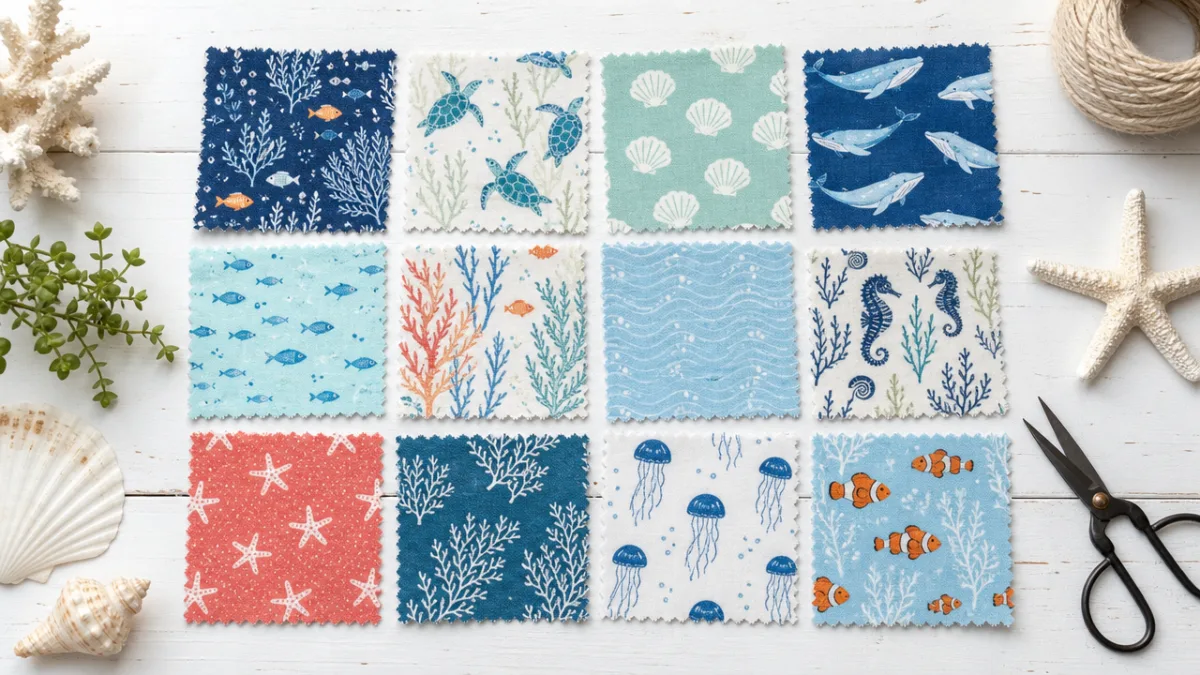
The ocean gives us an almost impossibly rich visual vocabulary to work with. Its creatures have inspired artists for thousands of years, and on patchwork shirts, they really get to shine. Getting familiar with the most common sea life motifs — and what they bring to a design — can genuinely help you choose pieces that feel personal, not just pretty.
Some of the most popular characters you’ll find on these shirts each carry their own visual personality. Octopuses and squids feel intelligent and mysterious, their flowing shapes perfect for organic, fluid prints. Sea turtles suggest wisdom and quiet strength, and their geometric shell patterns translate naturally into repeating tile designs that feel right at home in a patchwork format. Jellyfish have this dreamy, translucent quality that suits watercolor-style fabric beautifully. Tropical fish bring maximum color and graphic energy. Coral, seahorses, starfish, and waves all fill out the ecosystem in different ways depending on the overall mood of the piece.
The best patchwork sea life shirts go beyond individual creatures to tell a broader story — kelp forests drifting across one panel, sunlit surface water rendered in abstract washes on another, maybe a bioluminescent night ocean panel tucked in somewhere unexpected. When you’re shopping for or creating one of these shirts, it’s worth thinking about that bigger narrative, not just the individual images. That’s what makes the difference between a shirt that feels intentional and one that just feels like a bunch of things sewn together.
Color is equally important here. The ocean alone spans an enormous range — from the bright turquoise of a shallow tropical bay to the deep indigo of open water. Throw in a sunrise or sunset and suddenly you’ve got warm corals, flamingo pinks, and golden yellows mixing with all those cool blues and greens. The patchwork sea life shirts that really catch your eye tend to honor that full spectrum, letting warm and cool tones play off each other across the panels in a way that feels alive.
How to Style a Patchwork Sea Life Shirt
Styling a patchwork sea life shirt is one of those fun puzzles where the shirt basically does the heavy lifting for you — you just have to resist the urge to compete with it. These shirts are already doing a lot visually, so the rest of your outfit wants to take a step back and let the shirt be the thing people notice. The good news is that with a bit of intention, these shirts can work in casual, smart-casual, and even semi-formal situations.
The core principle is to keep everything else simple and grounded. A few approaches that work really well:
- Pair the shirt with solid-color bottoms in a tone you can pull directly from one of the panels — navy trousers, white linen shorts, or sand-colored chinos are all great depending on the season and where you’re headed.
- Stick with footwear in natural materials — leather sandals, canvas sneakers, woven espadrilles — that feel at home with the handcrafted spirit of the shirt without drawing the eye away from it.
- Keep jewelry simple and nature-inspired: a shell pendant, a hammered silver ring, or wooden bead bracelet feels right. Anything flashy or very geometric tends to fight with the shirt rather than complement it.
- For cooler weather, a solid linen blazer or a lightweight denim jacket in a wash that plays nicely with the shirt’s cooler tones can take the whole look up a notch.
- Bags in raffia, canvas, or unstructured neutral leather round things out without adding more visual noise.
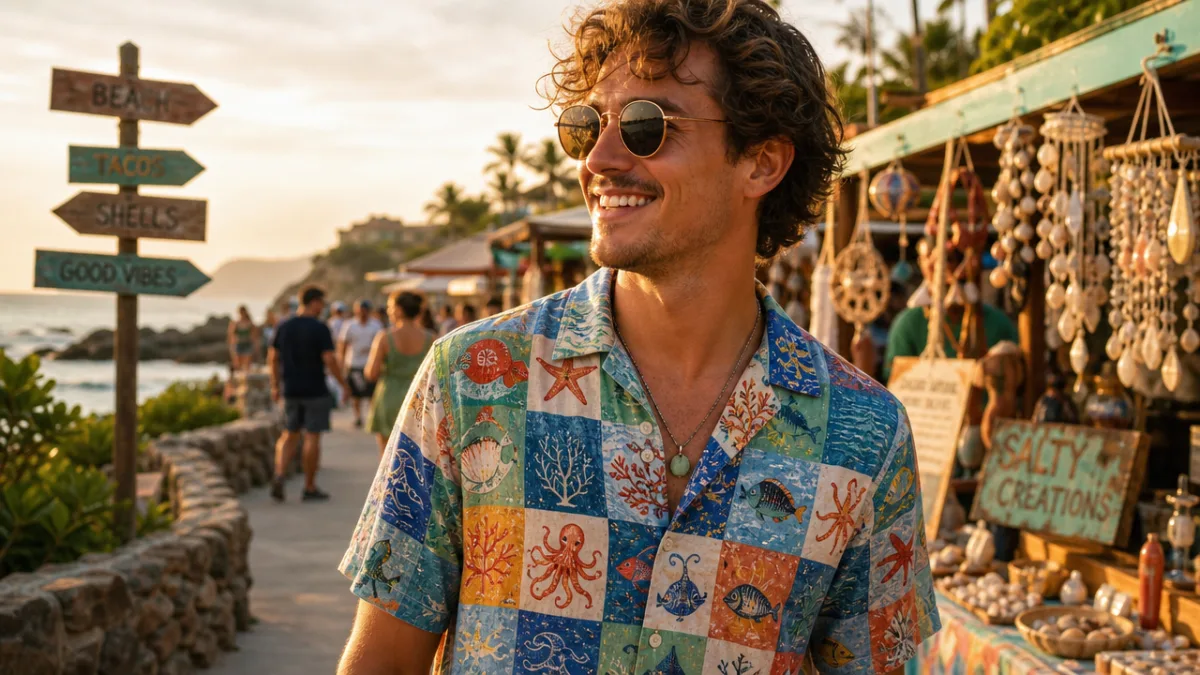
It also helps to think about where you’re wearing it. A loose cotton version worn open over a tank is perfect for a beach boardwalk or a summer market. Buttoned up and tucked loosely into wide-leg trousers, that same shirt can work for a creative office or a casual dinner out. These shirts are genuinely more versatile than they might first appear — you just need to play around with proportion and layering a little to find what clicks.
DIY: Creating Your Own Patchwork Sea Life Shirt
If you’re someone who loves making things, this is one of the most satisfying sewing projects you can take on. You get to choose every single fabric, every motif, every color, and every detail — and you end up with something that’s completely your own. Even intermediate sewers can get beautiful results as long as you plan carefully and enjoy the process.
The most fun part of the whole project is sourcing your fabrics. For a sea life patchwork, you want pieces that share a color story even if they’re very different in pattern and texture. Quilting cotton fabric stores are a goldmine — they often carry a huge range of novelty prints including ocean and nature themes. Thrift stores and vintage shops are also worth digging through, since old shirts, pillowcases, and tablecloths can yield surprisingly great prints once deconstructed. Online fabric marketplaces where independent designers sell printed fabric by the yard are another fantastic option. Try to gather fabrics at different scales — big statement prints, medium coordinates, and small textural fills — so your finished patchwork has real depth and visual rhythm rather than feeling flat.
Once your fabrics are sorted, construction happens in stages. You’ll want a base shirt pattern that plays nicely with patchwork — boxy silhouettes and camp-collar styles work much better than fitted, darted designs with lots of curved seams. From there, you’ll break the pattern pieces into patchwork-friendly sections, plan your fabric placement, cut everything with seam allowances, sew the patchwork panels together before cutting the final pattern pieces, and then assemble the shirt using standard methods. For an experienced sewer, the whole thing might take a weekend. If you’re newer to garment construction, budget a few enjoyable weeks and don’t rush it.
Want to take it even further? Embellishment is where you can really have fun. Hand embroidery in satin stitch or chain stitch can add dimensional sea creatures or coral details to individual panels. Glass seed beads in ocean colors can mimic iridescent fish scales or bubbles. Even just adding visible top-stitching in a contrasting thread along the seams between panels can give the whole shirt that extra handcrafted quality that makes it feel genuinely special rather than just assembled.
The Sustainability Story Behind Patchwork Sea Life Fashion
Beyond the aesthetics, there’s a genuinely compelling environmental argument for patchwork sea life shirts. Fashion is one of the most polluting industries in the world — textile waste, water use, carbon emissions — it adds up in ways that are hard to ignore. Patchwork clothing, especially when it’s made from repurposed or deadstock fabrics, offers a real alternative and a more thoughtful way to enjoy getting dressed.
Using scraps and remnants in patchwork construction is essentially textile recycling, and it has a long history. Before industrialization made fabric cheap and plentiful, people saved every usable scrap because wasting cloth was simply unthinkable — economically and culturally. Choosing to work that way today feels like a quiet act of resistance to throwaway culture. When a patchwork sea life shirt is made from thrifted finds, upcycled garments, or bolt-end remnants that would otherwise get binned, it turns potential waste into something beautiful and lasting.
There’s also something fitting about choosing ocean-inspired clothing made sustainably, given the state of the ocean right now. Coral bleaching, plastic pollution, overfishing — the problems are real and ongoing. Wearing a garment that celebrates sea life while also modeling a more thoughtful approach to consumption feels like a small but meaningful alignment between what you love and how you act. It’s not going to fix everything, but it opens conversations and quietly signals what you care about.
There’s also the longevity factor. A carefully made patchwork shirt, built from quality fabrics with real craft skill, is not going to fall apart after a season. And because patchwork is inherently eclectic and personal, it sits largely outside the trend cycle — it doesn’t go out of style the way a trend-driven piece does. A good patchwork sea life shirt made or bought today has every chance of being a cherished piece in your wardrobe for a decade or more, getting better and more characterful with every wear.
Where to Find and How to Choose the Perfect Patchwork Sea Life Shirt
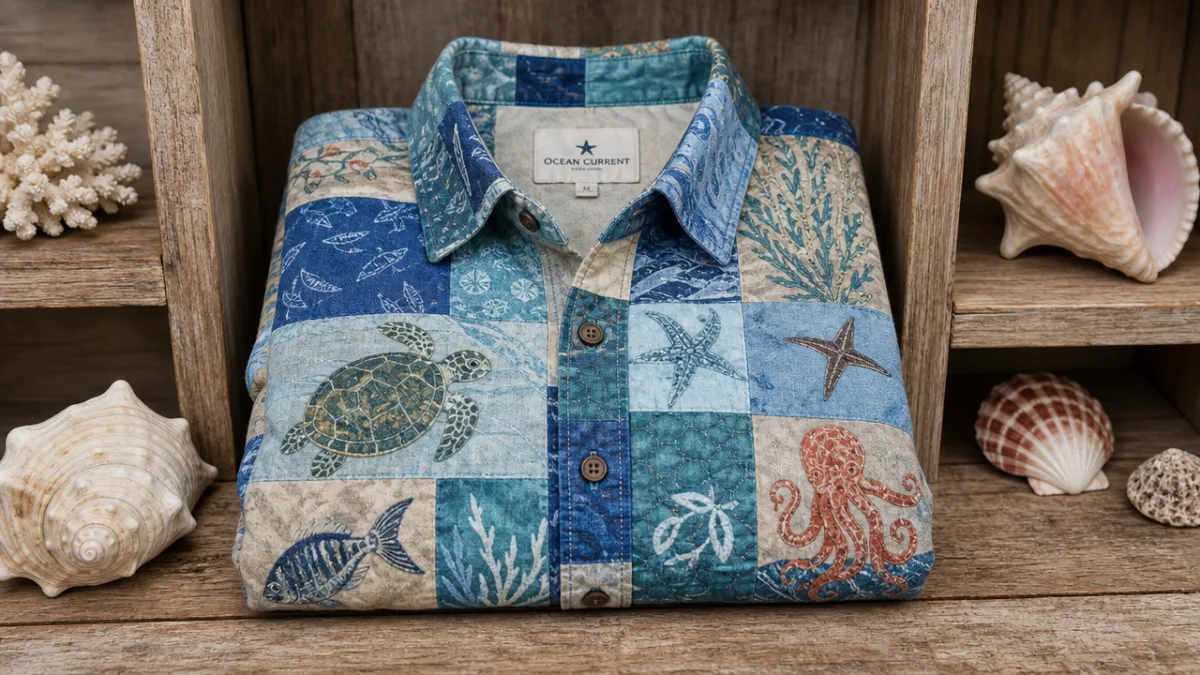
The good news is that as patchwork sea life shirts have gotten more popular, they’ve also become easier to find across a range of sources and price points — from mass-market takes to genuine one-of-a-kind pieces made by hand. Knowing where to look and what to look for makes it much easier to land something that’s actually worth your money and that you’ll be excited to reach for.
If you want something truly unique and handmade, independent makers on platforms like Etsy are a great place to start — the range is remarkable. When shopping from individual sellers, take the time to read reviews carefully, look closely at all the photos for construction quality, and don’t hesitate to message sellers with questions about materials and how things are made. Vintage markets, flea markets, local craft fairs, and small independent boutiques that carry handmade clothing are also fantastic hunting grounds. Honestly, part of the appeal of this type of garment is the search itself.
Whatever the source, there are a few quality markers worth checking before you commit. Look for seams that lie flat without puckering, fabric panels that are securely joined with no loose threads or gaps at the intersections, and solid overall construction — well-attached buttons, a flat collar, even hems. Also take a close look at the fabrics themselves: natural fibers like cotton, linen, and silk wear better, breathe better, and age much more gracefully than synthetics. A shirt that ticks all of these boxes is worth paying more for, because it’ll hold up and look good for years.
One more thing: don’t underestimate fit. Because so many of these shirts are handmade or produced in small batches, sizing isn’t always standardized the way it is with mass-produced clothing. Measuring yourself before you buy and comparing those numbers to the size guide can save a lot of frustration. Many people find that a slightly relaxed or oversized fit actually suits patchwork shirts really well — it lets the full composition of the garment breathe visually, and there’s something about that easy, effortless silhouette that just fits the whole oceanic spirit of the thing.








What do you think?
It is nice to know your opinion. Leave a comment.