










18 Fast Growing Climbing Plants for Fences, Pergolas, and Trellises
Why Climbing Plants Are the Ultimate Garden Solution
Few garden additions transform an outdoor space as dramatically and efficiently as climbing plants. Whether you are working with a bare wooden fence, a newly installed pergola, or a simple trellis leaning against a wall, fast-growing climbers can turn structural eyesores into lush, living backdrops within a single growing season. These plants work vertically, meaning they make the most of limited garden footprints while creating layered, textural interest that ground-level planting simply cannot replicate.
The appeal of fast-growing climbing plants extends well beyond aesthetics. Many varieties attract pollinators like bees and butterflies, contributing meaningfully to local ecosystems. Others provide dense foliage that acts as a natural privacy screen, shielding patios and garden seating areas from neighboring windows or road noise. Some climbing plants even offer edible fruits or flowers, blending the ornamental with the practical in a way that maximizes every square foot of growing space you have available.
Choosing the right climber for your specific structure requires understanding how different plants attach and grow. Some climbers twine their stems around supports, others use adhesive pads or aerial roots to cling to surfaces, and still others rely on thorns to scramble upward. Matching the plant’s attachment method to your fence, pergola, or trellis material ensures healthy growth and prevents structural damage over time. With that foundation in mind, let’s explore the best fast-growing options available to home gardeners today.
Top Fast-Growing Climbers for Privacy and Coverage
When privacy is your primary goal, few plants outperform Virginia Creeper (Parthenocissus quinquefolia). This vigorous deciduous vine can grow up to ten feet per year under favorable conditions, covering large expanses of fencing with its distinctive five-lobed leaves. In autumn, it rewards patient gardeners with a spectacular show of crimson and scarlet foliage before dropping its leaves for winter. Because it clings using adhesive pads rather than twining stems, it suits flat surfaces like solid fences and masonry walls particularly well.
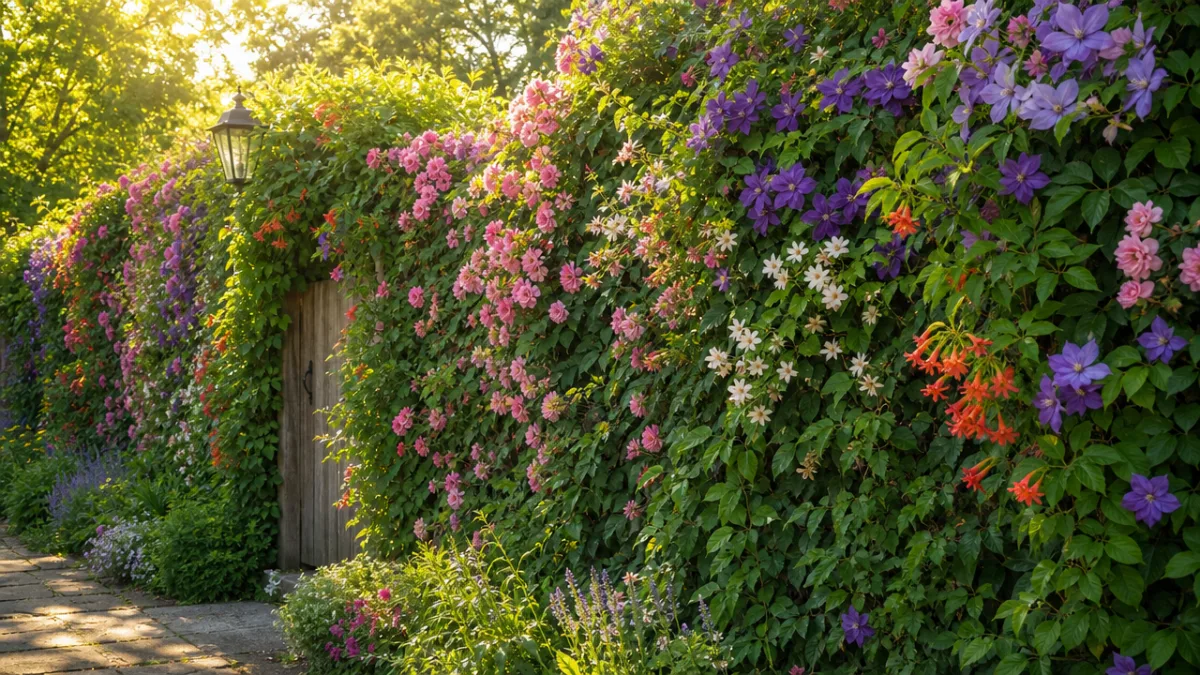
Clematis varieties are among the most celebrated climbing plants in temperate gardens, and for good reason. Varieties like ‘Montana’ and ‘Armandii’ are especially vigorous, capable of covering a pergola in two to three seasons with relatively minimal maintenance. Their large, showy flowers range from white to deep purple, and many are powerfully fragrant, turning an ordinary garden archway into a sensory experience. Clematis prefer to have their roots in shade while their flowering stems reach toward sunlight, making them well suited to growing up through other shrubs or along shaded fence bases.
Honeysuckle (Lonicera) is another dependable performer for rapid coverage. The common Japanese Honeysuckle can grow up to fifteen feet in a single season given rich soil and adequate water, and its tubular flowers are beloved by hummingbirds and moths alike. For gardeners in cooler climates, native varieties like Lonicera periclymenum offer similar vigor with flowers that transition from creamy white to golden yellow as they age. Honeysuckle twines enthusiastically around wires, trellis battens, and pergola posts, requiring very little guidance once established in the first growing season.
Flowering Climbers That Create Stunning Visual Impact
Wisteria is the undisputed showstopper of the climbing plant world. Its cascading racemes of blue, purple, white, or pink flowers can stretch up to thirty centimeters long, producing a curtain of bloom in late spring that draws gasps from even the most seasoned gardeners. Though wisteria takes two to three years to begin flowering, once established it grows with impressive determination, extending several feet each season. It is best suited to sturdy pergolas and robust wall supports, as mature plants develop thick, woody stems that can exert considerable force on lightweight structures.
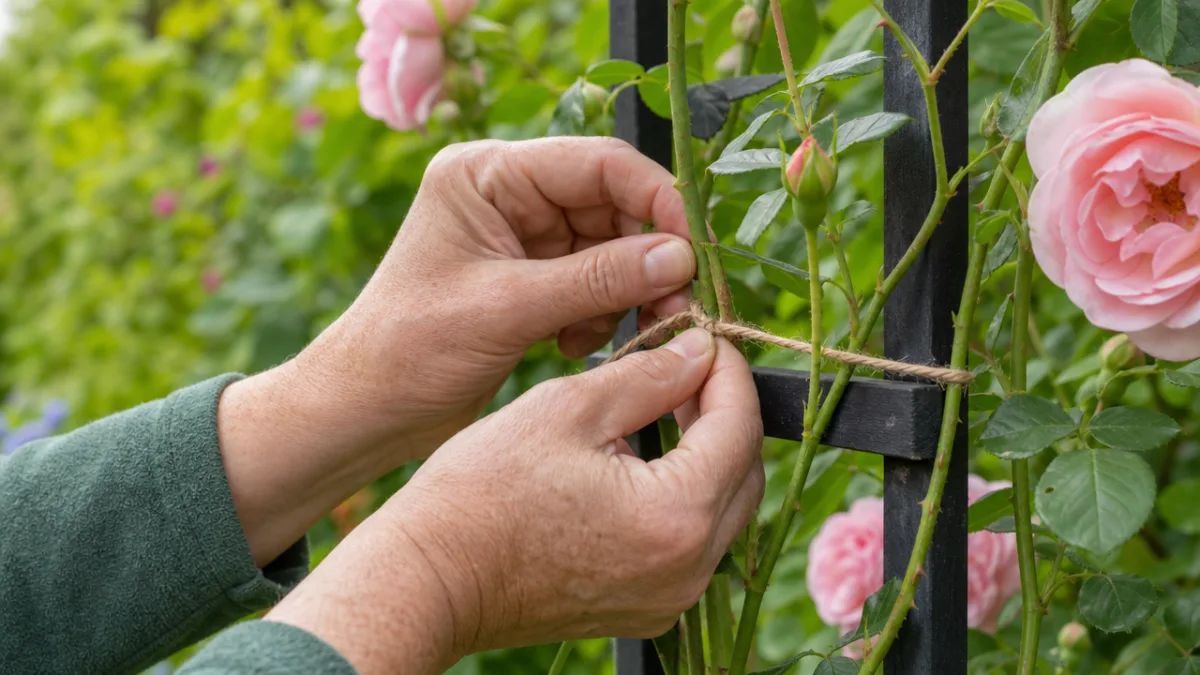
Climbing roses bring romantic cottage-garden charm to any outdoor setting. Varieties such as ‘New Dawn’, ‘Zéphirine Drouhin’, and ‘Compassion’ are well-known for their vigorous growth habits, easily covering a six-foot fence within two to three years. Unlike many climbers, roses do not attach themselves naturally and need to be tied to their supports regularly, but this minor extra effort is richly rewarded by repeat flowering from late spring through to the first frosts of autumn. Many modern climbing rose varieties have also been bred for improved disease resistance, making them considerably easier to maintain than older heritage types.
Passion Flower (Passiflora caerulea) offers some of the most exotic-looking blooms achievable in a temperate garden. Its intricate, spacecraft-like flowers feature radiating blue-and-white filaments that seem almost alien in their complexity, followed in warm summers by ornamental orange fruits. Despite its tropical appearance, the common Blue Passion Flower is surprisingly hardy in many regions, surviving mild winters outdoors when planted against a warm, sheltered wall. It grows rapidly using tendrils to grip wire or trellis supports, easily putting on three to five feet of new growth in a growing season.
Evergreen Climbers for Year-Round Structure and Privacy
Ivy (Hedera helix) remains one of the most practical choices for gardeners who need reliable year-round coverage. While it has a somewhat undeserved reputation for causing damage, when grown on solid wooden fences or robust trellis panels rather than directly on masonry, ivy provides a beautiful and low-maintenance evergreen backdrop. Its self-clinging aerial roots mean it requires no tying in, and its tolerance for shade makes it one of very few climbers that performs well on north-facing structures where most other plants struggle to thrive.
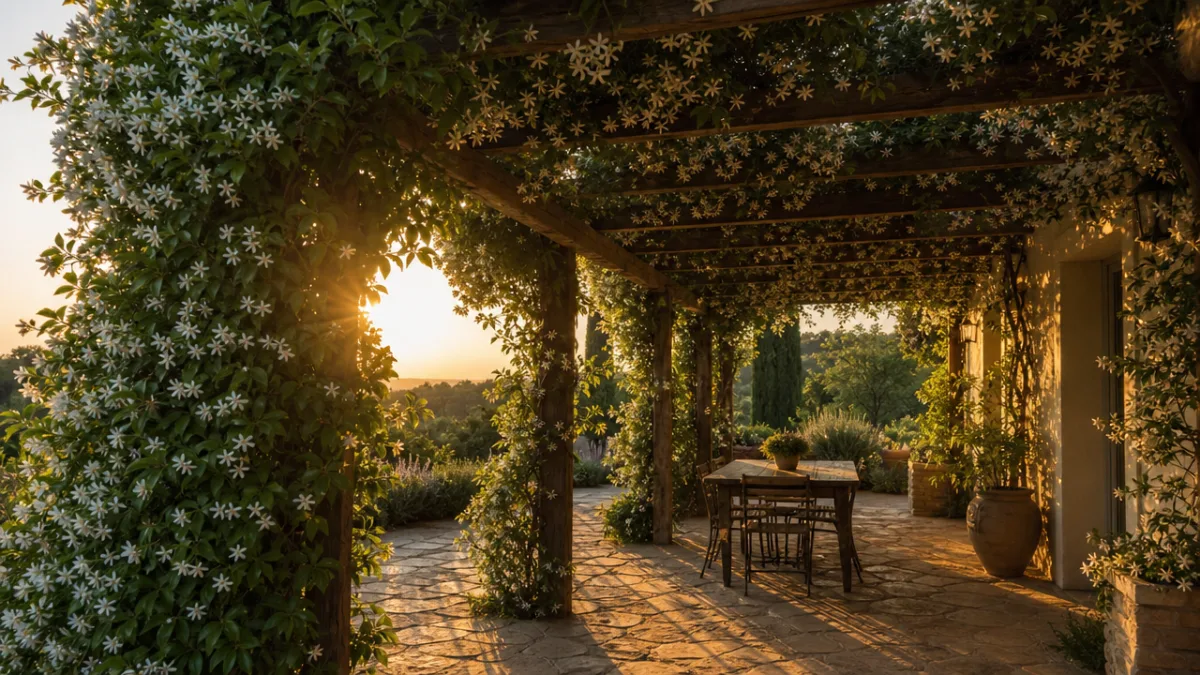
Star Jasmine (Trachelospermum jasminoides) is an increasingly popular evergreen climber prized for both its glossy, dark green foliage and its intensely fragrant white flowers, which appear in summer and are reminiscent of classic jasmine scent. It grows at a moderate but consistent rate, typically adding three to four feet annually once established, and is well suited to pergolas and trellis panels in sheltered, sunny positions. In colder regions it benefits from being planted against a south- or west-facing wall, where reflected heat helps it through winter without defoliation.
Euonymus fortunei, particularly climbing varieties like ‘Coloratus’ or ‘Emerald Gaiety’, offers reliable evergreen coverage with the bonus of variegated foliage that adds visual interest throughout all four seasons. While slower than some of the more vigorous climbers on this list, it compensates with exceptional tolerance of poor soils, pollution, and partial shade, making it an excellent choice for urban gardens or difficult spots where other climbers fail to establish. Its self-clinging habit means it will happily cover a fence with very little intervention once it finds its grip in the second or third year of growth.
Climbers for Pergolas and Overhead Structures
Pergolas and overhead structures require climbers that are not only vigorous enough to cover significant distances but also strong enough to support their own weight as they mature. Wisteria, already discussed for its flowers, is one of the best pergola climbers available due to its woody, self-supporting framework. However, for gardeners seeking faster results in the early years, the Mile-a-Minute plant (Fallopia baldschuanica) is hard to beat. It can genuinely grow up to fifteen feet in a single season, rapidly draping itself over pergola beams and creating dense, leafy shade underneath in just a year or two.
Hops (Humulus lupulus) are another outstanding choice for pergolas and large overhead structures. The ornamental golden hop variety, Humulus lupulus ‘Aureus’, produces spectacular lime-yellow foliage that illuminates a garden structure like natural sunshine, and grows with remarkable speed, often reaching twenty feet by midsummer. It dies back completely in winter, which allows light and warmth to reach the garden beneath during the colder months before returning vigorously each spring. This seasonal cycle makes it particularly useful for garden rooms and al fresco dining areas where overhead shade is welcome in summer but not in winter.
Kiwi vines (Actinidia) are often overlooked as ornamental climbers, but they offer exceptional vigor and large, attractive foliage that creates wonderful dappled shade over pergola structures. The ornamental variety Actinidia kolomikta produces leaves splashed with pink and white that are genuinely striking, while fruiting varieties like Actinidia deliciosa can produce edible kiwi fruits in warmer climates or sheltered positions. Both types are twining climbers that wrap enthusiastically around any available support, and they establish quickly when planted in fertile, well-drained soil in a sunny location.
Tips for Planting and Training Climbing Plants Successfully
The foundation of a successful climbing plant is a well-prepared planting hole. Even the most vigorous climbers will struggle if they are planted into poor, compacted, or waterlogged soil, so it is always worth investing time in thorough soil preparation before planting. Dig a hole at least twice the diameter of the root ball and enrich the soil with well-rotted garden compost or manure. Planting slightly away from the base of a fence or wall, rather than directly against it, is also important, as the soil immediately adjacent to structures tends to be dry and nutrient-poor, particularly with older brick walls.
Initial training is critical to getting climbing plants established on their supports correctly. For the first one to two growing seasons, regularly tie in new growth using soft garden twine, gently guiding stems in the direction you want them to grow. Spreading growth horizontally along fence rails, rather than allowing it to shoot straight upward, encourages the plant to produce more lateral shoots and results in denser, more even coverage. For trellis and wire supports, ensure fixings are robust before planting, as it is much harder to reinforce supports once a heavy plant has begun growing over them.
Watering and feeding during the establishment period makes a significant difference to how quickly a climber covers its support structure. For the first growing season, water deeply and regularly during dry spells, particularly for plants positioned against walls or fences where the soil can dry out rapidly. An annual application of balanced slow-release fertilizer in spring, supplemented with high-potassium liquid feed during the flowering season for blooming varieties, will keep plants healthy, vigorous, and flowering well. With the right preparation and a little ongoing attention, fast-growing climbing plants will reward you with a transformed garden landscape in just a few short seasons.
- Virginia Creeper – Up to 10 feet per year; brilliant autumn color; self-clinging adhesive pads.
- Clematis ‘Montana’ – Vigorous and fragrant; ideal for pergolas and large fences; prefers cool roots.
- Japanese Honeysuckle – Up to 15 feet per season; highly fragrant; excellent for wildlife.
- Wisteria – Spectacular cascading flowers; slow to bloom but exceptionally long-lived.
- Climbing Rose ‘New Dawn’ – Repeat flowering; romantic cottage-garden aesthetic; needs tying in.
- Passion Flower – Exotic blooms; surprisingly hardy; uses tendrils to grip supports.
- Common Ivy – Evergreen; shade tolerant; self-clinging; ideal for north-facing aspects.
- Star Jasmine – Intensely fragrant; glossy evergreen foliage; excellent for sheltered pergolas.
- Mile-a-Minute Plant – Exceptionally fast growing; ideal for quickly covering unsightly structures.
- Golden Hop – Dramatic lime-yellow foliage; dies back in winter; perfect for seasonal shade.
- Kiwi Vine – Large ornamental foliage; edible fruit potential; vigorous twining habit.
- Euonymus fortunei – Slow but reliable; evergreen; excellent for urban or shaded gardens.
Common Mistakes to Avoid When Growing Climbing Plants
One of the most frequent errors gardeners make is choosing a climbing plant that is too vigorous for the structure it is intended to cover. Russian Vine and Mile-a-Minute, while undeniably impressive for their speed, can overwhelm lightweight trellis panels, wooden fences, and even small trees if left unchecked. Before selecting a climber, always consider the ultimate size and weight of the mature plant alongside the load-bearing capacity of your support structure. What looks like a charming addition in year one can become a structural problem by year five if the wrong pairing is made.
Neglecting annual pruning is another common pitfall that can lead to climbing plants becoming tangled, woody, and unproductive over time. Most climbers benefit from at least one pruning session each year, though the timing varies significantly by species. Wisteria, for instance, requires both a summer and a winter prune to maintain its flowering framework, while Group 3 clematis varieties should be cut back hard to around thirty centimeters in late winter or early spring. Failing to prune at the right time, or pruning at the wrong time, can result in either missed flowering cycles or overly congested growth that harbors pests and disease.
Finally, many gardeners underestimate the importance of adequate watering during the first two years of a climbing plant’s life. Even drought-tolerant species need consistent moisture while their root systems are becoming established, and plants positioned against walls or under eaves may receive significantly less rainfall than open ground plants. Installing a simple drip irrigation system or making a regular commitment to hand watering during dry summer months will dramatically accelerate the establishment of new climbers and ensure they achieve the lush, vigorous coverage you are hoping for in the shortest possible time.








What do you think?
It is nice to know your opinion. Leave a comment.