










DIY Creative Backyard Flower Bed From Recycled Furniture
The Art of Giving Old Furniture a New Life in Your Garden
There is something deeply satisfying about transforming a piece of worn-out furniture into a thriving, beautiful flower bed. Rather than sending that old dresser, bathtub, or wooden chair to a landfill, creative gardeners around the world are discovering that discarded pieces can become the most charming focal points in an outdoor space. This movement blends sustainability with artistry, and the results are nothing short of spectacular. Every rusted drawer pull and cracked wooden slat tells a story that only adds to the garden’s character.
Upcycling furniture into flower beds is not just a trend — it is a philosophy rooted in respect for materials, creativity, and environmental responsibility. When you repurpose an old wooden dresser as a tiered planter, you are diverting waste from landfills while simultaneously creating a conversation piece that no garden center could ever sell you. The organic, imperfect nature of recycled furniture gives a garden a warmth and authenticity that brand-new planters simply cannot replicate, no matter how beautifully they are designed.
Beyond the environmental and aesthetic benefits, DIY furniture flower beds are remarkably accessible to gardeners of all skill levels. You do not need advanced carpentry knowledge or an expensive collection of tools. What you need is curiosity, a willingness to experiment, and a vision for what your outdoor space could become. Whether you are working with a tiny urban patio or a sprawling suburban backyard, there is a recycled furniture flower bed idea that will suit your space, your budget, and your personal style perfectly.
Why Recycled Furniture Works So Well as a Planter
Old furniture is often made from solid hardwoods, thick cast iron, or dense metals — materials that were built to last decades. This durability translates beautifully into the garden, where planters are exposed to rain, frost, intense sun, and soil moisture year-round. A vintage oak dresser, for example, can provide years of service as a flower bed even after its usefulness indoors has long passed. The natural aging process that would make furniture look shabby inside actually looks charming and intentional in a garden setting.
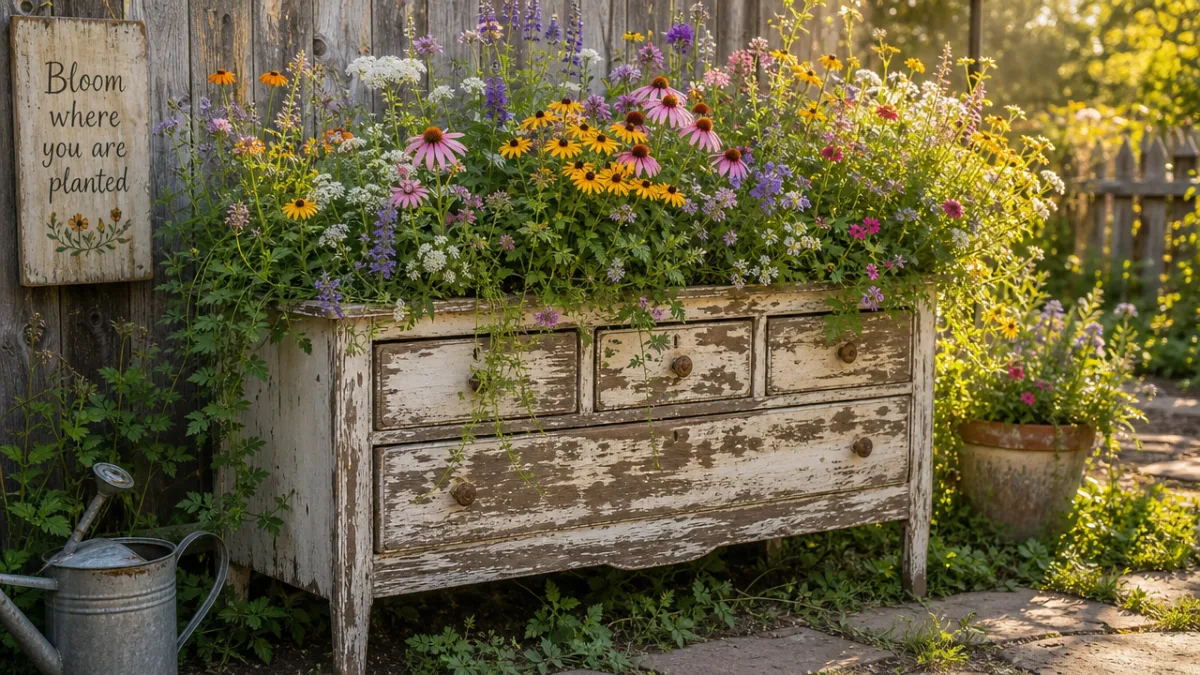
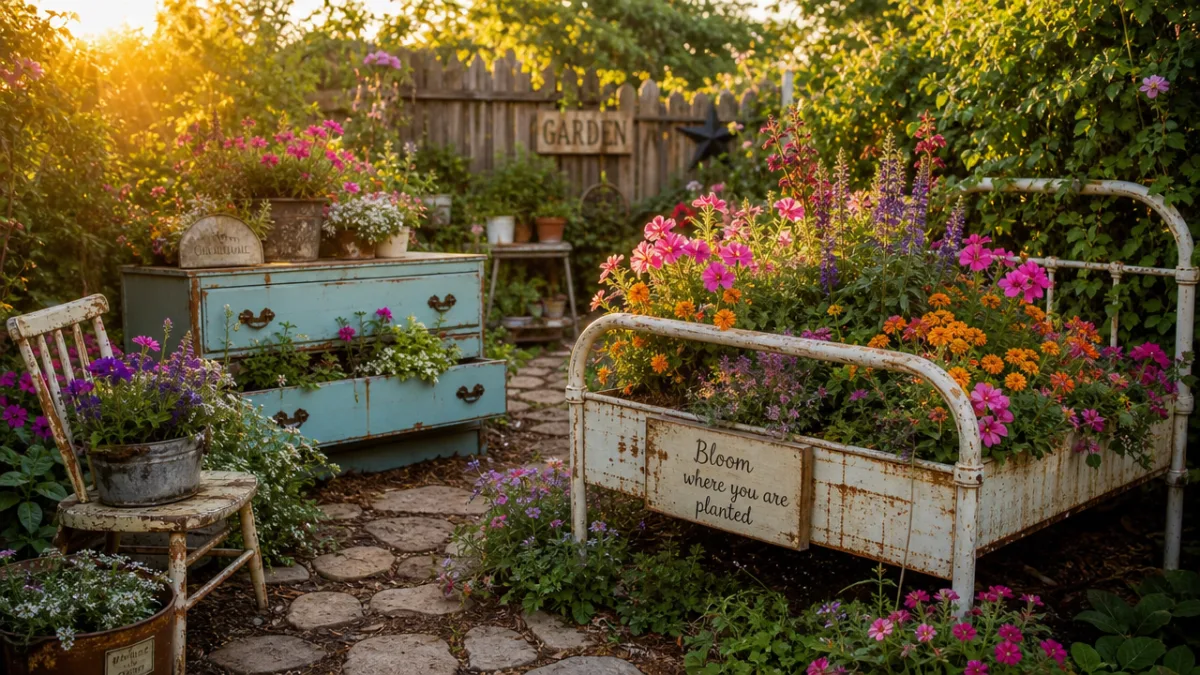
The shapes and forms of furniture also offer something that traditional garden planters cannot: variety and surprise. A ladder becomes a cascading vertical garden. A claw-foot bathtub becomes an overflowing cottage-style flower bed. A set of wooden drawers pulled out at different heights creates a dramatic tiered planting display that draws the eye upward and adds three-dimensional interest to a flat lawn. These unexpected forms delight visitors and give your garden a sense of personality and playfulness that formal garden design rarely achieves.
There is also a practical dimension to furniture planters that often goes unnoticed. Many pieces of furniture come with built-in compartments, drawers, and shelves that naturally separate different plant varieties — an invaluable feature for companion planting or simply organizing your garden display. A dresser with six drawers, for instance, allows you to grow six entirely different species of flowers, herbs, or succulents, each with their own microenvironment of soil and drainage, all within a single cohesive structure that looks unified and intentional.
Sourcing the Perfect Pieces for Your Flower Bed Project
Finding the right furniture for your garden project is half the adventure. Thrift stores, estate sales, flea markets, and neighborhood giveaway groups are all wonderful hunting grounds for pieces with potential. When you walk through a second-hand shop, train your eye not to see furniture as it was intended to be used, but rather as a vessel for growth. A wobbly side table is no longer a furniture failure — it is a rustic garden accent waiting for a pot of trailing petunias and a fresh coat of outdoor paint to seal its fate as a beloved yard ornament.
Online marketplaces such as Facebook Marketplace, Craigslist, and Freecycle are particularly rich sources for free or very low-cost furniture. Many people are eager to part with old dressers, chairs, and wooden shelving units, especially if you are willing to haul them away yourself. It is entirely possible to build a stunning, full garden bed display without spending more than a few dollars on the furniture itself, leaving more of your budget available for quality potting soil, plants, and basic tools.
When evaluating a piece of furniture for garden use, there are a few key factors to consider. Avoid furniture that has been treated with lead-based paint, especially if you intend to grow edible plants. Look for pieces with sufficient structural integrity to hold the weight of soil and plants — a completely rotten bottom will not serve you well for long. Prioritize materials like solid wood, wrought iron, wicker, and cast iron, as these tend to weather the outdoor environment most gracefully. Particleboard and MDF furniture will deteriorate rapidly when exposed to moisture and are best avoided.
Preparing Your Furniture for the Garden
Once you have sourced your perfect piece, a little preparation goes a long way toward ensuring its longevity and success as a planter. Begin by cleaning the furniture thoroughly, removing dirt, old finishes, and any loose or flaking paint. A stiff wire brush and a mild detergent solution work well for most surfaces. If you are working with metal furniture, check for rust and treat it with a rust-converting primer before applying any new finish. These preparation steps take only a few hours but add years to the life of your garden feature.
For wooden furniture, applying a coat of outdoor wood sealant or linseed oil will dramatically slow the natural decay that occurs when wood is in constant contact with moist soil. You can also choose to paint your furniture with exterior-grade paint in a color that complements your garden palette. Soft sage greens, chalky whites, and faded terracottas all look beautiful weathered by seasons of sun and rain. Alternatively, embracing the raw, unpainted look and allowing the wood to silver naturally over time creates an equally gorgeous aesthetic that feels deeply connected to the natural world.
Drainage is one of the most critical practical considerations when converting furniture into a planter. Most flowers and plants will suffer and eventually die in waterlogged soil, so you must ensure that water can escape freely from the bottom of your planter. For drawers and enclosed pieces, drill several drainage holes approximately one inch in diameter across the base. Line the interior with landscape fabric or burlap before adding soil — this allows water to drain while keeping the soil in place and extending the life of the wood by reducing direct soil-to-wood contact.
Design Ideas and Inspiration for Every Style of Garden
One of the great joys of furniture flower beds is the sheer range of design directions you can explore. For a romantic cottage garden look, pair an old iron bed frame with climbing roses, lavender, and foxgloves allowed to spill and tumble freely over the edges. Fill the bed itself with a mix of heirloom perennials in soft pinks, purples, and creams, and allow a few self-seeding annuals to fill in the gaps each year. Over time, the entire arrangement takes on a wonderfully untamed quality that feels both nostalgic and alive.
A more structured and modern approach might involve a set of matching wooden crates or a geometric bookshelf turned on its back and planted with succulents, ornamental grasses, and architectural plants like agave or aloe. This style suits contemporary homes and minimal gardens, where clean lines and restrained planting palettes create a sense of calm sophistication. Painting the furniture in a bold, matte color such as charcoal gray or deep navy adds a graphic, design-forward quality that elevates the entire outdoor space.
For families with children, a playful furniture garden can double as an imaginative outdoor learning environment. An old school desk planted with sunflowers, a wooden wheelbarrow overflowing with strawberries, or a rocking chair cradling a pot of giant zinnias creates a sense of whimsy and wonder. Children who participate in choosing the furniture, painting it, and selecting the plants develop a meaningful connection to their garden that encourages lifelong appreciation for nature and growing things. It is one of the most rewarding family projects a backyard can host.
Planting Strategies That Make Your Furniture Beds Shine
The way you plant your furniture beds can make or break the final effect. A classic and reliable strategy is the thriller-filler-spiller approach. Choose one tall, dramatic plant as the thriller — think ornamental grasses, tall dahlias, or a bold spike plant. Surround it with compact, mounding plants that fill in the middle space with texture and color, then add trailing plants at the edges that cascade beautifully over the sides of your furniture planter. This three-layered approach creates depth, movement, and visual richness in even the smallest piece of furniture.
Color theory plays a wonderfully important role in furniture flower bed design. A monochromatic planting — all shades of purple from pale lavender to deep violet — creates a sophisticated, cohesive look that feels intentional and elegant. Complementary color combinations, such as orange marigolds against purple salvia, create vibrant, high-energy displays that are visible from across the garden. Analogous palettes — warm reds, oranges, and yellows together — feel harmonious and sunny, perfect for south-facing spots that receive full sun throughout the day.
Do not overlook the power of foliage when planning your plantings. Leaves in deep burgundy, silver-gray, chartreuse yellow, and variegated green-and-cream add just as much visual interest as flowers and often last far longer through the season. Mixing different leaf textures — feathery ferns alongside bold hostas, or delicate thyme next to thick-leaved sedums — creates a tapestry effect that is beautiful even when nothing is in bloom. This approach ensures that your furniture flower bed looks intentional and cared-for from the first days of spring all the way through the final weeks of autumn.
Maintaining Your Furniture Flower Beds Through the Seasons
Like any garden feature, furniture flower beds reward consistent, attentive care. In spring, refresh the soil in each planter with a generous top-dressing of compost, which will feed your plants through the growing season and improve soil structure over time. Check drainage holes to ensure they have not become blocked over winter, and treat any new signs of wood rot or rust before they spread. This early-season maintenance is best done before plants are actively growing, giving you unobstructed access to every corner of the furniture.
During the height of summer, container planters — including furniture flower beds — dry out significantly faster than in-ground gardens, because their soil volume is limited and they are exposed to air on multiple sides. Water your furniture planters deeply and consistently, checking the soil moisture every day or two during heat waves. A slow-release granular fertilizer applied at the start of the season, supplemented with a liquid feed every two to three weeks, will keep your plants healthy, vigorous, and flowering prolifically throughout the warmest months.
As autumn arrives, take stock of what has performed beautifully and what you might change for the following year. Remove spent annuals and replace them with autumn interest plants such as ornamental kale, pansies, or trailing ivy. Tender plants can be potted up and brought indoors to overwinter. Perennials can be cut back and left in place, often surviving winter in a furniture planter as long as the piece is sheltered from the most extreme frost. Mulching around the base of the furniture and placing burlap wrapping around wooden pieces in very cold climates helps protect both plants and structure from freeze-thaw damage.
Extending the Life of Your Furniture Planters
A furniture flower bed that is well-maintained can last many seasons, becoming more beautiful as it ages and as perennial plants become more established. Re-sealing wooden furniture every one to two years is one of the single most effective maintenance steps you can take. Choose a quality exterior wood preservative designed for contact with soil and water, and apply it during a dry spell in late summer or early spring when plants are not actively growing. This simple task dramatically slows wood decay and keeps your furniture looking intentional rather than simply neglected.
Metal furniture — wrought iron garden chairs, vintage bed frames, old filing cabinets — benefits from periodic rust treatment. Sand back any areas where rust has begun to develop, apply a rust-neutralizing primer, and finish with exterior metal paint. Many gardeners find that the slightly mottled, aged appearance of weathered metal actually enhances the charm of a garden display, and a light application of clear lacquer can stabilize this look without making it appear overly polished or artificial. The key is to stay ahead of active rust rather than allowing it to spread unchecked.
It is also worth developing a rotation plan for your furniture flower beds. Each season, consider whether a piece has run its natural course as a planter and whether it might be replaced with a new find from a thrift store or flea market. This keeps your garden feeling fresh and evolving rather than static, and it gives you the pleasure of the hunt on a regular basis. A garden composed entirely of upcycled furniture can be an ongoing creative project that reflects your changing tastes, the plants you are currently excited about, and the stories embedded in the objects that find their way into your outdoor space year after year.

Environmental Benefits and the Bigger Picture of Sustainable Gardening
Every piece of furniture that is diverted from a landfill and repurposed in a garden represents a small but meaningful act of environmental stewardship. Furniture manufacturing is a resource-intensive process that involves timber harvesting, metal extraction, chemical treatments, and significant transportation emissions. When you extend the useful life of a piece of furniture by giving it a second purpose in your garden, you are reducing demand for new resources and keeping existing materials in productive use — a core principle of the circular economy that environmental scientists and sustainability advocates promote as essential to reducing global waste.
Gardens themselves are powerful environmental assets, and furniture flower beds contribute to this in meaningful ways. Every square foot of flowering plants you add to your outdoor space provides nectar and pollen for bees, butterflies, and other pollinators whose populations are under significant pressure from habitat loss, pesticide use, and climate change. A dresser planted with lavender, borage, and echinacea can support dozens of bee species throughout the summer, contributing to local pollinator health in a way that a concrete patio never could. The cumulative impact of thousands of gardeners making these choices is genuinely significant at an ecological level.
There is also a social dimension to this practice that deserves recognition. Sharing furniture flower bed projects on social media and in community gardens inspires others to see the creative potential in items they might otherwise discard. Community gardening projects that incorporate upcycled furniture create beautiful, accessible shared spaces while also sparking conversations about waste reduction and sustainable design. When neighbors swap furniture finds and trade cuttings from their furniture planters, gardening becomes a communal act of creativity that strengthens community bonds as powerfully as it beautifies shared outdoor environments.
Getting Started: A Simple First Project for Beginners
If you are new to this style of gardening, the best advice is to start simple and let the process teach you. Begin with a single wooden drawer — easy to find for free or for just a few dollars — and transform it into a small herb garden for your patio or deck. Drill drainage holes in the base, line it with landscape fabric, fill it with quality potting mix, and plant it with three or four culinary herbs such as basil, thyme, parsley, and chives. Place it somewhere that receives at least six hours of sunlight daily and water it regularly. Within weeks, you will have a functional, beautiful, and deeply satisfying little garden that cost almost nothing to create.
Once you have experienced the pleasure of this first project, the possibilities will begin to multiply naturally in your imagination. You might next try a small chair with the seat removed and replaced with a wire mesh basket filled with trailing nasturtiums. Then perhaps an old ladder leaned against a fence and fitted with hanging pots of ferns and begonias. Each project teaches you something new about materials, plants, drainage, and design, and the skills accumulate quickly. Most gardeners find that within a single season of furniture gardening, they have developed an entirely new way of seeing discarded objects and imagining their potential.
The most important thing is to embrace imperfection as part of the beauty. Furniture flower beds are not meant to look pristine. They are meant to look loved, lived in, and alive. A slightly crooked drawer handle, a patch of peeling paint, a crack in an old wooden arm — these are not flaws to be hidden but features that give each piece its unique identity and charm. When your garden is filled with objects that carry history and have been transformed through care and creativity, it becomes more than just a pleasant outdoor space. It becomes a reflection of your values, your ingenuity, and your deep appreciation for the world of growing things.








What do you think?
It is nice to know your opinion. Leave a comment.