










Sweet Granny Crochet Baby Blankets: A Complete Guide to Crafting Cozy Heirlooms
The Timeless Appeal of Granny Square Baby Blankets
Few crafting traditions carry the warmth and nostalgia of the classic granny square, and when applied to baby blankets, the result is something truly magical. These iconic crocheted motifs have been passed down through generations, connecting grandmothers, mothers, and daughters through the shared language of yarn and hook. A granny square baby blanket is not merely a practical item to keep a newborn warm — it is a labor of love, a tactile heirloom that a child may treasure long into adulthood as a reminder of the care woven into every stitch.
The beauty of the granny square design lies in its remarkable versatility. Whether you prefer the traditional look of rich, jewel-toned squares bordered in classic black or cream, or you lean toward soft pastel palettes perfectly suited for a nursery, the pattern adapts effortlessly to your vision. Modern crafters have taken the humble granny square in breathtaking new directions, experimenting with solid-color squares, floral variations, and even gradient arrangements that create stunning visual effects when the finished blanket is laid out in full. This adaptability is one of the main reasons the pattern has never gone out of style.
For new parents, grandparents, and friends alike, receiving a handmade granny square baby blanket as a gift is a deeply moving experience. There is an understood intimacy in knowing that someone sat for hours, carefully counting stitches and selecting colors with a specific child in mind. In a world increasingly dominated by mass-produced goods, a hand-crocheted blanket stands apart as a symbol of intentionality and affection. It communicates something no store-bought item can fully replicate: that the recipient is worth the time, effort, and love that only handmade craftsmanship can offer.
Choosing the Right Yarn for a Baby Blanket
Selecting the appropriate yarn is arguably the most important decision you will make when starting a granny square baby blanket. Babies have extraordinarily sensitive skin, and a yarn that feels perfectly soft to an adult’s hand may still cause irritation against a newborn’s delicate complexion. For this reason, most experienced crafters recommend staying with yarns specifically labeled as baby-safe or hypoallergenic. Popular choices include cotton blends, bamboo fiber yarns, and carefully processed merino wool, all of which offer a gentle touch while still providing the durability needed to withstand repeated washing.
Acrylic yarns often get a mixed reception in the crafting community when it comes to baby projects, but modern acrylic technology has come a long way. Many of today’s premium acrylic yarns are specifically engineered for softness, and brands like Paintbox Simply DK, Lion Brand Baby Soft, and Bernat Baby Blanket have earned devoted followings among baby blanket crafters for good reason. These yarns are machine washable and dryer safe, which is a practical consideration that busy new parents will genuinely appreciate. If you are making a blanket as a gift, opting for easy-care fiber is often a kindness that the recipient will silently thank you for every laundry day.
Weight and gauge also play a significant role in how the finished blanket drapes and feels. For baby blankets, a DK weight or worsted weight yarn tends to strike the ideal balance — light enough that the blanket won’t feel heavy or stiff, but substantial enough to provide real warmth and cozy texture. Fingering weight yarns can produce exquisitely delicate results, but they require considerably more time and attention to detail. Bulky yarns, while fast to work up, can sometimes produce a blanket that is too stiff and heavy for a small baby to be comfortable beneath. Experimenting with gauge swatches before beginning your project is always a worthwhile investment of time.

Essential Crochet Stitches and Techniques for Granny Squares
The foundational granny square uses only a small handful of stitches, making it an ideal project for beginners who are still building their crochet vocabulary. At its core, the classic granny square requires proficiency with the chain stitch, slip stitch, and double crochet — three of the most fundamental techniques in all of crochet. If you can master these three stitches, you have everything you need to begin creating beautiful squares. The pattern works in rounds from a central ring outward, with each round building on the last to create the characteristic layered, floral appearance that makes granny squares so recognizable.
Understanding how to join granny squares is just as important as knowing how to make them, and this step is where many newer crafters feel a touch of anxiety. There are several popular joining methods, each producing a distinct visual and textural effect. The flat slip stitch join is nearly invisible and creates a smooth, seamless look perfect for a refined finished blanket. The join-as-you-go method eliminates the need for a separate seaming step altogether by connecting each new square to the previous one during the final round of crocheting. The decorative chain join, by contrast, creates a raised, visible seam that can become a design element in its own right, adding a lovely texture and dimensional quality to the completed piece.
Color changes within a granny square and between squares open up a world of creative possibilities, but they do require a little extra technique to execute neatly. Carrying yarn ends neatly inside stitches as you work — a process known as crocheting over tails — can save enormous amounts of time on the finishing end of your project, especially when you are working with many different colors across dozens of individual squares. Practicing a consistent tension throughout your work is equally important; squares crocheted with uneven tension will not join cleanly and can cause the finished blanket to pucker or buckle in places. Taking a few minutes to check your tension regularly as you work is a habit that pays significant dividends.
Beyond the classic square, there are dozens of granny motif variations worth exploring once you feel comfortable with the basics. The granny hexagon produces a honeycomb-like blanket with a distinctly modern feel. The solid granny square, worked without the open chain spaces of the traditional version, creates a denser, warmer fabric ideal for cooler climates. Floral granny squares incorporate petal-shaped rounds that give each motif the appearance of a blooming flower, making for especially charming and gift-worthy baby blankets. Whichever variation you choose, the underlying skills transfer seamlessly from one to another.
Color Palette Ideas for Sweet Baby Blankets
Color is where your personal artistic vision truly gets to shine in a granny square baby blanket, and the options available to today’s crafters are genuinely staggering. For a traditional, soft nursery aesthetic, nothing beats a palette of classic pastels — think blush pinks, powder blues, soft mints, and buttery yellows, all anchored with rounds of pristine white or ivory. This color combination has endured for generations precisely because it is so undeniably sweet and gentle. Paired with a white border, a pastel granny square blanket carries an almost vintage quality that feels both timeless and tender.
If you are crafting for a parent with a more contemporary or gender-neutral aesthetic, consider exploring palettes built around modern neutrals. Warm taupes, soft sage greens, dusty mauves, and muted terracotta tones have become enormously popular in nursery design over the past several years, and a blanket that coordinates with these shades will feel thoughtfully chosen and right at home in a stylish modern space. Pairing these sophisticated muted tones with a natural oatmeal or warm white between squares creates a cohesive, earthy palette that feels both on-trend and genuinely beautiful.
Rainbow and multicolor blankets represent another beloved category entirely, and they make for some of the most visually joyful baby gifts imaginable. One popular approach is to arrange the squares in a deliberate gradient, moving from one end of the color spectrum to the other across the length of the blanket for a stunning ombre rainbow effect. Another approach embraces deliberate randomness, mixing every color in your stash with cheerful abandon to create a riot of color that feels playful and full of life. Whatever palette you choose, consider selecting one unifying border color — ideally a neutral — to tie all the individual squares together into a harmonious whole.
- Classic Pastel Palette: Blush pink, powder blue, soft mint, buttery yellow, and white — timeless and sweet for any newborn.
- Modern Neutral Palette: Warm taupe, sage green, dusty mauve, terracotta, and oatmeal — sophisticated and nursery-ready for contemporary parents.
- Rainbow Gradient: Red, orange, yellow, green, blue, indigo, and violet arranged in sequence — joyful, vibrant, and visually stunning.
- Monochromatic Palette: Multiple shades of a single color family, from deepest to lightest — elegant, modern, and surprisingly striking.
- Vintage Storybook: Muted dusty rose, sage, cornflower blue, and warm cream — nostalgic and fairy-tale-like in its gentle charm.
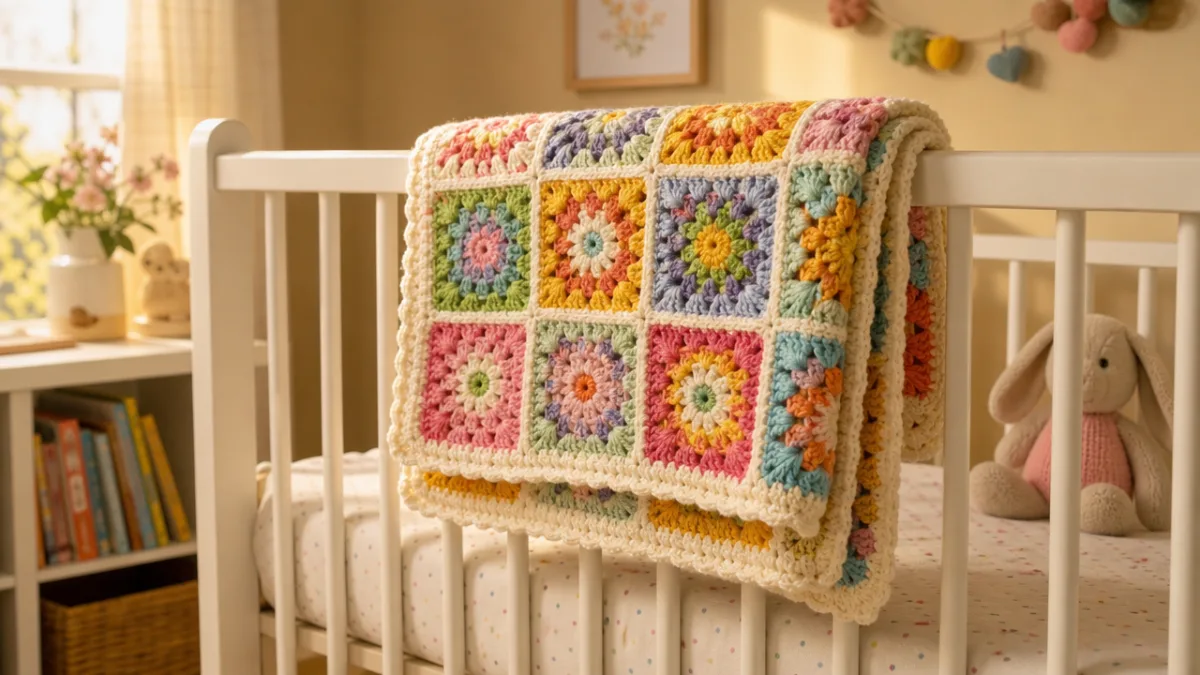
Step-by-Step Guide to Making Your First Granny Square Blanket
Before casting on a single stitch, it pays to do a small amount of planning that will make the entire project run more smoothly. Begin by deciding on the finished size of your blanket — a standard baby blanket measures approximately 36 by 36 inches, though you may prefer a slightly longer receiving blanket at around 36 by 45 inches. Calculate how many squares you will need based on your chosen square size and arrange a rough color layout on paper or using a digital tool. Having a clear plan prevents the frustrating experience of running out of a specific yarn color halfway through, and it gives you a satisfying visual roadmap to follow as you work.
To make a basic granny square, begin by creating a magic ring or chaining four stitches and joining them into a ring with a slip stitch. Work three double crochets into the ring, then chain two to create a corner space. Continue working clusters of three double crochets separated by chain-two corner spaces until you have four clusters and four corners. Slip stitch to close the round and then continue building outward, with each new round adding one additional cluster of double crochets along each side and maintaining the chain-two corner spaces. The square grows quickly and satisfyingly with each successive round, which is part of what makes this pattern so deeply addictive for crafters of all experience levels.
Once you have crocheted all of your individual squares, block them before joining. Blocking is the process of lightly wetting or steaming each square and then gently pinning it into the correct shape to dry. This step is particularly important for natural fiber yarns like cotton and wool, which can block dramatically and produce a beautifully even, professional-looking result. Even acrylic yarns benefit from light blocking, which relaxes the fiber slightly and helps each square lie flat. Blocking all squares to exactly the same dimensions ensures that your joining process will go smoothly and that the finished blanket will lie perfectly flat rather than rippling or pulling at the seams.
After joining all squares using your preferred method, finish the blanket with an even border around the entire perimeter. A simple border of single crochet worked all the way around creates a clean, tidy edge. For something more decorative, a shell stitch border adds a lovely scalloped edge, while a picot border introduces charming little points that frame the blanket beautifully. Work the border in a color that ties the whole composition together — usually the neutral or the most prominent color used across the squares. Take special care to work extra stitches into the corners of your border to ensure they sit neatly and do not pull inward, which is a common finishing issue that is easily avoided with a little extra attention.
Caring for Handmade Crochet Baby Blankets
A carefully made granny square baby blanket deserves care instructions that will help it last as long as possible, ideally for generations. The care requirements vary significantly depending on the fiber content of the yarn used, so attaching a small handwritten or printed tag to the blanket when gifting it is a wonderfully practical gesture. For acrylic yarns, machine washing on a gentle cycle in cool or warm water is typically perfectly safe, and most acrylic blankets can even be tumble dried on a low heat setting. Natural fibers like cotton and wool require more gentle handling, usually calling for hand washing or a delicate machine cycle and air drying flat to prevent stretching or felting.
Storage is another consideration worth discussing with the recipient of a handmade blanket. When a baby blanket is not in active use, it should be stored in a clean, dry location away from direct sunlight, which can cause yarn colors to fade over time. Cedar blocks or lavender sachets placed nearby are natural, baby-safe options for deterring moths, which are particularly drawn to natural fiber yarns. Folding the blanket loosely rather than tightly is preferable for long-term storage, as tight folding can stress the yarn fibers along the crease lines and eventually cause weak spots to develop in the fabric over years of storage.
Occasionally, a granny square baby blanket will develop a small snag or loose stitch over the course of its life, particularly once a baby becomes a mobile, curious toddler with little hands that love to pull and explore textures. These small repairs are almost always straightforward for anyone with basic crochet skills. A loose end can be worked back into the fabric with a tapestry needle, and a dropped stitch can usually be picked back up and secured without needing to undo any significant amount of work. Teaching the parent to perform minor repairs — or simply offering to do them yourself — extends the life of your handmade gift and reinforces the sense of ongoing connection that a handmade item uniquely carries.
- Always check yarn labels for specific washing and drying instructions before laundering.
- Use a gentle, baby-safe detergent free from harsh fragrances or dyes.
- Wash on a gentle or delicate cycle in cool water to preserve color and fiber integrity.
- Dry flat or on low heat depending on fiber content to prevent stretching or shrinkage.
- Store loosely folded in a clean, dry, dark space away from sunlight and moisture.
- Repair loose ends or dropped stitches promptly to prevent small issues from becoming larger ones.
Making Granny Square Blankets as Meaningful Gifts
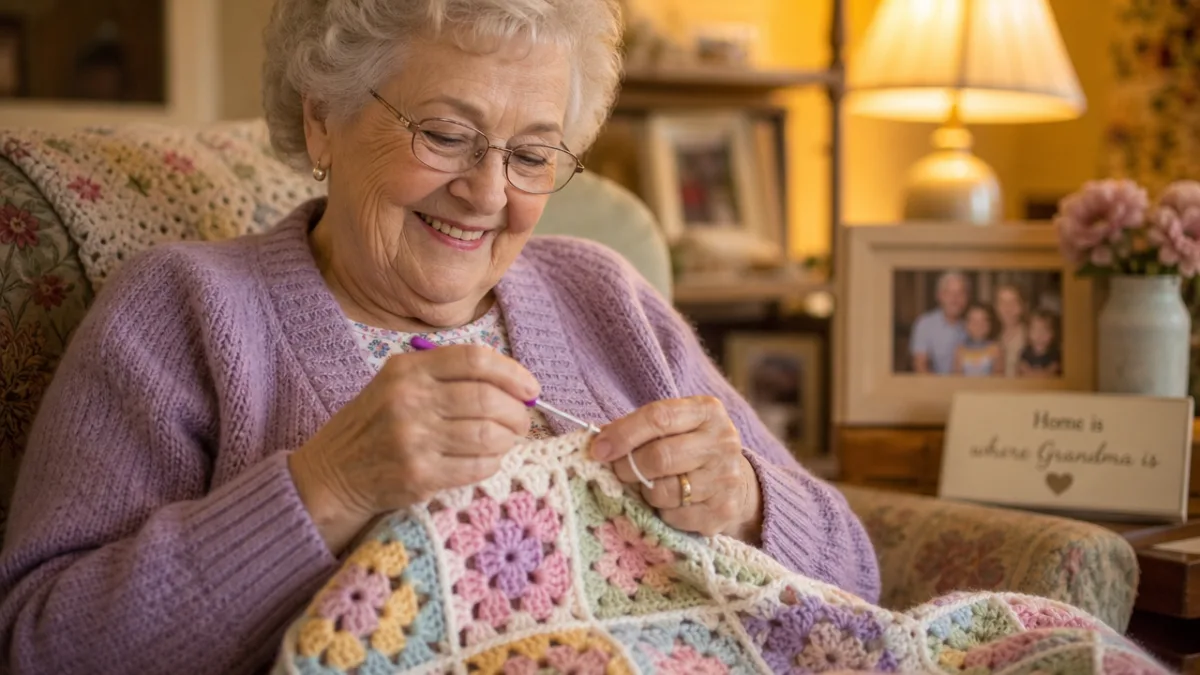
There is perhaps no more thoughtful gift for a new baby or a baby shower than a handmade crochet blanket, and the granny square style carries with it a particular sweetness and sentimentality that is hard to match. When you choose to give such a gift, you are sharing far more than an object — you are sharing time, skill, thought, and genuine affection. Many recipients of handmade baby blankets report keeping them long after babyhood has passed, storing them carefully as precious reminders of the love that surrounded a child’s earliest days. The granny square blanket, with its associations with grandmotherly warmth and domestic tradition, carries this emotional weight especially well.
Personalizing a granny square blanket for a specific baby elevates it from a beautiful handmade item to a true keepsake. Consider selecting colors that coordinate with the nursery the parents have already designed, or incorporating the family’s favorite color alongside a neutral. Some crafters add an embroidered or crocheted initial to one corner of the finished blanket, a small detail that makes the gift feel uniquely commissioned for a specific child. Others incorporate a meaningful date or a small decorative motif — a tiny crocheted star, a simple embroidered flower — that adds a narrative layer of personal meaning to the piece. These small touches require very little additional effort but make an enormous difference in how the gift is received and remembered.
Presenting a handmade baby blanket with care and intention enhances the gifting experience considerably. Folding the blanket neatly and tying it with a soft ribbon, tucking in a handwritten card that explains the colors you chose and why, or including a small card with the care instructions all communicate that this gift was made with full presence and love. Some crafters even include a small skein of the same yarn so that the parent can make minor repairs themselves in the years ahead. These thoughtful accompaniments transform the gift from a lovely object into a complete, cohesive experience — and they are a reflection of the same careful attention to detail that went into crafting the blanket itself.








What do you think?
It is nice to know your opinion. Leave a comment.