










How to Make a Bouncy Ball: The Ultimate DIY Guide for Fun Science at Home
There is something undeniably satisfying about watching a small, colorful ball ricochet off the floor and spring back into your hand. Bouncy balls have been a beloved toy for generations, captivating children and adults alike with their simple, elastic magic. What many people do not realize is that making your own bouncy ball at home is not only possible but surprisingly straightforward, requiring just a handful of inexpensive ingredients that you can find at most craft or grocery stores. This DIY project doubles as a fantastic science experiment, making it a perfect activity for rainy afternoons, school projects, or family bonding time.
The science behind a bouncy ball is rooted in polymer chemistry. When certain ingredients are combined, they form long, tangled chains of molecules called polymers, which give the ball its rubbery, elastic properties. The moment the ball hits a hard surface, those polymer chains compress and then rapidly expand, releasing stored energy in the form of a bounce. Understanding this simple concept makes the act of creating your own ball feel even more rewarding, because you are not just crafting a toy — you are witnessing chemistry in action right in your own kitchen or classroom.
This guide will walk you through everything you need to know to make your own bouncy balls at home, from gathering materials to troubleshooting common problems. Whether you are a parent looking for an engaging weekend project, a teacher searching for a hands-on science demonstration, or simply a curious maker who loves DIY crafts, this article has you covered with detailed instructions, helpful tips, and creative ideas for customization. By the end, you will have a collection of colorful, satisfying bouncy balls and a deeper appreciation for the everyday science that makes them work.
Understanding the Science Behind Bouncy Balls
Before diving into the actual making process, it is worth taking a moment to understand why bouncy balls behave the way they do. The key lies in the concept of elasticity, which refers to a material’s ability to return to its original shape after being deformed by an external force. When you drop a bouncy ball, the force of impact temporarily distorts its shape, compressing the polymer chains inside. These chains, being highly elastic, push back against that compression and rapidly return to their natural state, propelling the ball upward with a force nearly equal to the one that brought it down.
The primary material responsible for this behavior is a polymer, specifically a cross-linked polymer network. In the most common DIY recipe, borax acts as the cross-linking agent, creating chemical bridges between individual polyvinyl alcohol (PVA) molecules found in white school glue. These bridges form a three-dimensional network that is flexible yet resilient. The more tightly these bridges are formed, the firmer and bouncier the resulting ball will be. Adjusting the ratio of borax to glue is one of the easiest ways to experiment with the properties of your finished product.
Temperature also plays a role in how your bouncy ball performs. Like most polymer materials, DIY bouncy balls tend to be slightly firmer and bouncier in cooler environments and a bit softer and more pliable when warm. This is because heat increases the kinetic energy of the polymer chains, making them more mobile and less tightly wound. Storing your finished balls in a cool, dry place will help them maintain their optimal bouncing properties over time. Understanding these variables gives you a scientific framework for tweaking your recipe and achieving the exact bounce you are after.
Gathering Your Materials and Tools
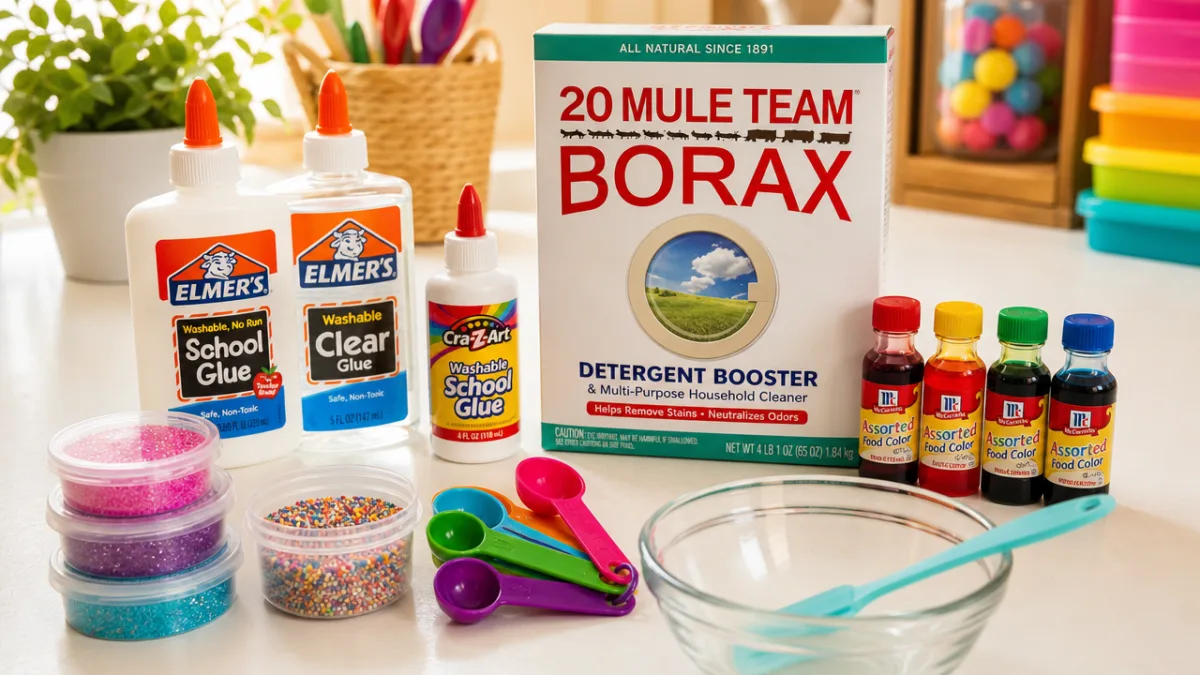
One of the greatest advantages of this DIY project is that the materials are inexpensive, widely available, and safe for children when used with basic adult supervision. The core ingredients for the most popular bouncy ball recipe are white school glue (such as Elmer’s), borax powder, warm water, cornstarch, and food coloring of your choice. Each of these ingredients plays a specific role in the final product, and substituting or omitting them can significantly affect the texture and performance of your ball, so it is best to follow the recipe closely on your first attempt.
In terms of tools and equipment, you will need a few small plastic or glass bowls for mixing, a measuring spoon set, a craft stick or plastic spoon for stirring, and a pair of disposable gloves to protect your hands from the borax solution, which can cause skin irritation with prolonged contact. You may also want to have some paper towels on hand for cleanup and a flat, clean surface covered with parchment paper or a silicone mat where you can shape your balls without them sticking. Having all of your materials ready before you begin will make the process smoother and more enjoyable.
Here is a complete list of what you will need for a standard batch of two to three bouncy balls:
- 1 tablespoon white school glue (PVA glue)
- 1 teaspoon borax powder
- 1 tablespoon cornstarch
- 3 tablespoons warm water (divided)
- Food coloring (gel or liquid, any color)
- 2 small mixing bowls
- Craft sticks or plastic spoons
- Disposable gloves
- Parchment paper or a silicone mat
Optional additions include glitter for a sparkly effect, glow-in-the-dark powder for a novelty twist, or fine sand mixed into the glue to add weight and alter the bounce dynamics. These extras can make the project even more exciting, especially for older children who enjoy experimenting with variables. Just keep in mind that adding too much of any extra ingredient can disrupt the chemical balance of the polymer network and result in a ball that is crumbly, too soft, or uneven in texture.
Step-by-Step Instructions for Making Your Bouncy Ball
Begin by preparing your borax solution in the first small bowl. Combine one teaspoon of borax powder with two tablespoons of warm water and stir thoroughly until the borax is completely dissolved. The warm water helps the borax dissolve more quickly and evenly, which is important for ensuring a smooth, consistent reaction when it meets the glue. Set this bowl aside once the mixture is clear and well-combined. If you notice any undissolved granules, continue stirring — undissolved borax can create uneven lumps in your finished ball.
In your second bowl, combine the white school glue with one tablespoon of warm water and add your chosen food coloring. Start with just a few drops and mix thoroughly before adding more, as food coloring can be quite potent and a little goes a long way. Stir the glue mixture until the color is fully incorporated and the consistency is smooth and uniform. This is also the stage where you would add glitter or any other optional additives. The glue mixture should look like tinted, slightly runny white glue at this point.
Now comes the exciting chemical reaction. Add the cornstarch directly to the glue mixture and stir it in well. Cornstarch helps to bind the mixture and gives the ball additional structure and firmness. Once the cornstarch is mixed in, slowly pour the borax solution into the glue mixture, one small splash at a time, stirring constantly as you go. You will almost immediately notice the mixture beginning to thicken, clump, and pull away from the sides of the bowl. This is the polymer network forming in real time — a genuinely fascinating thing to witness.
As the mixture becomes too thick to stir effectively, put on your disposable gloves and begin working the material with your hands directly in the bowl. It will feel sticky and lumpy at first, but as you knead and press it, the texture will become smoother and more cohesive. Once the mixture holds together without sticking to your gloved hands, remove it from the bowl and begin rolling it between your palms in a smooth, circular motion on your parchment-covered surface. Apply firm, steady pressure to compact the ball and eliminate any air pockets or irregularities in its surface.
Continue rolling until you have a smooth, round ball of the size you desire. Most homemade bouncy balls work best when they are roughly the size of a marble or a small superball — between one and two centimeters in diameter. Larger balls can be made, but they require more material and more working time to achieve a smooth, even surface. Once your ball is shaped to your satisfaction, set it on the parchment paper and allow it to rest for at least fifteen minutes before testing it. This resting period allows the polymer network to fully stabilize and gives the ball its final bouncy character.
Tips for Getting the Perfect Bounce
Achieving a reliably bouncy result requires attention to a few key variables, the most important of which is the ratio of borax to glue. Too little borax and the ball will remain sticky and soft, more like a blob of slime than a firm ball. Too much borax and the ball will become stiff, brittle, and prone to crumbling rather than bouncing. The recipe provided in this guide has been calibrated for a good general-purpose bounce, but feel free to experiment with small adjustments once you have completed a successful first batch and have a feel for how the chemistry behaves.
The kneading and rolling phase is also critical. Many first-time makers rush this step, resulting in a ball with internal air pockets or an uneven surface that causes it to bounce erratically or roll in unpredictable directions. Take your time working the material thoroughly before you begin shaping. If the ball feels too sticky during kneading, resist the urge to add more borax solution directly. Instead, lightly dust your gloved hands with a pinch of cornstarch, which will reduce stickiness without disrupting the chemical balance already established in the mixture.
Proper storage is essential for maintaining your bouncy ball’s performance over time. Because these balls are made with water-based ingredients, they can dry out and become hard or brittle if left exposed to air for extended periods. Store your finished balls in a small, airtight container or a zip-lock bag when they are not in use. A few drops of water added to the storage bag can help maintain moisture levels if you live in a particularly dry climate. Under these conditions, a well-made DIY bouncy ball can remain in good condition for several weeks to a couple of months.
- Always use warm water to dissolve borax for a smoother solution.
- Add food coloring before mixing in the borax to achieve even color distribution.
- Knead the mixture thoroughly before shaping to prevent air pockets.
- Roll the ball on a hard, flat surface rather than just between your hands for a rounder shape.
- Let the ball rest for at least fifteen minutes before bouncing it for the first time.
- Store in an airtight container to prevent drying out.

Creative Variations and Customization Ideas
Once you have mastered the basic recipe, the real fun begins with customization. One of the most popular variations is the galaxy-swirl bouncy ball, made by incorporating two or three colors of food coloring into the glue mixture without fully blending them together. When you knead the mixture, the colors marble and swirl together in a way that looks stunning in a transparent or translucent ball. To achieve this effect, add your colors in separate drops to different sections of the glue-cornstarch mixture and fold rather than stir when combining with the borax solution.
Glitter bouncy balls are another crowd favorite, especially among younger crafters. Ultra-fine cosmetic or craft glitter can be mixed directly into the glue and cornstarch stage for a sparkling effect that catches the light beautifully as the ball bounces. For the most dazzling result, use iridescent or holographic glitter, which shifts color depending on the viewing angle. Keep in mind that adding too much glitter — more than half a teaspoon per batch — can slightly compromise the structural integrity of the ball, so use a light hand and prioritize even distribution throughout the mixture.
For a fun nighttime activity, consider making glow-in-the-dark bouncy balls by incorporating phosphorescent powder, which is available at most craft stores, into the glue mixture. These balls absorb light when exposed to a lamp or flashlight and then emit a soft green or blue glow in the dark. This variation is particularly popular as a party favor or science fair demonstration. The phosphorescent powder does not affect the chemical reaction between the borax and glue, so the bounce quality remains consistent with the standard recipe while adding an impressive visual element.
Safety Considerations and Best Practices
While the ingredients used in this DIY bouncy ball recipe are generally considered safe for craft use, there are a few important safety considerations to keep in mind, particularly when working with children. Borax, the cross-linking agent in this recipe, is a naturally occurring mineral compound that is commonly used in laundry products and cleaning agents. However, it can cause skin irritation with prolonged or repeated contact and should not be ingested under any circumstances. Always have children wash their hands thoroughly after completing this project and ensure that the workspace is well-ventilated during the mixing process.
Disposable gloves are strongly recommended for anyone with sensitive skin, eczema, or known sensitivities to borax or glue. If gloves are not available, minimize direct contact with the borax solution during the mixing stage and begin kneading only once the mixture has largely coagulated and become less liquid. For very young children under the age of five, this project is best enjoyed as a supervised observation activity rather than a hands-on crafting experience, as the risk of accidental ingestion of materials is higher in this age group. The finished bouncy ball, once fully set and stable, is safe for children of all ages to play with under normal supervision.
It is also worth noting that homemade bouncy balls, while genuinely springy and fun, will not achieve quite the same bounce height or consistency as commercially manufactured rubber balls. Industrial bouncy balls are made with precision-engineered materials and processes that are difficult to replicate at home. Managing expectations appropriately — especially with enthusiastic young crafters — ensures that the experience remains positive and rewarding. Frame the project as a science experiment and a creative adventure rather than an attempt to produce a perfect commercial product, and everyone involved is sure to come away delighted with the result.
Turning Your Bouncy Ball Project Into a Learning Experience
The DIY bouncy ball project is an ideal vehicle for teaching a wide range of scientific concepts in a hands-on, engaging way. For younger children, the project introduces basic ideas about states of matter, asking them to observe how liquid glue transforms into a solid, elastic ball through a chemical reaction. Encouraging kids to describe what they see, feel, and notice at each stage builds observational skills and scientific vocabulary in a natural, pressure-free context. Simple questions like “Why do you think the mixture is getting thicker?” or “What happens when you squeeze the ball?” prompt critical thinking without requiring any formal scientific background.
Older students and teenagers can explore the project at a deeper level by investigating the chemistry of polymers, cross-linking, and viscoelasticity. A simple experiment involves making three batches of bouncy balls with different ratios of borax — one with less than the standard amount, one with the standard amount, and one with more. Students can then measure and compare the bounce height of each ball from the same drop height, record their observations, and draw conclusions about the relationship between cross-linking density and elastic performance. This kind of structured experimentation aligns with the scientific method and provides real data for discussion and analysis.
The project can also connect to broader conversations about materials science and the role of polymers in everyday life. Natural rubber, synthetic rubbers used in tires, the plastic in water bottles, and the elastic in clothing waistbands are all polymer materials whose properties are determined by their molecular structure. By making a bouncy ball, students gain a tangible reference point for understanding an entire class of materials that shapes modern life in countless ways. Extending the project into these broader conversations turns a fun afternoon activity into a meaningful educational experience that resonates long after the crafting session is over.

Frequently Asked Questions About DIY Bouncy Balls
One of the most common questions people have about this project is whether it is possible to make a bouncy ball without borax, due to concerns about its safety or simply because it is not readily available in all locations. The answer is yes — there are alternative recipes that use saline solution (contact lens solution) combined with baking soda instead of borax to achieve a similar cross-linking effect. These recipes tend to produce a slightly softer, more pliable ball, but the bounce is still satisfying and the safety profile is considered even more child-friendly. The proportions and method are similar to the borax recipe, making it an easy substitution to try.
Another frequently asked question concerns why the ball sometimes falls apart or crumbles shortly after being made. This is almost always the result of too much borax in the mixture, which creates an overly rigid polymer network that lacks the flexibility needed to withstand the impact of bouncing. If your ball is crumbling, try making a new batch with slightly less borax solution — even reducing by a quarter of a teaspoon can make a noticeable difference. Alternatively, a ball that is still slightly soft and tacky after rolling can benefit from an additional few minutes of kneading, which helps the polymer chains organize more uniformly throughout the material.
People also frequently ask how long homemade bouncy balls last and whether they can be repaired if they crack or flatten over time. The honest answer is that DIY bouncy balls have a more limited lifespan than commercial ones — typically a few weeks to a couple of months with proper storage. If a ball begins to flatten or lose its bounce, it may simply have dried out, and soaking it briefly in a small amount of warm water and then kneading it gently can sometimes restore some of its original elasticity. However, if it has cracked or broken apart, the most practical solution is simply to make a fresh batch — a task that, with practice, takes only about fifteen to twenty minutes from start to finish.








What do you think?
It is nice to know your opinion. Leave a comment.