










The Complete Guide to Knickers and Pants: History, Style, and Modern Fashion
The Fascinating History of Knickers and Pants
The history of knickers and pants goes back centuries, threading its way through cultural upheavals, social revolutions, and the constantly shifting language of fashion. What we call “knickers” today has meant completely different things to different generations and different parts of the world. In Britain, knickers are women’s underwear. In the United States, the word historically described a style of loose trousers gathered at the knee. Getting to grips with that linguistic and sartorial history gives you a much richer appreciation for what you’re actually wearing.
Knickerbockers — the full original name that gave us “knickers” — first showed up prominently in the early nineteenth century. They got a big boost from Washington Irving’s satirical 1809 book “A History of New York,” where the fictional Dutch narrator Diedrich Knickerbocker wore exactly that style of trouser. Cyclists, golfers, and sportsmen throughout the Victorian and Edwardian eras quickly latched onto the look, because the gathered hem gave you so much more freedom of movement than the long trousers everyone else was wearing. Practical and stylish — a winning combination.
By the early twentieth century, knickers had become firmly tied to boyhood and school uniforms in Britain, while women’s undergarment makers started borrowing the name for something entirely different. It’s a neat example of how language drifts right along with fashion. Through the 1920s and into the postwar years, the underwear meaning gradually crowded out the trouser meaning in everyday British speech, while the trouser style itself morphed into what we now recognize as the cropped, wide-leg, and tapered pants that turn up on runways every season.
Understanding Different Styles: From Bloomers to Modern Silhouettes
Knickers and pants cover an astonishingly wide range of silhouettes, fabrics, and fits. From the billowy bloomers of the late Victorian era — which were themselves a feminist statement, letting women move more freely — to the sharp, tailored wide-leg trousers of today’s power dressing moment, the story of these garments is really a story of women claiming space, both physically and socially. Every decade produced a new silhouette that reflected what was happening in the culture around it, which is why trousers have always carried a certain political charge.
Some styles have stood the test of time remarkably well: the classic straight-leg pant, the wide-leg or palazzo trouser, the cropped knicker-style pant gathered or tapered at the calf, the slim cigarette trouser, and the high-waisted culotte. Each one serves a different purpose. Wide-leg trousers create a long, dramatic line that reads beautifully in formal or business settings, while cropped knicker-length pants have a playful, retro quality that pairs perfectly with loafers or ankle boots. Knowing the difference genuinely helps when you’re trying to build a wardrobe that actually works for your life.
The fashion industry has really taken to the knicker pant as its own distinct category, with designers from Stella McCartney to Zimmermann turning out elevated versions in silk, linen, and technical fabrics. These contemporary takes keep the gathered or tapered lower leg that defines the original silhouette, while updating the proportions for a modern body. High waistlines, wide legs that taper dramatically at the knee, and seriously luxurious fabrics have transformed what started as a utilitarian garment into something you genuinely look forward to wearing.

How to Choose the Right Fit for Your Body Type
Finding the right trouser or knicker-style pant for your body is honestly one of the most transformative things you can do for your wardrobe. The core idea is balance — you’re trying to create a silhouette that feels both comfortable and confident. If you have a pear-shaped figure, wide-leg trousers that skim over your hips and thighs without clinging can beautifully balance things out, especially when you pair them with a fitted top or structured blazer that draws the eye upward.
If you have a more athletic or rectangular figure, high-waisted styles with a flared or wide-leg cut are great for creating the illusion of curves, adding volume and movement around the hips and thighs. On the flip side, if you’re more of an hourglass shape, tapered or straight-leg cuts that follow your natural line without overwhelming it tend to look stunning. The knicker style specifically, with its gathered or elasticated hem, works especially well on leaner frames or those who carry more weight in the upper half, since it draws the eye downward and creates visual interest at the calf.
Beyond overall proportions, rise is one of those fit details that makes an enormous difference. Mid-rise trousers are the most universally flattering — they sit comfortably at the natural waist without cutting into your torso. High-rise styles have exploded in popularity because they make legs look longer and create a smooth, clean line through the abdomen. Low-rise cuts, which had their big moment in the early 2000s, are creeping back into fashion among younger wearers, though they do require a bit more thought about both body type and occasion before you commit.
Fabric Guide: Choosing the Right Material for Every Occasion
Fabric matters just as much as cut and fit — maybe even more than people realize. The cloth you choose determines how a garment drapes on your body, how comfortable it feels after a full day of wearing, how well it holds up to washing and regular use, and whether it’s really appropriate for what you need it for. A beautifully cut pair of trousers in the wrong fabric can look and feel completely off, while a simpler silhouette in a gorgeous cloth can feel like a small luxury every single time you put it on.
For formal and business occasions, worsted wool and wool blends are still the gold standard. They hold a crease beautifully, resist wrinkling through long days, and breathe in a way that synthetic fabrics just can’t match. Linen is the go-to for warm-weather dressing — impossibly breathable, with a relaxed elegance that works just as well at a beach wedding as it does at a summer lunch. Its tendency to wrinkle, once considered a downside, is now embraced as part of its character. It’s supposed to look like that.
For more casual or active contexts, cotton twill, denim, and ponte knit offer durability and ease without much fuss. Silk and satin-finish fabrics bring a real sense of occasion to evening dressing, catching the light beautifully and draping with effortless fluidity. Technical stretch fabrics — four-way stretch nylon blends, elastane-infused weaves — have become genuinely sophisticated, giving you the polished look of traditional suiting with the comfort of activewear. When you’re choosing a fabric, think about where you’re going, what your climate is like, and what you actually enjoy wearing day to day.
- Wool and Wool Blends: Ideal for formal and business settings, excellent crease retention, naturally temperature-regulating, and long-lasting with proper care.
- Linen: Perfect for warm climates and casual or resort dressing, highly breathable, and celebrated for its relaxed, natural texture.
- Cotton Twill: Versatile and durable, suits both casual and smart-casual occasions, easy to launder, and widely available at all price points.
- Silk and Satin: Luxurious choice for evening and occasion wear, drapes beautifully, and elevates even a simple cut into something special.
- Technical Stretch Fabrics: Best for travel, long days, or any lifestyle requiring maximum comfort without sacrificing a polished appearance.

Styling Knickers and Pants: Building Complete Outfits
The real joy of fashion is in how you put pieces together, and knickers and pants are genuinely one of the most versatile foundations you can build an outfit around. A pair of wide-leg linen trousers, for instance, can go casual with a tucked-in linen shirt for an easy daytime look, dress up with a silk blouse and heeled mules for an evening out, or go completely relaxed with an oversized knit and clean white sneakers on the weekend. That kind of range is exactly why a well-chosen trouser is considered a cornerstone of any capsule wardrobe.
Proportions are really the guiding principle here. A wide-leg or voluminous trouser calls for something more fitted and streamlined on top — a tucked-in shirt, a slim turtleneck, a cropped blazer — to keep the overall look balanced. A slim or tapered trouser, on the other hand, can handle more volume up top and looks great with oversized blazers, flowing blouses, or chunky knitwear. When you’re wearing the cropped knicker style, the exposed ankle naturally becomes a focal point, which makes your footwear choice especially important — loafers, brogues, pointed flats, and ankle boots all land really well with this silhouette.
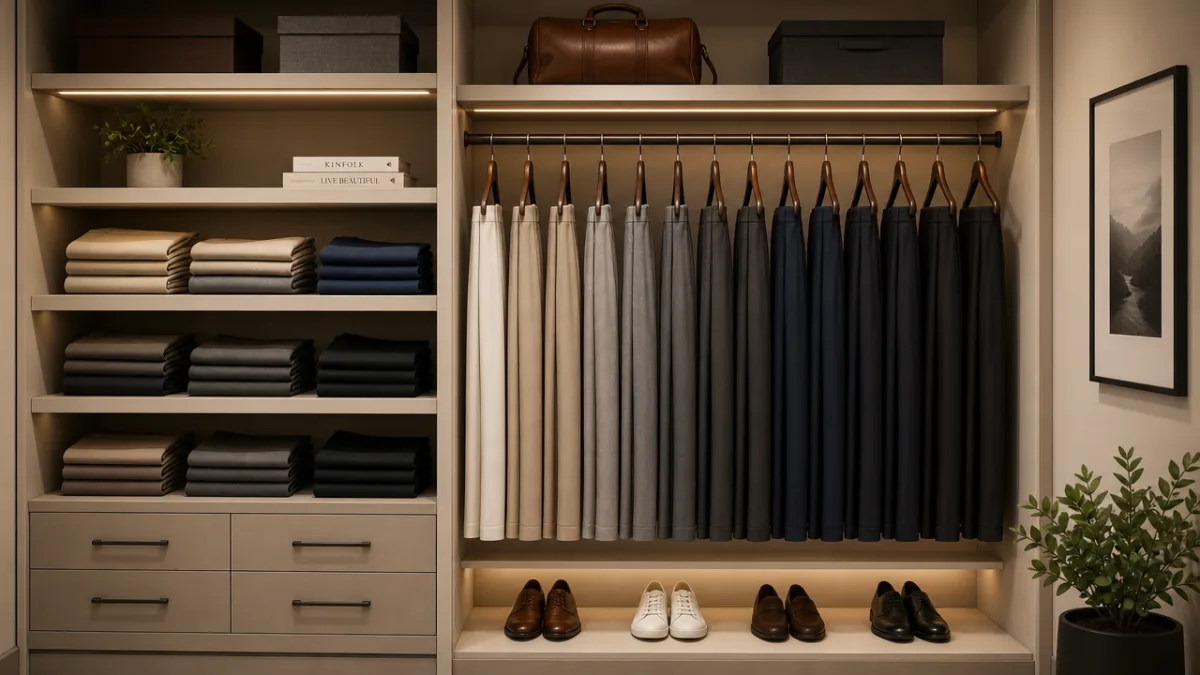
Color and pattern are just as important as proportion. Neutral tones — camel, ivory, navy, charcoal, black — are the backbone of a versatile trouser wardrobe because they go with practically everything. Once you’ve got your neutrals sorted, adding one or two pairs in a bolder color or a fun print can completely change the personality of your wardrobe without a huge investment. Checks, plaids, wide stripes, and floral prints are all perennially great trouser options that add real character, especially when you balance them with simpler tops and accessories.
Care, Maintenance, and Longevity of Your Trousers
Buying well-made trousers is only half the story — how you look after them is what determines whether they last years or fall apart after a season. The single most important first step with any new garment is reading the care label and actually following what it says. It’s tempting to throw everything into a warm machine wash for the sake of convenience, but that approach degrades fabric quality faster than almost anything else: colors fade, fibers shrink, and the shape distorts, especially in natural materials like wool, linen, and silk.
Wool trousers do really well when you hang them after each wear and let any wrinkles drop out naturally before putting them away. They rarely need a full wash more than a few times a season — wool naturally resists odor and repels light soiling, so spot cleaning between wears usually handles minor marks without any drama. When you do need to launder them properly, dry cleaning is the safest bet for structured wool trousers, though some lighter wool and wool-blend knits can handle a gentle cold machine wash in a mesh bag. Always reshape them and lay flat to dry so they don’t stretch out of shape.
Linen and cotton trousers are much more forgiving — they machine wash well at the right temperatures, though you should pull them out promptly and hang or lay flat to dry to keep wrinkling to a minimum. Ironing linen while it’s still slightly damp gives you the crispest, most polished result. For storage, fold your trousers along their natural crease and keep them somewhere cool, dry, and away from direct light, which fades fabric over time. If you’re storing wool, moths are a real concern, so a few cedar blocks or lavender sachets in your wardrobe give you natural, pleasant-smelling protection.
- Always read and follow the care label instructions for each individual garment before washing or storing.
- Hang trousers after wearing to allow creases and odors to dissipate naturally before putting them away.
- Spot clean minor marks on wool and structured fabrics rather than laundering the whole garment unnecessarily.
- Dry clean structured wool trousers when full laundering is required to preserve shape and finish.
- Iron linen and cotton trousers while slightly damp for the crispest, most professional results.
- Store all trousers folded along the natural crease in a cool, dry, dark location to preserve color and shape.
- Use cedar blocks or lavender sachets to naturally protect wool garments from moth damage during storage.
Sustainable and Ethical Choices in Trouser Fashion
As more people have woken up to the environmental cost of fashion, sustainability has become a real factor in how many of us shop for trousers and everything else. The clothing industry is one of the world’s biggest contributors to pollution, water use, and carbon emissions, and fast fashion trousers — especially those made from synthetic materials — are a meaningful part of that problem. Buying fewer, better-made pieces from brands that genuinely care about how their clothes are produced is one of the most effective things you can do as an individual consumer.
When you’re assessing a brand’s sustainability credentials, look for supply chain transparency, recognized certifications like GOTS (Global Organic Textile Standard) for organic fibers, Fair Trade certification for ethical labor practices, and B Corp status as a sign of broader environmental and social commitment. Brands like Eileen Fisher, Patagonia, Thought Clothing, and Everlane have built real reputations for transparency and ethical production — though it’s always worth digging into the specifics yourself, since sustainability claims in fashion don’t always hold up under scrutiny.
Beyond buying new, the secondhand and vintage market is one of the most sustainable routes to a beautiful trouser wardrobe — and often a more affordable one. Platforms like Vestiaire Collective, ThredUp, Depop, and your local vintage shops are full of high-quality trousers from heritage brands and designers at a fraction of what they originally cost. Vintage knicker-style pants and wide-leg trousers in particular have become genuinely sought-after, because buyers have figured out that pieces from the 1970s, 1980s, and 1990s were often made to a quality standard that’s hard to find at comparable modern price points — and that their distinctive character adds something no new pair can quite replicate.








What do you think?
It is nice to know your opinion. Leave a comment.