










25 Smart Ways To Make Dog Beds By Using Tires: A Complete Guide
Why Upcycled Tire Dog Beds Are a Brilliant Idea
Hundreds of millions of tires get thrown away every year, and honestly, nobody really knows what to do with them. They pile up in landfills, sit collecting dust in garages, and generally become someone else’s problem. But a growing number of pet owners and DIY fans have stumbled onto a pretty great solution: turning those old tires into cozy, long-lasting beds for their dogs. It’s one of those ideas that’s good for the environment, easy on your wallet, and — most importantly — your dog will absolutely love it.
What makes tires such a surprisingly good starting point for a dog bed is how tough they already are. They’re engineered to handle extreme pressure, wild temperature swings, and constant punishment — and all of that toughness carries right over into a pet bed that’ll hold up for years. While your typical store-bought dog bed might go flat or fall apart after a few months of enthusiastic use, a tire-based bed just keeps its shape. That natural circular rim also cradles a dog’s body in a way that feels snug and secure, which is exactly what most dogs are looking for when they curl up for a nap.
There’s also a pretty compelling money argument here. A good commercial dog bed for a medium or large breed can run anywhere from fifty bucks to several hundred dollars, and you’ll likely need to replace it every year or two. A tire dog bed, on the other hand, can cost almost nothing — many auto shops and recycling centers will hand you a used tire for free, or charge you next to nothing for it. Throw in an inexpensive cushion and some fabric you might already have around the house, and you’re looking at a genuinely impressive result for very little spend.
Essential Tools and Materials You Will Need
Before you dive in, it’s worth taking a few minutes to get everything together. Nothing derails a fun project faster than realizing mid-build that you’re missing something important. The good news is that most of what you need is probably already in your garage, and anything else is easy to pick up at a hardware store without spending much at all.
When it comes to choosing a tire, size really does matter. A standard passenger car tire is a great fit for small to medium breeds, while a bigger truck or SUV tire makes more sense for larger dogs like Labs, German Shepherds, or Goldens. Before you do anything else, give the inside of the tire a careful check for any sharp wire along the inner bead — just run your hand along it slowly to feel for anything poking out. It’s also a good idea to give the whole thing a thorough pressure-wash before you start painting or adding cushioning.
Beyond the tire itself, here’s what you’ll want to have on hand: exterior-grade spray paint or chalk paint in whatever color you like, a wire brush for prepping the surface, some 120-grit sandpaper, a strong construction adhesive or heavy-duty glue, fabric for lining the inside, foam or a pre-cut cushion insert that fits the tire’s inner opening, and any decorative extras you’re drawn to, like rope, twine, or stencils. If your design involves cutting the tire into a different shape — like a lounge-style or flat-panel bed — you’ll also need a jigsaw or oscillating tool.
The Top Design Styles for Tire Dog Beds
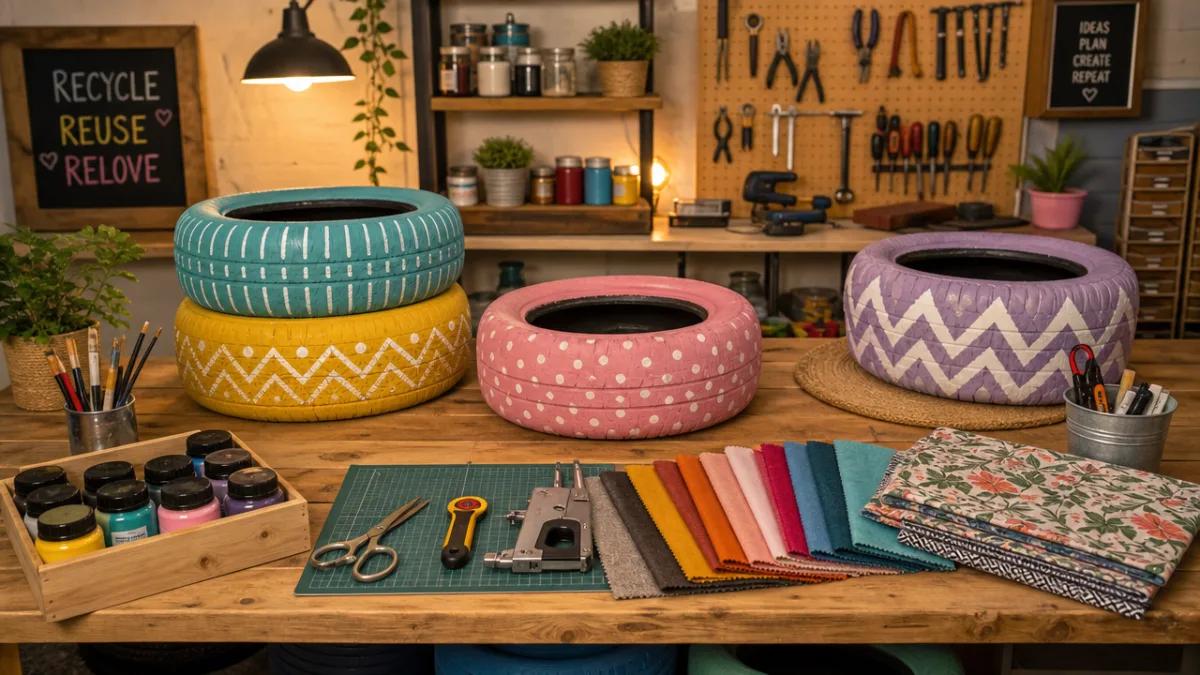
One of the best things about this project is that there’s no single “right” way to do it. The most straightforward approach is the classic upright circular bed — you just lay the tire flat, drop a cushion into the center opening, and you’re basically done. It looks a lot like a traditional round dog bed, just with a much sturdier frame. Leave the rubber natural for an industrial look, or paint it in a bold color to give the room a fun pop. Either way, it works.
If your dog is more of a stretch-out sleeper than a curler, a flat-panel tire bed might suit them better. This one involves cutting along one side of the tire and opening it up into a flat or slightly curved surface, which you then line with thick foam and fabric. It works especially well for bigger breeds, and if you add a set of wooden legs, the whole thing takes on a really nice mid-century modern look — the kind of thing that wouldn’t seem out of place in a well-designed living room. A wooden frame around the edges makes it look even more intentional and polished.
Then there’s the stacked tire bed, where you glue or bolt two or three same-sized tires on top of each other to create more height. This is a particularly thoughtful option for older dogs or pups with joint problems, since the extra elevation makes getting in and out much easier. You can also use the space between the tire layers as built-in storage for leashes, toys, or grooming supplies — a clever little bonus. Finish the outside with rope wrapping or a coat of glossy paint and it ends up looking like something you’d find in a boutique pet shop.
Step-by-Step Instructions for the Classic Round Tire Dog Bed
The classic round tire bed is the perfect starting point if you’re new to upcycling projects — it’s approachable, forgiving, and the results are genuinely satisfying. Start by setting your clean, dry tire on a flat, protected surface. Scrub the outer surface firmly with a wire brush to knock off any loose rubber, dirt, or grime, then go over it lightly with 120-grit sandpaper so the paint has something to grip. Wipe everything down with a damp cloth and let it dry completely before you touch any paint.
Once it’s prepped, apply your paint in two or three thin, even coats, letting each one dry fully before adding the next. Spray paint is the go-to choice for most people because it lays down smoothly and gets into all those tread grooves without much effort. If you’re going for a matte, farmhouse-style finish, chalk paint is a great option and doesn’t need a sealer on top. This is also the stage where you can get creative — use painter’s tape and stencils to add stripes, polka dots, or your dog’s name to the side of the tire.
With the painting done, it’s time to cut your foam cushion to fit the tire’s inner opening. Most craft and fabric stores sell foam by the yard in a range of thicknesses — two to three inches of density-rated foam gives most dogs really solid support. Wrap your foam in fabric, secure it underneath with fabric glue or a staple gun, and then lower it into the tire’s opening. Run a bead of construction adhesive around the inner rim to hold the cushion in place, and give the adhesive the full recommended curing time before your dog gets anywhere near it.
For the finishing touches, stick some non-slip furniture pads on the bottom of the tire so it doesn’t slide around on hard floors. You can also thread a length of thick nautical rope through the tread holes to add a decorative detail or a way to hang the bed on a wall. And if the bed is going outside on a patio or deck, a coat of clear exterior sealant over the painted surface will protect your work from rain, sun, and whatever else the weather throws at it. At that point, you’re done — and your dog is going to be very pleased with themselves.

Creative Customization Ideas to Make the Bed Uniquely Yours
Once you’ve got the basic build down, that’s really where the fun starts. One of the most eye-catching approaches is to wrap the entire outside of the tire in natural sisal or jute rope, glued down as you go with waterproof adhesive. The result is this warm, textured look that fits beautifully in bohemian, coastal, or rustic spaces. There’s also a practical upside: a lot of dogs seem to enjoy pawing at the rope texture, which might actually discourage them from scratching at your furniture.
For something a bit more dramatic, try applying adhesive mosaic tiles or small decorative pebbles around the outside of the tire using exterior-grade grout. It sounds involved, but the transformation is pretty remarkable — that plain rubber ring ends up looking like a decorative garden planter or a piece of functional art. Pair it with a plush velvet cushion in a jewel tone like emerald, sapphire, or burgundy, and honestly, it looks less like a dog bed and more like a throne. Which, let’s be real, is exactly how most dogs see themselves anyway. This style is especially gorgeous in outdoor spaces or sunrooms where natural light catches the tiles.
Personal touches are always a nice finishing move. Lots of crafters use letter stencils and metallic paint to write their dog’s name on the tire’s sidewall, turning a DIY project into a fully custom piece. Others attach a thin wooden panel to the front and use a wood-burning tool to engrave a breed silhouette or a decorative border. And for anyone who really wants to go all-in, some makers have added LED strip lighting around the interior rim — it creates a soft glowing effect that makes the bed easy to find in a dark room, and gives the whole thing an unmistakably cool, futuristic vibe.
Safety Considerations and Maintenance Tips
Tire dog beds are tough and creative, but there are a few safety things worth knowing before you get started. The main one is that rubber tires — especially newer ones — can off-gas volatile organic compounds, or VOCs. To minimize any risk, try to use tires that have been sitting unused for at least a year, since most of the off-gassing happens early in a tire’s life. Leaving the tire to air out in a well-ventilated spot for a few weeks before you use it is also a smart move, particularly if you have a dog with sensitivities or young kids in the house.
The inner bead of the tire — that stiff wire ring embedded along the edge that sits against the wheel rim — can sometimes be exposed or sharp, especially in older tires. Always run a gloved hand around the full inner circumference before you start lining or cushioning the inside. If you feel any wire poking through, cover those spots with several layers of duct tape or thick adhesive foam weatherstripping before the cushion goes in. It only takes a minute and it makes a real difference in keeping things safe for your pup.
Maintenance is actually one of the nicer surprises about these beds — they’re pretty low effort compared to most commercial options. Give the exterior paint or rope covering a periodic check for chips, peeling, or unraveling, and touch things up as needed. The cushion and fabric liner will need the most attention, so if you can set it up with a removable, machine-washable cover from the start, you’ll save yourself a lot of hassle down the road. Washing the cover every two to four weeks keeps odors, allergens, and bacteria under control. The tire itself just needs an occasional wipe-down with a damp cloth and some mild soap, and it’ll look great for years.
Here is a quick maintenance checklist to keep your tire dog bed in top condition:
- Inspect the outer paint or rope covering monthly and repair any damage promptly to prevent further deterioration.
- Remove and wash the fabric cushion cover every two to four weeks, or more frequently if your dog spends a lot of time outdoors.
- Check the adhesive holding the cushion in place every few months and re-apply if the cushion begins to shift or lift.
- Wipe down the tire exterior with a mild soap solution quarterly to remove dust, grime, and pet hair buildup.
- Re-apply exterior sealant annually if the bed is used outdoors to protect against weather damage.
- Inspect the inner bead area periodically to ensure no wire has become exposed over time due to wear.

Environmental Benefits and the Broader Upcycling Movement
Choosing to build a dog bed from a recycled tire isn’t just a practical decision or an aesthetic one — it’s a small but genuinely meaningful way to live a bit more sustainably. Tires are one of the trickiest waste problems we have. Their synthetic rubber resists natural decomposition, which means a single discarded tire can sit in a landfill for decades, potentially centuries, without breaking down. When tires are burned illegally — something that still happens in parts of the world — they release a cocktail of toxic chemicals including benzene, polycyclic aromatic hydrocarbons, and heavy metals into the air and soil, with real consequences for both human and animal health.
When you give a used tire a new life as pet furniture, you’re directly keeping material out of the waste stream and reducing the need for something new to be manufactured. That’s the heart of the upcycling philosophy — it’s not just about recycling, it’s about transforming something discarded into something of equal or greater value than what it started as. Upcycling has picked up a lot of momentum lately, driven largely by platforms like Pinterest and Instagram where these kinds of creative DIY projects reach enormous audiences and genuinely shift how people think about what counts as waste.
A tire dog bed sits right at the crossroads of environmental awareness, creative craftsmanship, and real love for your pet. It reflects an idea that more and more dog owners seem to be landing on: caring well for your animals and caring well for the planet aren’t in tension with each other — they actually go hand in hand. When you build one of these beds, you’re putting a little story into the world about resourcefulness and thoughtfulness, and your dog gets a comfortable, one-of-a-kind place to sleep that carries that story with it. No mass-produced product on a pet store shelf can really offer that, no matter what the price tag says.








What do you think?
It is nice to know your opinion. Leave a comment.