










Handmade Crochet Lace: The Timeless Art of Thread and Hook
The Rich History of Crochet Lace
Crochet lace is one of the most enduring and beloved textile arts in human history, stretching back centuries through European traditions and eventually spreading to every corner of the globe. The craft emerged prominently in the 19th century, when it became a fashionable alternative to expensive needle lace and bobbin lace that only the very wealthy could afford. As hooks and thread became more accessible, women of all social classes began creating intricate lacy fabrics that rivaled the beauty of their costly counterparts, democratizing elegance in a profound and lasting way.
Ireland played a particularly important role in elevating crochet lace to an internationally recognized art form. During the Great Famine of the 1840s, Irish crochet lace production became a lifeline for countless families, with women and children creating delicate motifs — roses, shamrocks, and leaves — that were sold throughout Europe and North America. This Irish crochet tradition, characterized by three-dimensional padded motifs set against a fine mesh background, became so distinctive that it earned its own name and continues to be studied and celebrated by textile historians and fiber artists worldwide.
Throughout the Victorian era, crochet lace adorned everything from the collars of Sunday dresses to the edges of fine household linens. Pattern books circulated widely, and the skill was passed from mothers to daughters as a cherished domestic inheritance. The craft survived the industrial revolution, two world wars, and multiple waves of shifting fashion, each time finding devoted practitioners who refused to let the tradition fade. Today, handmade crochet lace is experiencing a remarkable renaissance, as a new generation discovers in it something that machine production simply cannot replicate: the warmth, character, and irreplaceable human touch woven into every stitch.
Understanding the Materials: Thread, Hooks, and More
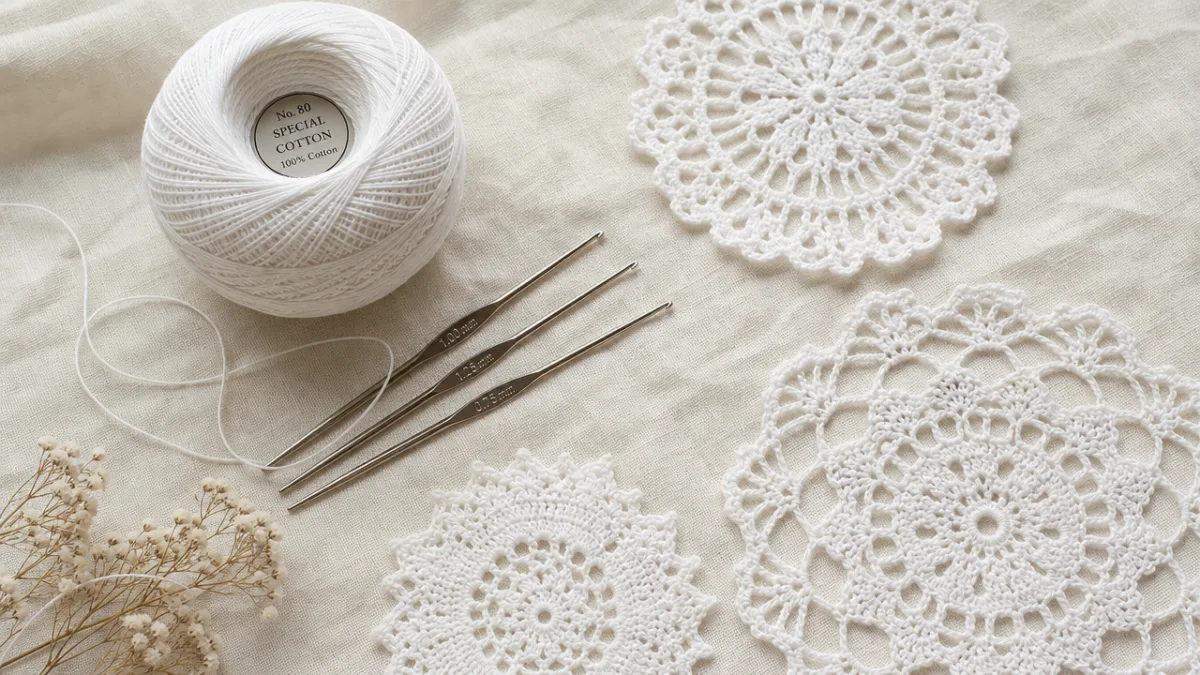
The foundation of any crochet lace project lies in the choice of thread, and this decision shapes everything about the finished piece — its drape, its durability, its sheen, and the sharpness of its stitch definition. Traditional lace thread is made from cotton, and for good reason. Cotton thread has a clean, slightly matte surface that allows intricate stitch patterns to read clearly without competing reflections. It holds its shape well after blocking, resists stretching, and can be washed and starched to create pieces that maintain their structure for generations. Thread weights typically range from size 3, which is relatively thick and great for beginners, all the way down to size 80, an almost gossamer-fine thread used by advanced lacemakers for heirloom-quality work.
Steel crochet hooks are the tools of choice for working with fine lace thread, and they differ significantly from the plastic or aluminum hooks used for yarn. Steel hooks are numbered inversely compared to standard hooks — the higher the number, the smaller the hook. A size 14 steel hook, for example, is barely larger than a needle, while a size 0 steel hook approaches the lower end of standard hook sizing. The shaft length, handle shape, and tip style all affect how comfortable a hook feels during long working sessions, and experienced lacemakers often develop strong preferences for particular brands or styles. Ergonomic handles with soft grips have become popular additions for those who crochet for extended periods.
Beyond thread and hooks, successful crochet lace work often depends on a few additional supplies that many beginners overlook. A good set of stitch markers helps track pattern repeats and beginning-of-round positions in circular motifs. Blocking mats and rust-proof pins are absolutely essential for the finishing process, as blocking — wetting the completed piece and pinning it to shape while it dries — is what transforms a crumpled, slightly uneven fabric into the crisp, open, breathtaking lace that photographs so beautifully. Scissors with fine sharp blades, tapestry needles for weaving in ends, and good lighting to see the fine stitches all contribute to a pleasant and successful lace-making experience.
- Cotton thread: The gold standard for traditional lace, available in thread weights from size 3 down to size 80, offering crisp stitch definition and excellent washability.
- Linen thread: A natural alternative with a beautiful rustic texture and exceptional strength, often used for table linens and household items.
- Silk thread: Luxurious and lustrous, silk produces lace with an exquisite drape and delicate sheen, though it requires more careful handling.
- Steel crochet hooks: Available in sizes 0 through 14, these fine metal hooks are specifically designed for working with thread rather than yarn.
- Blocking supplies: Foam mats, rust-proof pins, and a spray bottle or basin for wet blocking are indispensable for finishing any lace project professionally.
Essential Crochet Lace Stitches and Techniques
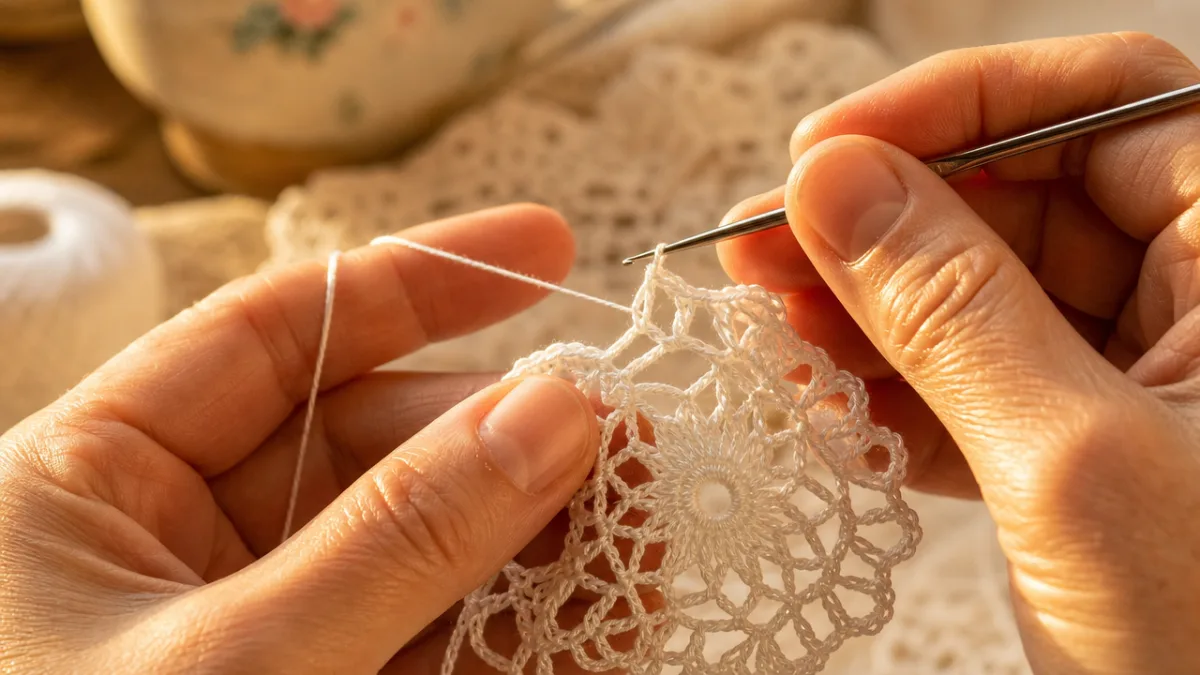
Crochet lace achieves its characteristic open, airy quality through specific combinations of stitches that create deliberate holes and spaces within the fabric. The most fundamental building block is the chain space — a series of chain stitches bridged between anchor points that forms the open mesh so recognizable in lace patterns. Simple filet crochet, for instance, is built entirely from combinations of double crochet stitches and chain-2 spaces, creating a grid-like fabric in which the filled and empty squares form pictures or geometric designs. Learning to maintain consistent tension while working chain spaces is one of the first and most important skills a lace crocheter must develop.
Picots are another signature element of crochet lace, adding decorative points and loops to the edges of motifs, borders, and mesh backgrounds. A basic picot is formed by making a small chain and slip-stitching back into the base stitch, creating a tiny loop that stands out from the fabric. Picots range from simple three-chain versions to elaborate multiple-loop constructions, and they appear constantly in Irish crochet, Bruges lace, and virtually every style of crochet lacemaking. Joined picots connect adjacent motifs or rows to each other, performing a structural function while simultaneously contributing to the decorative complexity of the piece.
The join-as-you-go technique has become increasingly popular among contemporary crochet lacemakers because it eliminates the tedious task of sewing dozens of motifs together after they have all been crocheted separately. When using this method, each new motif is attached to its neighbors during the final round of stitching, with joining slip stitches or joined picots creating seamless connections that are nearly invisible in the finished piece. Mastering this technique opens up a world of large-scale lace projects — tablecloths, bedspreads, curtains, and garments — that would otherwise require an enormous amount of assembly time and represent a significant barrier for many crafters.
- Chain spaces: The backbone of lace fabric, creating the open mesh that defines the airy, delicate quality of crochet lace.
- Picots: Small decorative loops formed from short chains, used to embellish edges and connect motifs throughout a piece.
- Shell stitches: Multiple double crochets worked into a single stitch or space, creating fan-shaped clusters that add texture and visual interest.
- Ring joins: Circular foundation rings from which motifs radiate outward, forming the basis of flowers, medallions, and other central design elements.
- Join-as-you-go: A method of connecting motifs during construction rather than after completion, saving significant time and producing a cleaner result.
Beyond these foundational techniques, experienced lace crocheters often incorporate more advanced methods such as Bruges crochet, which works narrow ribbons of lace fabric that are then coiled and joined to create larger pieces, or filet crochet, where the placement of filled and empty mesh squares creates pictorial designs of remarkable complexity. Hairpin lace uses a special fork-shaped loom to create long strips of looped stitches that are then joined with a crochet hook, producing a feathery, fluid fabric unlike anything achievable with conventional crochet alone. Each of these specialized branches of crochet lace offers its own particular aesthetic and set of technical challenges, ensuring that even the most experienced practitioner always has new territory to explore.
Designing and Reading Crochet Lace Patterns
One of the distinctive features of crochet lace, particularly in the European tradition, is the use of symbol charts as an alternative or supplement to written instructions. A crochet chart is a visual diagram in which each type of stitch is represented by a standardized symbol, and the symbols are arranged on the page exactly as the stitches appear in the finished fabric. For lace patterns with complex repeats and multiple elements happening simultaneously, charts are often far clearer and easier to follow than written instructions alone. Learning to read crochet charts opens up access to a vast library of patterns from non-English-speaking countries, particularly Japan, which has a particularly rich tradition of publishing exquisitely detailed crochet pattern books.
Written crochet lace patterns use a system of abbreviations that initially appears cryptic to beginners but quickly becomes second nature with practice. In English-language patterns, common abbreviations include ch for chain, sc for single crochet, dc for double crochet, sl st for slip stitch, and sp for space. More specialized lace terms include picot, cluster, shell, and various compound stitch names. Asterisks and brackets indicate repeating sections, and instructions for working in rounds versus rows follow recognizable conventions that experienced crocheters learn to parse almost automatically. Pattern notes and stitch counts help confirm that a crocheter is on track, acting as checkpoints throughout the construction process.
Creating original crochet lace designs requires a different kind of skill — the ability to visualize a finished piece, understand the mathematical relationships between stitches, and translate creative intentions into workable instructions that another person could follow. Many designers begin by creating sample swatches, experimenting with stitch combinations until they find an arrangement that achieves the desired balance of openness, texture, and visual interest. Graph paper and dedicated crochet design software help in planning larger motifs, especially for filet crochet where the pixel-like grid makes it relatively straightforward to translate a drawing or photograph into a stitch chart. The leap from following patterns to designing them is one of the most rewarding transitions any crafter can make.
Beautiful Projects You Can Create with Crochet Lace
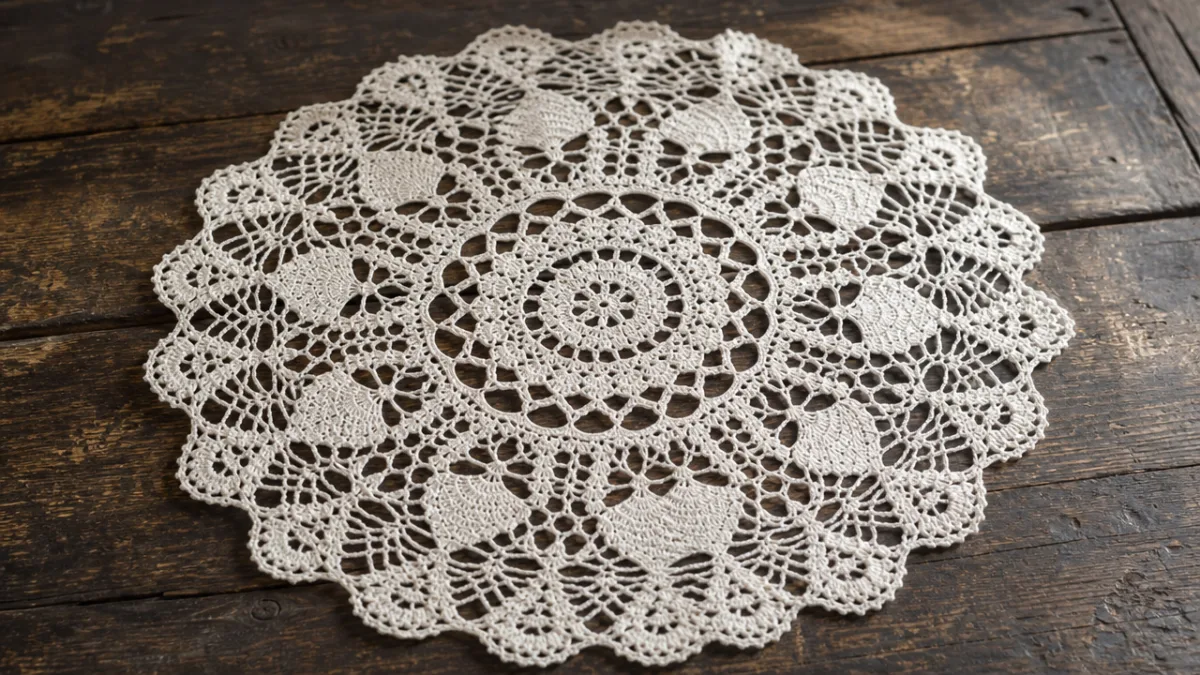
The range of objects that can be created through crochet lace is astonishingly broad, spanning from tiny decorative elements that take an afternoon to complete all the way up to ambitious large-scale projects that might occupy months or even years of dedicated work. Doilies remain among the most classic crochet lace projects, and for good reason — they are compact enough to be manageable, complex enough to be genuinely challenging and satisfying, and beautiful enough to display proudly. A finished doily, blocked to crisp perfection and placed beneath a vase or lamp, transforms an ordinary surface into something that speaks of care, skill, and unhurried craftsmanship. Doily patterns range from simple circular designs suitable for beginners to extraordinarily complex specimens with dozens of rounds and hundreds of individual motifs.
Wearable crochet lace has enjoyed an enormous surge in popularity, fueled partly by social media communities where crafters share photographs of finished shawls, wraps, tops, and even wedding gowns created entirely from handmade lace. A delicate lace shawl crocheted from fine cotton or silk thread is a particularly rewarding project because it combines technical complexity with practical wearability — the finished object is not merely decorative but something that can be worn and enjoyed in daily life. Lace collars and cuffs, drawing directly from Victorian tradition, have also found enthusiastic contemporary audiences among both vintage fashion devotees and those who simply appreciate the beauty of handcrafted textile accessories.
Home textiles represent another rich category of crochet lace projects, encompassing tablecloths, table runners, curtain panels, pillowcase trims, and decorative edgings applied to purchased linens. A crocheted lace tablecloth is perhaps the ultimate expression of the craft — a piece that might contain hundreds of individual motifs joined into a unified whole, representing dozens of hours of careful, meditative work. Such pieces become heirlooms almost automatically, objects passed from generation to generation precisely because they represent an investment of time and skill that is impossible to replicate casually. Window panels of crocheted lace filter light in a way no factory-made curtain can match, casting delicate shadow patterns across floors and walls that shift with the movement of the sun.
- Doilies and table centerpieces: Classic decorative pieces that showcase intricate stitch patterns and are perfect for developing lace-making skills at any level.
- Shawls and wraps: Wearable lace projects that combine beauty with practicality, often worked in fine cotton, linen, or silk thread.
- Lace collars and cuffs: Small, manageable accessories that add Victorian elegance to contemporary clothing with minimal time investment.
- Tablecloths and runners: Large-scale projects created from joined motifs that become treasured family heirlooms over time.
- Window panels: Lace curtains that filter light beautifully while providing a measure of privacy and adding handmade character to any room.
- Christening gowns and wedding accessories: Special occasion garments and accessories in which the labor-intensive nature of handmade lace adds profound sentimental value.
Caring for and Preserving Handmade Crochet Lace
Handmade crochet lace, particularly pieces crafted from fine cotton thread, is surprisingly durable when properly cared for, and many antique lace items survive in excellent condition after a century or more of careful storage and occasional use. The first principle of lace care is understanding what the piece is made from, because different fibers require different treatment. Cotton lace can generally be hand-washed in cool or lukewarm water with a gentle soap, handled with care to avoid stretching the wet fabric, and then blocked back to shape while damp. Silk lace requires even more delicate handling, as silk weakens when wet and is vulnerable to damage from vigorous agitation or wringing.
Blocking a clean lace piece after washing is not merely optional — it is what restores the crisp, open structure of the fabric and returns it to its intended dimensions and appearance. A piece of crochet lace that has been washed and allowed to dry in a heap will look limp, crumpled, and disappointing; the same piece carefully pinned out on a blocking mat and allowed to dry completely will be transformed into something that looks freshly made. Blocking is also the technique used to shape lace to specific measurements for garments or to ensure that a tablecloth lies perfectly flat, and it should be performed whenever a piece has been worn, used, or stored for any length of time.
Long-term storage of cherished lace pieces requires thoughtful attention to prevent the yellowing, brittleness, and fiber degradation that can afflict even well-made textiles over time. Acid-free tissue paper, available from archival supply companies, should be used to wrap lace pieces rather than ordinary tissue or newspaper, which contain acids that accelerate textile deterioration. Lace should never be stored in plastic bags, which trap moisture and create conditions favorable to mildew; instead, acid-free boxes or cloth bags made from natural fibers allow gentle air circulation while protecting against dust and light. Pieces should be refold periodically, as folds that remain in the same position for years can eventually weaken the fiber at those stress points, leading to breaks and tears that are difficult or impossible to repair invisibly.
Repairing damaged crochet lace is a skill unto itself, and for pieces with significant sentimental or monetary value it may be worth consulting a professional textile conservator rather than attempting home repairs. Minor damage — a broken thread here, a misshapen picot there — can often be addressed by a skilled crocheter who studies the surrounding stitches carefully and reconstructs the missing or damaged sections using matching thread and the same techniques used in the original construction. The challenge lies in matching thread weight and fiber content precisely, as even small differences become glaringly apparent in the finished repair. For this reason, keeping a small amount of the original thread when completing a project is a practice worth developing from the very beginning.
The Contemporary Crochet Lace Community and Its Future
The past decade has witnessed an extraordinary revival of interest in handmade crochet lace, driven in large part by online communities that connect crafters across geographical boundaries and make it possible for techniques, patterns, and inspiration to circulate with unprecedented speed. Platforms like Instagram, Pinterest, and Ravelry have become vital gathering places where lacemakers share works in progress, finished pieces, and the small victories and frustrations of complex projects. What might have been an isolated hobby pursued in quiet solitude has become a genuinely communal experience, with makers around the world cheering each other on, offering technical advice, and celebrating the diversity of approaches that different cultural traditions bring to the shared foundation of thread and hook.
Contemporary designers are pushing crochet lace in directions that would have surprised previous generations, incorporating unexpected materials, unconventional color palettes, and hybrid techniques that blend crochet with weaving, embroidery, or mixed media. Some designers have elevated crochet lace to the status of fine art, creating large-scale installation pieces that hang in galleries and challenge viewers to reconsider their assumptions about craft and artistic value. Others are working at the intersection of tradition and innovation, developing new motifs and pattern systems that honor historical precedents while expressing unmistakably modern sensibilities. This creative vitality ensures that crochet lace remains a living, evolving art form rather than a museum piece.
Sustainability concerns are also shaping the future direction of crochet lace, as crafters increasingly prioritize natural, ethically sourced materials over synthetic alternatives and seek out small-batch thread producers whose practices align with their values. The slow, meditative nature of handmade lace is itself a form of resistance to the disposability and speed of contemporary consumer culture — a handmade lace tablecloth that takes six months to complete and will last for generations represents a fundamentally different relationship with objects and time than anything available in a fast-fashion store. In this sense, the revival of crochet lace is part of a broader cultural conversation about sustainability, craftsmanship, and the human need to make things with our hands.
For those who are considering taking up crochet lace for the first time, the barrier to entry has never been lower. Online tutorials, pattern libraries, and community forums make it possible to learn at one’s own pace and find support when challenges arise. Local yarn shops frequently offer classes and workshops, and many experienced lacemakers are passionate about sharing their knowledge with newcomers. The investment in basic supplies is modest, the learning curve, while real, is navigable with patience, and the rewards — both in the beauty of the finished objects and in the calm, focused pleasure of the making process itself — are profound and lasting. Handmade crochet lace is not merely a craft; it is a practice, a tradition, and for many people, a lifelong companion.








What do you think?
It is nice to know your opinion. Leave a comment.