










Odontoglossum cirrhosum: The Elegant Fringed Orchid of the Andean Cloud Forests
Introduction to Odontoglossum cirrhosum
Odontoglossum cirrhosum is one of the most breathtakingly beautiful orchids to emerge from the high-altitude cloud forests of South America. Known colloquially as the fringed odontoglossum or the white lace orchid, this species has captivated botanists, horticulturists, and orchid enthusiasts since its formal description in the nineteenth century. Its large, pristine white flowers adorned with delicate fringed margins and intricate spotting patterns make it a jewel among the vast and diverse orchid family Orchidaceae.
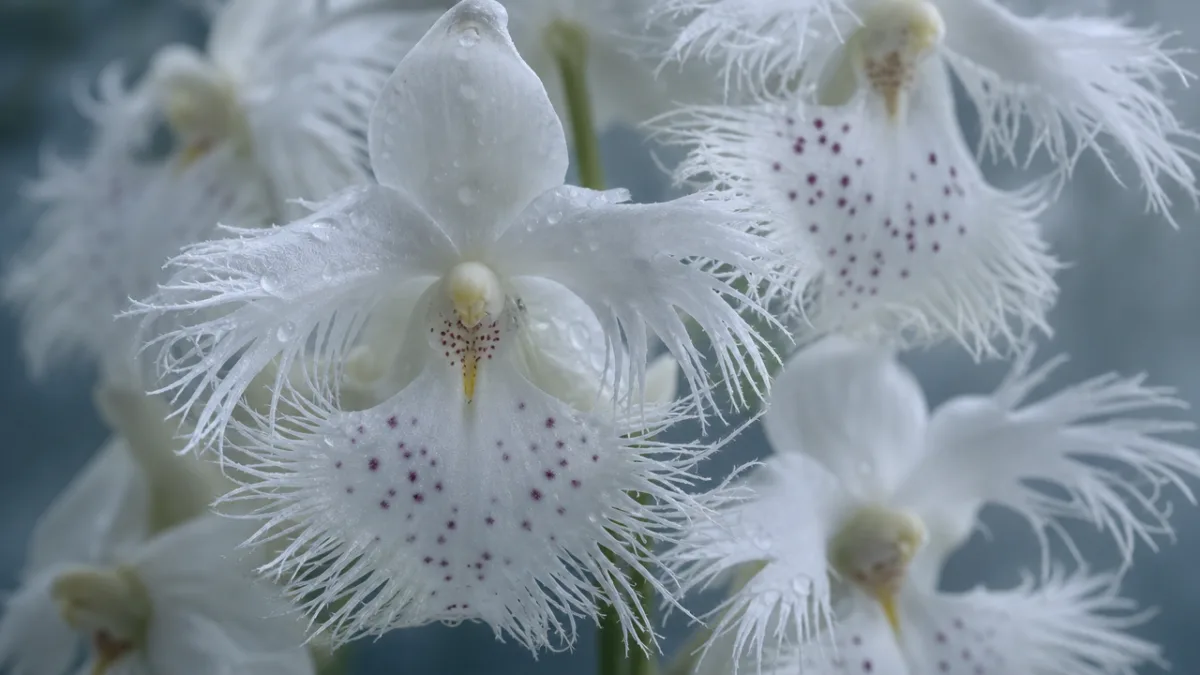
The name cirrhosum derives from the Latin word for tendril or fringe, a direct reference to the ornately fringed edges of its petals and sepals that give the flower its distinctively lacy appearance. This taxonomic descriptor is remarkably apt, as the feathery margins of each bloom create an almost ethereal quality, as though the flowers were crafted from delicate white lace. Few orchids can rival the visual drama produced by a well-grown specimen in full bloom, with its cascading sprays of large, pristine flowers catching the light in cool, misty greenhouse conditions.
Understanding this orchid requires an appreciation of its natural origins and the ecological niche it occupies. Odontoglossum cirrhosum is native to Ecuador and Colombia, where it grows as an epiphyte on the moss-covered branches of trees in montane cloud forests, typically at elevations between 2,000 and 3,000 meters above sea level. These high-altitude environments are characterized by cool temperatures, high humidity, and frequent cloud immersion — conditions that must be closely replicated for successful cultivation outside its native range.
Botanical Classification and Taxonomy
Odontoglossum cirrhosum belongs to the family Orchidaceae, the largest family of flowering plants on Earth, encompassing an estimated 25,000 to 30,000 species. Within this vast family, it is placed in the tribe Cymbidieae and the subtribe Oncidiinae, a grouping that includes many of the most horticulturally significant cool-growing orchids from the Andean region. The genus Odontoglossum itself is a relatively concentrated group of perhaps 100 to 200 species, all originating from montane habitats in Central and South America, with the greatest diversity centered in the northern Andes.
The formal scientific description of Odontoglossum cirrhosum is attributed to John Lindley, the preeminent British botanist who made enormous contributions to orchid taxonomy during the Victorian era. Lindley published extensively on orchids at a time when European exploration of the American tropics was bringing spectacular new species to the attention of the scientific world at an almost overwhelming rate. His careful documentation of Odontoglossum cirrhosum established the formal nomenclatural foundation upon which all subsequent study has been based, and his original descriptions remain essential references for taxonomists working with the genus today.
It is worth noting that the taxonomy of Odontoglossum and its closely related genera has undergone considerable revision over the decades, reflecting advances in molecular phylogenetics and a more nuanced understanding of evolutionary relationships within the Oncidiinae. Some authorities have reclassified various Odontoglossum species into related genera such as Oncidium or have recognized hybrid genera like Odontocidium and Vuylstekeara. However, Odontoglossum cirrhosum has generally retained its traditional placement, and the name remains the most widely recognized and accepted designation in both scientific and horticultural literature.
Physical Characteristics and Morphology
The vegetative structure of Odontoglossum cirrhosum follows the sympodial growth pattern typical of most orchids in its alliance. Each new growth, called a pseudobulb, develops from the base of the previous one, forming a spreading clump that expands laterally over time. The pseudobulbs themselves are ovoid to compressed in shape, somewhat flattened, and typically reach four to eight centimeters in height. They are a rich, bright green when young and in active growth, gradually becoming more yellowish and somewhat wrinkled as they age and the plant redirects its resources to newer growths.
Each pseudobulb carries two or occasionally three strap-shaped leaves at its apex. These leaves are medium green, somewhat glossy, and can reach lengths of thirty to forty centimeters in mature, well-grown plants. They are channeled or folded along their length, giving them a slightly pleated appearance that is characteristic of many Odontoglossum species. The leaves emerge from within sheathing bracts that encase the developing pseudobulb and persist as dry, papery sheaths around the base of the mature pseudobulb, providing some protection against desiccation and physical damage.
The flowers of Odontoglossum cirrhosum are the unquestionable highlight of the plant and the primary reason for its enduring popularity among orchid growers worldwide. The blooms are large for the genus, typically spanning seven to ten centimeters across, and are produced on arching or pendent racemes that can carry anywhere from five to fifteen individual flowers. The inflorescences emerge from the base of the newly matured pseudobulbs and may reach lengths of thirty to sixty centimeters or more. The flowers themselves are white to creamy white, marked with variable amounts of reddish-brown or purplish spotting concentrated toward the center of each segment, and the signature fringed margins create the lacy texture that distinguishes this species from all others in the genus.
Natural Habitat and Ecological Context
The cloud forests of Ecuador and Colombia where Odontoglossum cirrhosum makes its home are among the most biodiverse and ecologically complex ecosystems on the planet. These montane forests exist in a climatic zone where warm, moisture-laden air rising from the Amazon basin and Pacific lowlands meets the high Andean peaks, creating a persistent envelope of cloud and mist that bathes the vegetation in near-constant humidity. Trees in these forests are festooned with mosses, liverworts, lichens, and a remarkable diversity of epiphytic plants including ferns, bromeliads, and dozens of orchid species that exploit the aerial niches provided by branches and trunks.
As an epiphyte, Odontoglossum cirrhosum grows anchored to the bark of host trees without drawing any nourishment from the tree itself. Its roots cling to the bark surface and penetrate the thick cushions of moss that accumulate on branches, absorbing both moisture and the dilute mineral nutrients dissolved in rainwater and mist as it percolates through the organic substrate. This growth strategy allows the orchid to access the excellent air circulation and bright but diffused light available in the forest canopy while remaining free from the competition for soil resources that characterizes ground-level plant communities. The specialized velamen tissue that covers orchid roots acts as a sponge, absorbing water rapidly and then holding it within the root structure during brief dry periods.
The temperature regime experienced by Odontoglossum cirrhosum in its native habitat is the single most critical factor that must be understood by anyone wishing to cultivate this species successfully. At elevations of 2,000 to 3,000 meters, daytime temperatures typically range from 15 to 22 degrees Celsius, while nighttime temperatures regularly drop to between 8 and 13 degrees Celsius. This cool thermal regime, combined with a significant day-to-night temperature differential, drives the metabolic processes of the plant and is essential for triggering flowering. Without adequate cooling, the plant may grow vegetatively but will typically fail to bloom — one of the most common frustrations reported by growers attempting to cultivate cool-growing Andean orchids in warmer climates.
Cultivation Requirements and Horticultural Guidance
Successfully growing Odontoglossum cirrhosum outside its native habitat requires careful attention to several key environmental parameters, the most important of which is temperature. This is fundamentally a cool-growing orchid that will not thrive in the warm conditions typical of most domestic environments in temperate and subtropical regions. Growers in cool, maritime climates such as the Pacific Northwest of North America, coastal California, the United Kingdom, and parts of New Zealand and Australia have historically achieved the greatest success with this species, as their ambient temperatures often fall within the acceptable range for much of the year. In warmer climates, successful cultivation typically requires either a dedicated cool greenhouse with active cooling systems or the use of high-altitude growing conditions.
Watering and humidity management are equally important aspects of successful cultivation. Odontoglossum cirrhosum requires consistent moisture throughout the growing season, as it lacks the pronounced dry rest period that many other orchids demand. However, the roots are highly susceptible to rot if allowed to sit in stagnant water or if the potting medium remains saturated for extended periods. The ideal approach is to water thoroughly and then allow the medium to approach dryness before watering again — a cycle that promotes healthy root respiration while ensuring adequate hydration. Atmospheric humidity should ideally be maintained between 65 and 80 percent, and good air movement is essential to prevent fungal problems in these humid conditions.
Regarding potting media and containers, Odontoglossum cirrhosum is most commonly grown in one of the following approaches:
- Bark-based mixes: Medium-grade fir bark combined with perlite and sometimes charcoal provides excellent drainage and aeration while retaining adequate moisture. This is the most widely used medium and performs well in both pots and wooden baskets.
- Sphagnum moss: Pure or blended sphagnum moss provides exceptional moisture retention and is particularly useful in climates or situations where regular watering is difficult to maintain. However, it requires careful management to avoid overwatering and root rot.
- Mounted culture: Growing plants mounted on cork bark or tree fern slabs replicates natural epiphytic conditions most closely and allows excellent air circulation around the roots. Mounted plants require more frequent misting and watering than potted specimens.
- Peat and perlite blends: Some growers use open, well-draining mixes incorporating peat moss, though this has fallen somewhat out of favor due to environmental concerns about peat harvesting.
Fertilization should be approached with a light hand, as Odontoglossum cirrhosum, like most epiphytic orchids, is adapted to nutrient-poor conditions in nature. A balanced orchid fertilizer applied at quarter to half strength every two to three weeks during the growing season is generally sufficient. Reducing or eliminating fertilizer during the winter months when growth slows is advisable, and occasional flushing of the potting medium with plain water helps prevent the buildup of mineral salts that can damage sensitive root systems. Many experienced growers also recommend alternating between a high-nitrogen formula during active vegetative growth and a lower-nitrogen, higher-phosphorus formula as the pseudobulbs approach maturity to encourage flowering.
Hybridization and Horticultural Development
Odontoglossum cirrhosum has played a significant and historically important role in the development of the complex intergeneric hybrid orchids that have been a cornerstone of cool-growing orchid horticulture for well over a century. Victorian and Edwardian orchid breeders recognized the exceptional flower quality of this species — particularly its large flower size, pristine white coloration, and exquisite fringed petal margins — and incorporated it extensively into breeding programs aimed at combining the best qualities of multiple Odontoglossum and related species. The results of this early hybridization work established a tradition of orchid breeding that continues to this day.
The most famous and horticulturally significant intergeneric hybrids involving Odontoglossum species include the Odontocidium alliance (crosses with Oncidium), Vuylstekeara (a three-genus hybrid involving Cochlioda, Miltonia, and Odontoglossum), and Odontonia (crosses with Miltonia). Many of these hybrid groups owe at least part of their heritage to Odontoglossum cirrhosum, either directly as a parent species or indirectly through intermediate hybrid generations. The fringed petal margins that are the hallmark of the species sometimes appear as a recessive trait in hybrid populations, surfacing unexpectedly in seedlings to delight breeders and growers alike.
Modern orchid hybridization involving Odontoglossum cirrhosum continues in the hands of specialist breeders around the world, with contemporary programs focusing on combining the species’ exceptional flower quality with improved heat tolerance from warmer-growing relatives, broader color range from complementary parent species, and enhanced vigor and adaptability for a wider range of growing conditions. Advances in tissue culture propagation have also made it possible to produce and distribute high-quality clones of both the pure species and its hybrids at scales that would have been impossible in the era of seed-grown plants, helping to bring this extraordinary orchid to a broader audience of enthusiasts worldwide.
Conservation Status and Threats
Like the vast majority of Andean orchid species, Odontoglossum cirrhosum faces significant conservation challenges in its native range. The cloud forests of Ecuador and Colombia, which represent its entire natural distribution, have been subjected to intense pressure from agricultural expansion, cattle ranching, logging, and human settlement over the past century. The World Wildlife Fund and numerous national and international conservation organizations have identified the tropical Andes as one of the world’s biodiversity hotspots — a region of extraordinary species richness that is simultaneously experiencing severe habitat loss. Conservative estimates suggest that a substantial proportion of the original cloud forest cover has already been destroyed, with continuing pressure on remaining forest fragments.
Odontoglossum cirrhosum is listed under Appendix II of the Convention on International Trade in Endangered Species of Wild Fauna and Flora, commonly known as CITES. This listing does not indicate that the species is currently threatened with extinction, but rather that trade in the species requires monitoring and regulation to prevent commercial exploitation from becoming a threat. All international trade in specimens must be accompanied by appropriate permits from both the country of export and the country of import, and trade in wild-collected specimens is strictly controlled. Despite these protections, illegal collection of wild plants for the horticultural trade has historically been a problem for many Andean orchid species, and ongoing enforcement of CITES regulations remains important for the long-term security of wild populations.
Fortunately, the conservation outlook for Odontoglossum cirrhosum is somewhat more favorable than for many other threatened Andean orchids, partly because it is very well established in cultivation worldwide and can be propagated by both division and meristematic tissue culture. The existence of extensive ex situ collections in botanical gardens, specialist nurseries, and private collections around the world provides a significant safety net against the loss of genetic diversity through habitat destruction. Several Ecuadorian and Colombian conservation organizations are also engaged in habitat restoration and in situ conservation programs that aim to protect remaining cloud forest ecosystems and the extraordinary biodiversity they support, including this magnificent orchid.
Cultural Significance and Appeal to Collectors
The appeal of Odontoglossum cirrhosum to orchid collectors extends far beyond its undeniable visual beauty. This species represents a direct connection to the golden age of orchid collecting, when plant hunters employed by wealthy Victorian aristocrats and botanical institutions risked their lives in the remote mountain forests of South America to bring back new species for an orchid-obsessed European public. The history of this orchid is intertwined with the broader history of botanical exploration and the cultural phenomenon of orchid mania — the Victorian craze for exotic orchids that drove plant prices to extraordinary heights and inspired a vast literature of botanical illustration, scientific description, and popular writing.
For contemporary collectors, growing Odontoglossum cirrhosum successfully is regarded as something of a horticultural achievement, a demonstration of the skill and dedication required to meet the exacting environmental requirements of a cool-growing Andean specialist. This element of challenge adds to the species’ prestige and desirability within the orchid-growing community. Specialist orchid societies in the United Kingdom, the United States, Australia, and elsewhere regularly feature this species in competition, and well-grown specimens with superior flower quality are highly valued and eagerly sought by discerning collectors. Awards from organizations such as the American Orchid Society and the Royal Horticultural Society represent the pinnacle of recognition for exceptional plants.
The aesthetic qualities that make Odontoglossum cirrhosum so compelling to collectors and enthusiasts can be summarized in several key attributes that distinguish it from other orchids:
- Flower size and substance: The blooms are among the largest in the genus, with good substance and long-lasting qualities that extend the display period.
- Color and pattern: The combination of white or cream ground color with rich reddish-brown spotting creates a striking visual contrast of exceptional elegance.
- Fringed margins: The distinctive cirrhosum character — the intricate fringing of petal and sepal margins — gives the flowers an unparalleled textural quality.
- Fragrance: Some forms of the species produce a pleasant, light fragrance that adds a further sensory dimension to the flowering experience.
- Spray habit: The arching or pendent flower spikes carry multiple blooms in a graceful arrangement that shows the individual flowers to best advantage.
The enduring fascination with Odontoglossum cirrhosum among orchid enthusiasts reflects something deeper than mere aesthetic appreciation, though that appreciation is fully warranted. This orchid embodies the remarkable biological diversity of the Andean cloud forests, the long and fascinating history of orchid discovery and cultivation, and the ongoing challenge of maintaining rare and demanding plants in cultivation as living ambassadors of some of Earth’s most threatened ecosystems. For those fortunate enough to grow it well and witness a spray of its extraordinary fringed blooms in a cool, misty greenhouse, Odontoglossum cirrhosum represents one of the great rewards that the world of orchid cultivation can offer.








What do you think?
It is nice to know your opinion. Leave a comment.