










9 Miniature Hedgehog Free Patterns: Your Complete Guide to Crafting Adorable Tiny Companions
Introduction to Miniature Hedgehog Crafting
Miniature hedgehog patterns have taken the crafting world by storm, offering hobbyists of all skill levels an irresistible opportunity to create tiny, charming creatures that capture the essence of these beloved animals. Whether you are an experienced crafter or just beginning your journey into the world of handmade miniatures, free hedgehog patterns provide an accessible entry point into a deeply rewarding creative pursuit. The appeal of these patterns lies not only in their adorable finished results but also in the meditative, satisfying process of bringing each tiny spike, snout, and curled body to life with your own hands.
The world of miniature crafting has expanded dramatically in recent years, with online communities sharing thousands of free patterns across platforms like Pinterest, Ravelry, and dedicated crafting blogs. Hedgehogs in particular have emerged as perennial favorites, thanks to their distinctive silhouette and the creative challenge they pose to makers. A well-crafted miniature hedgehog can serve as a decorative piece, a thoughtful handmade gift, a unique jewelry element, or even a collectible addition to a miniature garden or dollhouse scene. Their compact size makes them ideal for those who want impressive results without investing enormous amounts of time or materials.
This guide explores the wonderful universe of the nine most popular free miniature hedgehog patterns available to crafters today, covering a range of techniques including crochet, needle felting, polymer clay sculpting, cross-stitch, and more. Each section will walk you through what to expect from these different approaches, the materials you will need, the skill levels required, and the unique character each finished hedgehog brings to the table. By the end of this article, you will have all the knowledge necessary to choose the perfect pattern and begin your miniature hedgehog crafting adventure.
Crochet Miniature Hedgehog Patterns
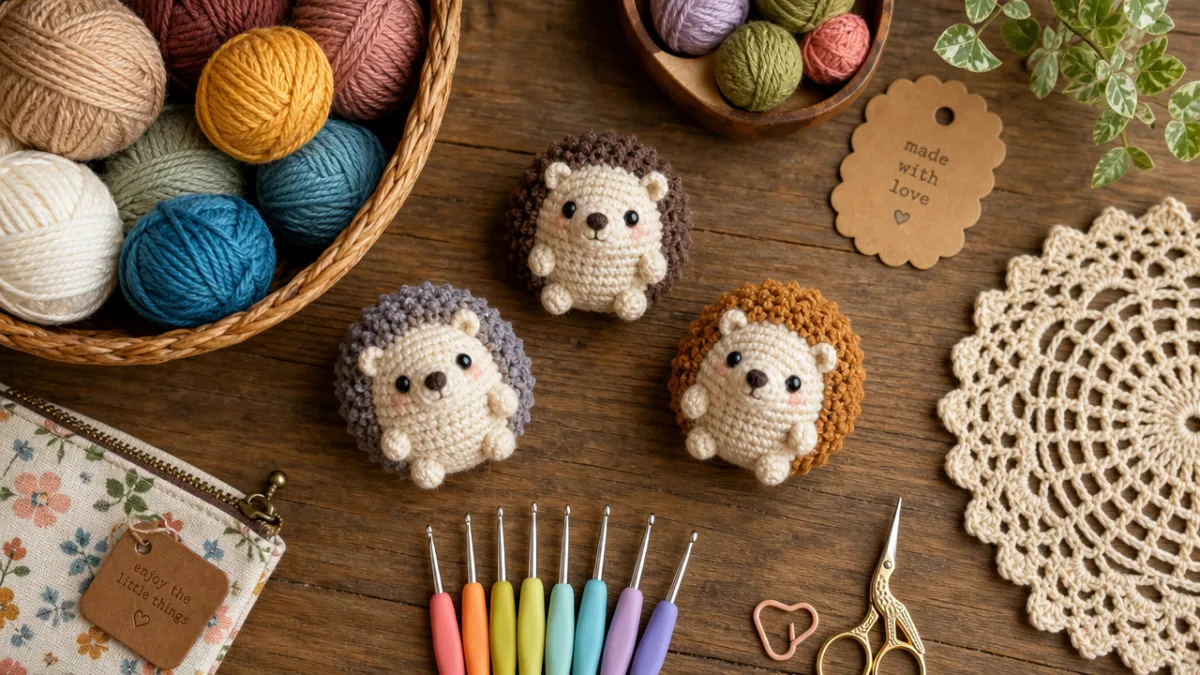
Crochet is arguably the most popular medium for crafting miniature hedgehogs, and it is easy to understand why. The inherent texture of crocheted fabric lends itself beautifully to replicating the spiny exterior of a hedgehog, while the versatility of the craft allows makers to adjust scale, color, and detail to suit their individual vision. Free crochet hedgehog patterns are widely available and range from beginner-friendly designs that can be completed in an afternoon to more intricate amigurumi creations that challenge even seasoned crocheters. Many of these patterns use only a small amount of yarn, making them an excellent stash-busting project.
Among the most beloved free crochet patterns are those that use the classic amigurumi technique, a Japanese style of crocheting small stuffed animals using a continuous spiral stitch. These patterns typically call for a small quantity of brown, cream, and black yarn, along with safety eyes, polyfill stuffing, and a small crochet hook ranging from 2.0mm to 3.5mm depending on the yarn weight. The resulting hedgehogs are perfectly rounded, delightfully squishy, and remarkably durable, making them safe even as toys for older children. Advanced patterns may incorporate separate textured panels for the back spines, adding a wonderful dimensional quality to the finished piece.
Two standout free crochet patterns that consistently receive rave reviews from the crafting community are the “Pocket Hedgehog” pattern and the “Teacup Hedgehog” design. The Pocket Hedgehog is worked entirely in the round and measures just under three inches when complete, making it genuinely pocketable. The Teacup Hedgehog, as its name suggests, is designed to fit snugly inside a small teacup or thimble, creating a whimsical display piece. Both patterns include detailed written instructions as well as stitch count guides, and many versions available online also include helpful photo tutorials for each stage of construction, making them accessible to beginners who are still learning to read crochet notation.
Needle Felting Miniature Hedgehog Patterns
Needle felting offers a completely different crafting experience from crochet, yet it produces some of the most breathtakingly realistic miniature hedgehogs imaginable. This technique involves repeatedly stabbing wool roving with a barbed felting needle, causing the fibers to interlock and compact into a firm, sculptural form. Because the process is essentially three-dimensional sculpting with fiber, needle felters have extraordinary control over the shape, texture, and fine details of their creations. Free needle felting hedgehog patterns guide makers through building the body from a core of dense wool, then layering increasingly fine fibers on the surface to achieve remarkably lifelike results.
The materials required for needle felted hedgehogs are modest but specific. You will need wool roving in shades of brown, cream, and black, a set of felting needles in varying gauges, a foam felting pad to protect your work surface and fingers, and optionally a pair of tiny glass or plastic eyes for finishing. Many free patterns recommend beginning with a pre-made wool core or a wire armature, particularly if you want your hedgehog to have poseable legs or a more dynamic pose. The process is wonderfully tactile and forgiving, as mistakes can generally be corrected by adding more wool to build up areas that are too flat, or by more vigorous felting to reduce areas that are too large.
Free needle felting patterns for miniature hedgehogs tend to be more descriptive than prescriptive, guiding makers through the general shaping process rather than providing precise measurements for every feature. This open-ended quality actually makes needle felting an excellent medium for experienced crafters who enjoy improvising, as well as for those who appreciate the organic variability that comes from handcrafted sculptural work. Each needle felted hedgehog becomes a unique individual, with its own personality expressed through subtle variations in posture, expression, and coloring. Three particularly popular free patterns focus on a sleeping hedgehog curled in a tight ball, an alert hedgehog with raised snout, and a baby hedgehog barely larger than a thimble.
Polymer Clay Miniature Hedgehog Patterns and Tutorials
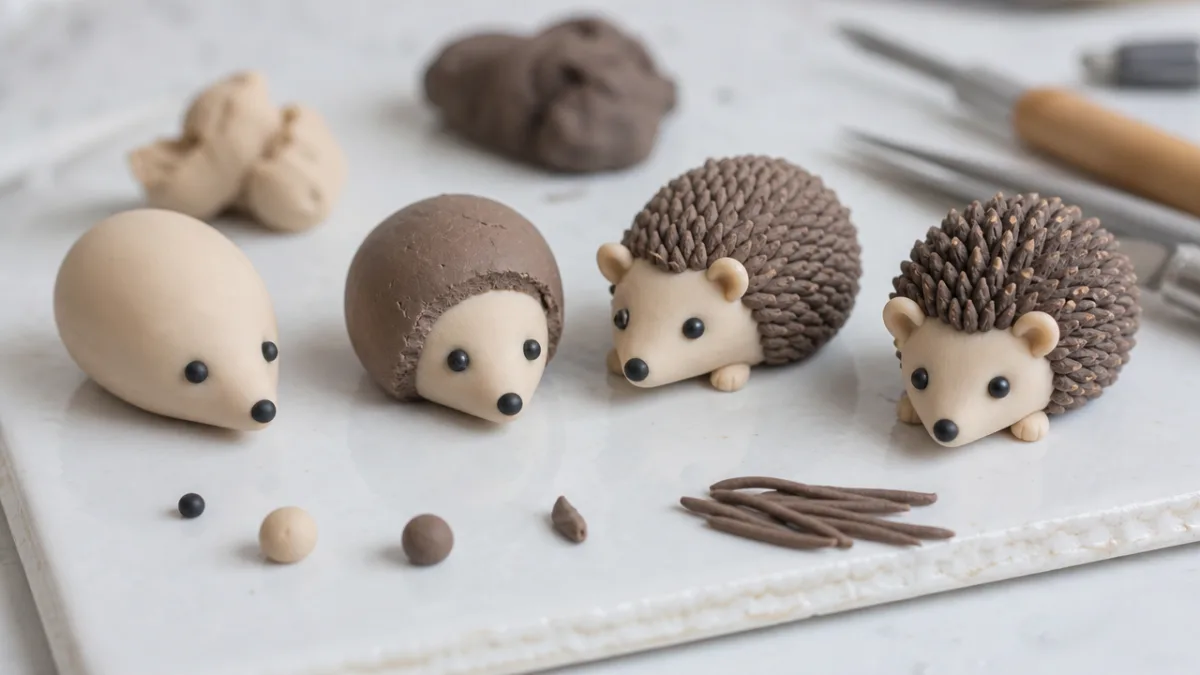
Polymer clay sculpting opens up yet another rich avenue for miniature hedgehog creation, particularly appealing to those who prefer working with a medium that can be sculpted, refined, and then permanently hardened in a standard home oven. Polymer clay brands such as Sculpey, Fimo, and Premo are the most commonly recommended for miniature work, offering a smooth, workable consistency that holds fine details beautifully during sculpting and retains them perfectly after baking. Free polymer clay hedgehog tutorials and patterns are widely available on crafting websites and YouTube channels, making this an increasingly accessible technique for beginners.
The distinctive spines of a hedgehog are the defining challenge and reward of working with polymer clay. Several clever techniques have emerged within the crafting community for replicating this texture, including using a toothpick, ball stylus, or specialty texture mat to create individual impressions in the clay surface. Some advanced tutorials demonstrate how to create each spine individually from tiny teardrop-shaped pieces of clay, applying them one by one to the body for a stunningly realistic three-dimensional effect. These more elaborate approaches require patience and a steady hand but produce results that are genuinely jaw-dropping in their level of detail, particularly when finished with careful painting and a protective glaze.
Free polymer clay hedgehog patterns are especially popular among jewelry makers, as the finished sculptures can easily be fitted with pin backs, earring posts, pendant bails, or magnetic closures to create wearable art. A tiny polymer clay hedgehog measuring just half an inch can become a charming brooch, a pair of earrings, or a pendant necklace that invariably draws compliments and curious questions wherever it is worn. The durability of baked polymer clay makes these pieces surprisingly resilient for everyday wear, and many crafters have discovered that miniature hedgehog jewelry makes an exceptionally popular item at craft fairs and online shops, with free patterns allowing them to experiment with designs before committing to a production process.
Cross-Stitch and Embroidery Miniature Hedgehog Patterns
For crafters who prefer the precision and portability of needle and thread work, cross-stitch and embroidery offer delightful ways to capture the charm of miniature hedgehogs in fiber art form. Free cross-stitch hedgehog patterns range from simple pixel-art style designs perfect for beginners to elaborate, shaded compositions that employ dozens of thread colors and multiple stitch types to achieve a painterly effect. These patterns are typically provided as gridded charts where each square represents one cross-stitch on the fabric, making them straightforward to follow even without extensive prior experience with the craft.
Miniature cross-stitch hedgehog designs typically work best on high-count evenweave fabrics such as 28-count evenweave or 32-count linen, which allow for extremely fine detail in a very small finished size. A hedgehog design worked on 32-count linen using one strand of thread might measure just one inch square when complete, yet contain an astonishing amount of detail in its shading and texture. These tiny finished pieces can be mounted in miniature frames, incorporated into jewelry such as pendants or brooches, used to embellish clothing and accessories, or displayed as part of a collection in a dedicated shadow box frame. The variety of possible applications gives cross-stitch hedgehog patterns exceptional creative versatility.
Embroidery-based hedgehog patterns take a slightly different approach, using a combination of stitch types such as satin stitch, stem stitch, French knots, and turkey work to create texture and dimension on fabric. Turkey work, a loop stitch that can be cut and trimmed to create a fluffy, raised surface, is particularly effective for replicating the spiny back of a hedgehog in embroidered form. Free embroidery hedgehog patterns are available from numerous sources online, including the websites of major thread manufacturers, independent embroidery designers, and enthusiast blogs. Many include color suggestions keyed to specific thread brands and numbers, making it easy to achieve results closely matching the original design.
Paper Crafting and Origami Miniature Hedgehog Patterns
Paper crafting and origami represent perhaps the most accessible entry point into miniature hedgehog making, requiring nothing more than paper, scissors, and in some cases a small amount of glue. Free origami hedgehog patterns range from simple designs achievable in just a few folds to complex modular constructions that challenge even experienced origami enthusiasts. The beauty of paper-based hedgehog patterns lies in their zero-cost accessibility and the wonderful graphic quality of the finished pieces, which can be made from plain paper, decorative origami paper, or even repurposed materials like book pages or magazine pages for an artistic, textured effect.
Kirigami, a variation of origami that incorporates strategic cuts as well as folds, offers particularly interesting possibilities for hedgehog designs. A kirigami hedgehog pattern might involve cutting a grid of fine slits into the back portion of a folded paper form, then gently pulling the layers apart to create a three-dimensional, fanned arrangement of paper “spines” that beautifully suggests the hedgehog’s characteristic texture. These designs photograph exceptionally well and have become popular on social media, inspiring countless crafters to try the technique for themselves. Many free kirigami hedgehog patterns include printable templates that remove the guesswork from placing cuts accurately, making the technique genuinely beginner-friendly.
Beyond traditional origami and kirigami, the broader world of paper crafting includes quilling, paper sculpture, and cardstock construction as additional avenues for miniature hedgehog creation. Quilling, which involves rolling and shaping narrow strips of paper into coiled forms that are then assembled into designs, produces particularly charming hedgehog artwork that sits beautifully in a frame or greeting card. Free quilling hedgehog patterns are available from specialty quilling websites and general crafting blogs, and the required materials, consisting of pre-cut paper strips, a slotted quilling tool, and craft glue, are inexpensive and widely available. A quilled miniature hedgehog, with its intricate spiraled body and delicately shaped features, makes an extraordinarily beautiful and unique handmade gift.

Tips for Success Across All Miniature Hedgehog Patterns
Regardless of which crafting medium you choose for your miniature hedgehog project, certain universal principles will help ensure the best possible results. First and most importantly, take the time to gather all required materials before beginning, as interrupting your creative flow to hunt for a missing supply can break your concentration and affect the quality of your work. Read through the entire pattern before making your first stitch, fold, or poke of the felting needle, as this overview will help you understand how the various stages connect and allow you to plan your approach more effectively. Many experienced crafters also recommend making a test piece in inexpensive or scrap materials before committing to your final project.
Consistency of scale is a particular consideration in miniature work that does not arise in the same way with larger projects. When crocheting, maintaining a consistent tension throughout the piece ensures that your hedgehog will have smooth, even proportions rather than bulging in some areas and pinching in others. When sculpting in polymer clay or needle felting, frequently stepping back from your work and viewing it from multiple angles helps you catch asymmetries before they become entrenched. Keeping a printed reference photo of a real hedgehog nearby while you work can also be invaluable for checking proportions and details, particularly for the placement of features like eyes, ears, and snout.
The finishing and presentation of your miniature hedgehog can be just as important as the crafting process itself. Some key finishing considerations to keep in mind include the following: secure all loose ends of yarn or thread thoroughly to prevent unraveling over time; use high-quality stuffing material and fill amigurumi pieces firmly enough to maintain their shape; apply any painted details with a fine brush and allow each layer to dry completely before adding the next; and protect finished pieces with an appropriate sealant if they will be handled frequently or worn as jewelry. Thoughtful presentation, whether in a small frame, a decorative box, or a miniature garden setting, can elevate even a modest finished piece into something that looks truly professional and gallery-worthy.
Building a Miniature Hedgehog Collection
Once you have successfully completed your first miniature hedgehog pattern, you may find, as so many crafters do, that one is simply not enough. The nine free patterns discussed throughout this article provide an excellent starting point for building a diverse collection that showcases different techniques, materials, and styles. A beautifully curated display of miniature hedgehogs made in different media creates a fascinating visual conversation between the pieces, highlighting the unique qualities that each crafting technique brings to the same subject. A glass display case or a series of small shadow boxes can present your collection in a way that protects the pieces while allowing them to be fully appreciated.
Many crafters develop their miniature hedgehog collection thematically, creating seasonal variations such as a hedgehog nestled in autumn leaves, a hedgehog wearing a tiny knitted hat for winter, a hedgehog surrounded by spring flowers, or a hedgehog relaxing in a summer garden scene. These thematic displays can be rotated throughout the year to celebrate the changing seasons, giving your collection ongoing visual relevance and providing a regular creative project to look forward to. The small scale of miniature crafting means that even an elaborate seasonal scene can be created from minimal materials, making this approach financially as well as creatively rewarding.
Sharing your finished miniature hedgehog creations with the broader crafting community is an important part of the creative cycle that benefits everyone involved. Posting photographs of your completed projects to platforms like Pinterest, Instagram, and dedicated crafting forums not only allows you to receive encouragement and feedback from fellow enthusiasts, but also helps other crafters discover the free patterns that you have found valuable. Many of the pattern designers who generously share their work for free are motivated and inspired by seeing how others interpret and personalize their designs, and your shared work may inspire future patterns, variations, and creative innovations that enrich the entire community. The world of miniature hedgehog crafting is, at its best, a warmly collaborative and mutually supportive creative ecosystem.








What do you think?
It is nice to know your opinion. Leave a comment.