










23 Adorable Crochet Doll Patterns: Your Complete Beginner-Friendly Guide
Why Crochet Dolls Are the Perfect Project for Beginners
Crochet dolls, often called amigurumi (a Japanese art form combining the words for knitting and stuffed toy), have taken the crafting world by storm over the past decade. What makes them so appealing to beginners is the combination of their manageable size, repetitive stitch patterns, and the incredibly satisfying reward of holding a finished character in your hands. Unlike large blankets or garments that take weeks to complete, a basic crochet doll can often be finished in just a weekend, making them ideal for those still building their skills and confidence.
The beauty of starting with doll patterns is that small mistakes are far less visible than they would be in wearable crochet projects. A slightly uneven tension on a doll’s arm or a stitch that looks a touch off on the body is easily hidden under stuffing or accessories. This forgiving nature allows beginners to practice fundamental stitches — the magic ring, single crochet, increases, and decreases — without the anxiety of producing something that must be perfect to be functional or wearable. Every project becomes a lesson wrapped in adorable packaging.
Beyond the technical benefits, crochet dolls offer tremendous creative freedom. Once you master a basic body template, you can customize characters endlessly by changing colors, adding embroidered features, crocheting tiny accessories, or adjusting proportions to create entirely different personalities. Many crafters find that starting their crochet journey with dolls keeps them motivated because each finished piece feels like a true accomplishment — a handmade character with its own story and charm, ready to be gifted or displayed with pride.
Essential Tools and Materials Before You Begin
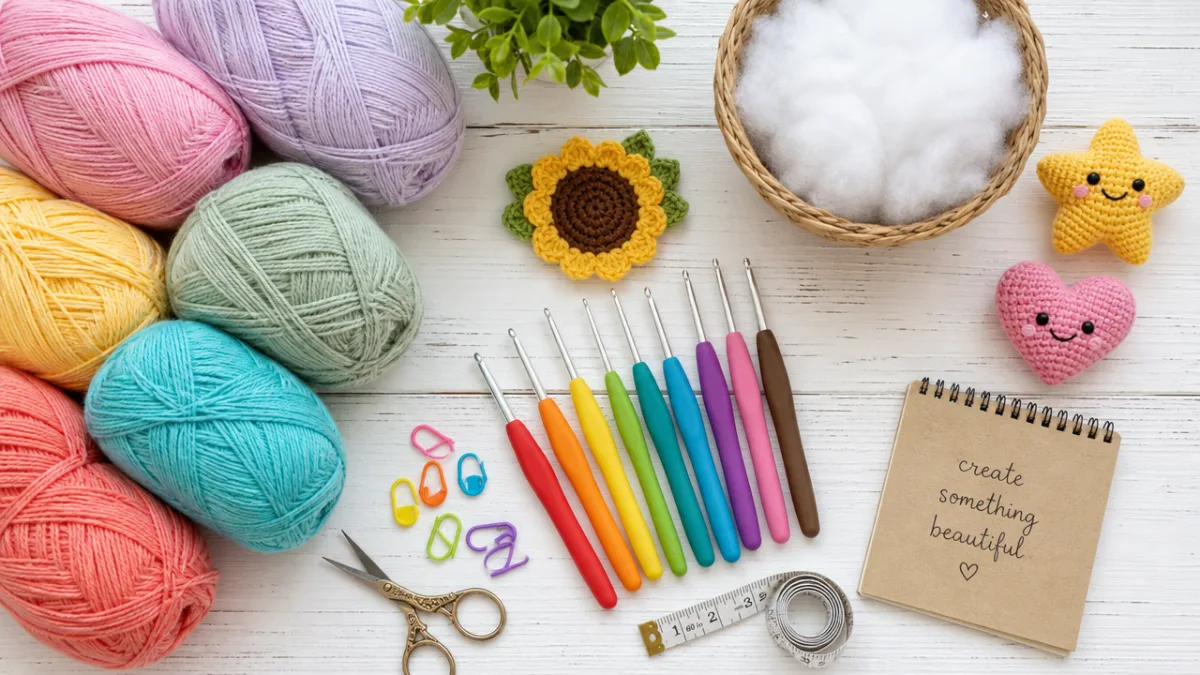
Before diving into your first crochet doll pattern, gathering the right tools will make the entire process significantly smoother and more enjoyable. The most important item is your hook, and for most amigurumi projects, a 2.5mm to 3.5mm steel or aluminum crochet hook is the standard recommendation. This smaller size creates a tighter stitch gauge, which ensures the stuffing inside your doll won’t peek through gaps in the fabric. Investing in an ergonomic hook with a comfortable grip is especially worthwhile if you plan to spend several hours working on a project.
Yarn selection is equally critical and often where beginners feel most overwhelmed by the sheer number of options available. For your first doll, choose a smooth, tightly spun yarn in a light to medium weight — worsted weight (size 4) is a popular choice because it’s easy to see your stitches clearly, which is invaluable when you’re learning. Cotton yarn is particularly beloved in the amigurumi community because it holds its shape beautifully, produces a firm finished fabric, and is available in an enormous range of vivid, consistent colors that bring your characters to life.
Beyond hooks and yarn, a few additional supplies complete your starter kit. You will need polyester fiberfill stuffing to give your dolls their plush, three-dimensional form — stuff your pieces firmly but not so tightly that the yarn stretches. Safety eyes, available in sizes ranging from 6mm to 15mm, create professional-looking dolls with charming character, but embroidered eyes using black yarn or thread are a safer alternative if the doll is intended for young children. A blunt tapestry needle for seaming pieces together and weaving in ends is absolutely essential, and stitch markers will help you track round beginnings as you work in the round.
Understanding the Core Stitches Used in Doll Patterns
The vast majority of crochet doll patterns rely on a surprisingly small collection of stitches, which is wonderful news for beginners. The single crochet stitch is the undisputed foundation of amigurumi work — virtually every pattern you encounter will be composed almost entirely of this one stitch. Mastering the single crochet means mastering the art of making dolls. It creates a dense, stable fabric when worked in continuous rounds (also called working in a spiral), which is the standard method for constructing rounded three-dimensional pieces like heads, bodies, arms, and legs.
Increases and decreases are the tools that give your doll its shape, and understanding them is just as important as the base stitch itself. An increase is simply working two single crochets into the same stitch, which adds a stitch to your round and causes your work to expand outward, creating bowl-like curves. A decrease — most commonly the invisible decrease in amigurumi — works two stitches together to reduce your stitch count, causing your work to curve inward and close up, forming rounded shapes like the top of a head or the bottom of a round body. Practicing these two techniques a few times before starting a pattern builds confidence quickly.
The magic ring (also called a magic circle or adjustable ring) is the signature starting technique of amigurumi and often the first stumbling block for new crocheters. Unlike traditional crochet that begins with a foundation chain, the magic ring creates a closed, adjustable loop from which you work your first round of stitches. The advantage is a nearly invisible center with no hole — essential for neat doll construction. While it can feel awkward the first few attempts, most beginners master it within a single practice session, and once it clicks, it feels like second nature from that point forward.
A Breakdown of 23 Beloved Doll Patterns Across Different Styles
The world of crochet doll patterns is gloriously diverse, spanning dozens of styles, themes, and difficulty levels. To help you find your perfect starting point, here is a curated look at the types of patterns that consistently rank among the most popular and beginner-accessible in the crafting community. Whether you’re drawn to fantasy creatures, realistic human dolls, or whimsical animals with human characteristics, there is a pattern waiting to become your new favorite project.
Classic amigurumi characters remain perennial favorites for good reason — their simple, rounded forms are forgiving, quick to complete, and universally adored. Patterns in this category often include small bears, bunnies, cats, and pandas worked in basic sphere and cylinder shapes. These patterns typically require fewer than 200 yards of yarn and can be completed in just a few hours, making them ideal for absolute beginners who want a quick win before tackling something more complex. Many designers offer these patterns free of charge on platforms like Ravelry, making them even more accessible.
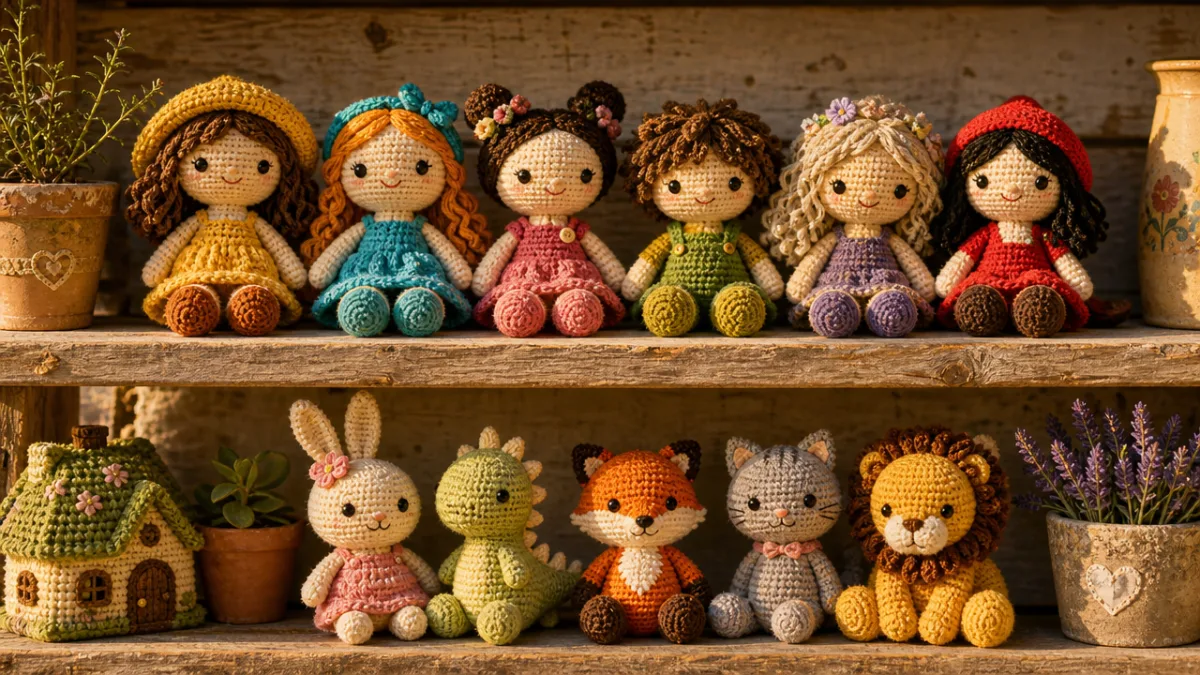
Among the 23 styles worth exploring, you’ll find a wonderful variety that keeps the craft exciting as your skills develop. A few standout categories include:
- Fairy tale characters — princess dolls, woodland fairies, and enchanted creatures with tiny crocheted accessories like crowns and wings that teach advanced detail work.
- Seasonal and holiday dolls — Halloween witches, Christmas elves, Easter bunnies, and harvest scarecrows that make charming seasonal decorations and heartfelt handmade gifts.
- Profession-themed dolls — miniature doctors, chefs, astronauts, and teachers dressed in tiny crocheted uniforms, perfect for personalized gifts.
- Fantasy and pop culture characters — dragons, mermaids, unicorns, and recognizable fictional characters that inspire passion projects in dedicated fans.
- Realistic portrait dolls — more advanced pieces that capture human likeness with skin-tone yarn, detailed facial embroidery, and yarn hair in various textures and colors.
- Miniature dolls — tiny figures under 4 inches tall that challenge your precision and create adorable keychains, ornaments, or dollhouse inhabitants.
- Oversized cuddle dolls — large, soft companions worked in bulky yarn that come together quickly and make wonderful gifts for children.
Each of these pattern categories teaches slightly different skills and opens new creative possibilities. Many experienced crocheters recommend working through several different styles rather than repeating the same type of pattern, because the variety accelerates skill development naturally. A crocheter who has made a round amigurumi bear, a shaped doll with arms and legs, a flat-faced softie, and a doll with wire armature has learned an enormous range of techniques that will serve them throughout their entire crafting life.
Tips for Reading and Following Crochet Doll Patterns Successfully
One of the most common frustrations beginners experience is feeling lost or confused while following a written crochet pattern, and doll patterns in particular use a specific shorthand and structure that can feel like learning a new language at first. The good news is that pattern notation is highly standardized, and once you understand the abbreviations and formatting conventions, patterns begin to feel logical and easy to navigate. Most patterns include an abbreviations key at the beginning — always read this section first, even if you think you know the standard abbreviations, because some designers use their own variations.
Keeping track of your stitch count at the end of each round is the single most important habit you can develop as a doll crocheter. Amigurumi patterns are written with precise stitch counts because every increase and decrease is calculated to produce specific curves and proportions. If your count is off by even one or two stitches, your doll’s head might end up slightly pointed, your body may not close neatly, or pieces may not match each other in size when you go to assemble. Placing a stitch marker at the beginning of each round and counting your stitches before moving to the next round eliminates the majority of errors and saves significant frustration.
Assembling your finished pieces is where many beginners feel the most uncertainty, yet it’s one of the most transformative steps in the entire process — this is the moment your collection of separate crocheted shapes suddenly becomes a recognizable character. Use your tapestry needle and a length of the same yarn to whipstitch or mattress stitch pieces together securely. Pin your pieces in position before committing to sewing to ensure you’re happy with the placement of arms, legs, ears, and other features. Many experienced makers recommend stuffing pieces very firmly and attaching them at the same stitch row rather than at the edge to create cleaner, more professional-looking joints.
Personalizing Your Dolls and Developing Your Unique Style
One of the most exciting aspects of crochet doll making is the almost unlimited scope for personalization, which is what transforms a pattern into a one-of-a-kind handmade creation. Even when two crocheters follow the exact same pattern using the same yarn brand and hook size, their finished dolls will often look noticeably different because of individual tension, color choices, and embellishment decisions. This inherent variability is not a flaw in the craft — it is its greatest strength, and it means that every doll you make carries your unique creative fingerprint in ways that mass-produced toys simply cannot replicate.
Color choice alone can completely transform the character and mood of a doll. A rabbit made in soft pastel lavender with a white belly reads as gentle and whimsical, while the same pattern worked in deep jewel tones of emerald and gold creates something that feels regal and enchanting. Experimenting with color combinations — complementary colors for bold contrast, analogous colors for harmonious blends, or tonal variations for subtle sophistication — is one of the most accessible ways to develop your artistic voice as a crocheter without needing to alter the pattern itself in any technical way.
As your confidence grows, you’ll likely begin making small modifications to existing patterns, and this is a natural and exciting stage of development as a doll maker. Common beginner modifications include changing eye sizes and placement to alter a character’s expression, adding simple crocheted accessories like scarves or hats, experimenting with different yarn textures for hair or fur effects, or scaling patterns up or down by adjusting hook size and yarn weight. Over time, these small experiments build the intuition and knowledge needed to eventually design original patterns from scratch — a deeply satisfying milestone that many crocheters once considered impossible when they were just starting out.
Building a Community and Finding Support as You Learn
Learning to crochet dolls in the modern era comes with an extraordinary advantage that crafters from previous generations could only dream of: a vibrant, generous, globally connected community of fellow makers ready to cheer you on, answer your questions, and share their expertise freely. Online platforms have made it possible to connect with amigurumi enthusiasts from every corner of the world, and the warmth and encouragement within these communities is genuinely remarkable. Whether you’re stuck on a tricky stitch, need help troubleshooting an asymmetrical head, or simply want to share your finished creation with people who will truly appreciate it, the community is always there.
Social media platforms have become particularly powerful hubs for the crochet doll community. Pinterest is an excellent resource for discovering patterns, gathering inspiration, and building visual collections of dolls you want to make. Instagram and TikTok are filled with makers who share real-time process videos, tutorials, and finished project reveals that make techniques feel approachable and demystified. Dedicated Facebook groups and Reddit communities like r/amigurumi offer spaces for questions, feedback, and the kind of genuine camaraderie that comes from sharing a niche passion with thousands of like-minded people around the world.
Finally, remember that every experienced crochet doll maker was once exactly where you are now — holding yarn and a hook for the first time, wondering if they’d ever produce something that resembled the beautiful creations they’d seen online. Progress in crochet is not always linear; some techniques will click immediately while others require repeated practice before they feel natural. Celebrating each small victory, from completing your first magic ring to finishing your first fully assembled doll, keeps the process joyful and sustainable. The crafting community universally agrees on one thing: the moment you hold your very first finished crochet doll — however imperfect it may be — is a moment of pure, irreplaceable magic that no one should miss experiencing for themselves.








What do you think?
It is nice to know your opinion. Leave a comment.