










50 DIY Pressed Flowers Crafts You Can Make at Home
The Ancient Art of Pressing Flowers: A Timeless Craft for Modern Homes
Pressed flower crafts have captivated creative minds for centuries, stretching back to the Victorian era when botanists and hobbyists alike preserved delicate blooms between the pages of heavy books. Today, this beautiful tradition is experiencing a remarkable renaissance, finding its way into modern homes, studios, and social media feeds across the world. Whether you are an experienced crafter or someone picking up a hobby for the very first time, pressed flower art offers a deeply satisfying, meditative creative outlet that connects you to the natural world in a profoundly personal way.
The beauty of pressed flower crafts lies in their accessibility. Unlike many artistic pursuits that require expensive equipment or years of technical training, pressing flowers demands very little in terms of upfront investment. You can begin with nothing more than flowers from your own garden, a stack of old books, and a few sheets of blotting paper. The process itself is wonderfully slow and intentional, encouraging patience and a mindful appreciation for the tiny details of petals, stems, and leaves that we so often overlook during our busy daily lives.
Beyond their simplicity, pressed flower crafts produce results of extraordinary beauty. A single pressed pansy, with its velvety texture and rich color preserved in perpetuity, can transform an ordinary greeting card into an heirloom. A collection of pressed wildflowers, arranged thoughtfully beneath glass, becomes a framed botanical print worthy of any gallery wall. The sheer versatility of the medium means that no two projects need ever look the same, and your creativity is genuinely the only limit to what you can achieve.
Gathering and Pressing Your Flowers: Techniques for Perfect Results
The foundation of any successful pressed flower project is, naturally, the quality of the flowers you choose to press. Timing and selection are everything. The best candidates for pressing are flowers that are neither too thick nor too fleshy, as excessive moisture content makes it difficult to achieve a clean, flat result without mold forming during the drying process. Thin-petaled flowers such as pansies, violas, daisies, Queen Anne’s lace, larkspur, and cosmos are widely considered the easiest and most rewarding choices for beginners eager to build their confidence quickly.
When gathering flowers for pressing, always collect them at the peak of their bloom, ideally on a dry morning after any dew has evaporated but before the heat of the afternoon sun causes them to wilt. Avoid flowers that show signs of insect damage, bruising, or disease, as these imperfections will be magnified rather than hidden by the pressing process. Carry your harvested blooms in a basket lined with a damp paper towel to keep them fresh, and begin pressing them as soon as possible after cutting to preserve their color and structural integrity at their very best.
There are several reliable methods for pressing flowers, each suited to different timelines and material preferences. The traditional book method, beloved for its simplicity, involves layering flowers between sheets of absorbent paper inside a heavy volume and leaving them undisturbed for two to four weeks. A dedicated flower press, constructed from two wooden boards with bolts and wing nuts to create even pressure, speeds up the process and allows for more consistent results. For those who need pressed flowers in a hurry, a microwave flower press can produce beautifully dried specimens in as little as two to three minutes, making it an excellent option for last-minute project inspiration.
- Traditional book pressing: Place flowers between blotting paper inside a heavy hardcover book; allow two to four weeks of drying time in a warm, dry location away from humidity.
- Wooden flower press: Layer flowers between sheets of corrugated cardboard and blotting paper; tighten the bolts evenly and check progress after one week.
- Microwave pressing: Use a microwave-safe press or ceramic tiles with absorbent paper; press in short intervals of thirty to sixty seconds, checking regularly to avoid scorching.
- Iron pressing: Place flowers between parchment paper and apply a warm, dry iron for ten to fifteen seconds at a time until moisture is removed.
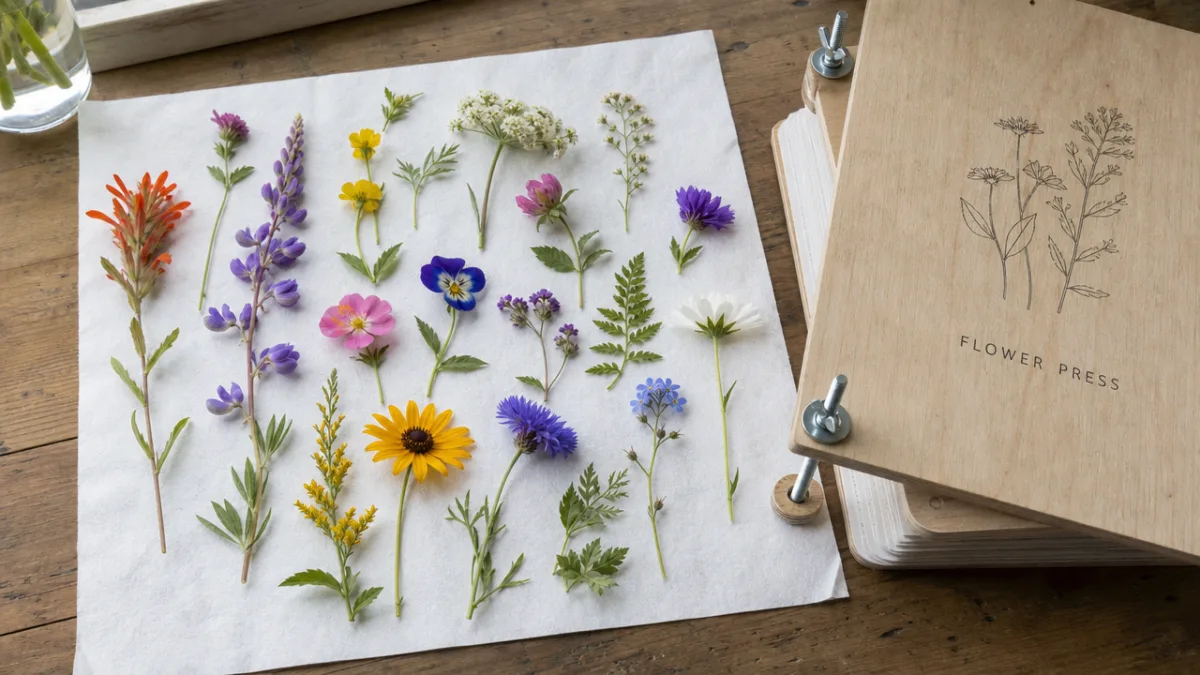
Framed Botanical Art: Turning Pressed Flowers Into Wall Masterpieces
One of the most popular and enduring uses for pressed flowers is the creation of framed botanical art. This craft sits at the intersection of science and aesthetics, drawing inspiration from the hand-illustrated herbarium plates produced by generations of naturalists and explorers who catalogued the plant world’s extraordinary diversity. Modern pressed flower framing takes these historical cues and runs with them, offering everything from spare, minimalist single-specimen compositions to lush, layered arrangements that resemble botanical illustrations brought to three-dimensional life beneath glass.
Creating a framed pressed flower piece requires only a few straightforward supplies beyond your dried specimens. A deep shadow box or a standard picture frame with a glass front, a piece of acid-free card stock or watercolor paper in your chosen background color, a pair of fine-tipped tweezers for positioning delicate petals without damaging them, and a small brush applicator with PVA glue or a dedicated botanical adhesive are all you need to get started. Planning your composition on the background paper before committing to glue is strongly recommended, as this allows you to experiment freely with arrangements until you find a layout that feels harmonious and visually balanced.
The color story of your composition deserves careful thought. Monochromatic arrangements, using flowers in varying shades of a single hue, create a sense of elegant restraint and allow the subtle tonal variations within each bloom to shine. Complementary color pairings, such as violet and yellow or coral and teal-leafed herbs, inject energy and vibrancy into a piece. Many experienced pressed flower artists also incorporate non-flower botanical elements such as fern fronds, grass seed heads, maple leaves, and eucalyptus sprigs to add texture, movement, and a sense of lush naturalistic abundance that elevates the finished artwork considerably.
Pressed Flower Resin Projects: Jewelry, Coasters, and Keepsakes
The world of epoxy resin crafting has opened up an extraordinary new frontier for pressed flower enthusiasts, allowing them to encapsulate their botanical specimens in clear, hard, permanent settings of remarkable beauty. Resin projects offer a fundamentally different aesthetic from framed art, trading the delicate, paper-flat quality of traditional pressed flower work for a glossy, jewel-like dimensionality that feels both contemporary and magical. The range of objects you can create using pressed flowers and resin is genuinely staggering, spanning everything from wearable jewelry to functional home accessories.
Pressed flower jewelry is perhaps the most popular resin application. Pendants, earrings, rings, and bracelets can all be made by casting pressed flowers into small silicone molds filled with clear casting resin. The key to stunning resin jewelry lies in choosing flowers and leaf fragments that are completely and thoroughly dry before encapsulation, since any residual moisture trapped inside the resin will cause clouding that permanently mars the clarity and beauty of the finished piece. Tiny specimens such as individual forget-me-not florets, miniature viola faces, and delicate herb sprigs work especially well in small jewelry molds, their intricate details beautifully magnified through the polished resin surface.
Beyond jewelry, pressed flower resin coasters have become a staple of the craft world for very good reason. A set of four coordinated coasters, each featuring a different pressed flower arrangement cast in resin and finished with a flat back, makes an extraordinarily thoughtful and personal gift that far surpasses anything available in a shop. Bookmarks, keychains, paperweights, and decorative trays are all equally achievable resin projects for the enthusiastic home crafter. As you grow more confident working with resin, you may wish to experiment with adding elements such as gold leaf flakes, dried moss, or small shells alongside your pressed flowers to create compositions of even greater richness and complexity.
- Pressed flower pendants: Choose a teardrop or round silicone mold, pour a thin base layer of resin, allow it to partially cure, place your flower face-down, then pour a final sealing layer.
- Botanical coasters: Use square or circular molds at least four inches across; arrange larger flower specimens for visual impact visible from table height.
- Resin bookmarks: Rectangular molds approximately two inches by six inches are ideal; incorporate ribbon loops before the final resin layer fully sets.
- Decorative paperweights: Dome-shaped molds create classic dome paperweights; layer multiple pressed flowers at different depths for a three-dimensional garden effect.
- Serving trays: Pour resin over a wooden tray base with flowers arranged across the surface; finish with multiple sealing coats for a food-safe, wipe-clean surface.

Pressed Flower Stationery, Cards, and Paper Goods
Long before resin and shadow boxes entered the pressed flower repertoire, crafters were adorning paper goods with their botanical specimens, and this tradition remains one of the most charming and versatile applications of the art. Pressed flower stationery carries a sense of personal warmth and intentionality that printed alternatives simply cannot replicate. When you send a handmade card decorated with a real pressed flower from your own garden, you are sharing a living fragment of your world with another person in the most literal and touching sense imaginable.
Making pressed flower greeting cards is an ideal entry-level project for anyone new to the craft. A blank card blank in a neutral tone, a few perfectly pressed specimens, a fine brush loaded with a thin coat of PVA glue, and a gentle hand are all that stands between you and a finished card of genuine beauty. Positioning your flowers using tweezers rather than fingers helps prevent the transfer of oils from your skin, which can discolour delicate petals over time. Once your flowers are adhered and fully dry, a thin coat of Mod Podge applied over the entire surface seals the arrangement, adds a subtle sheen, and significantly extends the longevity of the finished piece.
The world of pressed flower paper goods extends well beyond greeting cards. Handmade bookmarks laminated between two strips of clear contact paper make cherished gifts for book lovers. Pressed flower gift tags tied to wrapped presents with twine elevate even the simplest package into something memorable. Journaling enthusiasts incorporate pressed flowers directly into their pages, using them as decorative elements alongside handwritten text and watercolor washes. Bespoke wedding stationery featuring pressed flowers that match the bridal bouquet has also become a sought-after trend, creating a cohesive botanical narrative that runs from save-the-date cards all the way through to pressed bouquet preservation as a lasting memento of the day.
Seasonal and Occasion-Based Pressed Flower Projects for Year-Round Creativity
One of the greatest joys of pressed flower crafting is its deep connection to the rhythms of the natural year. Each season brings its own roster of beautiful candidates for pressing, meaning that your craft practice can evolve continuously through spring, summer, autumn, and winter, always reflecting the botanical world unfolding just beyond your door. Building a diverse archive of pressed specimens gathered across multiple seasons gives you an extraordinary palette to draw from throughout the year, allowing you to create pieces that feel alive with seasonal character and personal meaning.
Spring offers some of the most delicate and romantically beautiful specimens for pressing. Cherry blossoms, though fragile, press with breathtaking results when handled with care. Forget-me-nots create charming clouds of tiny blue flowers perfect for fine stationery work. Lily of the valley sprigs, primroses, and the first unfurling fronds of young ferns all press beautifully and serve as potent botanical reminders of the year’s most hopeful and tender season. Summer brings bolder, more abundant material: zinnias, marigolds, lavender stems, sweet peas, and cosmos all press reliably and produce vivid, long-lasting color that holds well over time.
Autumn and winter need not signal a pause in your pressing practice. Autumn delivers a spectacular harvest of pressed material in warm amber, copper, burgundy, and gold: maple leaves, oak leaves, ginkgo fans, and the seed heads of grasses and wildflowers create compositions of rustic, nostalgic beauty. For winter pressing, evergreen sprigs, dried citrus slices, and the geometric seed pods of plants like nigella and honesty add structural interest and a sense of quiet, spare elegance to seasonal arrangements. Holiday projects such as pressed flower Christmas ornaments, Advent calendar decorations, and New Year gift tags ensure that your collection of specimens finds purpose and appreciation throughout the entire calendar year.
- Spring: Cherry blossoms, forget-me-nots, violets, primroses, lily of the valley, young fern fronds, and apple blossom sprigs.
- Summer: Lavender, cosmos, zinnias, sweet peas, marigolds, cornflowers, and herb flowers such as borage and chamomile.
- Autumn: Maple leaves, ginkgo leaves, oak leaves, grasses, seed heads, fennel fronds, and rose hips.
- Winter: Evergreen sprigs, dried citrus wheels, eucalyptus, honesty seed pods, nigella seed pods, and berried holly leaves.

Tips for Preserving Color, Displaying Your Work, and Building a Long-Term Practice
Color preservation is one of the most frequently asked-about challenges in pressed flower crafting, and with good reason. While some flowers retain their vibrant hues almost indefinitely after pressing, others fade disappointingly quickly when exposed to light and air. Understanding which flowers belong to which category saves considerable frustration and allows you to plan your projects with realistic expectations. Yellow flowers, including coreopsis, buttercups, and black-eyed Susans, tend to hold their color exceptionally well. Blue and purple flowers, such as delphiniums and blue hydrangeas, are notoriously prone to fading, though pressing them quickly and storing them in darkness significantly slows this process.
Proper display and storage conditions make a meaningful difference to the longevity of your finished pressed flower pieces. Framed works should be hung away from direct sunlight, which is the primary accelerant of color fading in all pressed botanical work. UV-protective glass, available from most framing suppliers, provides an additional layer of defense for pieces you want to preserve in their original beauty for many years. For unframed specimens stored in your archive, keep them in acid-free envelopes or folders inside a box stored in a cool, dry, dark location, clearly labelled with the species name and pressing date so your collection remains organized and easy to navigate as it grows.
Building a long-term pressed flower practice is one of the most rewarding creative decisions you can make. As your archive of specimens grows richer and more diverse, your creative possibilities expand exponentially. Consider keeping a dedicated crafting journal where you record which flowers pressed well and which presented challenges, note the techniques and adhesives that produced the best results for different projects, and sketch out ideas for future compositions. Connecting with the wider pressed flower community through online groups, local craft workshops, and botanical art societies opens up a world of inspiration, shared knowledge, and encouragement that can sustain and deepen your practice for decades to come. The garden, the hedgerow, and the wildflower meadow are endlessly generous studios, available to all of us and capable of supplying material of infinite variety and beauty throughout every season of the year.








What do you think?
It is nice to know your opinion. Leave a comment.