










21 Maple Leaf Crochet Patterns: Add Autumnal Charm to Your Creations
The Magic of Maple Leaf Crochet: Why Autumn Inspires Makers
There is something undeniably enchanting about the fall season that draws crafters toward their hooks and yarn with renewed enthusiasm. The maple leaf, with its iconic five-pointed silhouette and deeply recognizable shape, has become one of the most beloved motifs in the world of crochet. Whether you are a seasoned fiber artist or a beginner picking up a hook for the first time, recreating this timeless symbol in yarn offers a deeply satisfying creative experience that captures the very essence of autumn.
Maple leaves are celebrated not only for their beauty but also for the remarkable range of shapes and color variations they display throughout the fall season. From vibrant crimson and burnt orange to golden yellow and deep burgundy, the palette of autumn leaves translates magnificently into yarn form. Crochet artists around the world have developed an astonishing variety of patterns that capture everything from the delicate veining of a single leaf to bold, stylized interpretations that add graphic impact to home décor projects and wearable accessories alike.
Beyond their visual appeal, maple leaf crochet patterns serve a wonderfully practical purpose. They are versatile enough to work as standalone decorative pieces, appliqués on garments, embellishments on bags, or components of larger projects like blankets, wreaths, and table runners. This incredible adaptability is a major reason why maple leaf patterns have maintained their popularity season after season, attracting new fans while keeping experienced crafters consistently inspired and engaged with the craft.
Understanding the Cultural Significance of the Maple Leaf
The maple leaf carries profound cultural resonance far beyond its association with autumn. As the national symbol of Canada, it represents strength, endurance, and natural beauty on a global stage. For crochet artists, incorporating this motif into their work is often a way of honoring heritage, celebrating national pride, or simply acknowledging the universal appreciation for nature’s most spectacular seasonal display. Many makers report feeling a special connection to their work when crafting something so steeped in meaning and tradition.
In Japanese aesthetics, the practice of momijigari, or autumn leaf viewing, elevates the appreciation of falling leaves to an art form in itself. This cultural reverence for the changing leaves of autumn resonates with crafters who see their crochet maple leaves as tiny celebrations of impermanence and seasonal transition. Creating a beautifully crafted leaf in yarn is a way of freezing that fleeting autumnal magic in a form that can be treasured long after the last real leaf has fallen from the trees outside your window.
For many fiber artists, the maple leaf pattern also serves as a wonderful entry point into more complex motif work. The shape requires mastering increases, decreases, and sometimes working in the round, all of which are fundamental skills that build confidence and technical ability. Starting with a simple leaf and progressing through more intricate versions provides a natural learning pathway that keeps crafters motivated and continually growing in their practice throughout the creative journey.
Beginner-Friendly Maple Leaf Patterns to Start Your Journey
Not all maple leaf crochet patterns require advanced skills, and the abundance of beginner-friendly options available today means that anyone can dive into autumn-themed crafting without feeling overwhelmed. Simple flat leaf patterns typically use basic stitches like single crochet, half double crochet, and double crochet, combined with strategic increases and decreases to form the distinctive lobed shape. Most beginner patterns can be completed in under an hour, making them perfect for crafters who want quick, satisfying results that build momentum and enthusiasm.
When starting out with maple leaf crochet, it helps to understand the fundamental structure of the pattern. Most basic versions begin with a foundation chain that forms the stem, then work outward to create each of the five lobes through a series of chain spaces and shell stitches. The symmetry of the leaf requires careful attention to stitch counts on each side, but once you understand the logic of the construction, the pattern becomes almost intuitive. Many beginners find that after making just two or three leaves, the process flows naturally from muscle memory alone.
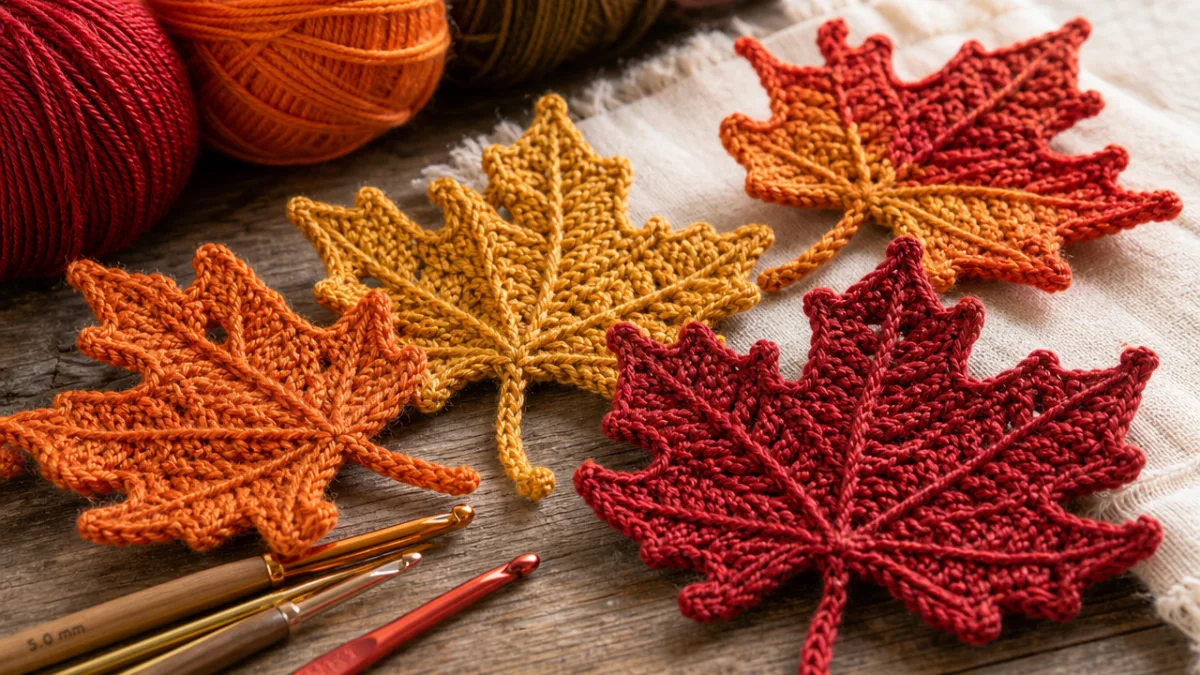
Choosing the right yarn and hook size is especially important for beginners tackling maple leaf patterns. Worsted weight yarn in a smooth, non-textured fiber is ideal for clearly seeing your stitches and understanding how the shape develops as you work. Acrylic yarns in autumn shades are widely available and affordable, allowing new crafters to practice without worrying about wasting expensive materials. A size 5mm hook is a reliable starting point for most worsted weight patterns, though always check the recommended gauge in your chosen pattern before beginning your first leaf.
Top Beginner Maple Leaf Pattern Styles
Among the most popular beginner options are flat single-layer maple leaves worked in rows, which produce a neat, pressed appearance perfect for appliqués and decorative accents. These patterns are typically written in straightforward language with clear stitch abbreviations, making them accessible to anyone who has learned the basics of reading a crochet pattern. Many are available as free downloads from crafting websites and social media platforms, meaning you can experiment with multiple designs without any financial investment as you find your personal style.
Another beginner favorite is the simple granny-square-inspired maple leaf, which incorporates the familiar granny square construction method into a leaf-shaped format. This approach appeals to crafters who already have granny square experience and want to expand their motif repertoire without learning entirely new techniques. The granny-style leaf tends to have a slightly more open, lacier texture that looks beautiful when worked in fingering weight yarn and used as a decorative element on shawls, cardigans, or autumn-themed home accessories.
Scalloped edge leaf patterns represent yet another beginner-accessible option that delivers impressive results with minimal technical challenge. By working a series of small shells along the outer edge of a basic leaf shape, these patterns create the illusion of detailed lobing without requiring advanced shaping techniques. The finished leaves have a charming, folk-art quality that translates beautifully into garlands, napkin rings, and seasonal wreath embellishments. They also make wonderful first projects for children learning to crochet under the guidance of an experienced adult mentor.
Intermediate and Advanced Maple Leaf Patterns for Experienced Crafters
Once the basics are firmly established, intermediate and advanced crochet artists will find an extraordinary wealth of more technically demanding maple leaf patterns waiting to challenge and excite them. These designs often incorporate dimensional construction techniques, intricate stitch patterns, and complex colorwork that elevates the humble leaf into a genuine work of textile art. The jump from beginner to intermediate patterns opens up a whole new world of creative possibility, from three-dimensional sculptural leaves to lace-weight wonders with incredible delicacy and detail.
Three-dimensional maple leaf patterns are among the most impressive achievements in intermediate crochet. By working separate front and back panels and joining them with a seam, or by using short-row techniques to add curvature and dimension, skilled crafters can produce leaves that appear to have been plucked directly from a living tree. These dimensional leaves are often stuffed lightly with polyester fiberfill to help them hold their shape, and they make stunning ornaments, pincushions, and decorative bowl fillers that draw admiring comments from anyone who sees them displayed in the home.
Advanced Irish crochet techniques offer another spectacular avenue for experienced maple leaf enthusiasts. Traditional Irish crochet, which involves working raised motifs against a mesh background, translates beautifully into leaf forms. The result is a leaf with sculptural, bas-relief detailing that showcases the true potential of crochet as a fine textile art. While these patterns demand patience, precision, and a solid foundation of advanced stitching skills, the extraordinary beauty of the finished pieces makes every moment of careful work deeply worthwhile for dedicated fiber artists.
Colorwork and Tapestry Techniques for Maple Leaves
Colorwork maple leaf patterns represent some of the most visually striking designs available to intermediate crafters. Using techniques such as tapestry crochet, intarsia, or mosaic crochet, it is possible to create leaves that feature multiple colors worked simultaneously, producing gradient effects, realistic vein detailing, or bold geometric interpretations of the classic leaf shape. These patterns require the ability to manage multiple yarn colors without tangling and to maintain even tension across color changes, skills that develop quickly with practice and patience.
Mosaic crochet is a particularly accessible entry point into colorwork maple leaf patterns, as it requires only one color per row while still producing the impression of complex two-color stranded work. The technique involves working with one color and strategically skipping stitches to reveal the contrasting color from the previous row. Maple leaf motifs worked in mosaic crochet have a striking, almost woven appearance that looks far more complex than the technique actually requires, making it a wonderful way for intermediate crafters to impress with their work while still enjoying a manageable level of technical challenge.
For the truly advanced crafter, Tunisian entrelac maple leaf patterns push the boundaries of what is achievable with a hook and yarn. Tunisian crochet, which uses a special elongated hook to work a series of loops in forward and return passes, produces a fabric with a unique drape and texture that differs fundamentally from standard crochet. When applied to maple leaf motifs, the result is a richly textured, almost woven fabric that captures the complex surface quality of real autumn leaves with remarkable fidelity. These patterns are rare, highly sought after, and represent a genuine pinnacle of the crochet craft.
Creative Projects Using Maple Leaf Crochet Patterns
The true beauty of mastering maple leaf crochet patterns lies in the extraordinary range of projects they make possible. A single leaf pattern, once learned, becomes a versatile tool that can be applied across dozens of different creative contexts. Understanding how to deploy your leaf motifs effectively is what separates a collection of pretty individual pieces from a cohesive body of work that genuinely transforms your home environment and personal style for the autumn season and beyond.
Home décor projects represent perhaps the most immediately impactful use of maple leaf crochet motifs. A garland of crocheted leaves in graduated autumn colors, strung on natural twine, creates an instant seasonal focal point when draped across a mantelpiece or dining table. Table runners incorporating repeated leaf motifs bring warmth and texture to holiday gatherings. Crocheted leaf wreaths, worked around a wire or foam base, provide a handmade welcome to guests that carries far more personal meaning than any commercially produced decoration could hope to achieve.
Wearable projects incorporating maple leaf crochet are equally compelling and diverse. Leaf appliqués can transform a plain cardigan into a seasonal statement piece when arranged along a neckline or scattered across the body. Maple leaf earrings worked in fine crochet thread and stiffened with fabric stiffener or clear nail polish make delightful autumn accessories. Hats, scarves, and mittens adorned with leaf motifs bring autumnal charm to cold-weather wardrobes, and the handmade quality of these accessories gives them a warmth and personal significance that mass-produced alternatives simply cannot replicate.

Gift Ideas and Seasonal Decor Projects
Maple leaf crochet patterns open up a world of thoughtful, handmade gift possibilities that resonate deeply with recipients precisely because of the time, skill, and care invested in their creation. A set of crocheted leaf coasters in autumn colors makes a charming housewarming gift. A leaf-trimmed baby blanket in soft, neutral tones with delicate leaf borders becomes an heirloom keepsake. Bookmarks, key fobs, and bag charms worked as tiny maple leaves are quick to make in bulk and always appreciated as small tokens of affection and seasonal celebration.
Seasonal home decorating with crocheted maple leaves extends beautifully into harvest-themed tablescapes and festive centerpieces. Scattering crocheted leaves among pillar candles, pinecones, and seasonal produce creates an organic, artisan aesthetic that feels both intentional and effortlessly natural. Framing a particularly beautiful individual leaf in a shadow box with pressed real leaves creates a piece of mixed-media wall art that celebrates the season in a uniquely personal way. These kinds of creative combinations showcase the versatility of crochet as a craft medium that can dialogue meaningfully with other natural and handmade materials.
Charity and community projects also benefit wonderfully from the production of maple leaf crochet motifs. Many crafting groups organize seasonal blanket drives where individual contributors each make a set number of leaf squares or motifs that are then joined into larger afghans for donation to nursing homes, shelters, or hospitals. The collective nature of these projects builds community among makers while producing something genuinely useful and beautiful for recipients who benefit from the comfort and warmth of a handmade blanket. Participating in such a project connects individual crafters to something larger than their own creative practice.
Choosing the Right Yarn and Materials for Maple Leaf Crochet
Selecting appropriate materials is one of the most important decisions you will make when embarking on any crochet project, and maple leaf patterns are no exception to this fundamental truth. The yarn you choose has an enormous impact on the final appearance, texture, drape, and durability of your finished leaves. Understanding the properties of different fiber types and weights, and how they interact with various pattern constructions, will help you make informed choices that ensure your finished pieces look exactly as you envision them from the very beginning.
For bold, graphic leaf motifs intended for home décor use, cotton yarn is an excellent choice. Cotton holds its shape well, produces crisp stitch definition that showcases the architectural quality of a well-constructed leaf, and is available in a gloriously rich range of autumn colors. It is also washable and durable, which matters for items like coasters, table runners, and placemats that will receive regular use and need to withstand repeated laundering without losing their shape or vibrancy. Mercerized cotton, with its subtle sheen, adds an extra dimension of elegance to leaf motifs intended for display.
Wool and wool-blend yarns bring their own unique qualities to maple leaf crochet projects. The natural elasticity of wool makes it forgiving to work with, helping stitches look even and consistent even for less experienced crafters. Wool also has wonderful thermal properties, making it ideal for autumn and winter wearables like hats, scarves, and mittens embellished with leaf motifs. Superwash treated wool blends offer the warmth and beauty of natural fiber with the practical convenience of machine washability, striking a useful balance between luxury and everyday practicality for busy modern crafters.
Tools and Notions for Perfect Results
Beyond yarn selection, having the right tools and notions on hand can make a significant difference to your experience of crocheting maple leaf patterns and to the quality of your finished work. High-quality crochet hooks with ergonomic handles reduce hand fatigue during longer crafting sessions and help maintain consistent tension across your work. Brands offering silicone grip handles or contoured aluminum shafts are particularly popular among crafters who work frequently and value comfort as much as precision in their tools.
Stitch markers are invaluable when working maple leaf patterns that require precise placement of increases, decreases, or color changes. Locking stitch markers that can be attached directly to the fabric are especially useful for marking the beginning of rounds or the tips of individual lobes, helping you keep track of your position in the pattern without losing your place. A good tapestry needle is essential for weaving in ends neatly on finished leaves, particularly when working with multiple colors that produce numerous yarn tails requiring careful management to produce a clean, professional finish.
Blocking tools deserve special mention for anyone serious about producing beautiful, professional-quality maple leaf crochet. Blocking, the process of wetting or steaming finished pieces and pinning them to shape while they dry, transforms a slightly uneven, curled crocheted leaf into a crisp, beautifully defined motif that lies flat and displays its shape with maximum clarity. Blocking boards, rust-proof pins, and a spray bottle or clothes steamer are modest investments that produce dramatic improvements in finished piece quality, particularly for lace-weight or finer fiber projects where the delicate construction really benefits from precise, careful shaping.
Tips for Customizing and Combining Maple Leaf Patterns
One of the great joys of crochet as a craft is the enormous scope it offers for personalization and creative adaptation of existing patterns. Maple leaf designs, in particular, lend themselves beautifully to customization, whether that means altering color schemes to match specific décor palettes, resizing patterns by changing yarn weight and hook size, or combining multiple leaf designs into original composite projects that go far beyond anything the original pattern designer may have envisioned. Embracing this spirit of creative adaptation transforms you from a pattern follower into a genuine textile designer in your own right.
Resizing maple leaf patterns is simpler than many crafters realize. Because most leaf patterns work on a principle of proportional increases and decreases rather than fixed stitch counts tied to a specific fabric size, switching from worsted weight to bulky yarn with an appropriately sized hook will produce a dramatically larger leaf using exactly the same pattern instructions. Conversely, working the same pattern in fingering weight thread with a fine steel hook produces a delicate miniature leaf that looks like fine lacework. This scalability makes a single good maple leaf pattern extraordinarily versatile across many different project types and scales.
Color customization opens up particularly exciting creative possibilities for maple leaf crochet projects. Rather than defaulting to traditional autumn shades, consider working leaves in unexpected colorways that speak to your personal aesthetic or the specific context of your project. Icy blues and silver-grays create a frost-touched winter leaf perfect for holiday décor. Deep jewel tones of emerald, sapphire, and amethyst produce richly sophisticated leaves for year-round home accessories. Even neon and pastel interpretations of the maple leaf form can be striking in the right creative context, demonstrating that this timeless motif need not be confined to any single seasonal or stylistic moment.
Combining Leaves into Larger Projects
The most ambitious and rewarding application of maple leaf crochet skills is the creation of large-scale projects that bring multiple individual leaf motifs together into cohesive, complex compositions. Full-sized throw blankets constructed from individual leaf squares joined in a granny-style construction are achievable goals for dedicated crafters, and the results are genuinely spectacular. The key to success in these larger projects lies in consistency of gauge across all individual motifs, which requires careful attention to tension and the use of blocking to ensure all pieces are the same size before joining begins.
Joining methods for multi-motif maple leaf projects deserve careful consideration, as the joining technique significantly affects both the appearance and the structural integrity of the finished piece. Flat slip stitch joins worked through the back loops only create neat, minimal seams that let the leaf shapes speak for themselves. The join-as-you-go technique, where each new motif is attached to existing pieces as the final round is worked, eliminates the need for separate seaming and can produce beautifully intricate results when the joining itself creates an additional decorative element between the individual leaf shapes.
Finally, keeping a project journal or portfolio of your maple leaf crochet work provides both practical and creative benefits that many experienced crafters find invaluable over time. Recording the yarn brands, colors, hook sizes, and pattern modifications used for each project means you can reproduce successful results and avoid repeating approaches that did not work as intended. Photographing finished pieces in good natural light creates a visual record of your creative development that can serve as a source of inspiration, a promotional portfolio if you sell your work, and a personal archive of the skill, creativity, and dedication you have brought to the beautiful and endlessly rewarding art of maple leaf crochet.








What do you think?
It is nice to know your opinion. Leave a comment.