










Soda Tab Beetles: The Tiny Aluminum Insects Taking the Internet by Storm
What Is a Soda Tab Beetle?
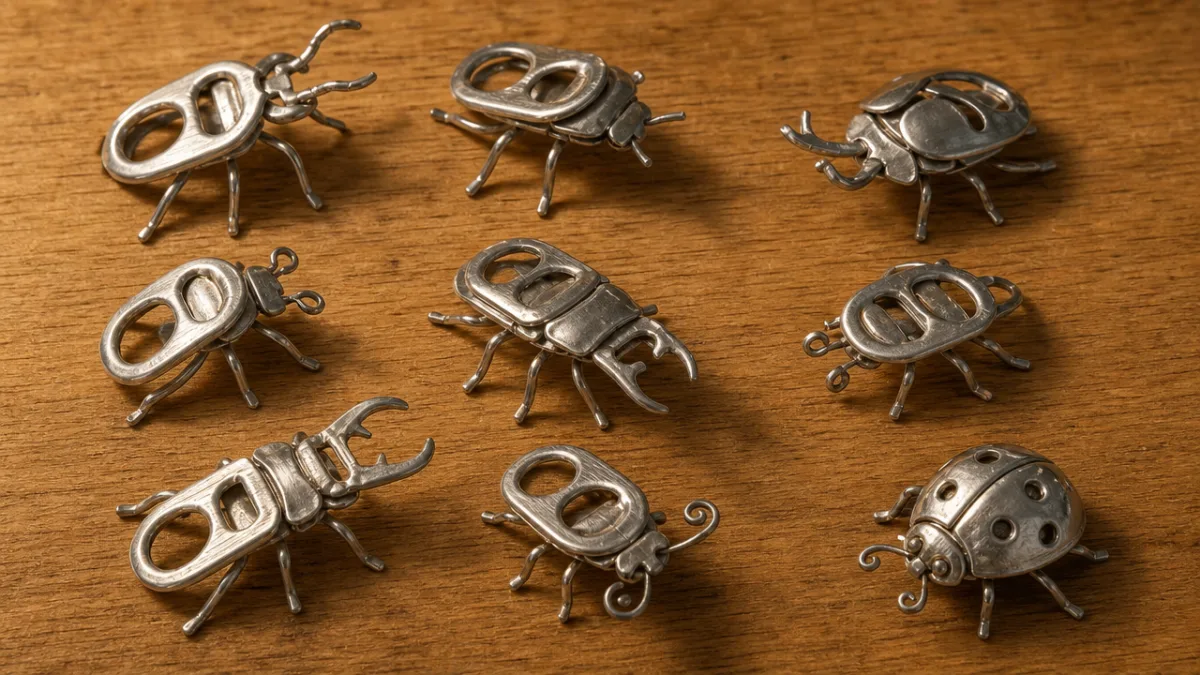
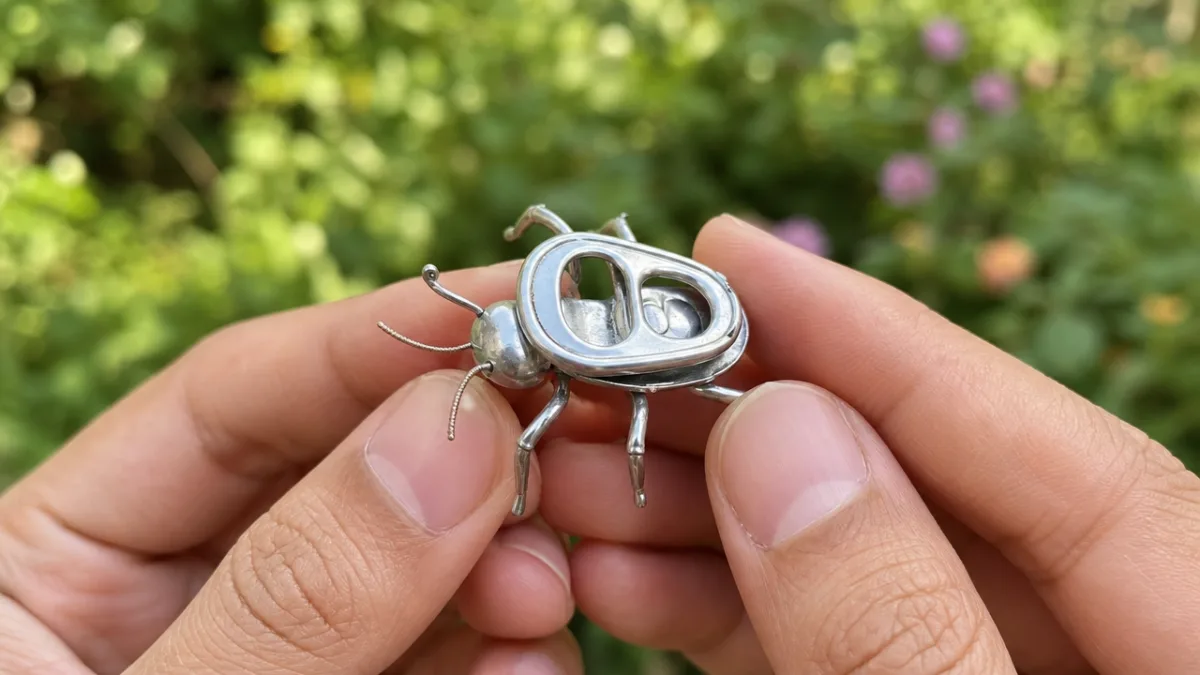
A soda tab beetle is a miniature sculptural insect crafted entirely from the pull tabs found on aluminum beverage cans. These clever little creations have captured the imagination of crafters, upcyclers, and art enthusiasts worldwide, transforming what would otherwise be discarded metal into something surprisingly lifelike and charming. The finished beetles typically measure just a few centimeters in length, yet their level of detail is remarkable given the simplicity of the materials involved.
The concept draws on a long tradition of found-object art, where everyday discarded materials are repurposed into something meaningful or beautiful. Soda tab jewelry has existed for decades, with craftspeople weaving and linking tabs into bracelets, necklaces, and bags. The beetle, however, represents a more sculptural evolution of this tradition — a three-dimensional figure that mimics the form of a real insect with surprising accuracy. Its rounded body, splayed legs, and antenna-like extensions all emerge naturally from the geometry of the humble pull tab.
What makes the soda tab beetle especially appealing is its accessibility. Nearly everyone has encountered a pull tab, and the idea that such a commonplace, throwaway object can become a tiny piece of art is genuinely exciting. No special tools are required beyond perhaps a pair of needle-nose pliers, and no artistic training is necessary to attempt one. This democratic quality has helped the craft spread rapidly through social media platforms, including Pinterest, where tutorials and finished examples are pinned and shared by the thousands.
A Brief History of Pull Tab Art and Upcycled Crafts
Aluminum pull tabs first appeared on beverage cans in the early 1960s, when the Schlitz Brewing Company introduced the pull-ring design in 1963. Within a few years, the detachable ring tab became standard across the beverage industry, and with it came mountains of discarded aluminum rings littering streets, beaches, and parks. It did not take long for creative minds to begin collecting and repurposing them. Early pull tab crafts were primarily functional — woven mats, purses, and belts — but over the decades the art form grew more varied and sophisticated.
The environmental awareness movement of the 1970s and 1980s gave additional momentum to pull tab crafts. As concerns about litter and landfill waste grew, many people began looking for ways to give a second life to materials that would otherwise take centuries to decompose. Aluminum, while technically recyclable, is not always properly disposed of, and craftspeople saw an opportunity to intercept these small pieces of metal before they entered the waste stream. Community groups, youth organizations, and individual artists all began incorporating pull tabs into their creative practices.
Today, pull tab art exists within the much broader context of the upcycling movement, which has grown enormously in both cultural visibility and practical reach. Shows like television crafting competitions, influential blogs, and especially visual platforms like Pinterest and Instagram have given upcycled art a global audience. The soda tab beetle fits perfectly into this contemporary moment — it is shareable, tactile, ecological in spirit, and just unusual enough to stop a scroll and demand a second look.
How to Make Your Own Soda Tab Beetle
Making a soda tab beetle requires only a handful of materials and a bit of patience. The process is meditative and satisfying, and most crafters find that after completing their first beetle, they immediately want to make another. The basic materials you will need are straightforward and inexpensive, making this an ideal project for beginners, hobbyists, and children working under adult supervision.
Here is what you will need to get started:
- Approximately 6 to 10 aluminum pull tabs, collected from beverage cans
- A pair of small needle-nose pliers for bending and shaping
- Thin wire or fishing line for joining sections together
- Optional: small beads or wire for eyes and antennae
- Optional: acrylic paint or nail polish for decorative coloring
To begin, rinse and dry your pull tabs thoroughly so they are clean and free of any sticky residue. The body of the beetle is typically formed from two tabs stacked or overlapped and bent slightly to create a domed, oval shape. The legs are fashioned by carefully bending individual tabs or thin strips of wire at the joints, mimicking the angles of a real beetle’s legs. Most beetles have six legs — three on each side — and achieving a balanced, symmetrical appearance is one of the more enjoyable challenges of the craft.
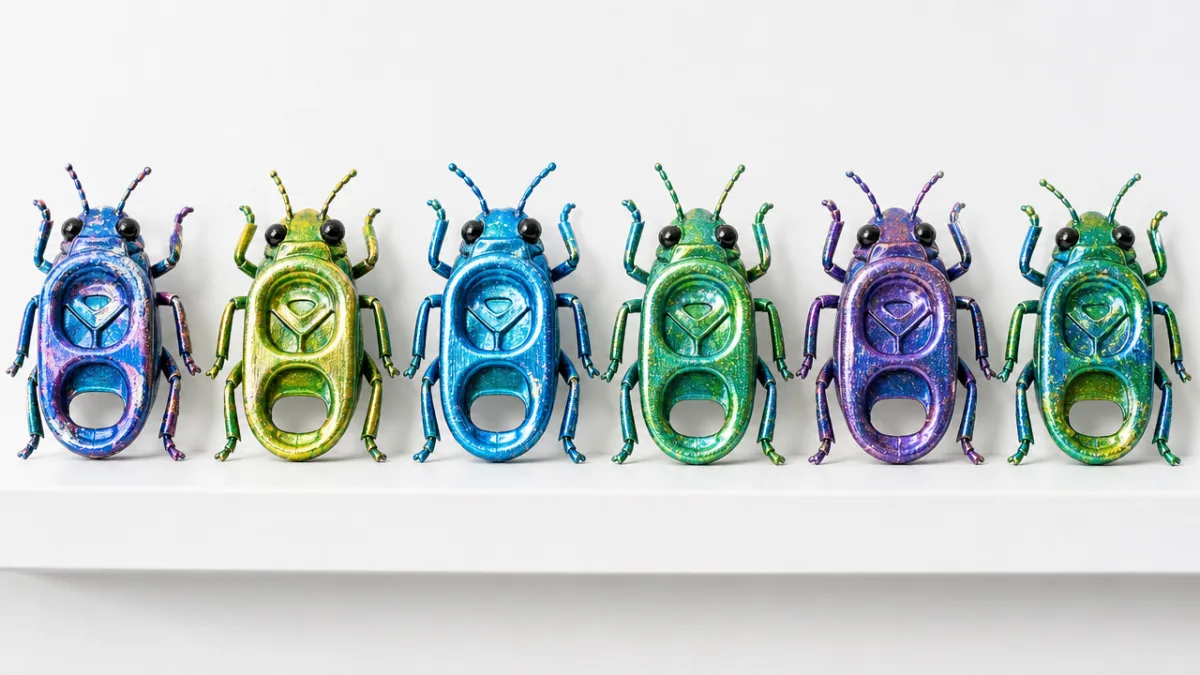
Once the body and legs are formed, they are wired or linked together at the thorax section. The result is a figure that can stand independently on a flat surface, its legs splayed outward and slightly downward just as a real beetle’s would be. Antennae can be added using fine wire twisted into subtle curves, and small round beads make convincingly glossy eyes. At this stage, you may leave the beetle in its natural silver aluminum finish, which has an appealing industrial aesthetic, or you may paint it in the iridescent blues, greens, and golds that real beetles display.
Why People Love Making Soda Tab Beetles
The appeal of the soda tab beetle is multi-layered, which helps explain why it has resonated so broadly with crafters of vastly different backgrounds and skill levels. On the most immediate level, it is simply fun. There is a particular joy in making something that looks complicated out of something that looks simple, and the gap between a discarded pull tab and a finished, lifelike beetle is wide enough to feel genuinely impressive, both to the maker and to anyone they show it to.
There is also a deeply satisfying ecological dimension to the craft. Beverage can tabs are frequently littered or improperly discarded, and even when they reach recycling facilities, they are sometimes too small to be efficiently processed by standard machinery. By collecting and transforming these tabs into art objects, crafters are giving a second life to material that might otherwise contribute to environmental harm. Many makers describe the experience of gathering tabs over weeks or months as itself becoming part of the creative process — a slow accumulation that makes the finished beetle feel even more earned.
For many people, the soda tab beetle also represents an entry point into broader creative practices. Someone who would never describe themselves as an artist may attempt a beetle on a whim, discover they enjoy the process of working with their hands, and find themselves drawn into other crafts and art forms. This gateway quality is one of the most valuable things about accessible folk crafts, and it is why tutorials for the soda tab beetle have been spread and saved so enthusiastically across social media platforms. The beetle is small enough to feel achievable but detailed enough to feel like a real creative accomplishment.
Variations, Customization, and Advanced Techniques
Once a crafter has mastered the basic soda tab beetle, a world of variation and personalization opens up. The silhouette of the beetle can be modified to mimic specific real-world species, from the rounded dome of a ladybird beetle to the elongated form of a ground beetle or the wide, flat profile of a stag beetle. Each variation requires slightly different tab arrangements and bending techniques, giving experienced makers an ongoing creative challenge that keeps the craft fresh and engaging even after dozens of completed figures.
Color is one of the most exciting areas of customization. Real beetles are among the most visually spectacular insects on the planet, displaying colors that include iridescent emerald green, deep cobalt blue, vivid scarlet, and burnished gold. Nail polish, with its wide color range and metallic finishes, is a particularly popular medium for painting soda tab beetles, as it adheres well to aluminum and dries to a glossy finish that mimics the chitinous sheen of a real insect’s carapace. Some crafters use multiple layers of translucent colors to achieve depth and iridescence.
Beyond individual beetles, some crafters have begun creating entire diorama-style scenes featuring multiple soda tab insects in naturalistic settings. A shadow box might display a cluster of beetles on a piece of preserved bark, or a mobile might suspend several beetles at different heights to create the impression of a swarm in flight. Others have begun incorporating soda tab beetles into jewelry, attaching a finished figure to a brooch pin or pendant bail to create wearable art that is as much conversation piece as accessory. The possibilities genuinely multiply the more creative attention is brought to bear on the basic form.
The Soda Tab Beetle as Cultural and Educational Object
Beyond its appeal as a craft project, the soda tab beetle carries surprising cultural and educational weight. Entomology — the scientific study of insects — is a field that often struggles to capture public interest, despite the fact that insects are among the most ecologically vital organisms on Earth. The soda tab beetle, precisely because it is whimsical and non-threatening, can serve as a gentle introduction to the world of real beetles, prompting curiosity about the diverse and spectacular insect families it evokes.
Teachers and educators have begun incorporating soda tab beetles into classroom projects that blend art, environmental education, and basic biology. A lesson might begin with students collecting tabs at home, progress through a discussion of insect anatomy — body segments, leg count, antennae function — and culminate in the construction of a personalized beetle figure. This kind of integrated, hands-on learning tends to be highly memorable for students, connecting abstract biological concepts to a tangible, creative act they can take home and display with pride.
The beetle also carries a certain symbolic resonance that has not been lost on more philosophically minded crafters. Beetles have appeared in human art and mythology for millennia, most famously in ancient Egyptian culture, where the scarab beetle was a powerful symbol of regeneration and protection. A small sculpture made from discarded aluminum echoes this ancient symbolism in a contemporary key — something cast off and forgotten is transformed into a figure of beauty and permanence. There is a quiet poetry to that transformation which resonates across cultures and age groups alike.
On a more practical level, communities around the world have used pull tab collection drives as charitable fundraising mechanisms. Children’s hospitals, in particular, have long organized campaigns to collect pull tabs, which are then sold to recycling centers to raise funds for patient services. The soda tab beetle fits naturally within this tradition of community-minded crafting, and some organizations have begun hosting beetle-making workshops as part of their outreach and fundraising activities, combining the pleasures of craft with the satisfaction of collective purpose.
Where to Find Inspiration and Share Your Creations
The online world offers an extraordinarily rich ecosystem of inspiration for soda tab beetle crafters at every level. Pinterest remains one of the best starting points, with dedicated boards full of finished examples, step-by-step photo tutorials, and creative variations that can spark ideas for your own projects. Searching terms like “soda tab beetle,” “pull tab insect,” or “aluminum tab art” will surface hundreds of images ranging from beginner-friendly basics to highly elaborate artistic pieces that push the medium to its limits.
Video platforms such as YouTube and TikTok host tutorial content that can be especially helpful for visual learners who want to see exactly how tabs are bent, joined, and shaped in real time. Many crafting channels have produced soda tab beetle tutorials that walk through the entire process from raw material to finished figure, often with helpful close-up shots of the trickier construction steps. These video resources are largely free and accessible, reinforcing the democratic spirit that makes the craft so appealing in the first place.
Once you have completed your own beetle, sharing it online is a natural and rewarding next step. Photographing a small metallic object like a soda tab beetle is itself a fun creative challenge — close-up macro photography, interesting backgrounds, and thoughtful lighting can all transform a simple snapshot into a striking image. Whether you share on Pinterest, Instagram, a crafting forum, or simply send photos to friends and family, the response you receive is likely to be enthusiastic. The soda tab beetle is the kind of object that makes people stop, look twice, and ask how it was made — and that question is always a wonderful place to begin a conversation about creativity, sustainability, and the unexpected potential of the everyday objects that surround us.








What do you think?
It is nice to know your opinion. Leave a comment.