










Moses Craft: Parting the Red Sea Bible Story for Kids
The Story Behind the Craft: Moses and the Parting of the Red Sea
If there’s one Bible story that never fails to grab kids’ attention, it’s the parting of the Red Sea. Found in the book of Exodus, this is the moment when Moses leads the Israelites out of slavery in Egypt — only to find the entire Egyptian army bearing down on them from behind and a vast stretch of water blocking the way forward. Nowhere to run, nowhere to hide. The people panicked. And then God did something incredible. Moses stretched his hand over the water, and the sea split open, two towering walls of water rising up on either side with a dry path running straight through the middle.
What makes this story stick with kids long after Sunday school is over is how cinematic it is. You can almost hear the rumble of Pharaoh’s chariots, feel the crowd’s panic, and then experience that sudden hush as the waters pull back. It’s the kind of story that works its way into a child’s imagination and stays there. And when you give kids a chance to recreate it with their own hands, something shifts — the story stops being just a tale they heard and becomes a memory they made.
That’s really the heart of why crafts like this one work so well as teaching tools. When a child is busy folding paper, spreading glue, and cutting out waves, they’re not just keeping their hands occupied — they’re processing the story, asking questions, and making it their own. The parting of the Red Sea is especially perfect for this kind of activity because the visuals are so striking. Walls of water, a dry path cutting through the middle, Moses with his staff stretched out — all of it translates beautifully into a simple paper craft that even young kids can put together without much help.
What You Will Need: Materials for the Moses Paper Craft
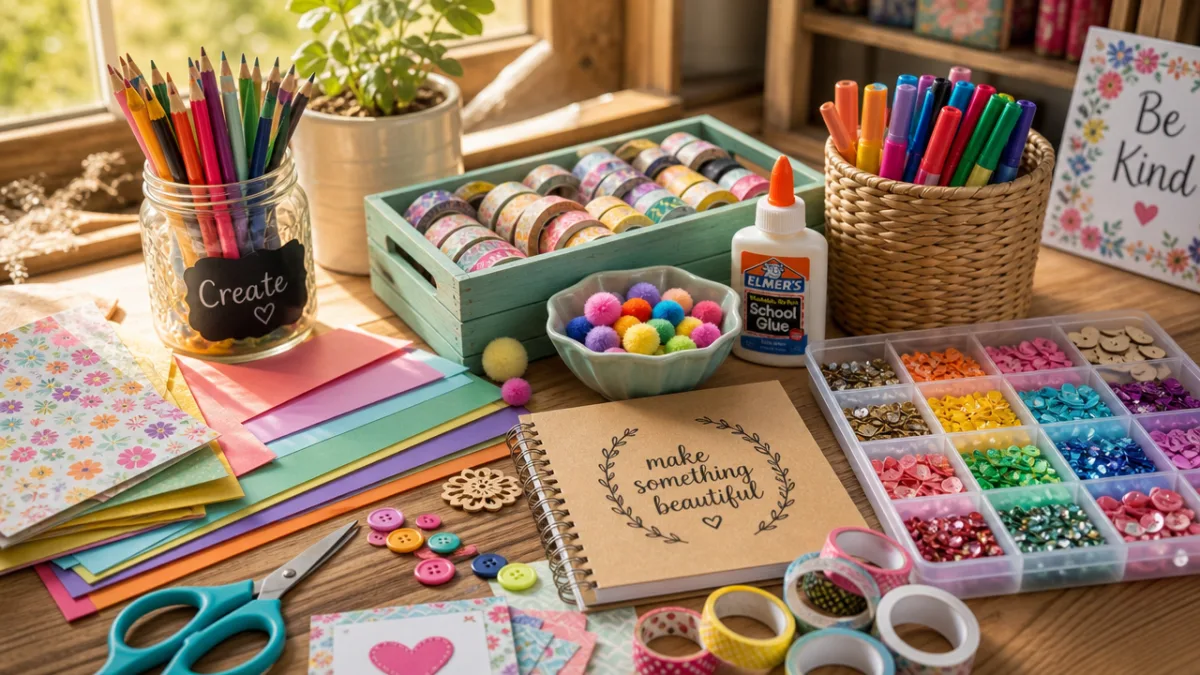
Here’s some good news: you almost certainly have everything you need for this craft already sitting in a drawer or a supply closet. There’s nothing exotic on the list, no specialty craft store runs required. That’s one of the things that makes this project such a great fit for Sunday school teachers, homeschool families, VBS coordinators, and parents looking for something meaningful to do on a rainy afternoon — you can gather everything in about five minutes and get straight to the fun part.
A quick tip before you start: lay out all your supplies before the kids sit down. If you’re working with younger children especially, having everything ready to go keeps the momentum up. Pre-cutting shapes or sorting materials into individual baggies ahead of time makes a big difference — little hands stay busy from the moment they sit down, and you get more time to actually talk about the story while everyone creates.
Here’s what you’ll need for one Moses parting the Red Sea paper craft:
- One sheet of light blue cardstock or construction paper (for the background sky and sea)
- Two sheets of darker blue or teal paper (for the walls of water)
- One sheet of tan or brown paper (for the dry ground path)
- One small Moses figure, either pre-printed and cut out or drawn by the child
- Glue sticks or liquid glue
- Scissors (child-safe for younger participants)
- Blue and white tissue paper or crinkled paper (optional, for adding texture to the waves)
- Crayons, colored pencils, or markers for decorating
- Optional: glitter glue or blue sequins for a shimmering water effect
- Optional: a printed Bible verse to glue onto the finished craft
What’s great about this list is how flexible it is. With toddlers, you can keep things super simple — just tearing and pasting pieces of blue paper while you tell the story together. With older elementary kids, you can go much further: detailed wave shapes, layered textures from crumpled tissue paper, maybe even a written summary of the passage on the back. The craft scales really naturally with whatever age group you’re working with.
Step-by-Step Instructions: How to Make the Red Sea Craft
Start with your background. Grab the light blue sheet of cardstock and lay it out however feels right to you — horizontal or vertical both work well. This piece is going to represent the sky and the sea before the miracle happens. Let kids add a little life to it first: a sun peeking out of one corner, a few clouds, maybe a hint of the Egyptian landscape in the distance. It’s a small step, but it helps kids start picturing the scene before the craft really comes together.
Next, cut or tear your tan or brown paper into a long, narrow strip — this is the dry ground path that runs through the center of the sea. Glue it horizontally across the middle of the blue background to represent the miraculous corridor the Israelites walked through. For a little extra realism, try crumpling the brown paper gently before you glue it down. It gives the ground a slightly textured, earthy look that makes the whole thing feel more three-dimensional.
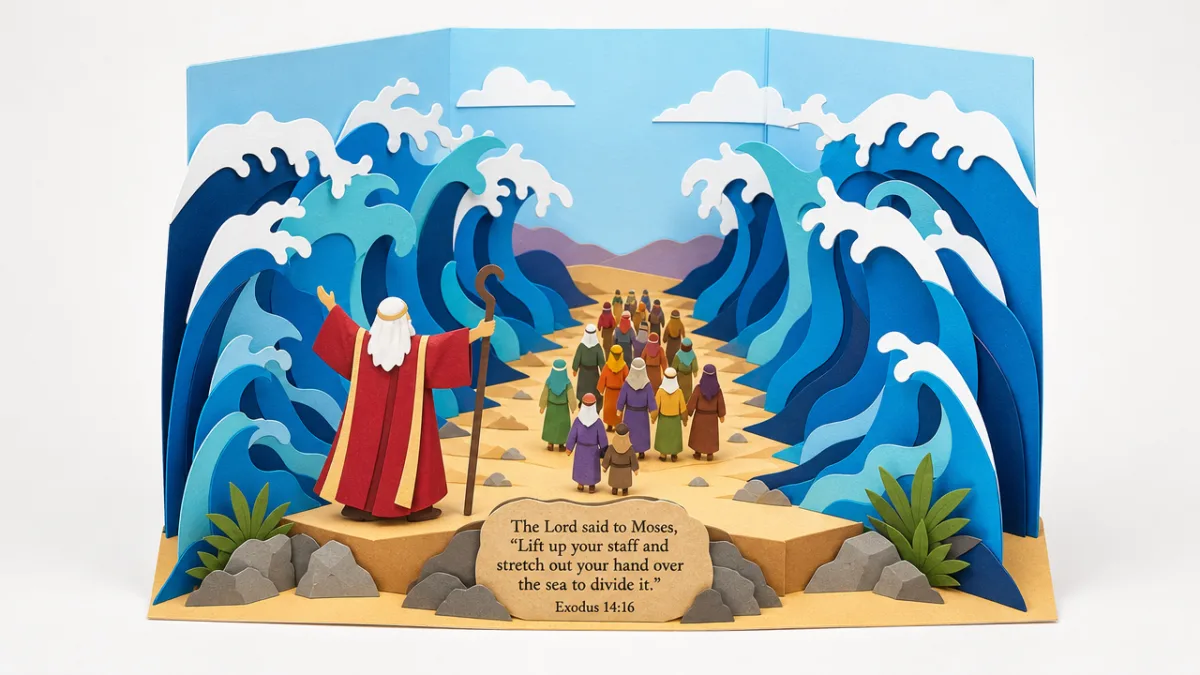
Now for the best part — the walls of water. Take each of your two dark blue sheets and fold them accordion-style from bottom to top, aiming for about four to six equal folds. When you stand these up on either side of the brown ground strip and glue them in place, they fan out into gorgeous layered waves that look like towering walls of water held back by something more powerful than physics. Kids absolutely love this step because it feels a little bit like magic — flat paper suddenly becoming something that stands up and comes alive.
Once the walls are in place, let kids go to town decorating them. White crayon or paint works beautifully for adding foam and wave crests along the tops. Blue tissue paper scrunched and glued along the edges adds great texture. A little glitter glue in silver or blue makes the waves shimmer. Finally, place the Moses figure at one end of the dry path — arm stretched out toward the water — and glue him down. The finished piece is genuinely striking, a vivid little snapshot of one of the most dramatic moments in the whole Bible.
Teaching the Bible Story While You Craft: Discussion Points and Scripture
The crafting table is actually one of the best places to have a real conversation about Scripture. Kids are relaxed, their hands are busy, and they’re not sitting in a chair feeling like they’re in school. Instead of walking through the Exodus story as a formal lesson, let each stage of the craft become a natural jumping-off point. While kids are setting up the background, ask what they already know about Moses and Egypt. While they’re cutting the ground path, wonder aloud together what it might have felt like to walk through the sea with walls of water towering on both sides. When they place Moses on the path, talk about what kind of faith it takes to raise a staff over the water when everything looks impossible.
The main Scripture passage for this lesson is Exodus 14, and one verse in particular tends to land really well with kids: Exodus 14:13 — “Do not be afraid. Stand firm and you will see the deliverance the Lord will bring you today.” It goes straight to the heart of the whole story, this idea of God asking His people to hold steady and trust Him even when things look completely hopeless. Writing this verse on a small strip of paper and gluing it to the bottom of the finished craft is a lovely touch — it gives kids something to carry home and remember.
Here are some discussion questions that work well during or after the craft:
- Who was Moses and why was he leading the Israelites out of Egypt?
- Why were the Israelites afraid when they saw the Egyptian army coming?
- What did God tell Moses to do at the edge of the Red Sea?
- Have you ever felt stuck or scared, like there was no way out of a problem?
- What does this miracle tell us about what God can do when we trust Him?
- How did the Israelites feel after they crossed safely to the other side?
These questions do something important — they invite kids to draw a line between an ancient story and their own real life. When a child can connect the Israelites standing at the edge of that sea with how they felt before a big test, or the first day at a new school, the story stops being just history. It becomes something personal. That’s really the whole point of an activity like this — not just to make a pretty craft, but to plant something in a child’s heart that they’ll carry with them for years.
Variations and Extensions: Making the Craft Your Own
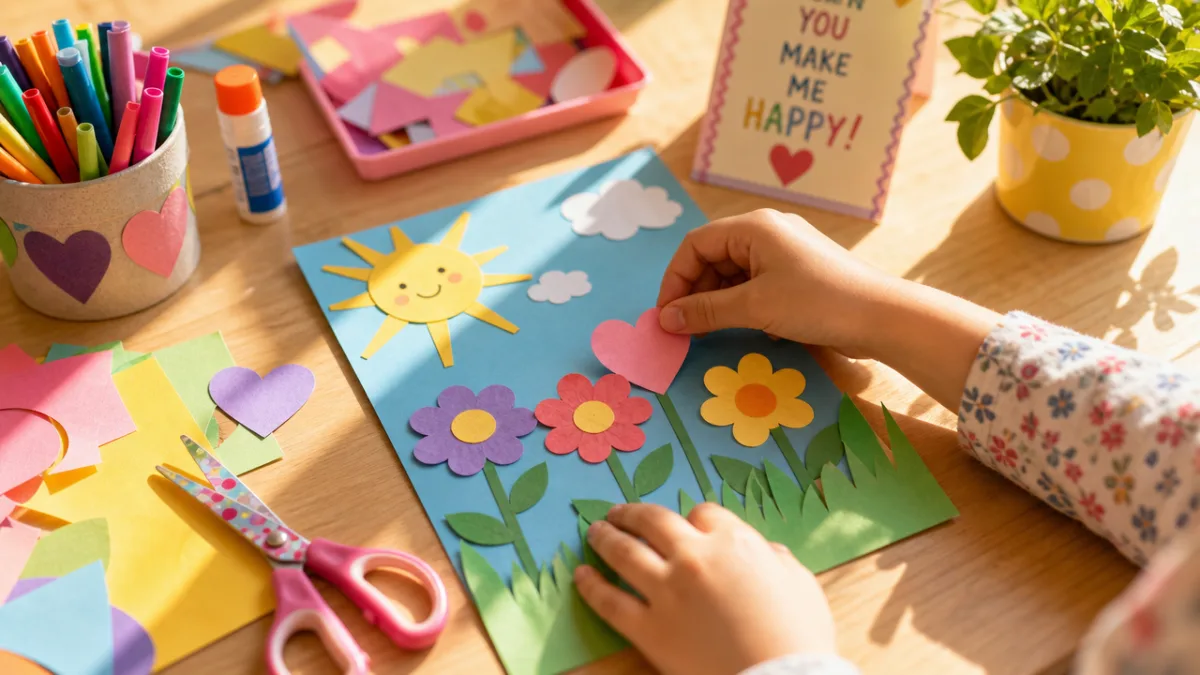
One of the best things about a simple paper craft is how easy it is to adjust it for whoever you’re working with. For the youngest kids — we’re talking two to four year olds — dramatically simplify things. Pre-cut all the shapes ahead of time and let toddlers focus on the gluing and the sticking. Use bigger, chunkier pieces and skip the accordion folding in favor of two flat blue shapes on either side of the path. At this age, the story and the sensory experience of putting things together are really what matter most.
For older kids, you can take things in a much more elaborate direction — turn the whole project into a diorama using a shoebox as the base. Make the sea walls from thicker cardstock or foam sheets that can actually stand up on their own. Add Israelite figures making their way along the path, tiny horses and chariots from the Egyptian army visible behind them, and a pillar of cloud and fire crafted from cotton balls and yellow tissue paper. Older kids can also dig into the text for details to add, like the Bible’s description of the water standing up “like a wall” on both the right and left sides.
The craft also translates really beautifully into a group project. In a Sunday school class or VBS setting, each child can make their own Moses figure, and then all the figures can march together along one long shared path displayed across a bulletin board or table. If kids add handwritten prayers or short faith declarations next to their figures, the whole thing becomes a powerful visual — the story of God’s people told in the words and hands of the children in the room. That communal element turns an individual activity into something much bigger and more meaningful.
Why Faith-Based Crafts Matter: The Bigger Picture of Childhood Spiritual Formation
In a world where kids are pulled toward screens and passive entertainment from every direction, sitting down together to make something by hand is quietly countercultural. When that handmade activity is grounded in Scripture and wrapped in conversation about faith, it becomes something genuinely powerful. Childhood development research consistently tells us that kids learn best through play, hands-on doing, and story — and faith-based crafts bring all three of those things together in the simplest possible way.
This Moses craft isn’t really about taking home a souvenir from a Bible lesson. It’s about giving a child something physical to hold onto while they work out an abstract spiritual truth — that God is faithful, that He makes a way when there seems to be no way, that His people really can trust Him even when things look scary. Every time that finished craft catches a child’s eye on the refrigerator or in a folder, it pulls them back to the story, the miracle, and the God behind it all. Physical objects carry memory in a way that worksheets and lectures genuinely can’t match.
When parents and teachers make time for activities like this, they’re doing something much bigger than filling a creative hour. They’re taking part in the ancient work of passing faith from one generation to the next. Deuteronomy 6 calls parents to speak of God’s ways “when you sit at home and when you walk along the road, when you lie down and when you get up.” Sitting around the kitchen table with glue and colored paper is a wonderfully ordinary version of that. The supplies are just supplies; the real work is the shaping of a young heart.
That’s what’s so encouraging about a craft like this one. Spiritual formation doesn’t require a fancy curriculum, a professional teacher, or an elaborate program. It needs a willing adult, a few sheets of colored paper, a child with eager hands, and a story worth telling. The story of Moses and the Red Sea has been doing exactly that — capturing imaginations and building faith — for thousands of years. With this simple, joyful craft, it can do the same for the child sitting right across the table from you today.








What do you think?
It is nice to know your opinion. Leave a comment.