










DIY Soda Tab Keychain: The Ultimate Guide to Crafting a Stylish Accessory
Introduction: Why Soda Tab Keychains Are Worth Making
There’s something deeply satisfying about turning everyday trash into something you actually want to carry around. Soda tab keychains hit this sweet spot in a way few craft projects do — they’re creative, surprisingly stylish, and kind to the planet all at once. Those little aluminum pull tabs you’ve been tossing into the recycling bin without a second thought? In the right hands, they become the building blocks of really cool accessories. This guide walks you through everything you need to know to make your own, from your very first tab to your finished keychain.
What makes this project so appealing goes way beyond just recycling something. Soda tab keychains have developed a real following in crafting communities, with designs ranging from clean, minimalist single-tab styles to elaborate woven chains that honestly look like they came from a boutique. Whether you’ve been crafting for years and want a fun weekend project, or you’ve never made anything by hand and aren’t sure where to start, this one’s genuinely great for all skill levels. The materials cost almost nothing, you don’t need many tools, and you’ll pick up the basics pretty quickly.
There’s also the gift angle — and it’s a big one. Handmade gifts have a warmth that nothing off a shelf can replicate, and a keychain made from recycled soda tabs carries its own little story. When you give someone one of these, you’re handing them something eco-friendly, one-of-a-kind, and made with actual effort. Hopefully by the end of this guide, you’ll never look at those little tabs the same way again.
Materials and Tools You Will Need
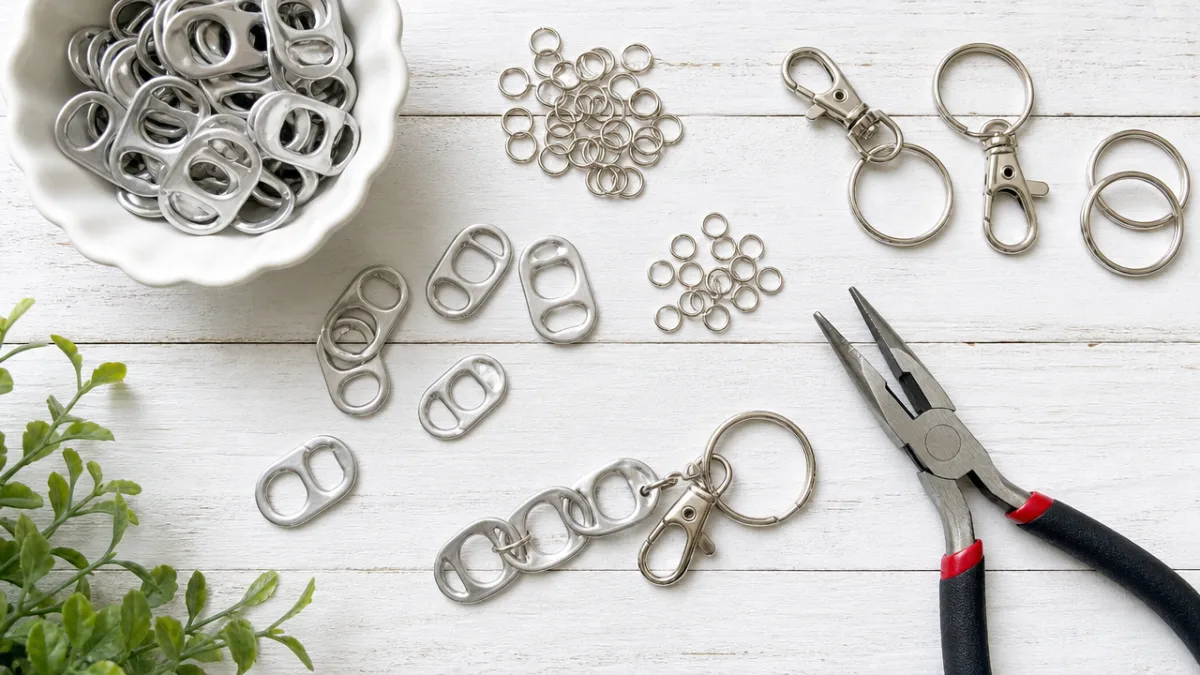
One of the best parts about this project is how little you actually need to get started. The main material is obviously the soda tabs themselves, and you’ll want to have a decent stash before you begin — even a small keychain can use anywhere from two to twenty tabs depending on the design. Start saving your own, and rope in your friends, family, or coworkers too. Most people are surprised by how quickly the tabs pile up once everyone’s on board.
Beyond the tabs, the supply list stays pretty minimal. You’ll need a keychain split ring, which you can find at any craft store, hardware store, or online for just a few cents. Jump rings — those small circular metal connectors used in jewelry making — come in handy for linking pieces together. A pair of needle-nose pliers makes opening and closing those rings much easier and saves your fingernails in the process. If you want to dress things up, optional extras like colored wire, ribbon, beads, and nail polish are great to have around.
Here’s a quick reference list of everything you might need for a basic to intermediate soda tab keychain project:
- 10 to 30 clean soda tabs (more for woven designs)
- One or two keychain split rings (standard size or large)
- Jump rings in silver, gold, or colored finishes
- Needle-nose pliers or jewelry pliers
- Sandpaper or a nail file for smoothing sharp edges
- Clear nail polish or spray sealant (optional, for coating)
- Ribbon, twine, or colored embroidery floss (optional)
- Beads, charms, or decorative elements (optional)
- A small bowl of warm soapy water for cleaning tabs
Before you start assembling anything, take a few minutes to prep your tabs properly. Give them a good wash in warm soapy water to get rid of any sticky residue, then dry them completely. While you’re at it, check each one for sharp or rough edges and smooth them down with a nail file or fine-grit sandpaper. This is especially worth doing if you’re making the keychain for a child — it only takes a minute and prevents any unpleasant little cuts later on.
Basic Single-Tab Keychain Design: Step-by-Step Instructions
The simplest version of this project uses just one or two tabs attached directly to a keychain ring, and it’s the ideal place to start if you’re new to this. Don’t let the simplicity fool you though — a clean, well-made single-tab keychain has a genuinely sleek look. The natural aluminum catches the light nicely, and the minimal design actually works really well as a blank canvas if you decide to decorate it later. Follow these steps carefully and you’ll have something you’re proud of even on your first try.
Start by picking out your best-looking tab — smooth, unbent, and with as few scratches as possible. Thread your keychain split ring through the top hole of the tab, which is the smaller of the two holes on a standard pull tab. You might need your pliers to nudge the ring open just a bit first. Once the tab is on, let the ring close back around itself. That’s your keychain — and honestly, if you’re going for an ultra-minimalist look, you could stop right here and it would look great.
If you want a little more visual interest, try threading a second tab onto the same ring so the two face each other in a layered stack. Or connect a couple of tabs with a jump ring first, letting them dangle in a short chain before you attach them to the keychain ring. Adding color is easy too — paint the tab with nail polish before assembling everything. Metallics, glitters, and soft pastels all look surprisingly good against the aluminum. Just let it dry all the way and seal it with a clear top coat so it lasts.
Intermediate Woven Chain Keychain Design
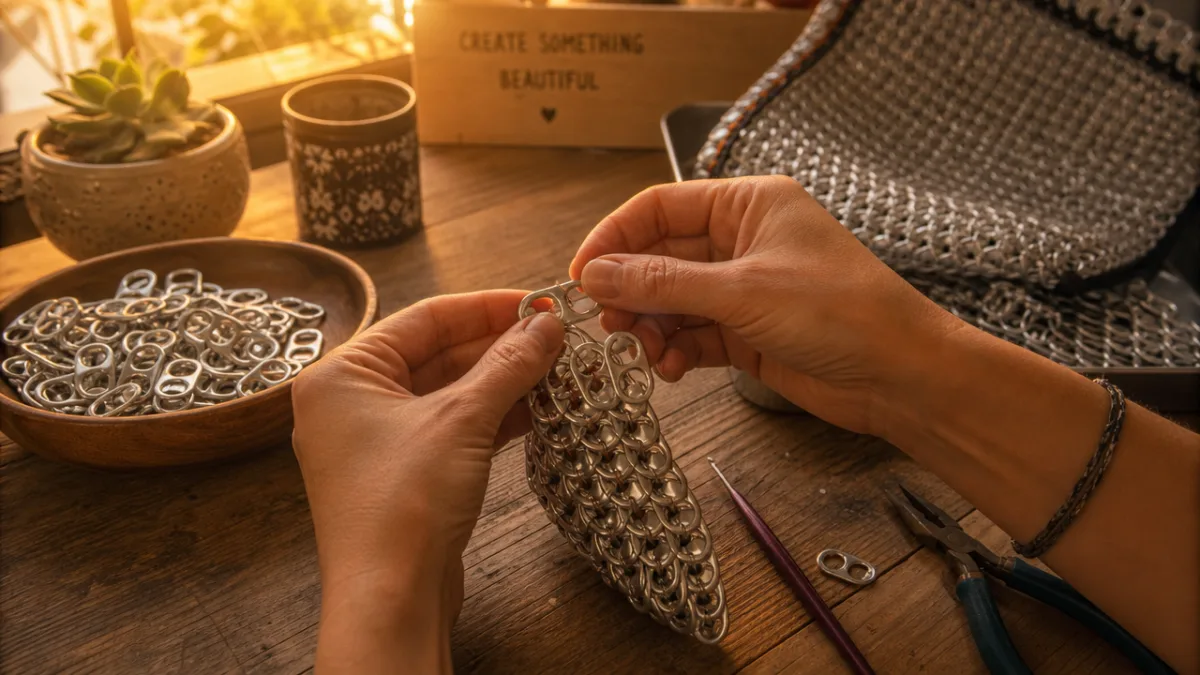
The woven soda tab chain is probably the design most people picture when they think of this craft, and it earns its reputation. It looks impressive, it holds up really well, and there are so many ways to make it your own. The basic idea is to interlock a series of tabs in a repeating pattern that creates a flat, chainmail-style band — sturdy enough to use as a keychain, bracelet, or bag charm. It takes a little practice to get the rhythm, but once it clicks, it honestly becomes kind of meditative to work on.
To get started, lay two tabs flat on your work surface with the tops facing up. Slide a third tab underneath both of them so it passes through their bottom holes at the same time. This third tab will sit perpendicular to the first two, and that three-way interlock is the foundation of the whole weave. Keep adding tabs in the same way, alternating direction as you go, and you’ll watch them start locking together into a flexible but stable strip. Try to keep your tension even throughout — too loose and the chain will be floppy; too tight and the tabs become hard to work with.
Once your chain is the length you want, attach it to a keychain ring by threading the ring through the tabs at one end. A lot of crafters like to add a jump ring at the attachment point for a bit of extra security, which is a good habit. From there, you can leave the chain as-is for that clean industrial look, or weave some ribbon or thin cord through the gaps to bring in color and texture. Painting individual tabs with nail polish before weaving them together is another great trick — it takes more planning, but the patterned result is really something.
Here are some helpful tips for getting the best results with the woven chain technique:
- Lay all your tabs out flat before starting so you can work quickly without hunting for materials.
- Work on a flat, non-slip surface like a silicone mat or a folded towel to keep tabs from sliding around.
- Check your weave pattern every few tabs to make sure you haven’t accidentally skipped a step.
- If a tab bends during assembly, swap it out rather than forcing it into place — bent tabs weaken the whole structure.
- Finish the ends neatly by folding any exposed sharp edges inward before attaching the hardware.
Decorating and Personalizing Your Soda Tab Keychain
Once you’ve got the construction down, this is honestly where things get fun. A plain aluminum keychain already looks good, but adding personal touches is what turns a cool craft project into something that actually feels like yours. The options are nearly endless, and a lot of the best embellishments cost almost nothing — which makes this a great project for anyone who wants to get creative without spending much.
Nail polish is probably the most versatile tool in your decorating kit. You can go for solid colors, blend two shades together while they’re still wet for a gradient effect, or use a thin brush to paint tiny patterns, dots, or stripes. Glow-in-the-dark polish is a genuinely fun option — the keychain looks completely different once the lights go out. Whatever you paint on, always seal it with a clear top coat. It only takes a moment and it’ll keep your design from chipping for a lot longer.
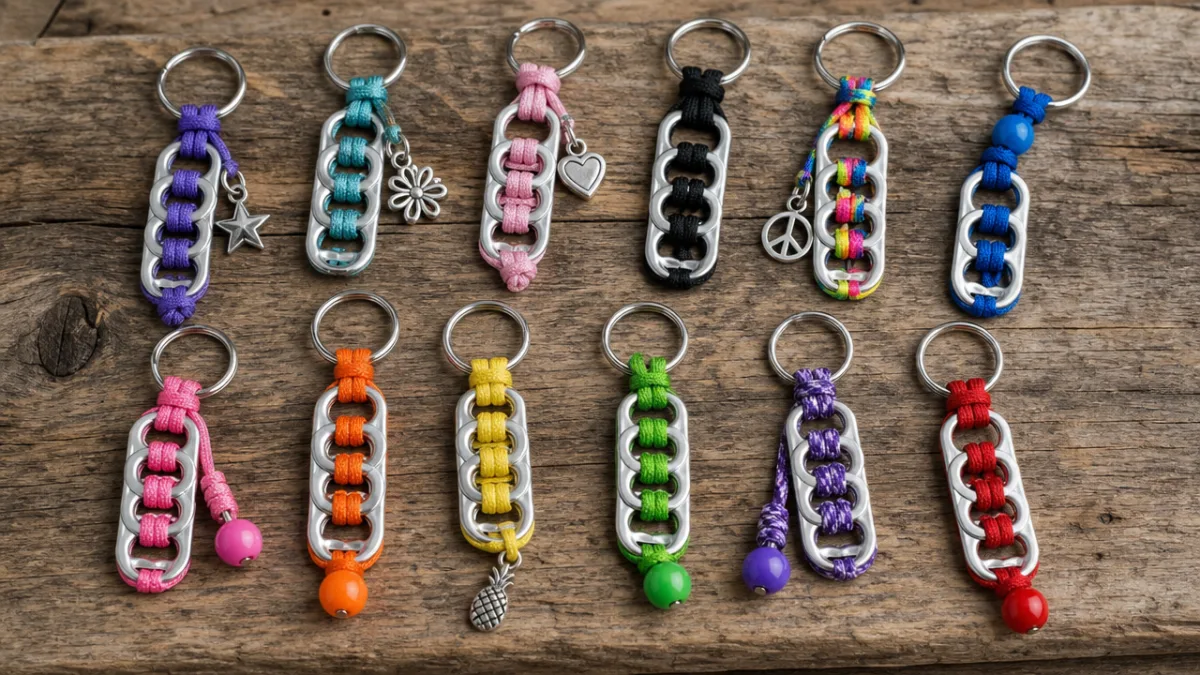
There’s a whole world of other materials to explore too. Wrapping a tab in colorful embroidery floss gives it this great fiber-meets-metal texture that feels really tactile. Gluing on small flat-backed rhinestones, sequins, or seed beads adds instant sparkle. For something more delicate and nature-inspired, you can seal pressed flowers or small bits of patterned paper onto the surface using decoupage medium or resin. Each technique gives you a totally different end result, which is a reminder of just how much potential there is in something as humble as a soda tab.
Personalization also comes through in the hardware you choose. A small initial charm or a birthstone-colored bead on the keychain ring makes the whole thing feel custom — because it is. Zodiac charms, tiny animal pendants, miniature locket charms with photos inside — all of these are great additions. The nice thing is that a keychain can keep growing and changing as you find new pieces you love, making it a sort of wearable record of the things that matter to you.
Gifting, Selling, and Sharing Your Creations
These keychains aren’t just for yourself — they make genuinely thoughtful gifts, and they have real potential as a small sellable item too. Since you’re collecting the tabs for free, your main costs are keychain rings, jump rings, and any extras you add, all of which are cheap in bulk. That low overhead makes this one of the most economical crafts you can produce, and the handmade, recycled-materials story behind each piece is exactly the kind of thing a lot of buyers today are drawn to.
When you’re giving one as a gift, presentation goes a long way. A beautifully made keychain wrapped in tissue paper and tucked into a small kraft box tied with twine feels genuinely special. Toss in a little card explaining where the tabs came from and maybe the inspiration behind the design — that storytelling element adds so much perceived value and shows the recipient you put real thought into it, not just effort.
If selling is something you’re curious about, Etsy, local craft fairs, school fundraisers, and farmers markets are all solid places to start. Keychains tend to sell especially well in sets — pairing a keychain with a matching bracelet, for example, creates a bundle that feels more complete and justifies a higher price. Take good photos of your process and your finished pieces and share them on Pinterest, Instagram, and TikTok, where craft content tends to do really well. You’ll attract potential customers, but you’ll also inspire other people to try it themselves — which honestly might be the most rewarding part of sharing your work.
Sustainability and the Bigger Picture
There’s a layer to this project that goes beyond making something pretty — the environmental side of it is worth thinking about. Aluminum is one of the most recycled materials on earth, and yet tabs still end up in landfills or get processed along with their cans without anyone pausing to consider what else they could become. When you craft with soda tabs, you’re giving a second life to something that already took a lot of energy to produce, and you’re doing it in a way that creates real beauty rather than just shuffling waste around.
There’s also something quietly educational about crafting with repurposed materials. Once you’ve made something genuinely cool out of what would’ve been trash, you start eyeing everything else differently — newspaper, fabric scraps, wine corks, bottle caps. A lot of crafters who start here end up exploring all kinds of upcycled projects, and that shift in perspective has a way of rippling out into how you think about buying, using, and discarding things in general. A little keychain made from a soda tab is a small thing, but the mindset it represents isn’t small at all.
And once you’ve got the skills, passing them on is one of the most meaningful things you can do with them. Host a casual crafting afternoon with friends, bring the project into a school or community center, or share your finished work online with clear instructions and a little encouragement. The more people who learn to see potential in things they’d otherwise throw away, the more creative and resourceful we all get to be together. Your keychain is a starting point — where it leads from there is entirely up to you.








What do you think?
It is nice to know your opinion. Leave a comment.