










The Ultimate Craft Room: Design, Organization, and Inspiration
Creating Your Dream Craft Space
If you’re a creative person, having a dedicated craft room might just be one of the best things you can do for yourself and your home. It doesn’t matter whether you sew, paint, scrapbook, or dabble in mixed media — having a space that’s entirely yours to make things in changes everything. Not just how you work, but how you feel when you sit down to create. There’s something about walking into a room set up for making that shifts your whole mindset into gear.
Here’s the thing, though — designing a craft room well starts before you hang a single shelf or label a single bin. It starts with getting honest with yourself about how you actually work. Are you someone who likes to spread out and leave a project half-finished for three days while the idea keeps brewing? Or do you prefer to wrap things up in one sitting and put everything away before you call it done? That’s not a small detail. Your working style should really be driving every choice you make, from layout to furniture to how you organize your supplies.
Budget is obviously a real factor, but don’t let it talk you out of getting started. A craft room doesn’t need to cost a fortune to be both functional and genuinely lovely. Some of the most inspiring creative spaces out there were built over time from thrift store hauls, repurposed pieces, and a little DIY ingenuity. Start with a clear vision, then add and improve as your time and budget open up. As long as you keep coming back to the question of what your creative work actually needs, you’ll get there.
Planning Your Layout for Maximum Creativity
Layout planning might be the most important thing you do when building out your craft room, and it’s also the step people most often rush past. It’s easy to get excited about cute storage containers and pretty shelving and skip straight to shopping — but if the layout doesn’t work, nothing else really will either. A poorly thought-out floor plan means you’re constantly walking across the room for something you use every five minutes, squinting in bad lighting, or running out of surface space right when a project gets messy. Sketching out a floor plan to scale before you buy anything is genuinely worth the extra hour.
Think about how your creative process actually flows, and let that guide where your major pieces go. Your main work surface should live close to the supplies you reach for most. If you sew, your machine should be right next to your fabric and notions. If you paint, your table or easel should be near your paints and ideally not far from a sink. The whole point is to keep your most-used things within arm’s reach so you’re spending your time making, not hunting.
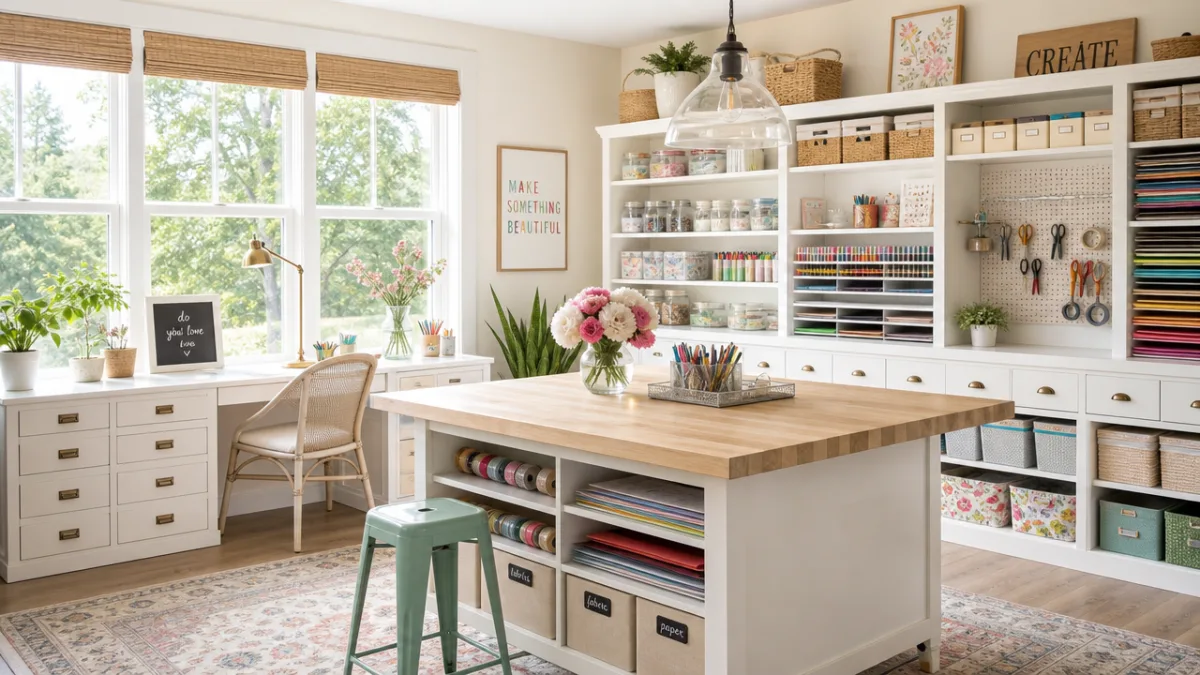
Lighting is its own conversation and deserves real attention during this phase. Natural light is wonderful for color-sensitive work — quilting, painting, card making — so putting your main work surfaces near windows makes a lot of sense. That said, natural light shifts throughout the day and disappears entirely at night, so you’ll want to layer in solid overhead lighting, adjustable task lamps, and maybe even some under-shelf lighting so you can work comfortably at any hour. Daylight-balanced LED bulbs are the way to go — they keep colors true and are much easier on your eyes during a long crafting session.
Storage Solutions That Actually Work
Storage is really what makes or breaks a craft room, and there’s no shortage of systems to choose from. But here’s the principle worth holding onto through all of it: visibility. When your supplies are tucked away in opaque bins or buried in closed cabinets, they might as well not exist. Crafters genuinely use their materials more often and more creatively when they can actually see them. Open shelving, clear containers, and pegboards are your best friends here for exactly that reason.
Before you go buy a single storage solution, do yourself a favor and pull everything out first. Sort it by type and take an honest look at what you actually have. You might realize you’ve quietly amassed a ribbon collection that needs its own dedicated spot, or that your paper stash has grown tall enough to need vertical storage. Knowing the real volume and variety of your supplies means you’ll buy storage that fits your life rather than containers that looked good in the store but don’t actually work once they’re full.
Some of the most practical and affordable storage options combine function with a bit of visual appeal too. Wall-mounted pegboards loaded with hooks and baskets keep your most-used tools right where you can see and grab them while freeing up surface space below. Rolling carts are great for smaller rooms because you can bring your supplies to wherever you’re working. And clear stackable drawers are a simple game-changer — no more digging around mid-project trying to remember where something landed.
- Pegboards with interchangeable hooks for tools, scissors, and frequently used supplies
- Clear acrylic organizers for smaller items like buttons, beads, and embellishments
- Labeled bins and baskets for larger supplies that benefit from grouped storage
- Vertical file holders repurposed to store paper pads, cutting mats, and magazines
- Rotating turntables or lazy Susans for paints, markers, and other cylindrical supplies
- Over-the-door organizers that make use of often-wasted vertical space
Choosing the Right Furniture and Work Surfaces
Furniture in a craft room is really about finding that sweet spot between practical and personal — and the good news is you don’t have to choose between them. Your work surface is the most important piece in the room, so it’s worth thinking through carefully. One thing that often gets overlooked is height. Standard desk height is fine for sitting, but a lot of crafting — cutting, measuring, assembling — is actually much more comfortable done standing. If you can only make one real furniture investment, a height-adjustable table that handles both is a strong pick.
Furniture that doubles as storage is especially worth seeking out in a craft room, where every square foot matters. Tables with built-in drawers, shelving units with a built-in desk surface, ottomans with storage inside — these pieces earn their keep twice over. When you’re shopping, try to train your eye to look past how something looks and ask how many storage problems it solves at once. A beautiful table that offers nothing but a flat surface might actually be a worse investment than a plainer piece that gives you drawers, shelves, and a lower rack all at the same time.
Seating is another one of those things that doesn’t get nearly enough attention. Crafters can spend hours in their rooms, and bad seating catches up with you fast — back pain, neck tension, the kind of fatigue that ends a creative session way earlier than it needs to. An ergonomic chair with adjustable height and lumbar support is worth every penny because it protects both your body and your ability to keep doing what you love. And if you like to stand while you work, an anti-fatigue mat in front of your main surface makes a real, noticeable difference.
Color, Decor, and Personal Style
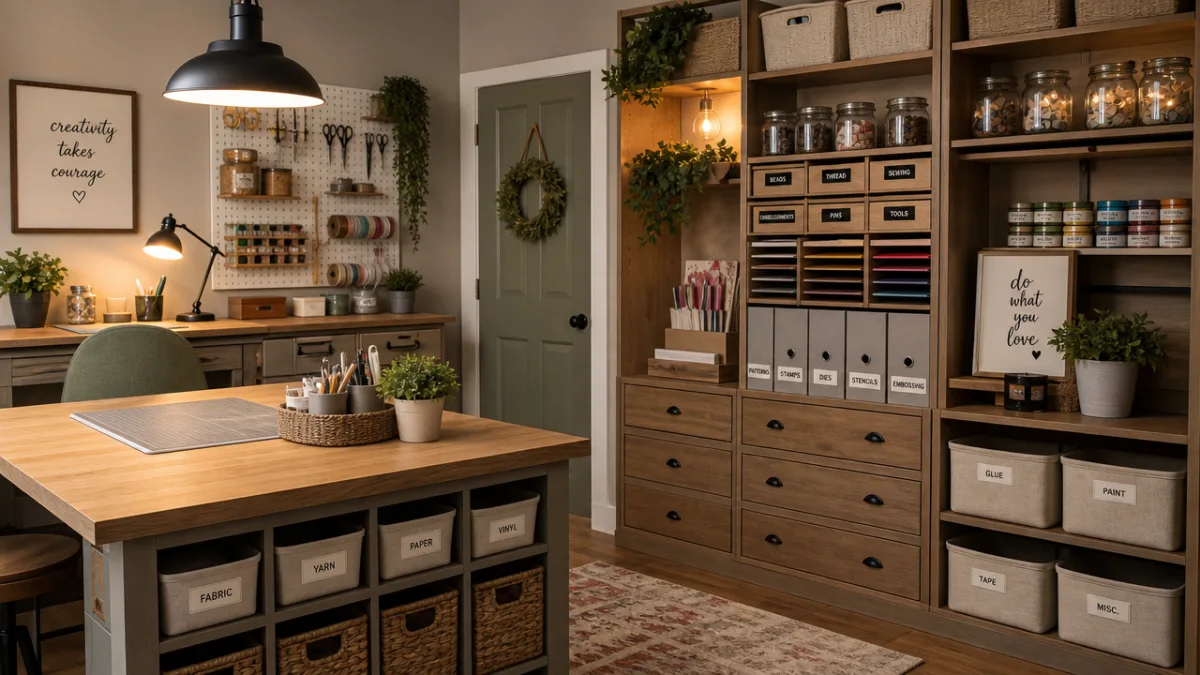
The look and feel of your craft room matters more than you might think. A space that actually reflects who you are and feels good to be in will pull you in more often and keep you there longer — and that’s not a small thing. Color plays a real role in this. Soft, warm neutrals tend to create a calm, focused atmosphere that’s great for detailed work. Brighter colors like yellow or teal bring energy and a sense of playfulness. There’s no right answer here; the best color palette is simply the one that makes you feel most like yourself when you walk in.
Decorating your craft room is also a great excuse to actually display the things you’ve made. Hang finished pieces on the walls, arrange completed projects on a dedicated shelf, or build out a gallery wall that tells the story of your creative journey so far. It’s both decorative and motivating. On the days when nothing’s clicking and you’re wondering why you bother, being surrounded by proof of what you’ve already made is a pretty powerful thing.
Small personal touches go a long way too — a few plants, a piece of art that speaks to you, or a mood board covered in inspiration images, color swatches, and fabric scraps. A mood board is especially useful in a craft space because it pulls double duty as a design anchor and a creative jumping-off point. Keep refreshing it with new images, paint chips, photos, and anything else that captures the direction you want your work to head, and let it guide your projects throughout the year.
Maintaining an Organized and Inspiring Space Over Time
Even the most beautifully organized craft room will drift into chaos without some kind of regular upkeep — and that’s just the nature of creative spaces. Making things makes mess. Unfinished projects pile up, new supplies trickle in and need a home, and what you’re working on shifts with the seasons. The real mindset shift is accepting that staying organized is part of having a craft room, not a problem you solve once and never think about again. That shift is honestly what separates spaces that stay functional from ones that gradually become too overwhelming to use.
A short daily reset is one of the simplest and most effective habits you can build. Many dedicated crafters wrap up each session with ten or fifteen minutes of putting things back where they belong, clearing off the work surface, and doing a quick mental check of what needs restocking. It sounds small, but it prevents that slow creep of clutter that eventually makes the room feel more stressful than inspiring.
Every few months, it’s also worth doing a deeper reassessment. Ask yourself honestly whether your storage systems still match how you’re actually using the space. Creative practices change — new hobbies get added, old ones shift to the back burner, and the setup that worked beautifully a year ago might not fit where you are now. Try to think of these seasonal reorganizations as something to look forward to rather than dread. They’re a chance to rediscover supplies you’d forgotten about, clear out what’s no longer serving you, and tune the space back up so it matches where your creativity is headed next.
- Schedule a brief daily reset to return supplies to their designated storage locations
- Conduct a seasonal deep clean and reassessment of all storage systems and supply inventory
- Donate or sell supplies you no longer use to prevent unnecessary accumulation
- Refresh the mood board and display areas to keep the space feeling current and inspiring
- Reassess lighting as seasons change and natural light availability shifts
- Update labels and reorganize categories when new supplies or crafts are added to your practice
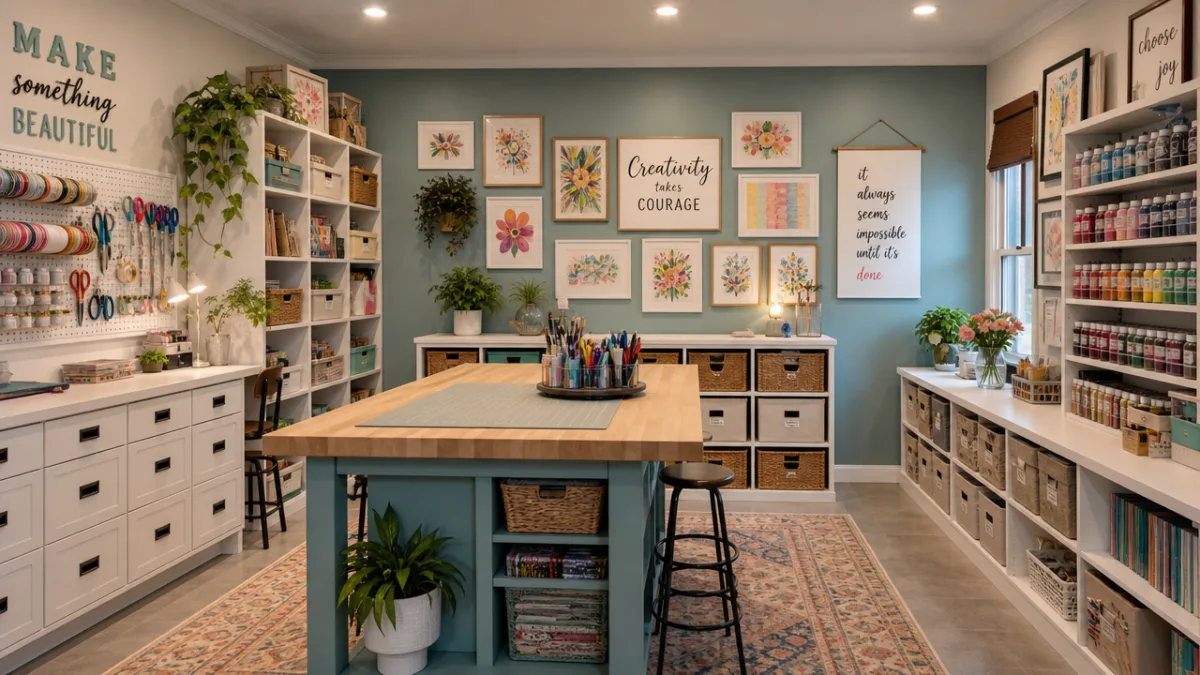
At the end of the day, a well-loved craft room is more than just a place to keep your supplies organized. It’s somewhere ideas actually come to life, where hours slip by in the best possible way, and where making something with your own hands reminds you of something fundamental about being human. Every bit of thought and care you put into this space is an investment in the creative life you want — and you’ll feel that return every single time you walk in ready to make something.








What do you think?
It is nice to know your opinion. Leave a comment.