










Colorful Pufferfish Craft For Preschool Art Time: A Complete Guide to an Ocean-Inspired Creative Activity
Why Pufferfish Crafts Are Perfect for Preschool Art Time
When it comes to choosing the right craft projects for preschoolers, educators and parents alike are always searching for activities that balance fun, learning, and developmental benefit. The colorful pufferfish craft checks every single one of those boxes beautifully. Its rounded, puffy shape is immediately recognizable and exciting to young children, who often encounter these fascinating creatures in cartoons, picture books, and aquarium visits. The visual appeal alone is enough to capture a preschooler’s imagination and hold their attention through the entire project.
Beyond its adorable appearance, the pufferfish craft offers an outstanding opportunity to develop fine motor skills that are absolutely critical at the preschool stage. Activities like cutting, gluing, painting, and arranging small pieces of colored paper or materials all require hand-eye coordination and muscle control that young children are still actively building. Each step of making a pufferfish — from tearing tissue paper to pressing on googly eyes — gives little hands meaningful practice that translates directly into writing readiness and everyday self-care skills.
There is also a rich vein of educational content woven naturally into this craft. While children work with their hands, teachers and parents can introduce fascinating facts about pufferfish, talk about ocean ecosystems, and explore concepts like color mixing and pattern-making. This integration of art and science is exactly the kind of cross-curricular learning that early childhood experts champion. A simple art project becomes a gateway to curiosity about the natural world, making learning feel joyful and entirely effortless.
Materials You Will Need to Create Your Pufferfish Masterpiece
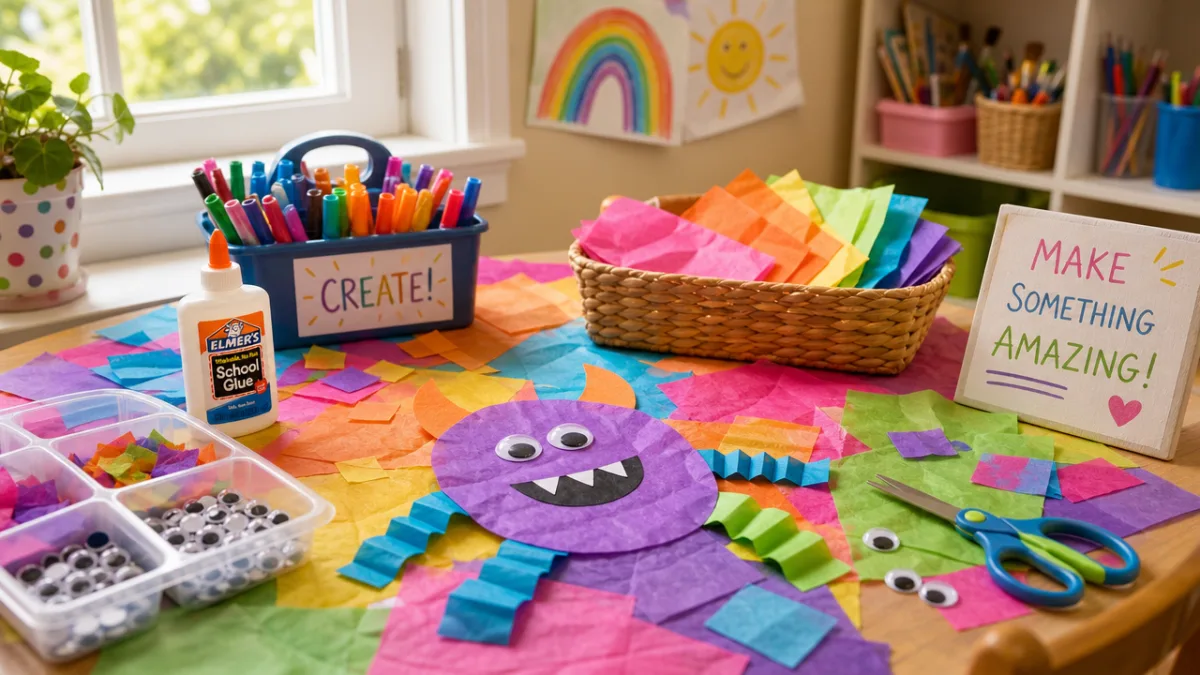
Gathering your materials before you begin is one of the most important steps in running a smooth and successful preschool art session. Young children have limited patience for waiting, and having everything laid out and ready to go ensures that the energy and excitement in the room can flow directly into creativity rather than frustration. For the pufferfish craft, the materials list is wonderfully accessible, meaning most items can be found at dollar stores, craft supply shops, or even around the home, keeping costs manageable for classrooms and families alike.
The core materials for a classic colorful pufferfish craft typically include a round balloon or a pre-cut circular cardstock template as the body base, which gives the fish its characteristic puffy silhouette. You will also need tissue paper in a wide range of vibrant colors — bright yellows, electric blues, vivid oranges, and cheerful pinks all work wonderfully and echo the dazzling palette found on real tropical fish. White school glue or a glue stick, a wide paintbrush for spreading glue, and a set of large googly eyes are essential additions that transform the flat craft into a charming, expressive character children will adore.
Additional embellishments and tools that elevate the finished product include the following:
- Scissors with rounded safety tips appropriate for preschool-age children, encouraging independent cutting practice while maintaining safety in the classroom or home setting.
- Foam stickers, sequins, or self-adhesive gems that children can press onto the fish body to create scales, spots, or decorative details that make each pufferfish uniquely their own.
- Pre-cut cardstock fins and spines in contrasting colors, which children can arrange and glue around the body to create the signature spiky silhouette of an inflated pufferfish.
- Black marker or paint pen for adding a smile, nostrils, or additional facial details once the main body is dry and assembled.
- A hole punch and length of yarn or ribbon if you intend to hang the finished pufferfish as a classroom display or take-home decoration.
It is worth noting that the beauty of this craft lies in its tremendous flexibility. There is no single right way to make a preschool pufferfish, and educators should feel empowered to substitute or add materials based on what is available and what best suits the developmental level of their particular group of children. Some classes might use watercolor paints for the body instead of tissue paper. Others might work with paper plates as the base. The essential spirit of the project — bold color, joyful texture, and imaginative expression — remains constant regardless of the specific materials chosen.
Step-by-Step Instructions for Making the Pufferfish Craft
Creating the pufferfish craft is a wonderfully straightforward process, but walking through each step with care and intention ensures that even the youngest preschoolers can participate meaningfully and experience the satisfying feeling of completing something they made entirely themselves. Before beginning, encourage children to put on art smocks or old shirts, spread newspaper or a plastic tablecloth over the work surface, and take a moment to look at pictures of real pufferfish together. This short visual warm-up sparks imagination and gives children a mental picture to guide their creative choices throughout the project.
Start by preparing the base of the pufferfish body. If you are using a paper plate or pre-cut circle of cardstock, have children begin by painting the entire surface with a coat of white school glue diluted slightly with water to create a smooth, workable paste. Next, children tear or cut tissue paper into small squares or irregular pieces — the size does not need to be precise, and the variety of shapes adds to the organic, natural look of the finished fish. Children press these tissue paper pieces onto the glue-covered surface, layering and overlapping them to build up rich, vibrant color coverage. Encourage them to use multiple colors freely and to experiment with how different combinations look side by side.
Once the body is covered and beginning to dry, move on to adding the defining features that make the fish recognizable and full of personality. Attach the pre-cut cardstock spines or rolled paper tubes around the outer edge of the circle to suggest the pufferfish’s iconic inflated spiky form. Press the large googly eyes onto the front of the face — most children find this step absolutely delightful and will often choose to spend extra time arranging and rearranging the eyes before committing to a placement. Add the fins on either side of the body, a simple curved smile with marker, and any additional gem or sequin scale details the child wishes to include. Finally, if the fish will be displayed, use a hole punch at the top and thread through a loop of yarn for hanging.
The following sequence summarizes the key steps in order for quick reference during your craft session:
- Prepare the work surface and gather all materials in advance, organizing them in small trays or cups for easy access by each child at the table.
- Apply a layer of diluted white school glue to the entire surface of the circular base using a wide paintbrush, working quickly before the glue begins to dry.
- Tear or cut tissue paper into small pieces and press them onto the glue-covered surface, layering colors generously to build up a vivid, textured finish.
- Apply a thin sealing coat of diluted glue over the top of the tissue paper layer to lock it in place and add a lovely slight sheen once dry.
- While the body dries, cut or distribute pre-made spines and fins, then glue them around the edge and sides of the body to create the pufferfish silhouette.
- Press on googly eyes and use marker to add facial details, then decorate with foam stickers, sequins, or gems to personalize each fish.
- Allow the completed pufferfish to dry fully before displaying or sending home, and add a yarn hanger if desired.
Developmental Benefits of Ocean-Themed Art Projects in Early Childhood
Art activities grounded in nature themes — and ocean crafts in particular — offer preschoolers a remarkable range of developmental benefits that extend far beyond the finished product itself. When children engage with a project like the colorful pufferfish craft, they are simultaneously exercising cognitive, emotional, social, and physical skills in ways that feel completely natural and intrinsically motivated. Early childhood researchers consistently find that this kind of open-ended, hands-on creative work is among the most powerful learning experiences available to young children precisely because it engages the whole child rather than focusing narrowly on a single skill or subject area.
On the cognitive and language development front, ocean-themed crafts create an irresistible context for vocabulary building, storytelling, and scientific curiosity. A child who has just made a pufferfish with their own hands is far more likely to retain new vocabulary words like “inflate,” “spines,” “camouflage,” and “tropical” than one who simply heard those words in a lesson. The craft becomes a concrete anchor for abstract concepts, and children often spontaneously begin narrating stories about their fish, asking questions about where pufferfish live, what they eat, and why they puff up — all of which opens the door to rich, extended conversations between children and adults that support language growth tremendously.
Social and emotional development also receives meaningful support through group art activities like this one. When preschoolers work side by side on the same project, they naturally begin observing each other’s choices and techniques, offering compliments, sharing materials, and negotiating solutions to small problems like needing the same color of tissue paper at the same time. These organic peer interactions build the foundational social skills — turn-taking, empathy, communication, and cooperation — that children will rely on throughout their entire educational journey. The shared experience of creating something together also fosters a genuine sense of community and belonging within the classroom group.
Finally, the physical benefits of craft work at the preschool level deserve special emphasis because they are sometimes overlooked in discussions that focus primarily on cognitive or social outcomes. The tissue paper tearing, scissor cutting, precise glue application, and small-piece placement involved in the pufferfish craft all provide intensive practice for the intrinsic muscles of the hand and for the coordination between fingers and eyes. Occupational therapists who work with young children frequently highlight exactly these kinds of art activities as therapeutic and developmental tools, noting that children who engage regularly in crafts arrive at kindergarten with measurably stronger fine motor foundations than those who do not.
Tips for Adapting the Craft for Different Skill Levels and Classroom Needs
One of the greatest strengths of the pufferfish craft as a preschool art activity is the ease with which it can be adapted to meet the needs of a remarkably diverse range of learners. In any given preschool classroom, you are likely to find children at very different stages of fine motor development, varying attention spans, different levels of comfort with messy sensory materials, and a wide spectrum of creative confidence. A thoughtfully designed craft activity accounts for all of this variation by building in natural points of differentiation so that every child can participate fully and experience success.
For children who are newer to art activities or who struggle with the sensory aspects of glue and wet paper, there are several simple modifications that make the project more accessible without reducing its value or enjoyment. Pre-torn tissue paper pieces eliminate the cutting and tearing challenge for children whose fine motor skills are still developing, allowing them to focus their energy entirely on placement and color selection. Providing the glue in a shallow tray with a foam roller applicator rather than a brush can also be more manageable for children who find the brush technique frustrating. Offering wax paper crayons or large sticker dots as alternatives to loose sequins accommodates children who are sensitive to small textures.
For children who are developmentally advanced or who complete the basic project quickly and are ready for additional challenge, there are equally wonderful extension possibilities built into this activity. These children might be invited to cut their own fins and spines from cardstock using patterned safety scissors, to mix their own custom paint colors for the base coat, or to create an entire underwater scene by adding a backdrop paper decorated with waves, seaweed, and additional ocean creatures they design themselves. Encouraging these children to teach a peer a technique they have discovered also reinforces their own learning while building leadership and communication skills simultaneously.
Sensory considerations deserve thoughtful attention in any preschool art setting, and the pufferfish craft is no exception. Some children experience genuine discomfort with the sticky, wet sensation of glue on their fingers, and this should be treated with respect and patience rather than dismissal. Offering nitrile gloves, providing baby wipes for immediate cleanup, or allowing certain children to use a sponge applicator instead of their fingers are all valid accommodations that honor individual sensory needs while still including every child in the joy of the project. Creating a predictable, calm, and well-organized art environment where children know what to expect also significantly reduces sensory overwhelm for more sensitive learners.
Extending the Pufferfish Theme: Books, Songs, and Curriculum Connections
A truly rich preschool learning experience does not begin and end with a single craft activity — it unfolds across multiple days and multiple modalities, allowing children to revisit and deepen their understanding from many different angles. The colorful pufferfish craft is an excellent anchor for a broader ocean-themed unit or week of exploration that weaves together literacy, music, movement, science, and art into a cohesive and memorable learning experience. When children encounter the same concept — in this case, the wonderful world of pufferfish and the ocean — through story, song, movement, and hands-on creation, their understanding becomes genuinely deep and lasting.
On the literacy side, there are wonderful picture books that can be shared before or after the craft to build background knowledge and vocabulary. Books that explore ocean life with vivid illustrations give children visual references for the colors, textures, and shapes they will work with in their art. After sharing a book, a brief guided discussion asking children what colors they noticed on the fish in the illustrations, or what they think it would feel like to touch a real pufferfish’s spines, naturally primes their creative thinking and makes the craft session that follows far more intentional and expressive. Children who have a story connection to their art often produce work that is more elaborate and personally meaningful.
Music and movement integration adds yet another dimension to the pufferfish experience and is especially beneficial for kinesthetic learners who process information best through their bodies. Simple songs about ocean creatures, sung together as a group before the art session begins, create a joyful, energized classroom atmosphere and help children transition smoothly into focused creative work. A pufferfish-themed movement break — where children curl up small, then slowly “puff up” by spreading their arms and puffing their cheeks, just like the fish does when it feels threatened — is not only hilarious fun but also a powerful embodied learning experience that helps children truly understand the pufferfish’s remarkable defense mechanism in a way no worksheet ever could.
The science connections available through this craft are genuinely exciting and can be explored at whatever depth is appropriate for your particular group of children. Sharing simple, age-appropriate facts about why pufferfish inflate, where they live in the world’s oceans, what they eat, and how their coloring helps them in the wild naturally introduces foundational science concepts like animal behavior, adaptation, camouflage, and ecosystem. Even very young preschoolers are capable of engaging meaningfully with these ideas when they are presented through the lens of something they have just made with their own hands. The pufferfish craft thus becomes not just an art project but a springboard for genuine scientific wonder and inquiry that can ripple outward through the entire curriculum.
Displaying and Celebrating Finished Pufferfish Artwork
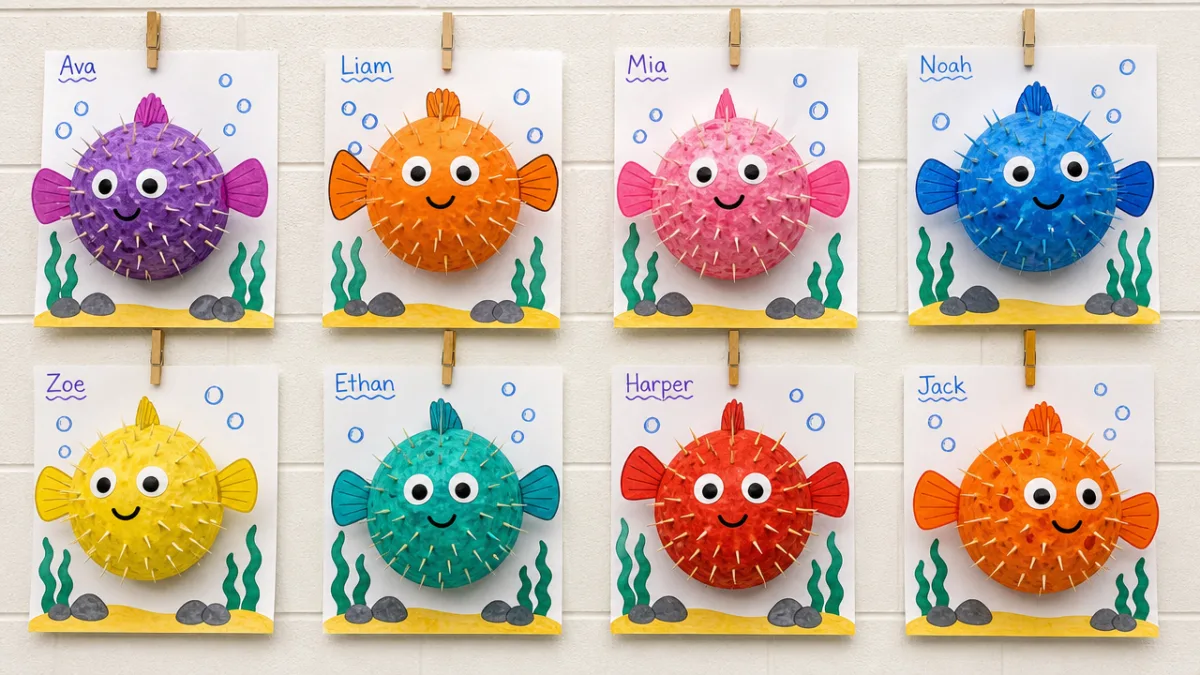
The way finished artwork is treated and displayed in a preschool classroom sends a powerful message to children about the value of their creative efforts. When children see their pufferfish hung prominently on a classroom wall, featured in a hallway display, or celebrated in a special class gallery walk, they receive the clear message that what they made matters — that their ideas, choices, and effort are worthy of attention and pride. This experience of being seen and celebrated as a maker and creator is foundational to the development of a healthy creative identity and a growth mindset that will serve children throughout their entire lives.
Creating a classroom “Ocean Gallery” or “Underwater World” display using the completed pufferfish alongside blue and green streamers, paper seaweed, and construction paper bubbles transforms the finished crafts into an immersive, collectively built environment that children feel genuine ownership over. Walking into a classroom that has been transformed into an underwater world by the collective creative work of the children who inhabit it is a deeply exciting experience for preschoolers and fills them with the kind of pride and belonging that is at the very heart of excellent early childhood practice. Invite parents and caregivers to view the gallery during pickup time and encourage children to serve as guides, explaining their artistic choices and what they learned about pufferfish.
Documentation of the creative process is equally important as the display of the finished product, and taking photographs or short video clips of children as they work — tearing tissue paper, selecting colors, pressing on eyes with expressions of deep concentration — creates a meaningful record of learning that can be shared with families and used for portfolio assessment purposes. Many early childhood educators create simple artist statements by asking each child a few open-ended questions about their pufferfish and writing down their exact words to display alongside the work. Hearing a four-year-old explain that they made their fish “rainbow colored because pufferfish like to be happy” is a reminder of the profound imaginative intelligence that lives in every young child and that great art activities like this one have the power to call forth and celebrate.








What do you think?
It is nice to know your opinion. Leave a comment.