










Christmas Decor: Transform Your Home Into a Winter Wonderland
The Art of Setting the Holiday Mood
Christmas decorating is one of the most beloved seasonal traditions across cultures, blending creativity, nostalgia, and a genuine desire to bring warmth and joy into the home. Whether you prefer a classic red-and-green palette or a more modern monochromatic aesthetic, the process of adorning your living space for the holidays is an opportunity to express your personality while honoring time-worn traditions that connect generations. The magic of Christmas decor lies not just in the individual pieces, but in how they work together to create an atmosphere that feels both festive and deeply personal.
For many households, the decorating process begins weeks before December 25th, often starting with the first weekend of December or even right after Thanksgiving. This extended timeline allows families to layer their decor thoughtfully, adding pieces gradually rather than overwhelming the space all at once. Starting early also means you have time to source unique ornaments, handmade pieces, or vintage finds that truly elevate your display beyond what mass-market stores typically offer. Thoughtful curation is what separates a beautifully styled home from one that simply feels cluttered with holiday items.
Understanding your home’s existing aesthetic is the crucial first step before purchasing a single decoration. A farmhouse-style home with shiplap walls and rustic wood beams calls for entirely different ornaments and greenery than a sleek, modern apartment with clean lines and neutral furnishings. Taking stock of your furniture tones, wall colors, and overall design language before you begin decorating ensures that your Christmas additions feel like a natural, harmonious extension of the space rather than a seasonal imposition that clashes with everything already in the room.
Choosing Your Color Palette and Theme
One of the most impactful decisions you will make in your Christmas decorating journey is selecting a cohesive color palette and overarching theme. A unified scheme instantly elevates the look of any space, making even budget-friendly decorations appear intentional and sophisticated. Popular palettes include the traditional red, green, and gold combination; the elegant pairing of silver and white; the cozy warmth of plaid and buffalo check in neutral tones; and the increasingly popular jewel-toned approach featuring deep emerald, sapphire, and burgundy accents throughout the home.
Thematic decorating has grown tremendously in popularity over the past decade, largely driven by social media platforms like Pinterest and Instagram where homeowners share room-by-room holiday transformations. Themes can range from the broadly appealing, such as a winter woodland motif featuring owls, deer, and pine cones, to the highly personal, such as a travel-inspired tree adorned with miniature landmarks from countries the family has visited. The beauty of choosing a theme is that it provides a decision-making framework that simplifies every subsequent purchase: if an item doesn’t fit the theme, it stays on the shelf.
When selecting your theme, consider the full scope of your decorating territory. A theme that works beautifully on a Christmas tree may feel forced or out of place on a dining table centerpiece or entryway garland. The most successful holiday decorators think holistically, ensuring that the central theme weaves naturally from room to room without becoming repetitive or monotonous. This might mean using the same core colors throughout while varying the specific motifs slightly, so the kitchen feels festive but distinct from the living room, and the bathroom receives a subtle nod to the overall palette without being overdone.
Consider the following popular Christmas themes and their signature elements:
- Classic Traditional: Red and green palette, plaid ribbons, gold accents, candy canes, nutcrackers, and heirloom-style ornaments with a vintage feel.
- Winter Wonderland: All-white and silver palette, snowflakes, crystal ornaments, frosted branches, and soft blue accents for a cool, ethereal atmosphere.
- Scandinavian Hygge: Natural wood tones, white candles, simple geometric patterns, wool textures, and minimalist greenery with warm amber lighting.
- Rustic Farmhouse: Burlap, twine, buffalo check, galvanized metal, barn wood accents, and simple botanical elements like dried orange slices and cinnamon sticks.
- Glam Hollywood: Black, gold, and white palette, sequined ribbons, mirrored ornaments, faux fur throws, and dramatic oversized bows on every surface.
The Christmas Tree: Your Decorating Centerpiece
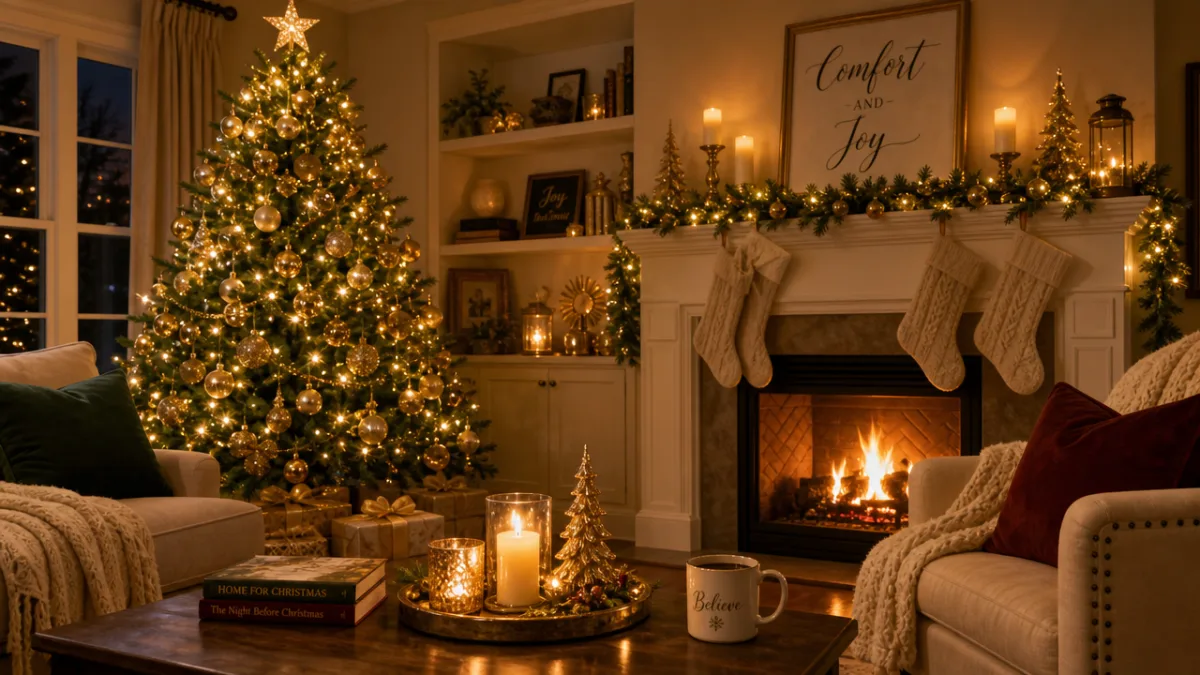
No element of Christmas decorating commands more attention, generates more excitement, or requires more thoughtful planning than the Christmas tree. Whether you opt for a freshly cut Fraser fir that fills your home with that unmistakable pine fragrance, a sustainably grown potted tree that can be replanted after the season, or a high-quality artificial tree that will serve your family for years to come, the tree is undeniably the anchor of your holiday decor. Everything else in the room, from the mantel garland to the throw pillows on the couch, should be considered in relation to the tree.
Decorating the tree itself is a multi-step process that benefits enormously from a systematic approach. Begin with lights, working from the trunk outward to the tips of the branches, ensuring even distribution so that no section appears significantly darker than another. Next, add any garland or ribbon, draping it in loose, flowing S-curves rather than wrapping it tightly around the tree in a spiral. Then place your largest, most statement-making ornaments first, spacing them evenly across the tree at varying depths, with some pushed closer to the trunk for a sense of dimension and layering.
The topper is the crowning touch that completes the tree’s visual story, and it deserves as much careful consideration as any other element. Traditional stars and angels remain perennially popular for good reason: they are instantly recognizable symbols of the season that complement virtually any aesthetic. However, adventurous decorators have embraced unconventional toppers including large bows made from luxurious wired ribbon, clusters of pine cones and berries, miniature lanterns, monogram letters, or even a cascading arrangement of flowers and greenery that spills downward into the upper branches for a lush, garden-inspired look.
Decorating Beyond the Tree: Mantels, Entryways, and Table Settings
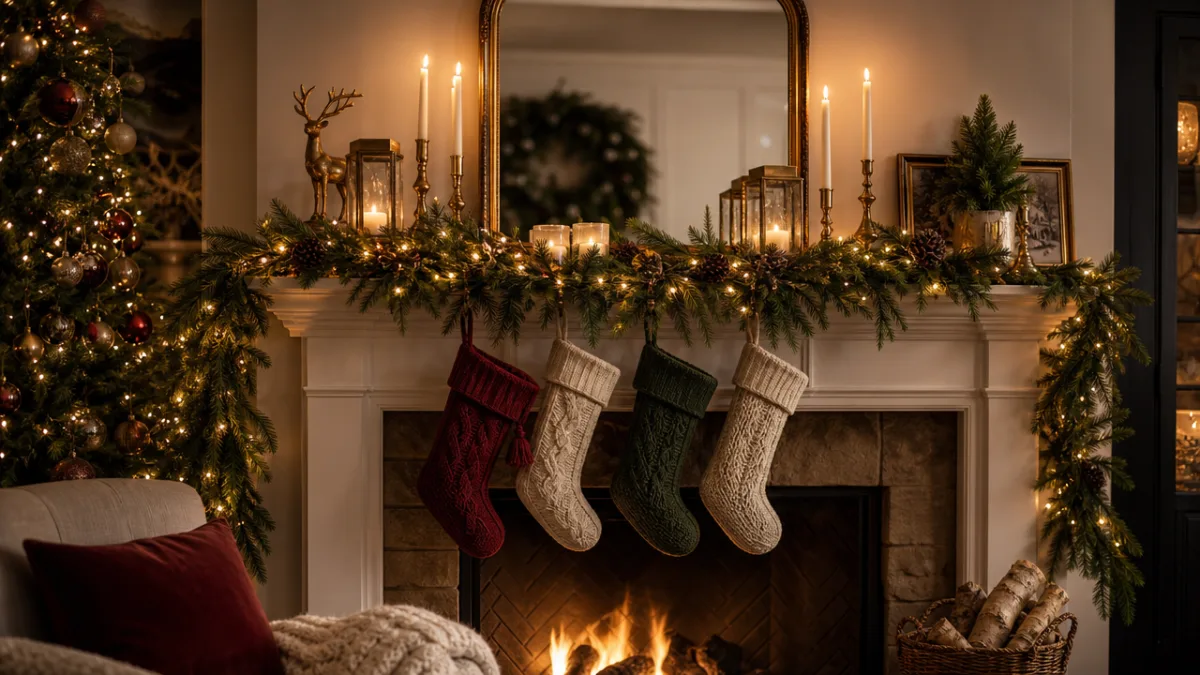
While the Christmas tree rightfully dominates most holiday decorating conversations, the most memorable and magazine-worthy homes pay equal attention to every other decoratable surface. The fireplace mantel is perhaps the most natural secondary focal point, offering a horizontal canvas that invites layered arrangements of greenery, candles, stockings, and collected holiday objects. A well-dressed mantel should have varying heights to create visual interest: tall candlesticks at the ends, a medium-height arrangement in the center, and smaller objects filling the spaces in between to prevent the display from feeling flat or one-dimensional.
The entryway sets the tone for everything that follows, serving as every guest’s first impression of your holiday decor. A generously sized wreath on the front door is the classic starting point, but the most welcoming entryways go further. Consider flanking the door with potted topiaries wrapped in warm white lights, placing a decorative sled or vintage crate filled with wrapped gifts near the threshold, or draping greenery along a porch railing to frame the entryway with natural beauty. Indoors, a console table in the entry hall provides an ideal surface for a small tablescape featuring a lantern, a bowl of ornaments, or a miniature evergreen arrangement.
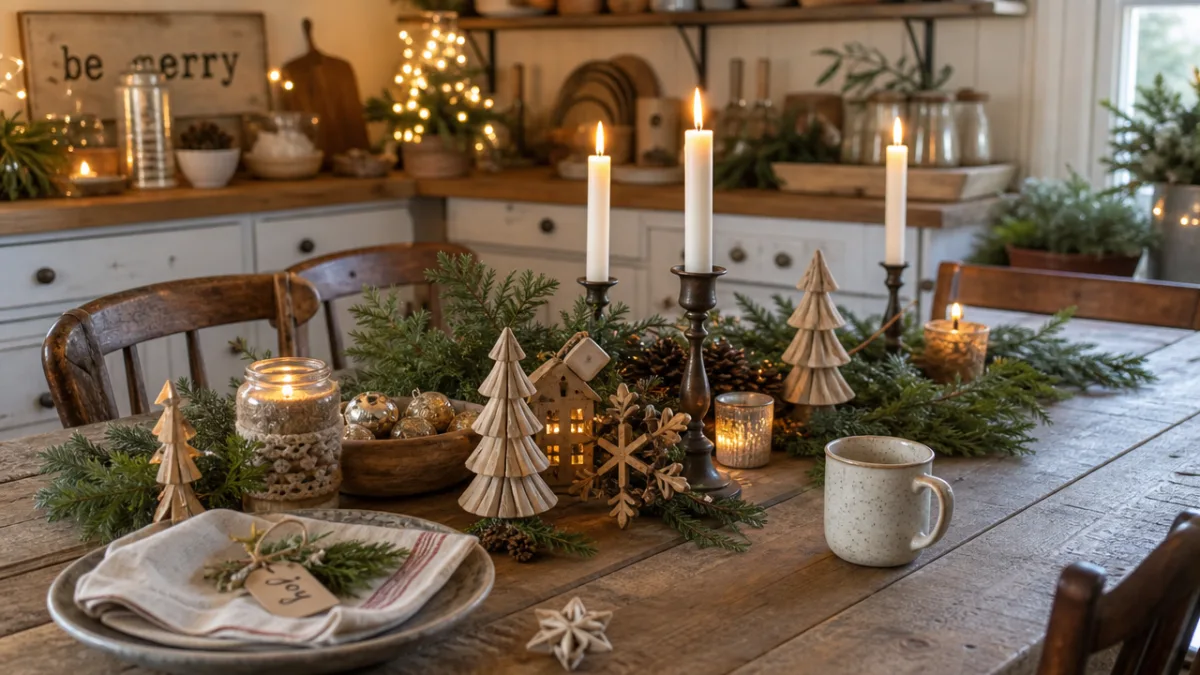
The dining table deserves special holiday treatment, particularly as it becomes the gathering place for Christmas Eve dinners and holiday parties throughout the season. A long, low centerpiece works best for dining tables because it allows guests to see and converse with one another across the table without visual obstruction. Consider a runner of fresh evergreen boughs studded with candles, pine cones, and small ornaments, or a collection of varying-height pillar candles grouped together on a mirrored tray surrounded by scattered berries and preserved foliage. The key is creating something beautiful but not so precious that it cannot be adjusted to make room for serving dishes when mealtime arrives.
Don’t overlook these often-forgotten decorating zones that can make a powerful cumulative impact:
- Staircase banisters: Wrap with fresh garland, ribbon, and battery-operated lights, securing with floral wire at regular intervals so the garland stays full and doesn’t sag.
- Windows: Place simple battery-operated candle lights on windowsills for a classic look that glows warmly from both inside and outside the home.
- Bookshelves: Weave small strands of lights among your books and objects, adding a few miniature ornaments and greenery sprigs for a layered effect.
- Kitchen counters: A simple bowl of clementines, cinnamon sticks, and star anise serves as both beautiful decor and a natural seasonal fragrance diffuser.
- Bathrooms: A small evergreen arrangement, holiday-scented hand soap, and a festive hand towel transform even a powder room into a seasonal vignette.
Outdoor Christmas Decorating: Curb Appeal for the Season
Outdoor Christmas decorating transforms a home’s exterior into a beacon of holiday warmth that lifts the spirits of everyone who passes by. The most impactful outdoor displays begin with a strategic lighting plan, since string lights do more architectural and atmospheric work than any other single decorating element available to homeowners. Outlining the roofline, framing windows, and wrapping trees and shrubs with warm white or multicolored lights creates depth and dimension that makes even a modest home appear magical after dark. Before purchasing lights, carefully measure each run you intend to cover so you buy exactly what you need without making multiple trips to the store.
Beyond lighting, outdoor greenery plays a central role in creating a welcoming holiday exterior. Fresh wreaths on windows and the front door, garland draped along porch railings, and evergreen arrangements planted in large urns or planters near the entrance all contribute to a sense of lush, natural abundance that feels distinctly seasonal. When working with fresh greenery outdoors, keep in mind that cold temperatures actually help preserve the material, but extended exposure to direct sunlight or dry, warm conditions will cause it to brown and shed needles more quickly. A light misting with water every few days can significantly extend the life of fresh outdoor arrangements in moderate climates.
Inflatable lawn decorations and light-up figurines have become staples of suburban holiday decorating, and while they can certainly be fun and cheerful, restraint and intentional placement remain important even here. A single large, well-positioned inflatable can be charming; a front yard crowded with dozens of unrelated characters and objects tends to read as visually chaotic rather than festive. If you love inflatables and figurines, consider grouping them in a scene, perhaps a nativity display, a family of snowmen, or Santa’s sleigh and reindeer, rather than scattering them randomly across the lawn without any compositional logic.
Sustainable and Budget-Conscious Holiday Decorating
Creating a beautifully decorated home for Christmas does not require an unlimited budget or the purchase of brand-new items every single year. Some of the most charming and character-rich holiday displays are built slowly over time, incorporating handmade pieces, thrifted treasures, natural materials gathered from the outdoors, and heirloom items passed down through families. This approach not only reduces the financial pressure often associated with the holiday season, but it also creates decor with genuine personal meaning and a story behind every piece, which is ultimately what makes a house feel truly like a home during the holidays.
Natural materials are among the most beautiful, affordable, and sustainable decorating options available. Pine cones gathered on a walk through the woods, branches cut from overgrown backyard shrubs, dried citrus slices made in a low oven, bundles of cinnamon sticks tied with twine, and sprigs of holly or rosemary snipped from garden plants all cost virtually nothing while contributing enormous warmth and organic texture to holiday arrangements. These natural elements can be layered with affordable pillar candles, a handful of glass ornaments from the dollar store, and a roll of wired ribbon to create centerpieces and arrangements that look genuinely expensive.
Investing wisely in a few high-quality foundational pieces each year, rather than purchasing large quantities of inexpensive items all at once, is the most financially sound approach to building a holiday decor collection over time. A beautifully made artificial wreath with realistic foliage, a set of generously sized mercury glass ornaments, or a set of quality pillar candle holders will serve your home for a decade or more. Shopping end-of-season sales in January, when holiday merchandise is dramatically reduced, is an excellent strategy for acquiring these higher-quality pieces at accessible price points, allowing you to gradually build a collection you genuinely love without financial strain.
Handmade decorations add irreplaceable personal warmth to holiday displays and can involve the whole family in meaningful creative activity during the season:
- Paper garlands: Cut strips of patterned paper or old holiday cards into loops and link them into colorful chains that children can make independently with just scissors and a glue stick.
- Pressed botanical ornaments: Press leaves, small flowers, or ferns between heavy books for several weeks, then seal them between two pieces of clear glass or acrylic for elegant, nature-inspired tree ornaments.
- Salt dough ornaments: Mix flour, salt, and water into a simple dough, cut into shapes, bake until hard, and paint or stamp with holiday designs for ornaments that last for years.
- Pinecone fire starters: Dip gathered pine cones in melted wax mixed with essential oils for fragrant firestarters that double as decorative bowl fillers before use.
- Fabric scrap garlands: Cut strips of holiday-colored fabric or flannel into small rectangles and tie them onto a length of twine for a rustic, colorful garland that costs nearly nothing.
Ultimately, the most successful Christmas decorating is guided not by trends or the pressure to replicate what you see on social media, but by a genuine desire to create a space where your family and guests feel welcomed, comfortable, and enveloped in holiday warmth. The specific ornaments you choose, the palette you embrace, and the style you favor matter far less than the intention and care behind the effort. A home decorated with love, however simply or elaborately, always radiates the spirit of the season in a way that no amount of expensive purchases can manufacture or replace.








What do you think?
It is nice to know your opinion. Leave a comment.