










Amur Maackia (Maackia amurensis): A Complete Guide to This Remarkable Ornamental Tree
Introduction to Amur Maackia
The Amur Maackia, known scientifically as Maackia amurensis, is a small to medium-sized deciduous tree that has quietly earned a devoted following among landscape designers, horticulturalists, and garden enthusiasts across the temperate world. Native to the Amur River region that spans northeastern China and the Russian Far East, this species belongs to the legume family Fabaceae and offers a rare combination of ornamental beauty and practical toughness that few trees can match. Despite its relative obscurity compared to flashier ornamentals, those who discover it rarely plant anything else in its place.
Named in honor of Richard Maack, a nineteenth-century Russian naturalist who conducted extensive botanical expeditions through Siberia and the Amur basin, this tree carries a legacy of scientific discovery in its very name. Maack documented countless species during his remarkable journeys, and the genus Maackia stands as one of botany’s enduring tributes to his work. The species name amurensis further anchors the tree to its geographic origin along the Amur River, one of the great waterways of northeast Asia and a region of extraordinary ecological diversity.
For gardeners and landscape professionals considering adding this tree to a planting scheme, the first thing to understand is that Amur Maackia is genuinely multi-seasonal in its appeal. It offers interest from spring through autumn, with features ranging from its distinctive emerging foliage to its fragrant summer flowers and its handsome peeling bark that provides winter character long after the leaves have fallen. Understanding why this tree has earned a place in premier nurseries like Forde Nursery requires looking at each of these qualities in detail.
Physical Characteristics and Growth Habit
Amur Maackia typically matures to a height of fifteen to twenty feet, though specimens in ideal conditions can occasionally reach twenty-five feet or slightly beyond. The tree tends to develop a rounded to broadly spreading crown that makes it exceptionally well-suited to residential landscapes, urban streetscapes, and smaller garden spaces where a full-sized shade tree would quickly overwhelm its surroundings. Its relatively slow growth rate, averaging around one foot per year under normal conditions, means it rarely outgrows its allotted space and requires minimal corrective pruning over its lifetime.
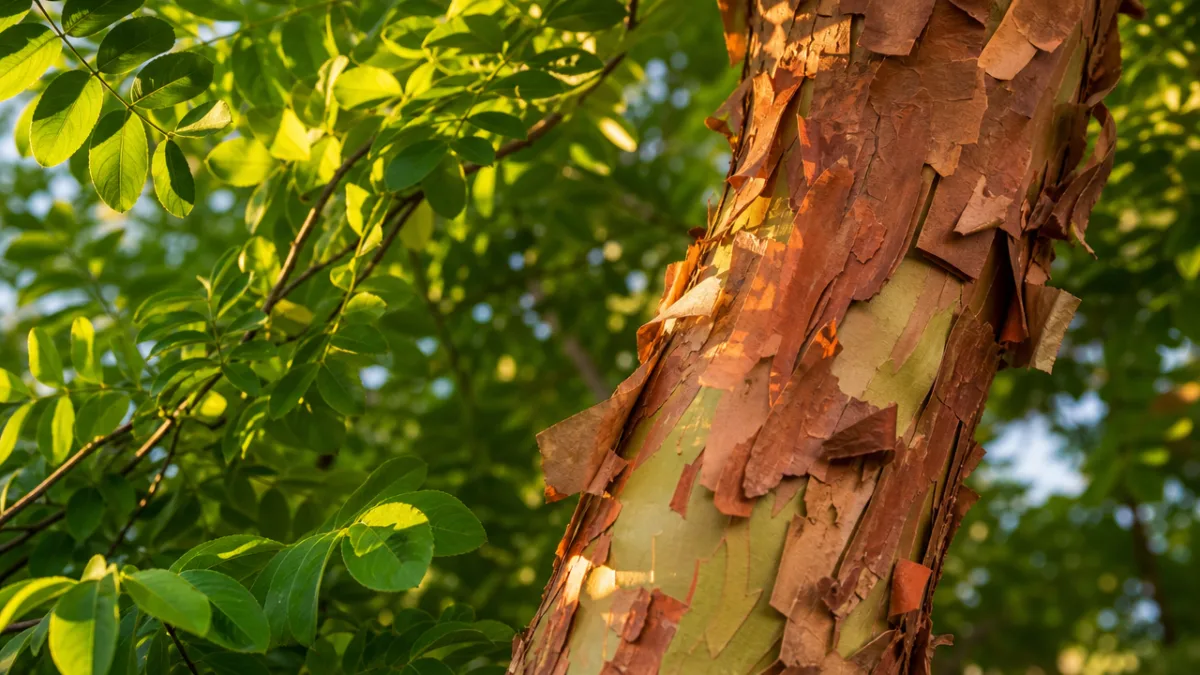
One of the most immediately striking physical features of Amur Maackia is its bark. On young stems and branches, the bark displays a rich, lustrous amber to coppery-bronze coloration that catches the light beautifully during the low-angle sun of winter months. As the tree matures, this bark begins to exfoliate in attractive curling strips, revealing layers of contrasting color beneath. This peeling quality gives mature specimens a sculptural, almost artistic quality during the dormant season, making the tree an asset in the landscape even when it carries no foliage.
The foliage of Amur Maackia deserves special attention for its unusual seasonal development. New leaves emerge in late spring with a distinctive silvery-gray to bluish-green color that gives the fresh growth an almost metallic, shimmering quality in morning light. This emerges because the young leaflets are densely covered in silky hairs that gradually shed as the leaves mature into a darker, matte green over the course of the growing season. The pinnately compound leaves, typically composed of seven to eleven leaflets arranged along a central stem, give the tree a fine-textured, elegant appearance throughout summer that contrasts beautifully with bolder-leafed companions in the garden.
Flowering Season and Ornamental Value
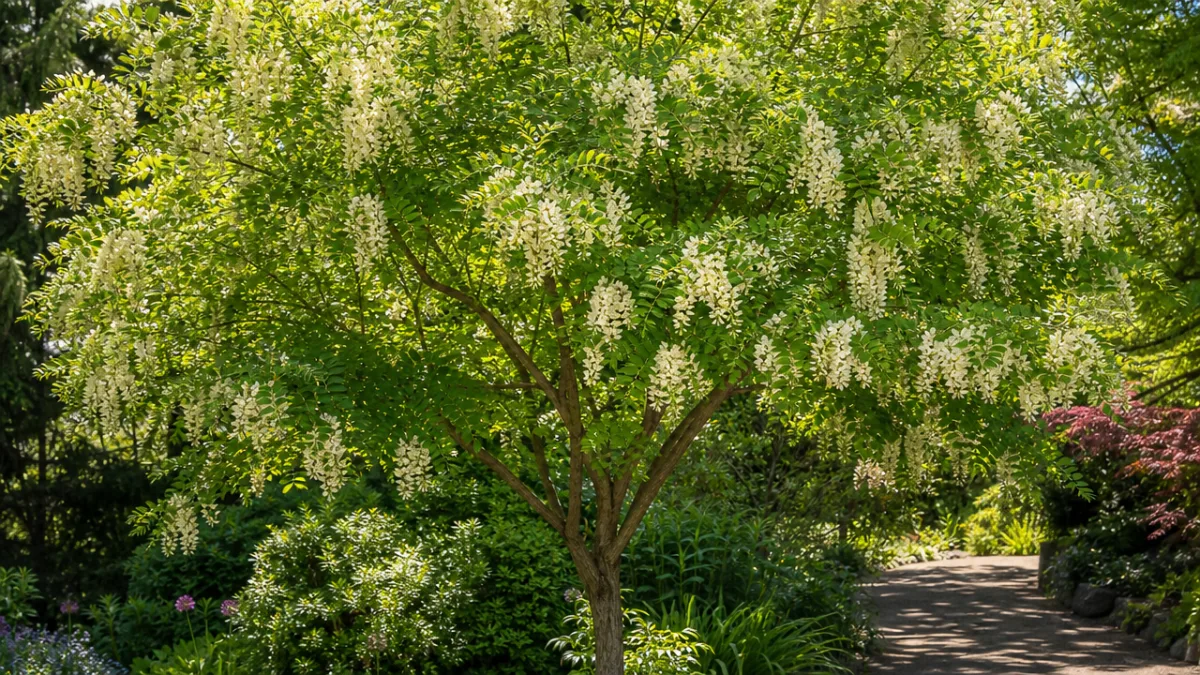
The flowering display of Amur Maackia is one of its most celebrated attributes, and it occurs at a particularly strategic time in the gardening calendar. The tree blooms in midsummer, typically from late June through August depending on climate and location, a period when relatively few ornamental trees are producing significant floral interest. This positions Amur Maackia as an invaluable gap-filler in the sequence of seasonal bloom, providing color and fragrance precisely when the spring-flowering cherries, crabapples, and redbuds have long since finished and the autumn color season has yet to begin.
The flowers themselves are borne in upright, densely packed racemes that can reach six inches or more in length. Each individual floret is small and pea-shaped, as one would expect from a member of the legume family, and they display a creamy white to soft ivory coloration with occasional pale greenish or yellowish tints. While the color palette is subtle rather than dramatic, the sheer density of the flower clusters against the dark green foliage creates a quietly refined effect that photographs beautifully and reads well across a landscape. The blooms also carry a light, pleasant fragrance that becomes particularly noticeable on warm, still summer evenings.
Beyond the flowers themselves, the pollinator value of Amur Maackia during its midsummer bloom period should not be underestimated. At a time when many flowering plants have concluded their season, the nectar-rich blossoms of this tree attract an impressive array of bees, including numerous native species that are critical components of healthy garden ecosystems. Butterflies, hoverflies, and other beneficial insects also visit regularly, making Amur Maackia not merely an ornamental asset but a genuine ecological contribution to any landscape planting. Gardeners with an interest in supporting pollinators will find this tree rewards them generously.
Hardiness, Adaptability, and Site Requirements
Among the most compelling practical arguments for planting Amur Maackia is its extraordinary toughness and adaptability across a wide range of conditions. The tree is rated hardy in USDA zones 3 through 7, meaning it can survive the brutal winters of the northern United States, Canada, and much of northern Europe without suffering significant cold damage. This cold hardiness is substantially better than many ornamental trees that offer comparable aesthetic features, and it makes Amur Maackia particularly valuable in regions where winter temperatures regularly plunge well below freezing.
Soil adaptability is another area where Amur Maackia genuinely excels. Like many members of the legume family, it possesses the ability to fix atmospheric nitrogen through associations with specialized soil bacteria, which allows it to establish and thrive in poor, infertile soils where more demanding trees would struggle. It tolerates clay soils, compacted urban soils, and dry conditions with remarkable equanimity once established. It also shows good tolerance of alkaline soil conditions, expanding its usefulness in regions where soil pH limits the choice of ornamental trees considerably.
While Amur Maackia performs best in full sun with at least six hours of direct sunlight daily, it demonstrates reasonable adaptability to partial shade conditions, particularly in hotter climates where some afternoon shading can actually improve performance and foliage quality. The tree shows good drought tolerance once its root system is established, typically after two to three growing seasons, though supplemental irrigation during extended dry periods in the first few years after planting will help the tree settle in more quickly and develop a robust, expansive root system that will serve it for decades.
Landscape Uses and Design Applications
The modest mature size and refined appearance of Amur Maackia open up a remarkable range of landscape applications that larger trees simply cannot accommodate. As a specimen tree planted in a lawn or garden bed where it can be appreciated from multiple angles, it provides year-round interest through its changing seasonal displays. Its rounded crown casts pleasant, filtered shade without the dense, root-competitive shadow of larger trees, making underplanting with shade-tolerant perennials, groundcovers, or spring bulbs both possible and rewarding. A well-established specimen surrounded by a thoughtful underplanting is genuinely one of the small garden’s finest achievements.
In urban and suburban streetscape applications, Amur Maackia has proven its worth in many trial plantings across North America and Europe. Its tolerance of compacted soils, urban heat, and the stresses associated with pavement root restriction make it a practical candidate for tree pits and boulevard plantings. Its modest height means it is unlikely to conflict with overhead utility lines, a common and expensive problem with trees selected for street use without adequate attention to mature size. Several municipalities that have planted Amur Maackia in trial programs have subsequently expanded its use based on consistently strong performance.
Designers working on residential landscapes have found Amur Maackia particularly useful in several specific situations. It works beautifully as a small patio tree where its light canopy creates comfortable shade without blocking desirable views or creating oppressive overhead enclosure. It serves effectively as a transition tree at the edge of a more formal garden area moving toward a naturalistic or woodland planting, where its fine texture and natural grace bridge the two aesthetic zones elegantly. It can also anchor a mixed shrub border, providing vertical structure and seasonal bloom without the aggressive suckering or spreading habit that makes some shrubby alternatives problematic over time.
Cultivation, Care, and Maintenance
Establishing Amur Maackia successfully begins with selecting an appropriate planting site and preparing the ground thoughtfully before the tree arrives from the nursery. Although the tree is notably adaptable once established, giving it a good start will significantly accelerate the process of getting it to that point. Digging a planting hole two to three times wider than the root ball but no deeper than the root flare allows root expansion into loosened soil while ensuring the trunk base remains at the correct depth. Planting too deeply is one of the most common and damaging mistakes made with any tree, and Amur Maackia is no exception to this rule.
Watering during the establishment period deserves careful attention. Newly planted Amur Maackia trees benefit from consistent moisture during their first growing season, receiving deep, infrequent irrigation that encourages roots to explore the surrounding soil broadly rather than shallow, frequent applications that keep roots near the surface. A layer of organic mulch two to four inches deep applied over the root zone, kept clear of direct contact with the trunk, conserves soil moisture, moderates temperature extremes, suppresses competing weeds, and gradually improves soil structure as it decomposes. This single practice probably does more to support establishment than any other aftercare measure.
Pruning requirements for Amur Maackia are generally minimal, which is one of the practical advantages of this species over more maintenance-intensive ornamentals. The tree naturally develops an attractive form with relatively little intervention, and heavy pruning is neither necessary nor particularly beneficial. Where pruning is appropriate, it is best carried out during the dormant season, removing any crossing or rubbing branches, addressing any co-dominant leaders that might develop structural weakness, and maintaining clearance from buildings, walkways, or other structures as needed. The tree does not produce significant quantities of problem suckers or water sprouts under normal circumstances, keeping maintenance demands pleasingly low.
- Watering: Deep, infrequent irrigation during establishment; drought tolerant once mature
- Fertilizing: Minimal requirements due to nitrogen fixation; avoid excess nitrogen which promotes weak growth
- Pruning: Light corrective pruning during dormancy; no heavy shaping required
- Mulching: Maintain a two to four inch layer over the root zone annually
- Pest and disease monitoring: Inspect periodically but serious problems are uncommon
Pest, Disease Resistance, and Ecological Considerations
One of the most genuinely appealing practical qualities of Amur Maackia is its strong resistance to the pests and diseases that bedevil so many popular ornamental trees. Unlike elms threatened by Dutch elm disease, ashes devastated by emerald ash borer, or hemlocks struggling with woolly adelgid, Amur Maackia has so far demonstrated no significant vulnerability to major pest or disease pressures in cultivation. This freedom from serious pest and disease concerns dramatically reduces the long-term cost and effort of maintaining specimens and, more importantly, significantly lowers the risk of losing established trees to the kinds of catastrophic infestations that have reshaped North American and European urban forests in recent decades.
From an ecological standpoint, Amur Maackia offers tangible benefits beyond its pollinator support during the flowering season. As a nitrogen-fixing legume, it contributes to soil fertility not only beneath its own canopy but, through leaf litter decomposition, to the broader planting area over time. This characteristic makes it an interesting candidate for ecological restoration plantings on poor, degraded soils where improving soil fertility without chemical inputs is a goal. Several conservation-oriented landscape projects have begun incorporating Amur Maackia specifically for this functional ecological role in addition to its ornamental merits.
The question of invasiveness deserves brief attention for conscientious gardeners. Amur Maackia is not currently listed as invasive in any region where it is commonly cultivated, and its relatively restrained seed production combined with apparently limited naturalization tendency suggest it poses low ecological risk in landscapes outside its native range. This stands in favorable contrast to a number of other Asian species that have been widely planted as ornamentals and subsequently proven problematic in natural areas. Gardeners who prioritize ecological responsibility alongside beauty can plant Amur Maackia with a reasonable degree of confidence on this front.
Sourcing, Availability, and the Role of Specialist Nurseries
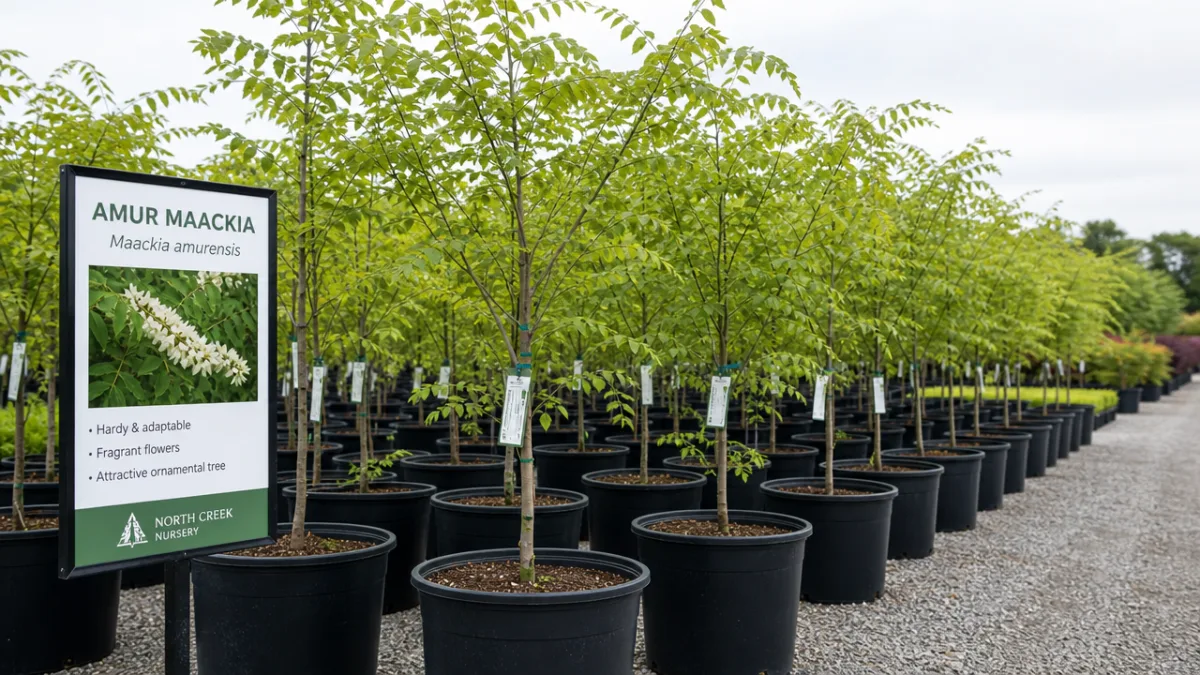
Finding Amur Maackia at a local garden center remains more challenging than it should be given the tree’s considerable merits, and this is precisely where specialist nurseries like Forde Nursery play an invaluable role in the horticultural landscape. The relative scarcity of Amur Maackia in mainstream retail channels reflects the commercial realities of ornamental tree production rather than any shortage of horticultural merit. Trees that grow slowly, require careful propagation, and appeal most strongly to knowledgeable buyers tend to be underrepresented in volume-driven retail environments, but they find their natural home in specialist operations that prioritize quality and diversity over sheer turnover.
When sourcing Amur Maackia, purchasing from a reputable nursery that has grown its stock from verified provenance material offers the best assurance of genuine species quality and local adaptability. The genus Maackia contains several species, and hybridization or mislabeling can occasionally complicate identification. A specialist nursery with expertise in the genus will be able to provide accurate identification and guidance on selecting the right plant for a specific site and climate. They will also typically offer specimens that have been grown and hardened under conditions appropriate to the selling region, which improves establishment success considerably compared to plants that have been shipped long distances from inappropriate growing climates.
The broader value of supporting specialist nurseries like Forde Nursery extends beyond any individual tree purchase. These businesses serve as living libraries of horticultural diversity, maintaining collections of species and cultivars that would otherwise disappear from cultivation entirely, providing expertise that guides gardeners toward better plant choices, and contributing to the ongoing conversation about which plants deserve wider recognition and use in our landscapes. As awareness of Amur Maackia continues to grow through the advocacy of knowledgeable nursery professionals and the sharing of successful specimens in public and private gardens, its availability through mainstream channels will likely improve, bringing this remarkable tree within reach of an ever wider gardening audience.








What do you think?
It is nice to know your opinion. Leave a comment.