










Bramble 2.0: Reimagining a Classic Cocktail with Empress 1908 Gin
The Legacy of the Bramble Cocktail
The Bramble is one of those rare modern classics that somehow feels like it’s always existed. Dick Bradsell — a true legend of British bartending — created it in 1984 at Fred’s Club in London, and the inspiration was wonderfully personal: he wanted to bottle the feeling of picking blackberries from hedgerows as a kid on a crisp autumn afternoon. He combined gin, fresh lemon juice, sugar syrup, and crème de mûre, and the result was something simultaneously sophisticated and deeply nostalgic. Watch the blackberry liqueur cascade slowly through crushed ice like ink through water, and you’ll understand immediately why bartenders and drinkers around the world fell for it.
In the decades since, the Bramble has earned its place on cocktail menus everywhere. The balance of sharp citrus, botanical gin, and sweet-tart berry is approachable enough for newcomers but never dumbed down — which is a genuinely hard line to walk. For a lot of drinkers who came up during the cocktail renaissance of the early 2000s, ordering a Bramble was a kind of milestone moment, a sign you’d wandered past the well drinks and into something more intentional. And yet, precisely because it’s so beloved, creative bartenders can’t help tinkering with it, looking for ways to honor the original while taking it somewhere new.
What makes the Bramble such a great template is that its elegance and simplicity are also an open invitation. The gin, the citrus, the sweetener, the berry element — every single component is a variable waiting to be played with. That’s exactly where Empress 1908 Gin comes in, bringing a botanical depth and a visual drama that genuinely transforms the drink. The Bramble 2.0 isn’t change for change’s sake; it’s a thoughtful step forward that keeps its roots firmly planted while making the most of what’s possible today.
Empress 1908 Gin: A Spirit Unlike Any Other
Empress 1908 Gin takes its name from the Fairmont Empress Hotel in Victoria, British Columbia — a landmark that’s been serving its famous afternoon tea since, you guessed it, 1908. The gin was made in collaboration with the hotel and draws directly from that tea tradition, using butterfly pea blossom (the same flower steeped in the hotel’s signature tea) as one of its core botanicals. That single ingredient gives the gin its most immediately striking quality: a deep, jewel-toned indigo color that shifts to vivid pink or rose the moment acidic ingredients like lemon juice enter the picture. It’s a spirit that doubles as a performance.
But the color is just the opening act. Empress 1908 is genuinely well-crafted on every level, built from eight botanicals: juniper, grapefruit peel, rose petal, coriander seed, cinnamon bark, ginger root, butterfly pea blossom, and — a lovely nod to its origins — black tea. The balance it strikes between classic juniper-forward gin character and floral, citrus, and spice notes makes it surprisingly versatile. At 42.5% ABV, it has enough backbone to hold its own in a cocktail without bulldozing more delicate flavors. Sip it neat and it just keeps revealing new layers the longer you spend with it.
There’s also something genuinely poetic about the spirit’s sense of place. Victoria is a city with deep British colonial roots, and the Fairmont Empress is its most iconic landmark. That history lives in every bottle of Empress 1908, from the name down to the label’s Edwardian sensibility. For a cocktail like the Bramble — itself born from British culture and a very British kind of nostalgia — choosing Empress 1908 as the base spirit feels less like a substitution and more like a homecoming. They share the same lineage, the same botanical tradition, the same instinct for elegance in the glass.

The Color-Changing Magic: Science Meets Craft
One of the most compelling reasons to use Empress 1908 in a Bramble 2.0 is the color transformation — and once you understand what’s actually happening, it becomes even more interesting. The butterfly pea blossom that gives the gin its indigo hue contains anthocyanins, naturally occurring pigments that are highly sensitive to pH. In neutral or alkaline conditions they read as blue and purple; introduce an acid — like the lemon juice at the heart of a Bramble — and they shift toward red, pink, and violet. No tricks, no additives, just straightforward natural chemistry playing out in real time, right in your glass.
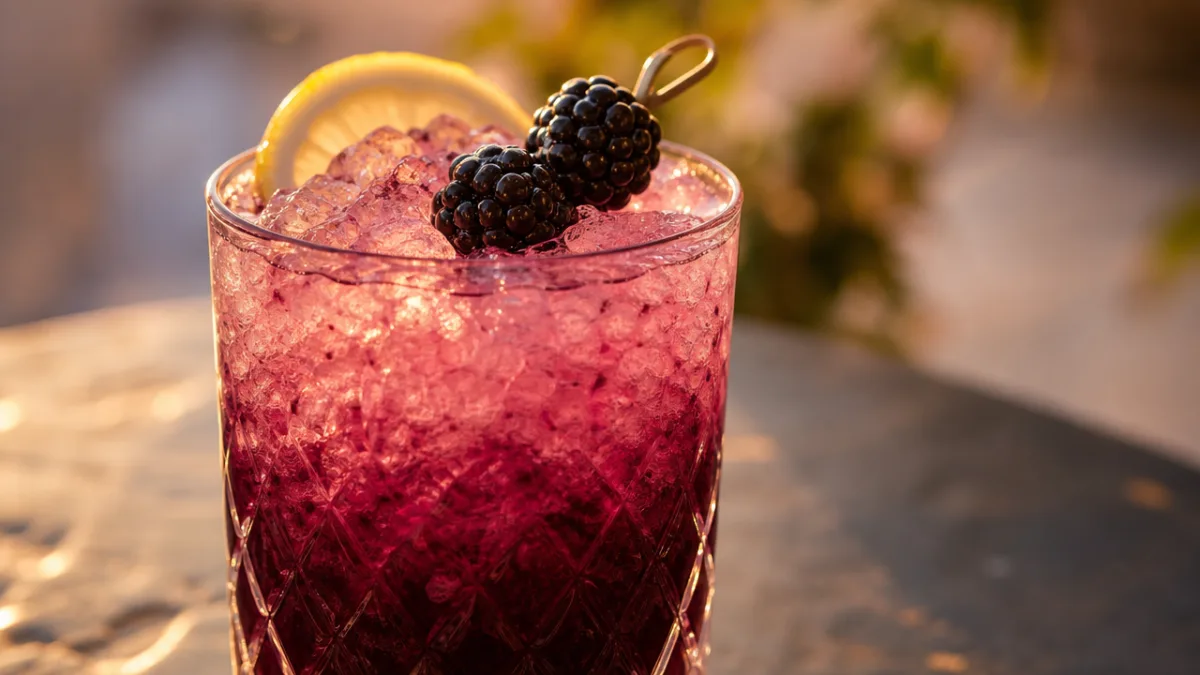
In the Bramble 2.0, this transformation adds a whole new layer to a drink that was already a visual showpiece. The original Bramble’s signature moment is the crème de mûre bleeding through crushed ice. In the upgraded version, the gin itself opens as a deep, mysterious indigo, then slowly blooms through violet and into pink as it meets the lemon juice and blackberry liqueur. The finished drink cycles through a shifting spectrum of purples and pinks that seems almost alive. It’s one of the most photogenic cocktails you can make right now, and the reactions from people who haven’t seen it before are genuinely delightful.
Understanding the science also gives you real control over the presentation. Mix the lemon juice in early and aggressively, and the drink settles quickly into a uniform rosy hue. Pour the gin gently over ice and drizzle the citrus slowly, and you can draw the transition out, watching it happen in real time. The Bramble 2.0 rewards an unhurried, considered approach — which, honestly, fits perfectly with everything the craft cocktail movement has always been about. The process here is part of the pleasure, not just a means to an end.
Building the Perfect Bramble 2.0: Ingredients and Technique
Good ingredients are non-negotiable here, as they are with any cocktail worth making. Two ounces of Empress 1908 forms the floral, botanical foundation everything else is built on. Fresh lemon juice — and I mean fresh, squeezed that day, not from a bottle — is equally non-negotiable; three-quarters of an ounce delivers the brightness and acidity that balances the gin and kicks off the color change. A two-to-one simple syrup (two parts sugar, one part water) rounds out the sour template with clean, neutral sweetness that doesn’t compete with what the gin is already doing.
The blackberry element is where you have the most room to make the drink your own. Classic crème de mûre is always a solid choice — its rich, sweet-tart blackberry flavor plays right into the berry and floral notes already in Empress 1908. But a house-made blackberry shrub brings a vinegary complexity that’s genuinely interesting; a blackberry and rose cordial echoes the gin’s rose petal botanical beautifully; a premium blackberry liqueur with lower residual sugar gives you a drier, more understated finish. About half an ounce is all you need, whatever direction you go — enough for color, flavor, and that signature visual drizzle.
Technique really does matter. Shake the gin, lemon juice, and simple syrup hard with ice until the shaker is properly frosty — you want full integration and the right dilution. Strain it over a glass packed tight with crushed ice, which is not optional: it slows dilution, keeps everything colder longer, and gives the blackberry drizzle a textured surface to cascade across. Then pour the blackberry element slowly over the back of a bar spoon so it drifts down through the drink rather than disappearing into it immediately. Finish with a fresh blackberry and a lemon wheel, and you’re done.
- 2 oz Empress 1908 Gin — the floral, indigo-hued base that drives both flavor and visual drama
- ¾ oz fresh lemon juice — bright acidity that balances sweetness and triggers the color change
- ½ oz 2:1 simple syrup — clean sweetness that supports without overshadowing the botanicals
- ½ oz crème de mûre or blackberry liqueur — the defining blackberry drizzle, poured last over the back of a spoon
- Crushed ice — essential for the proper texture, dilution rate, and visual presentation
- Garnish — fresh blackberries and a dehydrated or fresh lemon wheel
Flavor Profile and Pairing Suggestions
The Bramble 2.0 is a drink that feels both familiar and genuinely surprising. On the nose, the butterfly pea blossom and rose petal from the gin meet bright, fresh lemon in a way that really does smell like a summer garden after rain — there’s a delicate sweetness underneath hinting at the blackberry to come, and a faint warmth from the ginger and cinnamon in the botanical bill. It’s an inviting, layered aroma that sets up the palate nicely for what follows.
The first sip opens with clean lemon tartness, which quickly makes way for the floral juniper character of the gin — lusher and more perfumed here than you’d get from a classic London Dry style. The midpalate is where the blackberry arrives, rich and jammy and just sweet enough, weaving through the citrus and botanical notes without ever taking over. The finish is long and gently spiced, with the gin’s ginger and black tea notes quietly asserting themselves as the sweetness fades. It’s a cocktail that genuinely evolves from first sip to last, and it rewards the kind of drinking where you’re actually paying attention.
Food pairing is more interesting than you might expect. The citrus, berry, and floral combination makes this a natural match for soft creamy cheeses like brie or camembert, where the acidity cuts the richness and the floral notes find a complementary bridge. It’s wonderful alongside a charcuterie board with fruit accompaniments, and it pairs beautifully with desserts built around stone fruit, fresh berries, or dark chocolate. For something a bit more unexpected, try it with a lightly dressed arugula salad with shaved parmesan and candied walnuts — the bitterness of the greens and the sweetness of the nuts mirror the cocktail’s own internal push and pull in a way that’s genuinely satisfying.
The Bramble 2.0 in Culture and Occasion
The Bramble 2.0 lands at an interesting cultural moment. Today’s drinkers are increasingly drawn to cocktails that have something to say — drinks connected to a place, a history, a set of values they can actually get behind. Empress 1908 delivers all of that effortlessly, and when you bring it together with a drink as storied as the Bramble, the result is something that feels meaningful alongside being delicious. This is a conversation-starter of a cocktail, one that says something about the person making it and the care they brought to the process.
Practically speaking, it’s also one of the most adaptable cocktails in the modern repertoire. The color-changing drama makes it ideal for celebrations, dinner parties, and any occasion where presentation is part of the point — it photographs beautifully and consistently stops people in their tracks when they haven’t encountered Empress 1908 before. It works just as well as a quiet treat at the end of a long week. It batches well too, which is a genuine gift for hosts who want to offer something memorable without spending the whole evening behind a shaker.
There’s also something worth appreciating about what Empress 1908 represents more broadly in premium spirits culture. It’s a spirit that achieved real recognition through genuine quality, compelling storytelling, and visual identity all at once — proving those things aren’t in tension but are actually deeply complementary. The Bramble 2.0 operates on the same logic. It’s beautiful because it’s well-made. It’s memorable because it has actual substance. It earns the Instagram post by first earning genuine pleasure. In a cocktail world that sometimes gets accused of prioritizing aesthetics over authenticity, this one refuses to choose — and that refusal is part of what makes it worth making.

Variations and Creative Riffs on the Bramble 2.0
Once you’ve got the base recipe dialed in, there’s a lot of fun to be had riffing on it. One of my favorite variations swaps the simple syrup for a lavender honey syrup, which leans into the floral character of Empress 1908 and adds an earthy, herbal sweetness that plays beautifully against the lemon tartness. Adding a few drops of Peychaud’s bitters to the shake brings in an anise and cherry complexity that deepens the whole thing considerably. Or, replace some of the crushed ice with a float of sparkling rosé and you’ve got a longer, effervescent version that’s perfectly suited to warm-weather entertaining.
If you enjoy working with shrubs, try swapping the crème de mûre for a blackberry-apple cider vinegar shrub. The result is less sweet, more savory, and has a kind of grown-up edge to it — the vinegar doubles down on the citrus acidity while the apple weaves in a subtle autumnal quality that makes this variation especially fitting as summer turns to fall. A blackberry and black pepper shrub is another strong option, introducing a gentle heat at the finish that creates an interesting tension with the gin’s floral sweetness. It’s the kind of contrast that keeps you going back for another sip just to figure it out.
A non-alcoholic version is also genuinely worth developing if you’re hosting people with different drinking preferences. Several distillers now produce alcohol-free botanical spirits with real floral and juniper character; pair one with a butterfly pea blossom infusion to get the color-changing effect back, add fresh lemon juice, simple syrup, and blackberry cordial, and you have an alcohol-free Bramble 2.0 that’s remarkably convincing. Making sure every person at the table has something beautiful and complex in their hand — not just an afterthought — is its own kind of hospitality. In all its forms, the Bramble 2.0 is ultimately a drink built around that idea: connection, pleasure, and the quiet satisfaction of something made with real care.








What do you think?
It is nice to know your opinion. Leave a comment.