










Coprosma repens: The Ultimate Guide to Mirror Plant
Introduction to Coprosma repens
Coprosma repens, commonly known as Mirror Plant or Looking Glass Plant, is one of the most visually striking shrubs you can grow in a coastal or temperate garden. Native to New Zealand, this evergreen shrub has earned its evocative common name from the extraordinary glossiness of its leaves, which reflect light so intensely that they appear almost lacquered. The plant belongs to the family Rubiaceae and has become a popular ornamental choice across gardens in the United Kingdom, Australia, the United States, and beyond.
What makes Coprosma repens particularly appealing to gardeners is its remarkable adaptability. It thrives in conditions that would challenge many other shrubs, particularly coastal environments where salt-laden winds, sandy soils, and high exposure would deter most ornamental plantings. This resilience, combined with its spectacular foliage, has made it a staple recommendation for seaside gardens and hedging projects around the world. The plant can be grown as a specimen shrub, a hedge, or even in large containers on patios and terraces.
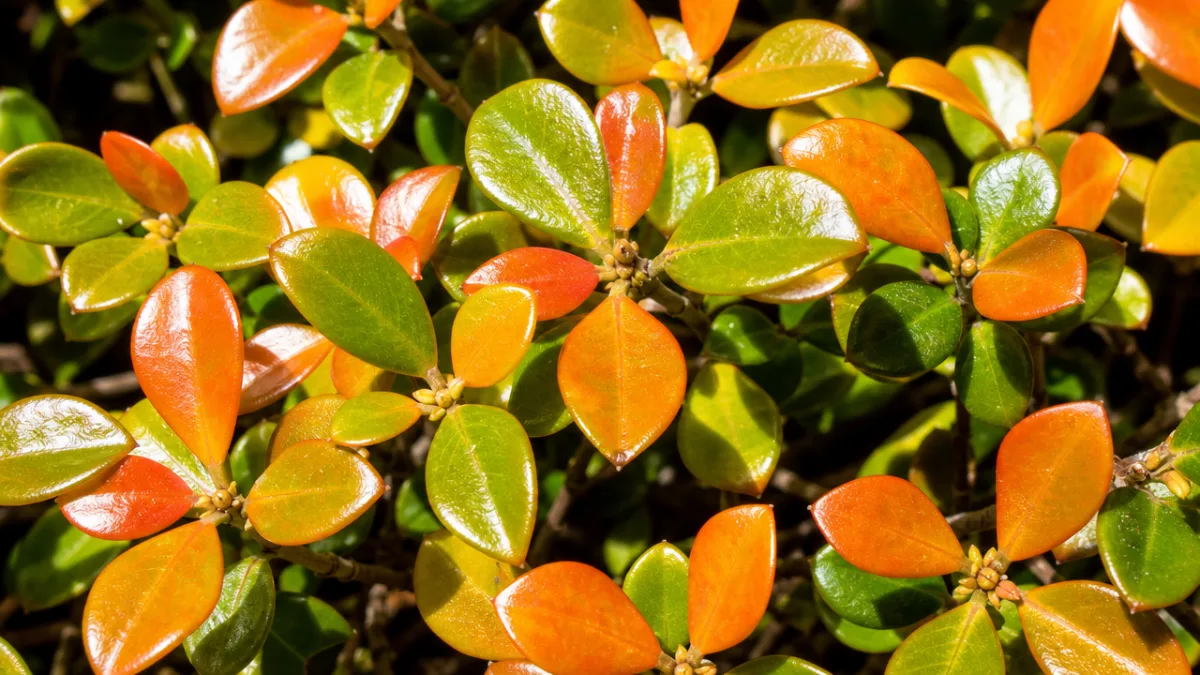
The genus name Coprosma derives from the Greek word for dung, a reference to the unpleasant smell produced by some species when their foliage is bruised or crushed. However, the repens species is far more agreeable in garden use than this etymology might suggest. Its cultivated varieties, developed over decades of horticultural breeding, often feature spectacular leaf colors ranging from deep olive green to vibrant orange, red, chocolate brown, and multicolored variegated forms that make the plant truly eye-catching throughout all seasons of the year.
Botanical Characteristics and Varieties
In its natural habitat across New Zealand’s coastal regions and lowland forests, Coprosma repens grows as a medium to large shrub, capable of reaching two to three meters in height when left unpruned. The leaves are oval to oblong, typically measuring two to five centimeters in length, and bear that signature high-gloss surface that distinguishes the species so dramatically from other garden shrubs. The texture is thick and leathery, an adaptation that helps the plant conserve moisture and resist wind damage in its native coastal environment.
The species produces small, inconspicuous flowers in spring, and male and female flowers are borne on separate plants. When both sexes are grown in proximity, female plants produce small, fleshy, brightly colored berries in shades of orange, red, or translucent white. These berries were historically consumed by Māori people in New Zealand, and they also provide a valuable food source for birds. However, it is worth noting that while technically edible, the berries are not commonly cultivated for human consumption in modern horticultural settings.
Among the most celebrated aspects of Coprosma repens are its cultivated varieties, which have been developed to showcase an extraordinary range of foliage colors. Some of the most popular and widely available cultivars include the following options, each bringing something distinct to a garden planting scheme:
- ‘Marble Queen’ – A stunning variegated form with cream and green mottled leaves that brighten shady corners.
- ‘Tequila Sunrise’ – Features warm orange, red, and green tones that intensify dramatically in cooler autumn temperatures.
- ‘Evening Glow’ – Bears rich chocolate-brown and orange foliage, offering a warm, jewel-like quality to mixed borders.
- ‘Pacific Night’ – Displays deep, lustrous burgundy-purple leaves with a mirror-like finish that is particularly striking in full sun.
- ‘Rainbow Surprise’ – Offers a multicolored palette of pink, cream, green, and orange, making it a popular choice for container growing.
These cultivars differ not only in their foliage color but also in their ultimate size and growth habit, with some remaining quite compact and others developing into substantial shrubs. The variation in cold hardiness is also an important consideration, as some varieties are more frost-tolerant than others. Gardeners in cooler climates should pay particular attention to selecting varieties rated for their specific hardiness zone before purchasing, as losses to unexpected frost can be a real disappointment with this otherwise reliable genus.
Growing Conditions and Soil Requirements
One of the great virtues of Coprosma repens is its tolerance of a wide range of growing conditions, making it accessible to gardeners working across different climates and soil types. The plant performs best in full sun to partial shade, with full sun generally producing the most vibrant and intense foliage coloration, particularly in the variegated and colored-leaf cultivars. When grown in deeper shade, the leaves may lose some of their characteristic gloss and the coloration can become less pronounced, though the plant will typically still survive and grow reasonably well.
In terms of soil, Coprosma repens is refreshingly undemanding. It tolerates a wide pH range and will grow in sandy, loamy, or even somewhat clay-based soils, provided that drainage is adequate. It does not appreciate waterlogged conditions and can develop root rot if left sitting in poorly draining soil for extended periods. For gardeners working with heavy clay soils, incorporating organic matter such as garden compost or well-rotted bark into the planting area will help improve drainage and create a more favorable root environment for the newly establishing plant.
Salt tolerance is one of the most noteworthy characteristics of Coprosma repens, making it an outstanding choice for coastal gardens where other shrubs simply cannot cope with salt-laden sea breezes. The leathery, glossy leaves are naturally adapted to resist salt spray, and the plant will thrive in exposed seaside positions that would scorch or kill many other ornamental shrubs. This quality has led to its widespread use as a windbreak and hedging plant in coastal gardens across New Zealand, Australia, the British Isles, and the Pacific coast of North America.
Regarding watering, established plants are reasonably drought-tolerant once they have had a full growing season to develop a robust root system. During the establishment period, which typically lasts the first growing season after planting, regular watering is important to help the plant anchor itself effectively. Once established, Coprosma repens is content with natural rainfall in most temperate climates, requiring supplemental watering only during prolonged dry spells or in particularly arid growing conditions. This low-maintenance quality adds considerably to its appeal for time-pressed or water-conscious gardeners.
Planting, Pruning, and Maintenance
Planting Coprosma repens is a straightforward process, though timing and preparation can make a meaningful difference to how quickly the plant establishes and begins to thrive. In temperate climates, spring planting is generally preferred, as it gives the plant the entire growing season to settle in before facing its first winter. In milder coastal climates, autumn planting is also entirely feasible and can result in excellent establishment, as cooler, moister conditions suit the developing root system well. Container-grown specimens, which are how this plant is most commonly sold at nurseries, can technically be planted at any time the ground is workable and not frozen.
When it comes to pruning, Coprosma repens responds well to trimming and can be shaped into a formal hedge, kept as a rounded specimen, or trained against a wall or fence. The best time to prune is in late spring after any risk of frost has passed, and again lightly in midsummer if necessary to maintain a neat shape. Heavy pruning, including cutting back into old wood, is generally well tolerated, making the plant useful for renovation if an established specimen has become overgrown or misshapen over time. This resilience to pruning is particularly valuable in hedging applications where consistent shaping is required across a long growing season.
Feeding requirements for Coprosma repens are modest, which further contributes to its reputation as a low-maintenance garden plant. An application of a balanced, slow-release granular fertilizer in early spring will support healthy growth and maintain the vibrancy of the foliage color throughout the season. Organic mulching around the base of the plant serves a double purpose, helping to retain soil moisture during dry periods while also gradually releasing nutrients into the soil as the mulch breaks down. Avoid mulching directly against the main stem of the plant to prevent moisture accumulation that could encourage rot at the crown.
While Coprosma repens is generally a robust and problem-free plant, there are a few maintenance considerations worth keeping in mind. In gardens where slugs and snails are prevalent, young plants and newly planted specimens can be susceptible to damage, particularly in wet spring conditions. Protective measures such as copper tape around pots, or environmentally friendly slug pellets in garden borders, can help protect new plantings until they are well established. Scale insects can occasionally be an issue, particularly on plants grown in sheltered indoor or conservatory conditions, and a suitable horticultural oil spray will typically resolve this problem effectively.
Landscape Uses and Design Applications
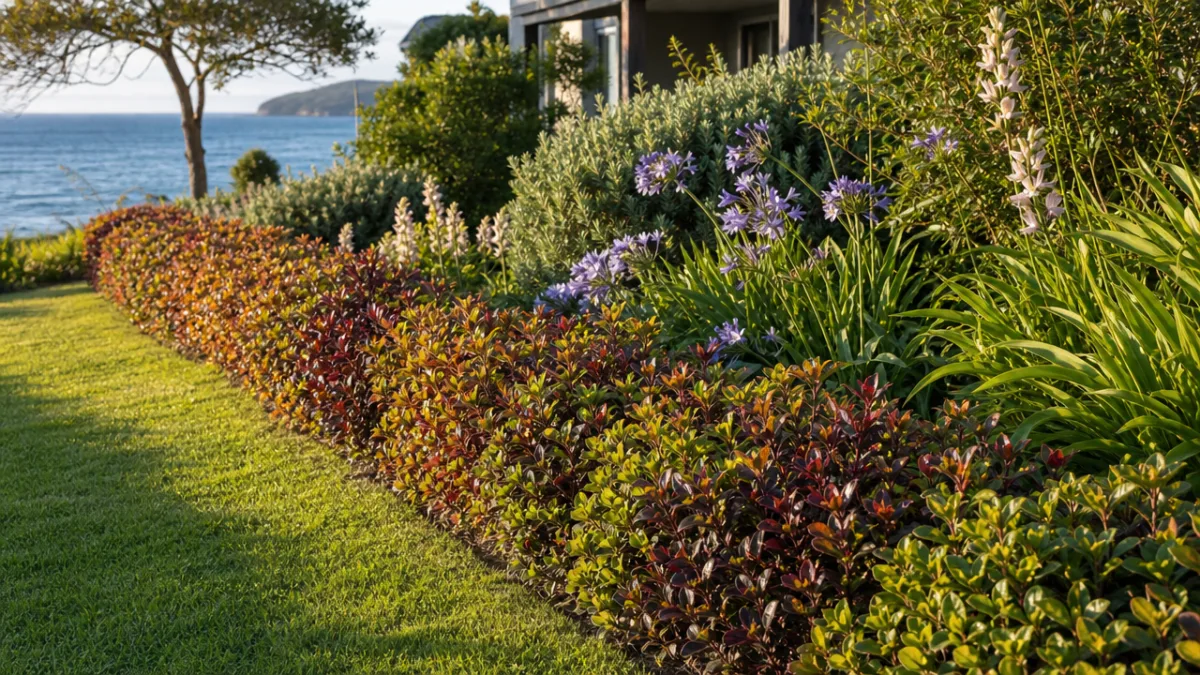
The design versatility of Coprosma repens is genuinely impressive and goes some way toward explaining why it has become such a reliable presence in contemporary garden design. Its compact, dense growth habit makes it an outstanding hedging plant, providing year-round privacy and wind protection in a relatively short time compared to many traditional hedging species. When multiple cultivars are planted in alternating groups along a hedge line, the contrasting leaf colors create a tapestry effect that remains visually interesting throughout every season, even in the depths of winter when deciduous alternatives offer nothing but bare stems.
As a specimen plant, the colored-leaf cultivars bring dramatic focal points to mixed borders, gravel gardens, and contemporary minimalist planting schemes. The warm orange and red tones of varieties like ‘Tequila Sunrise’ pair beautifully with ornamental grasses such as Stipa tenuissima or Festuca glauca, creating naturalistic planting combinations that feel dynamic and textured. Equally, the deep purples and burgundies of darker cultivars create sophisticated contrast against silver-leaved Mediterranean plants like Artemisia or Convolvulus cneorum, making them a designer’s go-to for contemporary gravel or drought-tolerant planting schemes.
Container gardening is another area where Coprosma repens excels, and the more compact cultivars are particularly well suited to life in large pots, planters, and window boxes. Growing the plant in a container gives gardeners in cooler climates the flexibility to move tender specimens under cover during periods of severe frost, greatly extending the range of colorful varieties that can be enjoyed in gardens where winter temperatures might otherwise cause losses. A grouping of contrasting cultivars in matching containers on a terrace or patio can create a striking ornamental display that requires relatively little maintenance once established.
Coprosma repens also plays an important functional role in erosion control and slope stabilization, where its spreading root system helps bind soil effectively. In landscaping projects involving embankments, coastal dunes, or sloped garden areas, it provides reliable ground-stabilizing coverage while simultaneously delivering significant ornamental value. This dual function makes it attractive not just to domestic gardeners but also to landscape architects working on commercial and public realm projects where low maintenance and visual appeal must be balanced against practical horticultural requirements.
Propagation Techniques and Growing from Cuttings
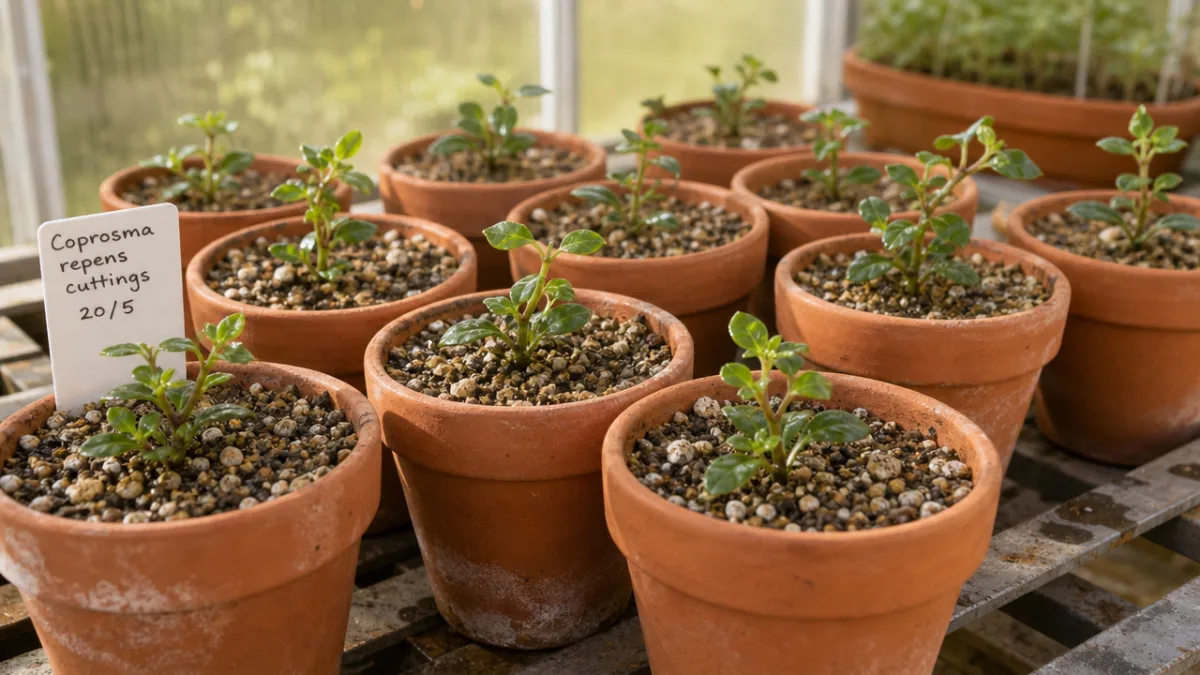
Propagating Coprosma repens at home is a satisfying and economical way to produce new plants, and the species responds particularly well to semi-ripe cuttings taken in late summer or early autumn. To take a successful cutting, select a healthy, non-flowering shoot of the current season’s growth, approximately ten to fifteen centimeters in length, and cut cleanly just below a leaf node using sharp, clean secateurs or a knife. Remove the lower leaves to expose two or three centimeters of bare stem, and optionally dip the cut end into hormone rooting powder or gel to encourage faster and more reliable root development.
The prepared cuttings should be inserted into small pots or trays filled with a well-draining propagation mix, typically a combination of equal parts horticultural grit and peat-free compost. Firm the mix gently around the stem to hold the cutting upright, and water in well without waterlogging the medium. Covering the pot with a clear plastic bag or placing it in a heated propagator will help maintain the high humidity that encourages rooting, while avoiding the desiccation that uncovered cuttings in a dry atmosphere can suffer. Bottom heat of around fifteen to twenty degrees Celsius significantly improves rooting success rates.
Rooting typically takes between four and eight weeks under suitable conditions, after which the cuttings can be potted up individually into small pots of standard potting compost and grown on in a frost-free but well-ventilated environment until they are large enough to plant out. It is important to harden off young plants gradually before moving them to their final outdoor position, acclimatizing them over a period of one to two weeks by increasing their exposure to outdoor conditions incrementally. This careful transition prevents the stress and leaf drop that can occur when tender young plants are moved abruptly from sheltered indoor conditions into a more exposed outdoor environment.
Layering is an alternative propagation method that works well for Coprosma repens, particularly for gardeners who want to produce just a small number of new plants without the fuss of taking cuttings. A low-growing flexible stem is bent down to the ground, wounded slightly at the point where it will contact the soil, and pinned in place with a piece of bent wire before being covered with a small mound of moist soil or compost. Roots will typically develop from the wounded section over the course of a growing season, at which point the newly rooted section can be severed from the parent plant and transplanted to its desired final position in the garden.
Overwintering and Frost Protection
Frost hardiness is one of the most important considerations when growing Coprosma repens, particularly for gardeners in continental or northern temperate climates where winters can be severe. The species itself is rated hardy to approximately minus five to minus eight degrees Celsius in sheltered conditions, though individual cultivars vary considerably in their cold tolerance. Generally speaking, the green-leaved forms tend to be hardier than the more ornamental colored-leaf cultivars, many of which are best regarded as frost-tender and treated accordingly in colder gardens.
For container-grown specimens, the most straightforward strategy for overwintering is simply to move the plants under cover before the first frosts arrive, relocating them to a cool but frost-free greenhouse, conservatory, or even a bright, unheated porch or garage. This approach allows gardeners in zone seven and below to enjoy tender cultivars that would be lost in an open garden setting, and the containers can be returned to their outdoor positions in late spring once the risk of frost has passed. Adequate light during the winter months is important to prevent excessive elongation of growth and to maintain the health and vigor of the plant through the dormant period.
For plants growing in the open garden in borderline climates, a range of protective measures can help carry the plants through difficult winters. Mulching heavily around the base with a thick layer of straw, bark chips, or horticultural fleece wrapped loosely around the foliage can provide meaningful protection during brief cold snaps. Planting in a sheltered south or west-facing position, against a warm wall where temperatures are slightly elevated, and where the plant benefits from reflected warmth, can also make a meaningful difference to survival rates in gardens where winter frost is a regular occurrence rather than an exceptional event.
It is also worth noting that Coprosma repens plants that do suffer frost damage should not be given up on too quickly. The plant’s regenerative capacity is considerable, and even specimens that appear entirely killed back by a hard frost may send up new growth from the base once warmer temperatures return in spring. Resist the urge to cut back frosted stems immediately; wait until new growth begins to emerge and the extent of any die-back becomes clear before removing damaged material. This patience is often rewarded with the survival of plants that might otherwise have been prematurely discarded.








What do you think?
It is nice to know your opinion. Leave a comment.