










Simple Craft Ideas for Room Decor to Transform Your Space
Why DIY Room Decor Is Worth Your Time and Effort
There’s something really special about walking into a room and realizing that everything beautiful in it came from your own hands. DIY room decor has taken off in a big way over the past decade, and honestly, it makes sense. Making your own decorative pieces lets you put your personality into a space in a way that anything off a store shelf just can’t. Every brushstroke, every fold, every cut is yours — which means the finished piece is genuinely one of a kind.
On top of the personal satisfaction, making your own decor is one of the most budget-friendly ways to style a home. Interior designers and high-end boutiques can charge eye-watering prices for pieces you could recreate at home for a fraction of the cost. A decorative vase from a fancy shop might run you fifty dollars or more, while a handmade version from an upcycled bottle and some craft paint could cost under five. Those savings add up fast, and before long you’ve got a beautifully decorated home without the financial hangover.
There’s also a therapeutic side to crafting that a lot of people don’t fully appreciate until they try it. Working with your hands, focusing on something creative, watching raw materials slowly become something real — it genuinely reduces stress and brings you into the moment. In a world where we’re staring at screens most of the day, sitting down with scissors, glue, paint, or yarn feels grounding in a way that’s hard to describe until you’ve experienced it. Your handmade decor ends up being more than just decoration — it’s a record of quiet, restorative moments that were good for you.
Getting Started: Building Your Craft Supply Collection
You really don’t need to go out and buy everything at once before your first project. Starting with a solid set of versatile basics will get you through a surprisingly wide range of crafts without overwhelming your space or your wallet. The essentials are pretty simple: a hot glue gun, scissors, acrylic paints in neutral shades, painter’s tape, twine or jute rope, and a handful of brushes. You can find all of this at any craft store, often in affordable starter kits aimed specifically at beginners getting into home decor.
As you finish more projects and figure out what kind of crafting you actually enjoy, you can slowly build out your collection from there. If macramé clicks for you, you’ll want to explore different cord weights and wooden dowels. If paper crafting is your thing, a bone folder, cutting mat, and some specialty cardstock will start calling your name. Letting your supplies grow alongside your interests means every tool earns its place rather than collecting dust in a drawer.
Transforming Walls with Handmade Art and Textile Pieces
Walls are the biggest canvas you have in any room, and filling them with handmade art makes an immediate difference. One of the most accessible places to start is a gallery wall — a mix of simple painted canvases, framed pressed botanicals, and hand-lettered quotes arranged together. Blank canvases are cheap when you buy them in bulk, and they’re great for experimenting with color blocking, abstract shapes, or basic geometric designs. The best part is that no two gallery walls ever look the same, so yours will always be completely your own.
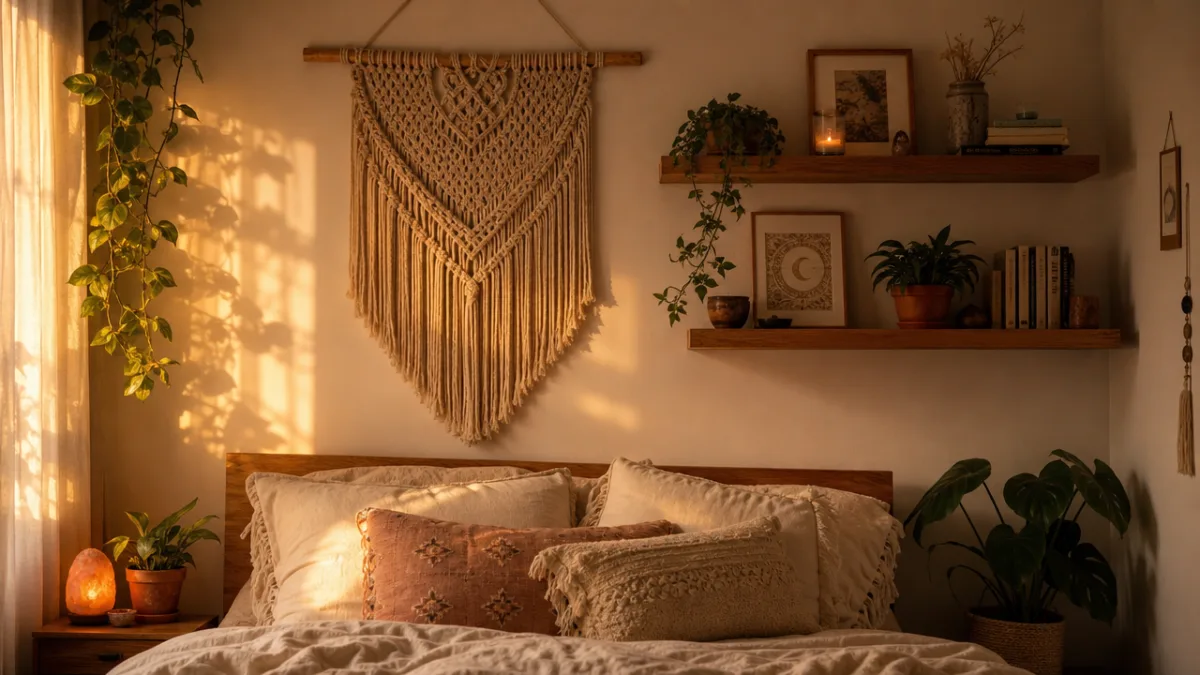
Macramé wall hangings have made a huge comeback in recent years, and their relaxed, bohemian look works with way more interior styles than you might expect. All you really need is some cotton rope, a wooden dowel, and a couple of basic knots — the square knot and spiral hitch will take you a long way. There are great free tutorials online for every skill level, and even a total beginner can walk away from their first attempt with something genuinely impressive after a few hours of patient practice.
Fabric wall art is another option worth considering, and the best part is that it requires zero sewing. Simply stretch a piece of patterned fabric over a wooden frame, or fold and pin it inside an oversized picture frame, and you’ve got a finished piece that looks intentional and polished. Fabric adds texture, pattern, and color in a way that painted canvas sometimes can’t match, and you can swap it out with the seasons without much effort or expense. Honestly, just browsing a fabric store for prints that work with your color palette is a fun afternoon on its own.
DIY Floating Shelves and Display Ledges
Floating shelves do double duty — they give you practical storage and a place to put together a little curated display. Building basic shelves from wood planks doesn’t take much carpentry experience, just a drill, a level, and the right wall anchors. Paint or stain the wood to match your existing furniture and the shelves immediately look like deliberate, considered additions rather than a weekend DIY project. Style them with a mix of plants, books, candles, and small handmade objects and the whole thing comes together really nicely.
If building shelves from scratch feels like too big a leap right now, picture rail molding from the hardware store is a great alternative. These narrow ledges sit close to the wall and are perfect for leaning framed artwork, small terracotta pots, and decorative objects in an arrangement you can rearrange whenever the mood strikes. The shallow depth naturally pushes you toward a more minimal approach, which tends to look cleaner and more deliberate than deeper shelves that can quickly turn into a dumping ground.
Upcycling Everyday Items into Stunning Decorative Pieces
Some of the most rewarding room decor projects come from transforming things you already own — or can pick up secondhand for next to nothing — into something genuinely beautiful. Glass jars and bottles are probably the most versatile starting point. They can become candle holders, vases, storage vessels, or lanterns with very little effort. A collection of mismatched jars painted in different shades of the same color family looks surprisingly sophisticated lined up on a windowsill or mantelpiece, and the total material cost is almost zero.
Old picture frames that have lost their glass or just look tired and dated can be given a whole new life. Strip out the backing and glass, give the frame a fresh coat of paint, and suddenly you have a structure that works for displaying a small piece of macramé, a hanging terrarium, or even a pegboard for jewelry. Or mount a cluster of mismatched frames on a wall, paint them all the same color, and you’ve created an architectural wall feature that adds real visual interest to an otherwise flat surface.
Fabric scraps, old sweaters, and clothes that have seen better days are also worth holding onto before you toss them. Cutting fabric into strips and braiding or weaving them into a small rug works beautifully in tight spaces like a bathroom or reading nook. Sweaters with interesting textures or patterns can be pulled over cushion inserts to create throw pillows with real character. These kinds of projects cut down on textile waste while producing home pieces that actually mean something — little connections to memories tied to the original items.
Creating Botanical and Nature-Inspired Accents
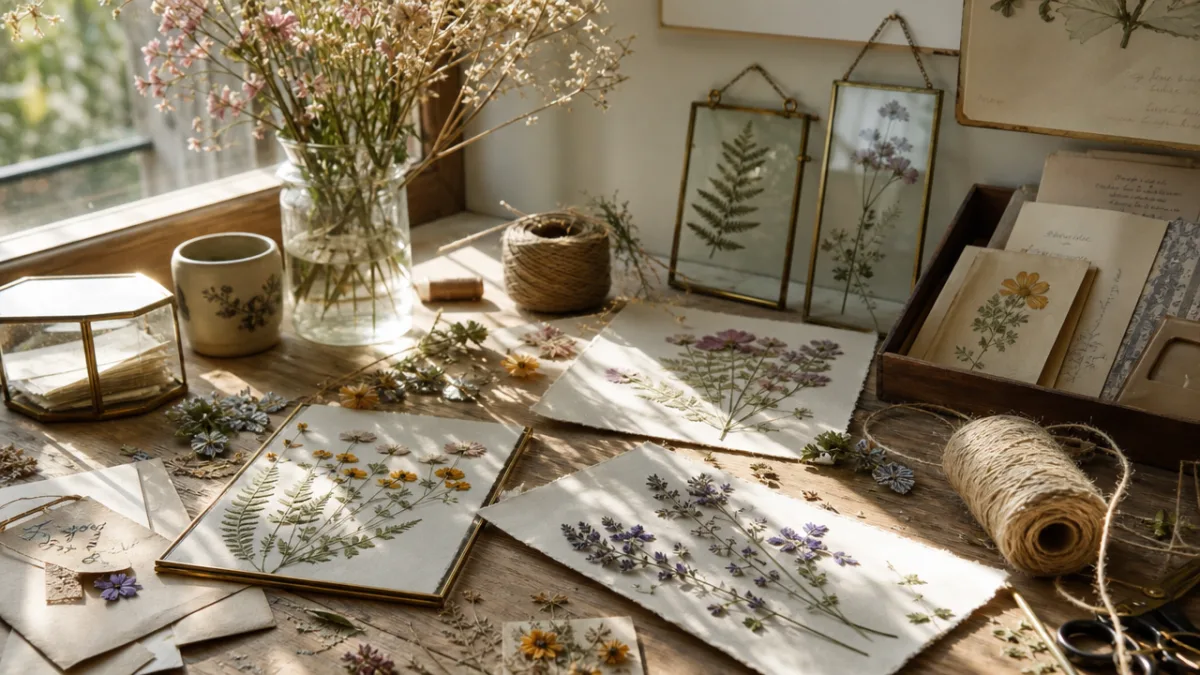
Nature has always been one of the most reliable sources of decorating inspiration, and bringing botanical elements into your handmade decor adds a sense of calm and organic beauty that’s hard to manufacture any other way. Pressed flowers and leaves displayed behind glass make for beautiful, minimal wall art that costs almost nothing. Gather them from your garden or on a walk, press them between the pages of a heavy book for a couple of weeks, then arrange them in simple clip frames — the result looks genuinely elegant.
Dried flower arrangements and wreaths are another great option that doesn’t require any particular skill. Bundling dried lavender, pampas grass, eucalyptus, or wheat and tying them with twine creates hanging arrangements that are everywhere on social media right now for good reason. They last for months without any upkeep and actually look lovely as they slowly age and fade a little, adding a soft, romantic quality to whatever space they’re in.
Lighting Projects That Completely Change a Room’s Atmosphere
Lighting might be the single most impactful thing you can change in a room, and handmade lighting projects are among the most satisfying crafts you can take on. Creating a fairy light canopy above a bed or reading chair takes almost no effort — just a string of warm LED lights and a few hooks or curtain rods — but the effect is completely transformative. That soft, twinkling glow makes a space feel magical and intimate in a way that overhead lighting simply can’t pull off on its own.
Paper lanterns and lampshades take a bit more effort but produce results that are genuinely stunning. A simple lantern made from cardstock or watercolor paper, cut into geometric panels and assembled around a thin wire frame, becomes a beautiful pendant light when paired with a basic cord kit from the hardware store. Paint or stamp a pattern onto the paper before you assemble it and the light filters through in warm, intricate ways, casting interesting shadows across the walls and ceiling once the sun goes down.
Candle holders made from natural materials like driftwood, concrete, or air-dry clay add a warm, organic feel to any surface. With air-dry clay, you just press your mold into shape, smooth it with damp fingers, and carve in simple geometric or botanical details before it dries. Seal the finished piece with a matte varnish and it genuinely looks artisanal — the kind of thing you’d see in an interior design magazine. Group a few together in different heights and you’ve got a centerpiece with real visual rhythm.
Textile Crafts for Soft Furnishings and Cozy Accents
Soft furnishings go a long way toward making a room feel warm and lived-in, and a lot of the most impactful pieces are surprisingly easy to make yourself. Arm knitting — where you use your arms instead of needles — lets total beginners produce chunky, luxurious throws from thick merino wool in under an hour. Draped over a sofa or folded at the end of a bed, these oversized blankets instantly make a room feel more inviting, and they make fantastic handmade gifts too.
No-sew cushion covers made with iron-on hem tape or fabric glue open up a whole world of possibilities for customizing your soft furnishings without touching a needle and thread. Bold prints, velvet, linen, or even plain canvas covers painted with fabric paint give you full control over the color story in a room. Swapping covers out seasonally is one of the easiest, most affordable ways to refresh a living room or bedroom without buying a single piece of new furniture.
Organizing Your Craft Projects for Long-Term Success
A little planning goes a long way when it comes to room decor crafting. Before you dive into a new project, take a moment to look at the space you’re working with and think about what it actually needs. More warmth? More color? Better storage? Something interesting on a bare wall? Having a clear answer to that question gives your crafting direction and means every piece you make is earning its place in the room rather than just filling a gap.
Putting together a simple mood board — physical or digital on something like Pinterest — helps you see how different handmade elements will work together before you’ve spent time and materials finding out the hard way. A good mood board shows you whether your color palette is cohesive, whether you’re balancing textures and scales well, and whether the pieces you’re planning actually suit the overall vibe you’re going for. That small bit of upfront thinking saves a lot of effort down the line and usually leads to a much more harmonious final result.
Probably the most important thing for staying motivated long term is to enjoy the process rather than getting too fixated on a perfect outcome. Not every project will turn out exactly the way you pictured it, and that’s genuinely fine — it’s actually part of what makes handmade decor so charming. The little imperfections are the fingerprints of a real person making real things, and that’s exactly what separates a handcrafted home from one full of mass-produced objects. Give yourself permission to experiment, to take a wrong turn, to be surprised by where a project ends up. That open, curious approach is what fills a home with pieces that actually feel like you.
- Start small with one or two beginner-friendly projects before attempting more complex crafts, building confidence gradually as your skills develop.
- Invest in a small number of quality basic tools rather than accumulating cheap supplies that perform poorly and lead to frustrating results.
- Keep a dedicated crafting space, even if it is just a single drawer or box, to store your supplies neatly and make it easy to begin projects spontaneously.
- Document your finished pieces with photographs to track your progress, share your work with others, and create a record of your creative journey over time.
- Connect with online crafting communities for inspiration, troubleshooting advice, and encouragement from fellow makers who share your enthusiasm for handmade home decor.
With a bit of patience, curiosity, and a willingness to experiment, crafting your own room decor can genuinely change not just how your space looks, but how you feel about being in it. Every handmade piece is a small celebration of creativity, resourcefulness, and that very human urge to shape your surroundings into something that feels like home.








What do you think?
It is nice to know your opinion. Leave a comment.