










Tiny Beer Candle: The Charming Craft That’s Taking DIY Culture by Storm
What Is a Tiny Beer Candle and Why Everyone Is Obsessed
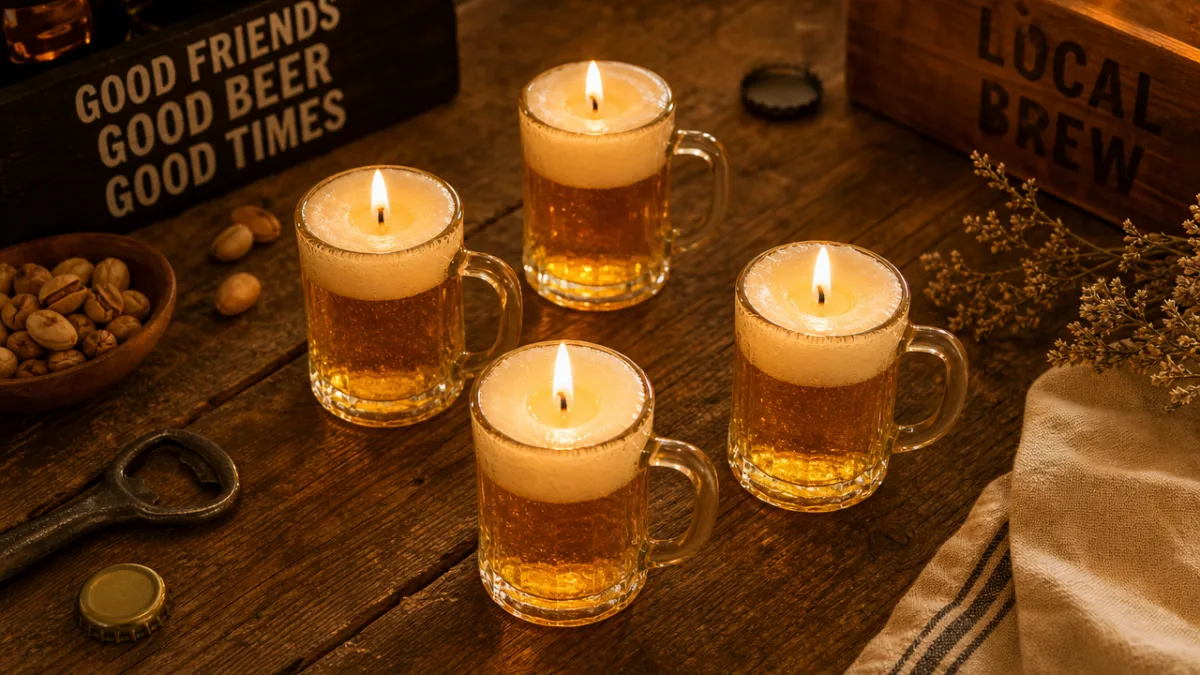
If you’ve been anywhere near craft communities, Pinterest, or home décor feeds lately, you’ve probably spotted them: tiny beer candles. And yes, they’re exactly what they sound like — small, hand-poured candles made to look like a frothy glass of beer, golden wax body and all, topped off with a creamy white “foam” head. They’re whimsical, surprisingly convincing, and people absolutely love them. What started as a niche DIY project has quietly snowballed into a full-on aesthetic trend, and it’s not hard to see why.
The appeal goes well beyond the cute factor, though. These little candles land right at the crossroads of two beloved hobbies — candle making and miniature crafting — and the result feels both functional and genuinely charming. Whether you’re displaying one on a shelf, tucking it into a gift bag for a beer-loving friend, or using a bunch as quirky party favors, each one has a personality that no mass-produced candle can touch. Because they’re handmade, no two are ever identical, and that kind of authenticity is something people really respond to these days.
There’s also just something deeply satisfying about making them. Playing with wax, fragrance oils, and dye to recreate the look of a cold pint taps into a playful kind of creativity that feels both accessible and genuinely rewarding. You don’t need a professional setup or a long shopping list to get started. With a few basic materials and a little patience, even someone who’s never made a candle before can turn out something that looks pretty impressive — and that feeling of “I actually made this” is a big part of why the trend has caught on so widely.
A Brief History of Novelty Candles and the Rise of Food-Shaped Wax Art
Novelty candles have a richer history than you might expect. Long before scented soy wax became a wellness staple, craftspeople were treating wax as a sculptural material, shaping it into figures, fruits, animals, and all sorts of decorative objects that were as much art as they were light sources. Molding candles into unexpected shapes is a tradition with deep roots in European and North American folk art, where skilled chandlers would create elaborate pieces for festivals, markets, and seasonal celebrations.
The modern novelty candle really picked up steam in the mid-twentieth century, when mass production made themed and decorative candles much more widely available. Birthday candles shaped like numbers, holiday candles molded into festive figures, and eventually the whole “food candle” genre — wax cakes, donuts, and burgers that looked good enough to eat — all built on that same tradition. The idea was always the same: take a familiar, comforting material and turn it into something that makes people smile. Food-shaped candles in particular hit a sweet spot of humor and warmth, playing on the pleasure of seeing something totally recognizable rendered in a completely unexpected way.
The tiny beer candle slots right into that lineage while also feeling very much of the moment. The miniature scale gives it an extra layer of charm — there’s something almost universally endearing about a perfectly formed tiny object — and the beer glass shape is instantly recognizable across cultures and age groups. Beer itself carries all kinds of associations with relaxation, celebration, and good company, which maps nicely onto the mood a candle is supposed to create when you light it at home. In hindsight, combining those two symbols of warmth and togetherness into something you could make in your kitchen was always going to be a great idea.
Materials and Tools You Need to Make Tiny Beer Candles at Home
One of the best things about this project is that the materials list is pretty short and won’t break the bank. The foundation is the wax, and most crafters gravitate toward paraffin or a paraffin-beeswax blend — the beeswax adds rigidity and a nice surface finish. Soy wax works too, though it tends to produce a softer, slightly less glassy look, which can make the beer illusion a little harder to pull off. Whatever you go with, you want something that melts cleanly and holds color well, since the whole point is how it looks.
Beyond the wax, a few key supplies make the beer illusion work. Getting the color right is really the heart of this craft — you need that perfect amber-golden hue for the body and a soft, off-white creaminess for the foam head. Most makers use candle dye chips or liquid dye and find that a combination of yellow with a small touch of orange or brown hits the right note. Fragrance oils aren’t strictly necessary, but a honey, amber, or light citrus scent makes the finished candle feel as warm and inviting as it looks. Here’s a basic list of what you’ll need to get started:
- Paraffin or blended candle wax (enough for your mold volume)
- Candle wicks (pre-tabbed, appropriately sized for the diameter of your mold)
- Yellow and orange candle dye chips or liquid dye
- White dye or titanium dioxide powder for the foam top
- Small beer glass molds (silicone molds work best for easy release)
- A double boiler or wax melting pot
- A thermometer to monitor wax temperature
- Fragrance oil of your choice
- A wick centering tool or two pencils and a rubber band
- Stirring sticks and a pouring pitcher
Most of these are easy to find at craft stores or online, and if you’ve made candles before, you probably already own half of them. Silicone molds shaped like beer mugs or pint glasses are widely available and make the whole process much smoother, since the cured candle pops right out without damaging the foam detail at the top. If you plan to make these as gifts or to sell, a good set of consistent molds is worth the investment — it makes a real difference in how professional and uniform the finished pieces look.
Step-by-Step Guide to Pouring the Perfect Tiny Beer Candle
Making a tiny beer candle comes down to two separate pours: the golden beer body and the creamy foam top. That two-pour approach is what gives the finished candle its uncannily realistic look, and getting the timing and temperatures right makes all the difference. Start by prepping your mold — center your wick and make sure it’s sitting straight and taut before you do anything else. A crooked wick looks sloppy and burns unevenly, so it’s worth taking a moment here to get it right.
For the first pour, melt your wax to around 160 to 170 degrees Fahrenheit, then stir in your amber dye until you hit that golden-brown beer color. Add your fragrance oil once the wax cools to about 140 degrees, and stir thoroughly for at least two minutes so everything blends evenly. Let it cool a little more to around 130 to 135 degrees, then pour it carefully into the mold, filling it to roughly three-quarters of the way up — you need to leave space for the foam layer. Now, be patient. Let this layer set completely before moving on. The surface should feel firm and look slightly opaque. Some makers stick the mold in the fridge for a few minutes to speed things up, which works fine.
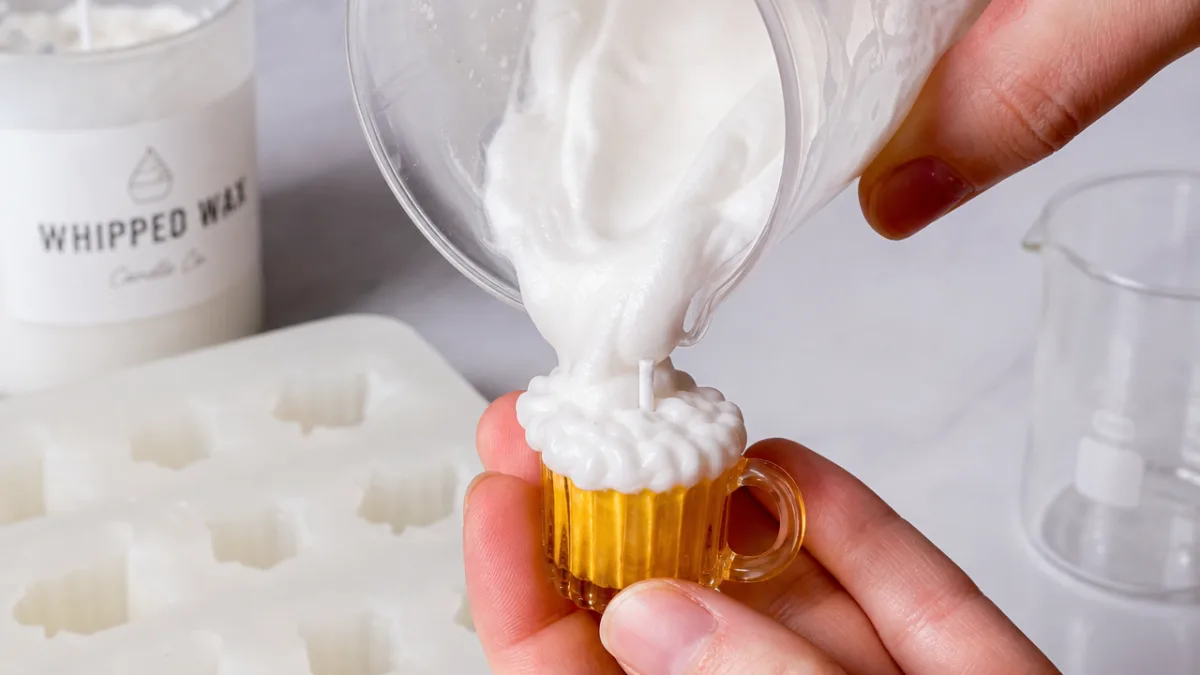
The foam layer is where the real fun happens. Melt a small amount of fresh wax, color it white with titanium dioxide or white candle dye, and then — here’s the trick — let it cool way down to around 115 to 120 degrees and whip it with a fork or small whisk before spooning it on top of the set beer layer. The whipping works air bubbles into the wax, creating that bubbly, mounded texture that looks remarkably like a real beer head. It’s the step that makes people pick the candle up for a closer look, which is, honestly, the whole point.
Creative Variations and Personalization Ideas for Beer Candles
Once you’ve got the basic version down, a whole world of creative directions opens up. Experimenting with different beer styles is one of the most enjoyable places to go next. A stout candle uses very dark brown or near-black wax for the body with a rich, creamy foam top — the effect is a dead ringer for a freshly poured Guinness. An IPA-style version might call for a lighter, brighter amber with a stark white foam head. A wheat beer could use a hazier, more opaque yellow wax to suggest that characteristic unfiltered look. Each variation is its own small, satisfying creative puzzle.
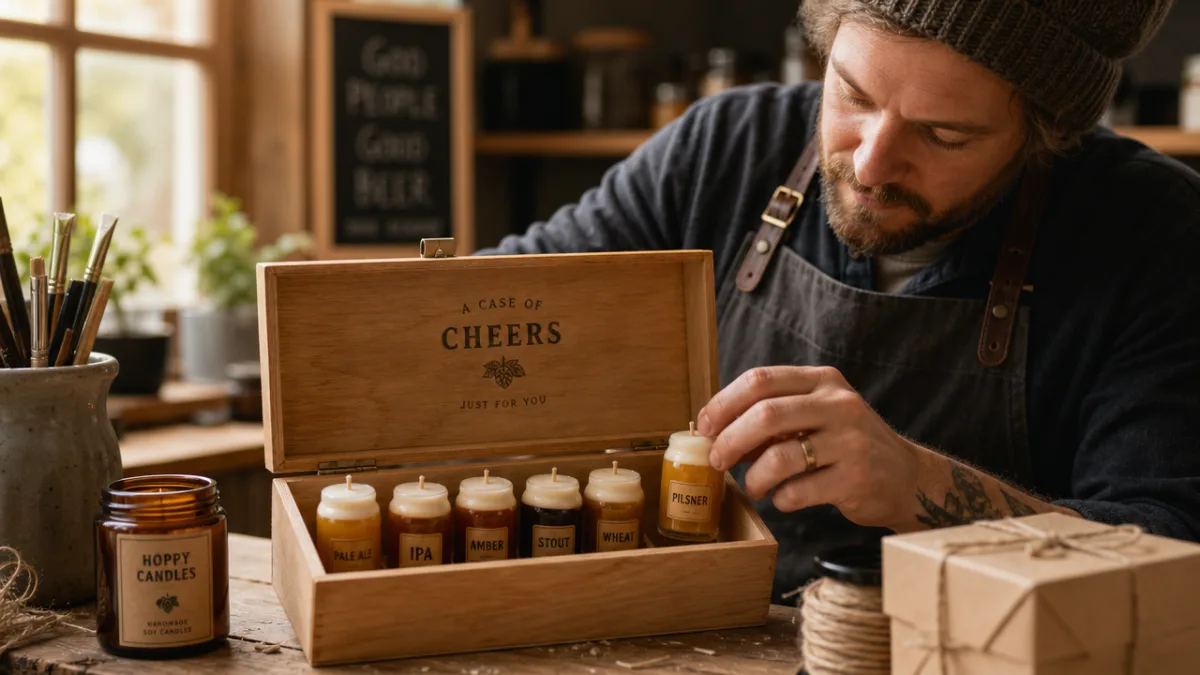
Personalization is another big reason these candles work so well as gifts. A small handwritten or printed label wrapped around the base — styled like a brewery label — instantly elevates the whole thing. Some crafters add tiny stickers or printed tags with the recipient’s name alongside a beer pun: “You’re brew-tiful,” “Hoppy Birthday,” or “Thanks for being on tap” are all perennial favorites. At the miniature scale, these labels look charmingly proportionate, and the finished candle feels genuinely thoughtful in a way that anything off a store shelf just can’t replicate. These are the kinds of gifts people keep on their desk long after the candle has burned down.
Tiny beer candles have also found enthusiastic audiences well beyond the gift space. They work beautifully as party favors, as wedding decorations for craft beer couples, and as props for photography and social media content. They photograph really well — the warm amber glow and the textured white foam top naturally make for an appealing image — and they pair easily with rustic or vintage-style décor. Lots of makers sell them in sets of six or twelve, arranged in a small wooden crate to evoke a miniature six-pack, which has become one of the most popular presentation formats at craft markets and online shops.
Selling Tiny Beer Candles: Turning a Hobby Into a Small Business
Tiny beer candles aren’t just a fun project — for a lot of creative people, they’ve become a legitimate small business. The mix of novelty appeal, easy giftability, and relatively low material costs makes them a natural fit for the handmade marketplace world. Etsy, Instagram storefronts, and local craft fairs have all turned out to be great venues for novelty candle sellers, and beer candles have a broad enough appeal — cutting across age groups, genders, and gift occasions — that the potential customer base is wider than you might expect from such a quirky product.
Pricing takes some thought. Raw material costs are modest — usually somewhere between two and five dollars per candle depending on your wax, fragrance, and packaging choices — but the two-pour process, curing time, and everything involved in packaging and photographing finished pieces all add up. Most sellers land somewhere between twelve and twenty-five dollars per candle, depending on size, scent, and personalization level. Offering bundle pricing for sets of three or six is worth considering, since it raises the average order value and makes small-batch production a bit more economically sensible.
On the marketing side, photography and storytelling are everything. You need strong images — candles shown both unlit and glowing, styled in a warm, inviting setting — to stand out in a crowded marketplace. Process content, especially video of the whipping and spooning of the foam layer, consistently performs well on social media because people genuinely love watching skilled handwork happen in real time. Sellers who share their process, talk about why they make what they make, and bring their audience along for the ride almost always outperform those who just post product photos. People aren’t only buying a candle — they’re buying a connection to the person who made it.
The Cultural Moment Behind the Tiny Beer Candle Trend
It’s tempting to write the tiny beer candle off as a passing internet novelty — cute for a moment, then forgotten. But there’s something more durable going on here. The trend speaks to a genuine, widespread hunger for craft, tactility, and handmade objects at a time when so much of daily life feels digital and mass-produced. The explosion of interest in candle making, sourdough, pottery, and other slow, hands-on hobbies in the early 2020s wasn’t random. It reflected a real need for creative engagement, sensory pleasure, and the quiet satisfaction of actually making something. Tiny beer candles fit right into that current.
The miniature scale adds its own layer of meaning. Tiny versions of familiar objects have always had a hold on people — there’s something almost universally delightful about a perfectly formed little thing. Psychologists suggest this might be connected to the sense of control and mastery that miniatures evoke, as well as the way they invite close, sustained attention at a moment when our focus is constantly being pulled toward screens. A tiny beer candle on a windowsill asks you to slow down and really look at it, and that feels genuinely valuable right now.
And then there’s the simple fact that these candles make people smile. In a cultural moment that can feel pretty heavy, there’s real value in an object whose whole purpose is to bring a little warmth and a little whimsy into a room. The tiny beer candle is a small but genuine act of joy, and that — more than any trend cycle — is why it’s worth your time. Whether you make one for yourself, one for a friend, or a whole batch to share, it’s a reminder that the best crafts are the ones that bring a little light and a little laughter into the everyday.








What do you think?
It is nice to know your opinion. Leave a comment.