










The Art of Perfume Application: A Complete Guide to Pulse Points and Beyond
Understanding Why Perfume Application Points Matter
Perfume is so much more than something you spritz on and walk out the door. Where and how you apply your fragrance makes a real difference — in how long it lasts, how it develops through the day, and the impression it leaves on the people around you. Once you understand a bit of the science behind it, you’ll get so much more out of even a mid-range bottle in your collection.
The big idea here is body heat. Your skin naturally radiates warmth, and some areas run warmer than others because of how close the blood vessels are to the surface. Those warmer spots act almost like tiny diffusers — they gently lift the fragrance into the air around you as your temperature shifts throughout the day, so the scent feels like it’s coming from you rather than just sitting on top of you.
And it’s not just about longevity. The right technique affects how a fragrance actually unfolds. Perfumes have top notes, heart notes, and base notes, each evaporating at its own pace. Applied well, those layers reveal themselves gradually, creating a little olfactory journey. Applied carelessly, the whole thing can smell flat, disappear in an hour, or — on the opposite end — be overpowering to everyone who gets near you.
The Classic Pulse Points: Your Fragrance Foundation
Pulse points are the go-to recommendation for a reason. These are the spots where blood vessels run closest to the skin’s surface, generating steady warmth that activates the aromatic compounds in your fragrance. Apply there, and you get a controlled, hours-long release of scent that doesn’t knock anyone over when they walk into the room.
The most useful pulse points are the inner wrists, the sides of the neck just below the jawline, the inside of the elbows, behind the knees, and the area behind each ear. Each one has its own personality — some throw the scent out into the space around you, while others create something more intimate, a trail that people only catch when they’re right beside you.
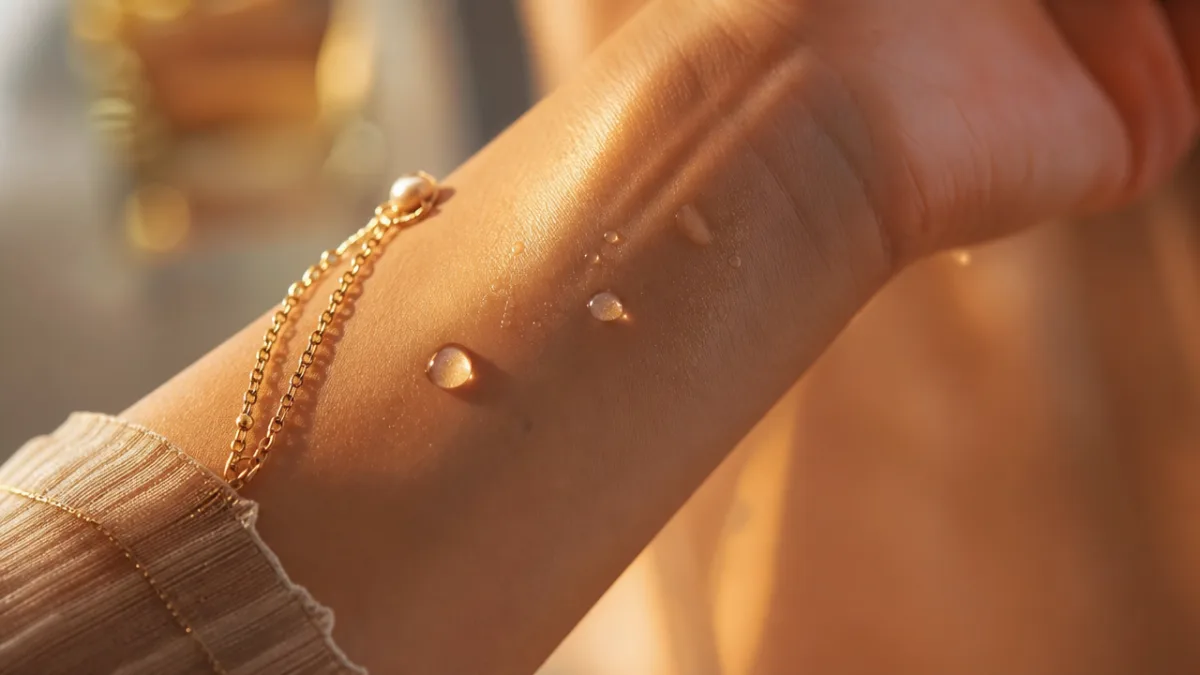
The inner wrist is probably the most iconic spot, but there’s one thing almost everyone gets wrong: rubbing your wrists together after spraying. It feels like the natural thing to do, but the friction and heat actually crush the delicate top notes before they get a chance to bloom properly. Just spray and leave it alone. Let your pulse do the work.
Upper Body Application Points for Maximum Projection
Wrists and neck are a great starting point, but there’s a whole range of upper body spots most people skip entirely. The décolletage — that area just below your collarbone — is one of the most effective and honestly elegant places to apply fragrance. The warmth from your chest carries the scent upward with every movement, leaving a soft trail as you walk through a room.
The hollow of the throat, sometimes called the suprasternal notch, is another gem. That little indentation right where your neck meets your chest captures and holds fragrance beautifully, releasing it steadily throughout the day. It works especially well for florals and orientals that love a warm, skin-close diffusion. A lot of fragrance experts will tell you this is the single most impactful spot on the entire body — and honestly, it’s hard to argue.
Behind the ears has been a classic for centuries, and it still earns its place. The skin there is thin and warm, and you’re at exactly the right height for people to notice it during conversation or a close hug. For something a little more contemporary, try applying a small amount to your hairline at the nape of the neck — your hair will carry and release the scent gently as it moves, which creates a really lovely effect.
Lower Body Application Points: The Secret to Lasting Fragrance
Here’s something that seasoned perfumers and fragrance enthusiasts have known for a long time but most people never try: applying fragrance lower on your body. The logic is simple — scent rises. When you spray lower down, the warmth of your skin gradually lifts the fragrance upward as you move, creating a full-body scent cloud that feels far more natural than just spritzing the top half and calling it done.
The backs of the knees are surprisingly effective and almost completely overlooked. There are large blood vessels running through that area, which means real warmth, and the natural bending motion of walking keeps refreshing the scent throughout the day. Paired with some upper body application, it creates something layered and genuinely long-lasting — you’re enveloped in the fragrance rather than just wearing it on the surface.
The inner ankles and tops of the feet are also worth trying, especially in warmer weather when you’re in sandals. Every step releases a little burst of scent, which sounds subtle but adds up beautifully over the course of a day. This works particularly well with lighter, fresher scents — citrus and aquatics especially — which feel more at home in breezy, movement-activated applications than in the intense heat of the upper body.
- Behind the knees: Excellent for projection through movement and walking throughout the day.
- Inner ankles: Ideal for warmer months when legs are bare and the scent can rise freely.
- Tops of the feet: Works beautifully with sandals, releasing scent with every step.
- Inner thighs: A warm, intimate application zone that creates a soft, close-to-skin scentcloud.
- Behind the calves: A subtle option that adds depth to the overall fragrance trail.
Hair and Fabric Application: Extending Your Fragrance Experience
Your hair might actually be the best fragrance carrier you have. Hair fibers cling to scent molecules remarkably well, meaning a little goes a long way and lasts significantly longer than the same amount applied to skin. Every time your hair moves — a head toss, leaning forward, catching a breeze — it releases another little wave of fragrance. It’s one of those effects that feels almost effortlessly enchanting.
That said, be thoughtful about applying fragrance directly to your hair if it’s a standard Eau de Parfum or Eau de Toilette. The alcohol content in most formulas can be drying over time with repeated use. A smarter approach: spray into the air and walk through the mist, or spray a brush before running it through your hair. You get the effect without the direct contact.
Clothing holds fragrance even longer than skin does, but that comes with its own considerations. Always apply to your skin before you get dressed — the natural oils in your skin help the fragrance develop the way it’s meant to. Spraying directly onto delicate fabrics is risky; the alcohol can stain, and citrus or heavy floral compounds can interact with light in ways that leave marks you won’t be happy about. Sturdier fabrics like cotton and wool handle a light mist just fine and will carry the scent with you all day.
Common Mistakes and How to Avoid Them
Even people who’ve been wearing fragrance for years make application mistakes that quietly undermine their perfume. Wrist rubbing gets the most attention, but over-application is probably just as common. When a scent seems to fade fast, the instinct is to use more — but that usually just creates something overwhelming for everyone else while you stop noticing it yourself, a phenomenon called olfactory fatigue. It’s a losing strategy on both ends.
Another mistake people don’t think about: applying to dry skin. Fragrance clings to hydrated skin because the moisture and oils give the scent molecules something to hold onto. The fix is easy — apply an unscented or matching body lotion before your perfume and let it act as a base layer. Your fragrance will last noticeably longer, and this matters especially in winter when central heating dries everything out.
How you store your perfume also affects how it performs. Light, heat, and humidity all break down fragrance compounds over time, which is why the bathroom — where most people keep their bottles — is actually one of the worst places for them. A bedroom drawer or a spot away from direct sunlight will keep your collection in much better shape and make sure every spray smells the way it’s supposed to.
- Do not rub your wrists together after application, as this destroys the delicate top notes of your fragrance.
- Avoid over-applying to a single area, as this can be overwhelming and creates olfactory fatigue for the wearer.
- Never apply to dry skin without moisturizing first, as hydrated skin holds fragrance significantly longer.
- Avoid spraying directly onto delicate fabrics such as silk, as the alcohol content can cause permanent staining.
- Do not store fragrances in the bathroom, where heat and humidity break down the scent compounds over time.
- Avoid applying to freshly waxed or shaved skin, as the open pores and sensitivity can cause irritation.
Personalizing Your Application Strategy for Different Fragrances and Occasions
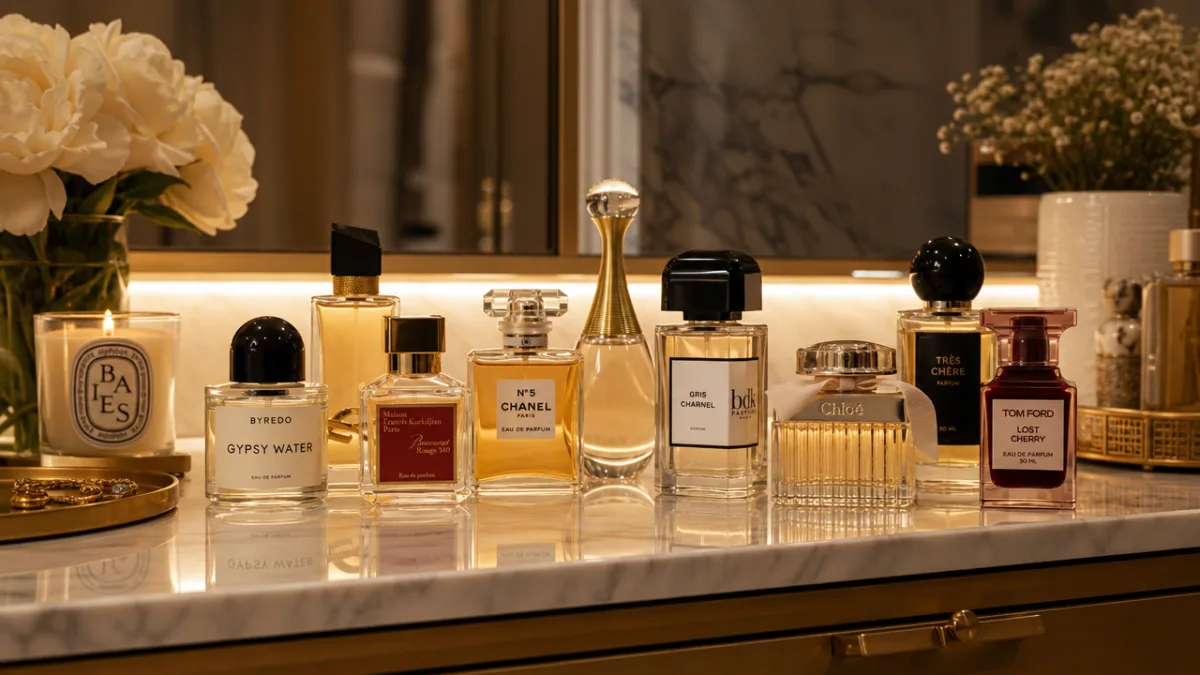
Not every fragrance wants to be worn the same way, and matching your approach to the scent, season, and occasion is where things get genuinely interesting. Light citrus and aquatic fragrances are naturally volatile — they evaporate quickly and that’s part of their charm. Apply to more pulse points at once, reapply when you feel like it, and don’t stress about it. These are daytime, warm-weather scents that are supposed to feel easy and airy, not heavy and long-lasting.
Rich orientals and gourmands are a different story entirely. These are powerful by design, and one spray to the neck or a single wrist is often genuinely enough. Their base notes are built to anchor to your skin and linger for hours, so generosity here can quickly tip into being overwhelming for you and everyone in a fifty-foot radius. In enclosed settings — offices, theaters, restaurants — less is always more with the heavier fragrance families.
The weather matters more than most people realize. On a hot, humid day, your body temperature is up and your skin is active, so fragrance projects more intensely and evaporates faster. Go lighter — one or two pulse points is plenty. In the cold of winter, it’s the opposite: scent doesn’t carry as freely in cold air, so you’ll want to apply to more spots and favor the warmer zones around the neck and chest to help the fragrance actually perform.
Ultimately, how you apply perfume is deeply personal, and the more you pay attention to it, the more intuitive it becomes. Learning your own skin chemistry, getting a feel for how different fragrance families behave, and noticing what works in different situations — that’s what transforms perfume from a grooming step into something closer to self-expression. Your fragrance is part of the invisible impression you leave on the world. With a little thought about how you apply it, that impression can be exactly what you want it to be.








What do you think?
It is nice to know your opinion. Leave a comment.