










Pumpkin Chai Latte Wood Wick Candle: The Ultimate Guide to Autumn’s Most Beloved Scent
The Magic Behind Pumpkin Chai Latte as a Candle Fragrance
Honestly, not many scents nail autumn the way pumpkin chai latte does. There’s something about the combination — that warm, earthy sweetness of pumpkin meeting the bold, spice-forward depth of chai — that just feels right this time of year. It’s like wrapping up in your favorite blanket on a cold October morning. And when you put that into a candle? It goes from “nice smell” to something that actually changes the feel of a whole room.
What makes this scent so interesting is how it unfolds. When you first light it, you get those bright top notes — cinnamon, cardamom, the classic chai markers. Then as it burns and settles in, the deeper stuff starts to come through: clove, ginger, vanilla, and underneath it all, that subtle earthiness of pumpkin. It doesn’t just smell good and stay the same. It actually evolves as the candle burns, which keeps it from going stale or fading into the background.
A big part of why this scent resonates with so many people is that it’s tied to memory. That mix of pumpkin spice and warm tea pulls up images of coffee shop mornings, family dinners, rainy afternoons with a good book. A well-made pumpkin chai latte candle isn’t just freshening the air — it’s bringing a whole mood into your home. Comfort, warmth, the feeling that the season is doing exactly what it’s supposed to do.
Understanding Wood Wick Candles: Why the Crackle Makes All the Difference
Pairing this fragrance with a wood wick isn’t just a style choice — it genuinely changes what the candle experience feels like from start to finish. Wood wicks are made from natural wood, often sourced from fruit trees or FSC-certified forests, and they burn differently than a standard cotton wick. Instead of a tall, narrow flame, you get a wide, flat one that produces the soft crackling sound wood wicks are known for. If you’ve never burned one before, it’s a little surprising how much that sound adds to the whole thing.
People often describe it as sounding like a miniature fireplace, and that’s pretty accurate. When you have a pumpkin chai latte candle crackling away on the coffee table, you’re not just getting a nice smell — you’re getting an atmosphere. The sound and the scent work together in a way that a silent cotton wick just can’t replicate. It’s a bit like the difference between a recorded playlist and someone actually playing music in the room.
There are practical benefits too. Wood wicks tend to produce a wider melt pool, which matters more than you might think — more melted wax on the surface means more fragrance being released into the air, which translates to a stronger, more consistent throw. They also tend to produce less soot and less of that mushrooming at the top that cotton wicks are prone to. Overall, the candle stays cleaner and your air stays cleaner too, which makes a noticeable difference over the life of the candle.
The Art of Candle Making: What Goes Into a Quality 12 oz Candle
A 12 oz candle is kind of the sweet spot. It’s big enough to actually fill a room with scent and give you a solid burn time — usually somewhere between 60 and 80 hours if it’s made well — but not so large that it becomes awkward to place around the house. Knowing what actually goes into a candle at this size helps explain why the good ones cost what they do and why the difference in quality is something you can genuinely feel.
The wax is probably the most important ingredient. Soy, coconut, and beeswax are the main natural alternatives to paraffin, and each one brings something different to the table. Soy wax burns cleanly and holds fragrance well. Coconut wax has a rich, creamy texture and tends to throw scent beautifully. A lot of premium candle makers blend wax types to get the best of several worlds — a clean burn, great scent retention, and a finish that looks as good as it smells. The wax choice quietly shapes everything else about how the candle performs.
Then there’s the fragrance load, which is just the ratio of fragrance oil to wax. Industry guidelines usually land somewhere between 6 and 10 percent, though some formulas can handle up to 12. Getting this right is genuinely tricky. Too little and the candle barely makes an impression; too much and the oil starts pooling on the surface, which can look bad, smell overwhelming, and even create safety issues. Good candle makers test their ratios over and over to find that balance where the scent is present and satisfying without being too much.
How to Get the Best Performance From Your Pumpkin Chai Latte Candle
Even a really well-made candle can underperform if you don’t treat it right, and a lot of people are genuinely surprised by how much a little technique matters. The first burn is the most important one the candle will ever have. Wax has a memory, and that initial burn sets the pattern for every burn that follows. You need to let it go long enough that the melt pool reaches all the way to the edges of the jar — and if you cut it short, you’re going to run into problems.
On a 12 oz candle, that usually means burning it for two to four hours the first time, depending on how wide the vessel is. If you only let it burn for an hour and blow it out, the wax “remembers” that smaller melt pool and will keep tunneling straight down the center, leaving a thick ring of solid wax around the outside that never burns. It’s frustrating, it wastes a big chunk of the candle, and it significantly reduces how much scent the candle puts out. Taking the time to do that first burn properly is absolutely worth it.
Wick maintenance matters a lot with wood wicks specifically. As you burn the candle, the tip of the wick gets charred, and if you leave that char in place, the next burn can sputter, smoke, or fail to produce that satisfying crackle. Before you light it each time, just pinch or brush away that charred bit to expose fresh wood underneath. It takes about five seconds and makes a noticeable difference. Also, keep your candle out of drafts while it’s burning — moving air causes uneven burns and can push the flame in ways that aren’t good for the wax or the vessel.
- First burn rule: Always allow the wax pool to reach the edges of the container on the initial burn to prevent tunneling and establish a healthy melt pool.
- Trim your wick: Before each lighting, remove charred wood from the tip of your wood wick by gently pinching it away with your fingers or a wick trimmer.
- Burn time limits: Never burn a candle for more than four hours at a time, as extended burning can cause the vessel to overheat and may compromise the integrity of the wax.
- Safe placement: Always place your candle on a heat-resistant surface, away from flammable materials, drafts, children, and pets.
- Storage: When not in use, store your candle with its lid on in a cool, dark place to protect the fragrance oil from degrading in light and heat.
Seasonal Styling: Incorporating Your Candle Into Autumn Home Decor
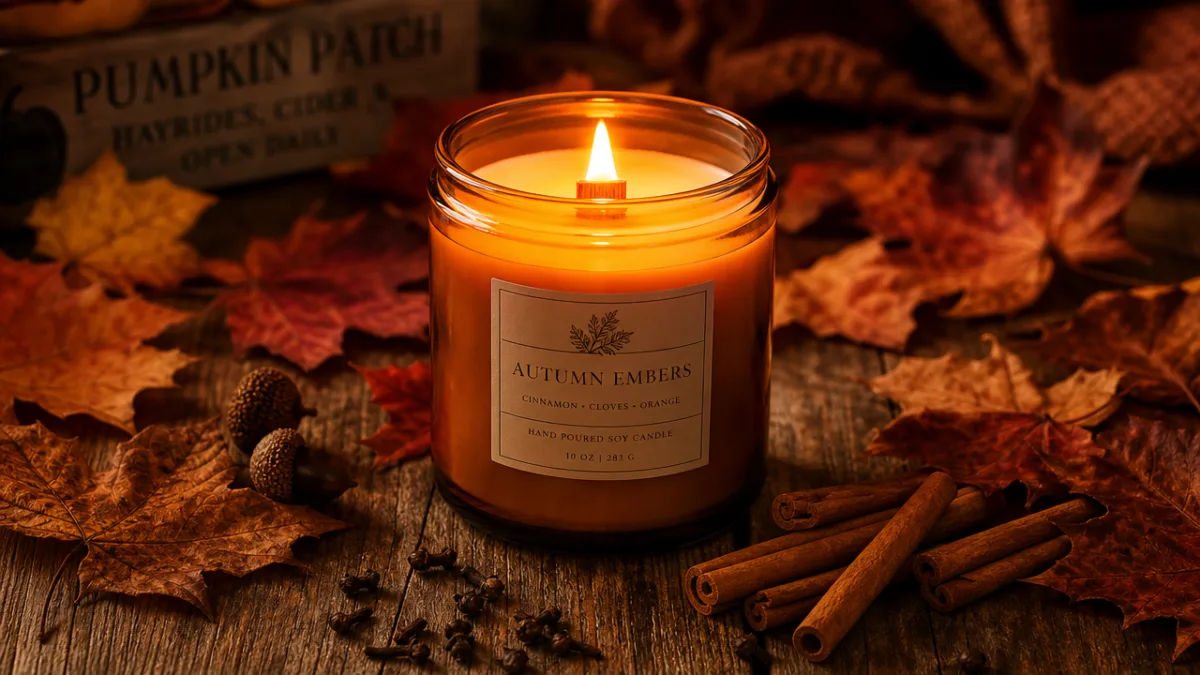
A pumpkin chai latte wood wick candle isn’t just something you burn — it’s a genuinely nice object to have sitting around, and a little thought about how you place it goes a long way. The warm, spiced scent naturally fits an autumn aesthetic, so it works beautifully as the anchor of a seasonal vignette. Try grouping it with dried botanicals, small gourds, a few cinnamon sticks, some acorns, or textiles in rust and deep burgundy. It doesn’t take much to pull together something that looks intentional and feels very much like fall.
In the living room, it’s a natural fit on a coffee table or fireplace mantel. The crackling of the wood wick next to an actual fireplace is a lovely combination — or it can stand in on its own when you don’t feel like dealing with a real fire. On a mantel, flank it with some seasonal greenery, varying-height pillar candles, and a bit of autumn foliage for a layered look. On a coffee table, set it on a small wooden board or tray and add a few simple elements around it so it becomes a focal point rather than just a candle sitting by itself.
The kitchen and dining areas are great spots too, especially during fall. A candle on the counter while you’re cooking brings the warm, spiced fragrance into conversation with whatever’s in the oven, and the effect is genuinely wonderful. For a dinner party or family gathering, cluster a few candles of different sizes together as a table centerpiece — your wood wick statement candle with some smaller votives in vanilla, cinnamon, or apple spice nearby. The combined warmth and fragrance makes any meal feel a little more like an occasion, even if it’s just a Tuesday night dinner.
The Perfect Gift: Why a Pumpkin Chai Latte Candle Delights Everyone
Candles have always been solid gifts, and a premium wood wick candle in a seasonal scent is about as reliably well-received as a gift can get. You don’t need to know someone’s exact taste for this to land well — the fragrance itself is broad and crowd-pleasing in a way that speaks to comfort and seasonal warmth, which most people respond to regardless of their personal style. It works for close friends, family members, teachers, neighbors, coworkers, hosts — pretty much anyone on your list.
Part of what makes a quality candle feel like a real gift (and not just a filler item) is the sense of occasion that comes with it. A well-made candle in a beautiful vessel signals that you put actual thought into this — you picked something that looks good, smells wonderful, and will genuinely improve someone’s day-to-day life for weeks. At a premium price point, it reads as considered and generous rather than obligatory. Add a handwritten note, tuck in a box of chai tea or a packet of artisan cookies, wrap it in some seasonal tissue paper and ribbon, and you’ve got a complete, beautiful little gift that requires very little additional effort to feel special.
Candles also make sense as gifts from a practical standpoint because they’re consumable. They don’t pile up, they don’t clutter a shelf indefinitely, and they don’t create the mild anxiety of “where am I supposed to put this.” Once enjoyed, they leave behind just the pleasant memory of the experience. This makes them ideal for people who already have everything they need, or for people you don’t know well enough to get something more personal. The seasonal angle also adds a layer of thoughtfulness — giving this as a fall gift shows you’re paying attention to the time of year and genuinely want to contribute to someone’s enjoyment of it.
- Housewarming gift: A wood wick candle helps new homeowners make their space feel warm and personal immediately, filling empty rooms with inviting fragrance and the comforting sound of crackling wood.
- Teacher appreciation: A quality candle is a thoughtful, universally appropriate gift that conveys genuine gratitude without being overly personal or perishable.
- Hostess gift: Arriving at a dinner party or holiday gathering with a beautifully packaged seasonal candle is a classic gesture that any host will appreciate.
- Self-care gift set: Pair a pumpkin chai latte candle with a cozy mug, a selection of chai teas, and a soft throw blanket for a complete autumn self-care package.
- Corporate gifting: For clients or colleagues, a premium candle strikes the perfect balance between personal and professional, conveying appreciation without overstepping.
Supporting Small Candle Makers: The Value of Artisan Home Fragrance
In a world full of mass-produced everything, choosing a handcrafted candle from an independent maker is a genuinely different kind of purchase. Small-batch candle makers bring a level of care to their work that large-scale production simply can’t match. Each candle gets poured by hand, with the maker watching temperatures, fragrance ratios, and curing times closely to make sure every single one meets their own standards. When you buy from a small candle maker, you’re not just getting a product — you’re getting someone’s creative vision and the kind of quality that comes from actually giving a damn about what you make.
The fragrance development side of things especially deserves some appreciation. Independent makers often spend months — sometimes years — working on a single scent blend, testing it over and over until it’s exactly right. A pumpkin chai latte fragrance might go through dozens of adjustments: a little more cardamom, slightly less cinnamon, a deeper vanilla base, a more subtle pumpkin note. The maker keeps tweaking until it captures that specific feeling they’re going for — warm, complex, autumn in a cup. That kind of dedication produces something noticeably richer and more interesting than the generic pumpkin spice you’ll find in a big-box store.
Buying from small candle businesses also does good things for local economies and creative communities. Many independent makers source their materials from other small businesses — local beeswax farms, domestic soy wax suppliers, independent fragrance houses — building a supply chain that keeps money circulating among small producers rather than flowing upward to large corporations. And when you share your find on social media, leave a thoughtful review, or tell a friend about a maker you love, you’re doing something genuinely meaningful. You’re helping a small creative business stay alive, grow, and keep making beautiful things. Every candle you burn is, in a small but real way, an investment in that.








What do you think?
It is nice to know your opinion. Leave a comment.