










Easy Ways to Create a Witchy Vibe in Your Kitchen
Embracing the Magic: What a Witchy Kitchen Really Means
A witchy kitchen is not about casting spells or following any particular spiritual dogma — it is about creating a space that feels intentional, mysterious, and deeply connected to the natural world. Think of it as the intersection of aesthetic beauty and functional purpose, where every herb hanging from the ceiling and every dark ceramic bowl serves both a practical and an atmospheric role. This kind of kitchen has been romanticized for centuries, from the wise woman’s cottage in fairy tales to the modern maximalist home that celebrates the beauty of shadow and candlelight alongside the warmth of a simmering pot.
The appeal of a witchy kitchen has surged in recent years, driven by a broader cultural interest in cottagecore, dark academia, and folk herbalism. More and more people are drawn to kitchens that tell a story — spaces filled with apothecary jars, dried botanicals, cast iron cookware, and the faint scent of rosemary and wood smoke. These are kitchens that feel alive, as though the walls themselves hold memory. Creating that atmosphere does not require a full renovation or a huge budget; it is mostly a matter of curation, intention, and a willingness to let the space breathe with character.
At its core, a witchy kitchen is deeply personal. It reflects the specific tastes, interests, and even the spiritual practices of the person who inhabits it. Some people lean toward a dark, moody palette with black candles and iron hooks. Others prefer a more herbalist aesthetic, with soft greens and overflowing dried flower bunches. There is no single correct interpretation, which is precisely what makes this style so enduring and so adaptable. Whether you rent a small apartment or own a sprawling farmhouse, you can bring this energy into your cooking space with a few key choices and a lot of creative heart.
Color Palettes and Materials That Set the Mood
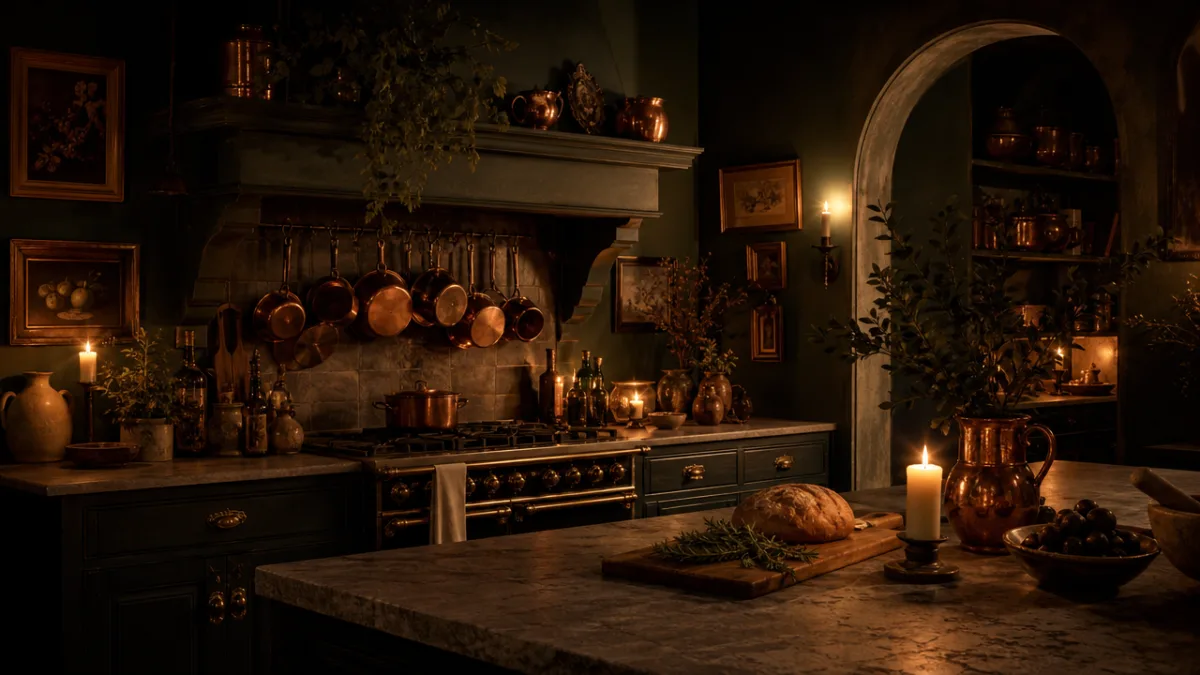
Color is one of the most powerful tools you have when cultivating atmosphere, and in a witchy kitchen, the palette tends to favor depth over brightness. Deep forest greens, inky blacks, warm burgundies, and earthy terracottas all work beautifully here. These colors absorb light rather than reflect it, creating an environment that feels hushed and intimate, like stepping into a shadowy old apothecary or a candlelit cellar. If you cannot paint your walls, focus instead on introducing these shades through textiles, ceramics, and accessories — even a collection of dark-toned cookbooks on an open shelf can shift the energy of a room considerably.
Materials matter just as much as color in establishing a witchy kitchen aesthetic. Natural and aged materials carry a visual weight and history that synthetic alternatives simply cannot replicate. Raw wood with visible grain, unpolished stone countertops, wrought iron fixtures, hammered copper pots, and hand-thrown pottery all contribute to a space that feels rooted in something older and more elemental. When you mix these materials thoughtfully, the kitchen begins to feel like it has been assembled over time — gathered, not purchased in a single shopping trip — and that sense of accumulation is central to the witchy aesthetic.
Texture plays an enormous supporting role as well. Linen dish towels with raw edges, beeswax taper candles in tarnished holders, rough-hewn wooden cutting boards, and woven baskets for storing onions and garlic all add tactile richness to the space. The goal is a kitchen that looks as good as it feels to move through — a space where everything has a texture worth touching. Avoid overly polished, uniform surfaces wherever possible. A little imperfection, a little patina, a little evidence of use and time is precisely what gives a witchy kitchen its soul and its sense of lived-in magic.
Herbs, Botanicals, and the Art of the Kitchen Apothecary
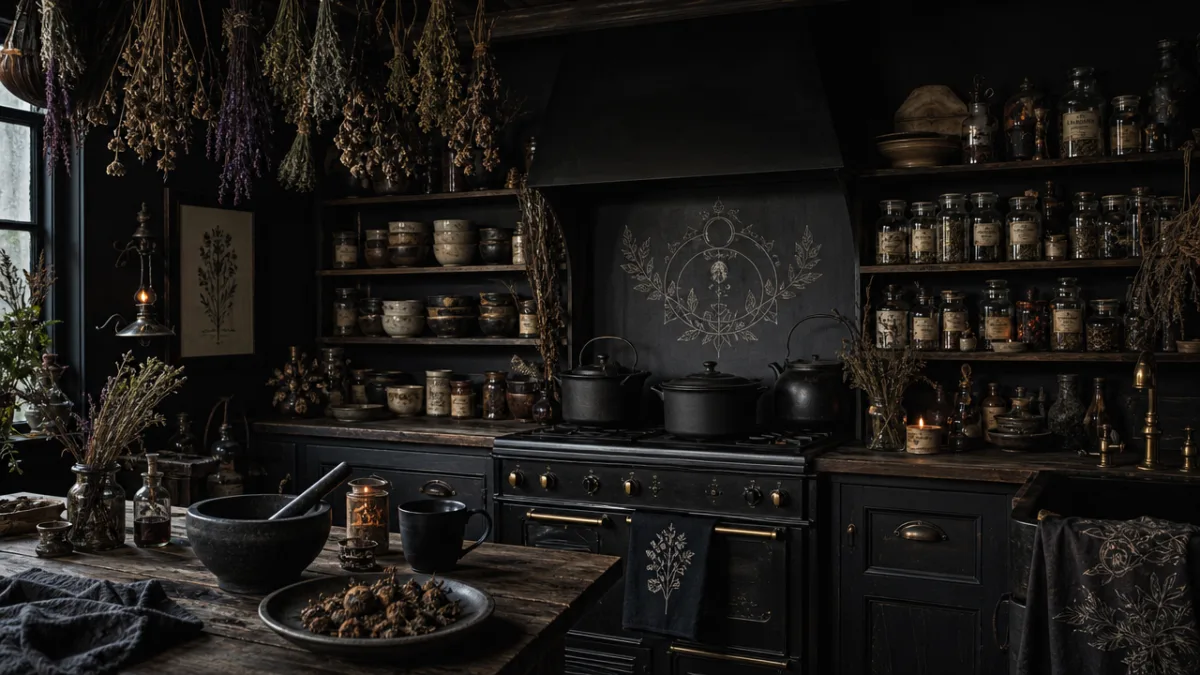
Nothing transforms a kitchen into a witchy sanctuary quite as effectively as the presence of herbs and botanicals. This is both deeply practical and visually stunning — a dual quality that defines the witchy kitchen at its best. Hanging bundles of dried lavender, rosemary, mugwort, and sage from exposed beams or ceiling hooks immediately signals that this is a kitchen where cooking is treated as a form of alchemy. The visual layering of these bundles, combined with their scent as they slowly dry, creates an immersive sensory atmosphere that no amount of décor alone can fully replicate.
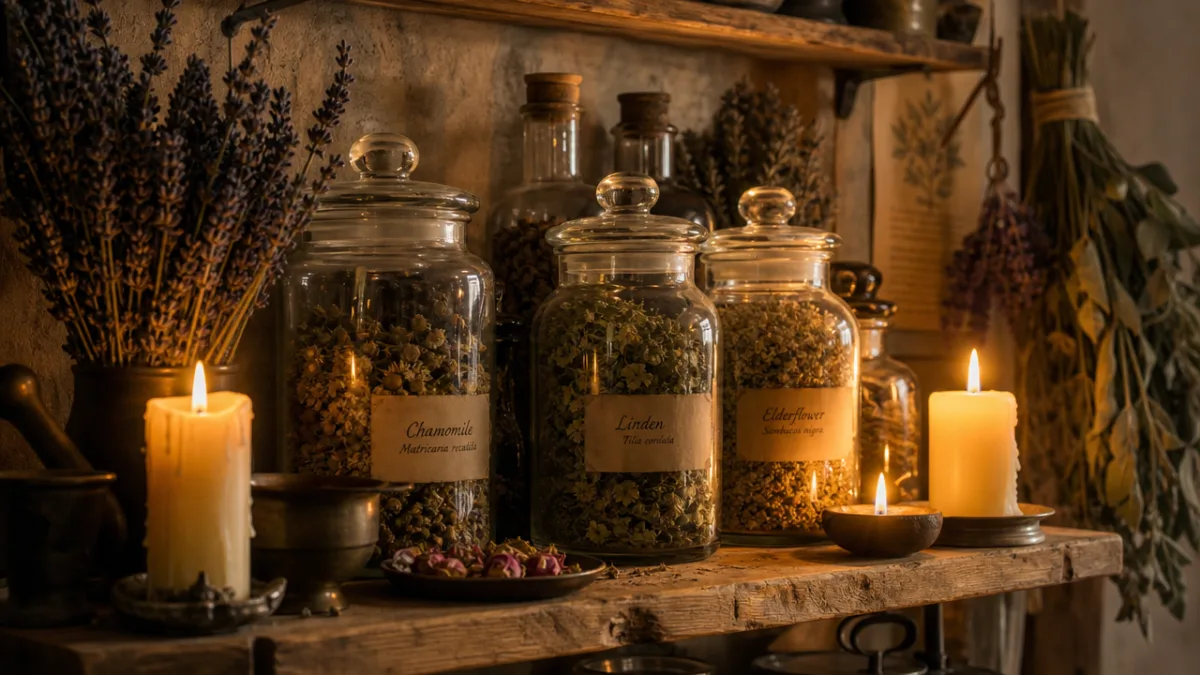
Building a kitchen apothecary is one of the most satisfying projects you can undertake in this space. Begin by collecting an assortment of glass jars in various sizes — apothecary-style vessels with cork or ground glass stoppers are particularly effective — and fill them with dried herbs, seeds, whole spices, and botanicals. Label them with hand-lettered tags or vintage-style adhesive labels, and arrange them on open shelving or in a dedicated cabinet with the doors left open. The effect is immediately transformative, turning what might otherwise be a functional spice collection into something that looks like it belongs to an herbalist or a wise kitchen witch.
Consider growing a small selection of living herbs on your windowsill as well. A row of terracotta pots containing basil, thyme, lemon balm, and mugwort brings life and color to the space while keeping fresh ingredients within arm’s reach. Living plants soften the more austere elements of the witchy aesthetic and introduce a sense of growth and ongoing care that feels deeply aligned with the kitchen witch philosophy — the idea that tending to living things and feeding people from your home are both sacred acts. Together, dried bundles overhead and living plants in the window create a beautiful sense of the full herbal cycle.
Lighting: Creating Atmosphere Through Shadow and Flame
Lighting is perhaps the single most transformative element you can alter in your kitchen without touching the architecture. The witchy kitchen thrives in low, warm, layered light — the kind that creates pools of illumination and leaves comfortable shadows in between. Harsh overhead fluorescent lighting is the enemy of this aesthetic. If you cannot replace your main light fixture, supplement it aggressively with other sources: clusters of candles on open shelving, pendant lights with amber bulbs, small brass lanterns on the counter, and plug-in sconces positioned near your prep area. Each additional source adds warmth and dimensionality to the room.
Candles deserve their own dedicated consideration in the witchy kitchen. Beeswax tapers in iron candlesticks, thick pillar candles on wooden boards, and tiny votive candles tucked between jars on a shelf all contribute to an atmosphere that feels ritualistic and intentional. If open flames are not practical for your space — particularly if you have small children or a very busy stove — high-quality LED candles with realistic flicker effects have improved dramatically in recent years and can achieve a surprisingly convincing approximation of real candlelight. Place them strategically in areas where you want to draw the eye.
String lights also have an important role to play, though the choice of style matters significantly. Avoid the harsh white or multicolored varieties associated with holiday decorating. Instead, look for warm amber Edison-style string lights or tiny copper wire fairy lights, which cast a much softer and more magical glow. Drape them along open shelves, wind them around a bundle of dried branches placed in a large vase, or hang them along the underside of upper cabinets. When all these layers of light are working together — candles, pendants, string lights, and perhaps a single overhead fixture turned down low — the kitchen becomes an entirely different world after dark.
Crystals, Symbols, and Sacred Objects in the Kitchen Space
For those who incorporate spiritual or magical practice into their daily lives, the kitchen is a natural place to display and work with meaningful objects. Crystals are a popular choice and bring both visual beauty and symbolic resonance to the space. Dark, grounding stones like obsidian and black tourmaline work beautifully against wooden surfaces. The soft purple of amethyst catches the light beautifully when placed near a window. Citrine, associated with abundance and warmth, feels particularly at home near the stove or a fruit bowl. There is no strict rule about placement — trust your intuition and arrange them in ways that feel balanced and intentional to you.
Beyond crystals, consider what other objects carry meaning for you personally. A small framed botanical print, a hand-carved wooden spoon that belonged to someone you loved, a vintage mortar and pestle used for grinding spices, a ceramic dish painted with moon phases — these items transform a functional kitchen into a personal sanctuary. The witchy kitchen aesthetic places enormous value on objects with history and story. Antique shops, estate sales, and artisan markets are wonderful hunting grounds for these kinds of pieces, and the search itself can be part of the pleasure of building the space over time.
You might also consider incorporating intentional symbols into the kitchen in subtle or overt ways, depending on your comfort level. A simple pentacle carved into a wooden trivet, moon phase art hung near the window, or even a small chalkboard where you write seasonal intentions or herbal correspondences can all deepen the sense of purpose in the space. Some kitchen witches keep a small altar or dedicated shelf where they place objects connected to their current season, intention, or practice — rotating the display with the lunar calendar or the turning of the year. This kind of ongoing engagement with the space keeps it feeling alive and dynamic rather than static.
Cookware, Utensils, and the Tools of Kitchen Alchemy
The tools you cook with are as much a part of the witchy kitchen aesthetic as any decorative element, and upgrading or curating your cookware collection thoughtfully can make a significant difference in the overall atmosphere. Cast iron is the quintessential witchy kitchen material — heavy, dark, deeply seasoned with use, and capable of conducting heat in a way that feels almost elemental. A well-seasoned cast iron skillet hanging on a wall hook or sitting on the stove is an immediately evocative presence. Dutch ovens in dark enamel are equally compelling, and the visible wear and use on older pieces only adds to their visual power.
When it comes to smaller tools and utensils, look for natural materials and handcrafted quality wherever possible. Some excellent choices to build your collection around include the following:
- Wooden spoons and spatulas, particularly those made from darker woods like walnut or with naturally irregular grain patterns that give each piece its own character
- Handmade ceramic bowls and plates in earthy, uneven glazes — matte blacks, deep greens, speckled creams, and rust tones are all particularly effective
- Copper measuring cups and spoons, which develop a beautiful patina over time and catch light in a warm, luminous way
- A large stone or marble mortar and pestle for grinding spices, herbs, and dried botanicals by hand
- Linen, cotton, or hemp dish towels rather than synthetic materials, ideally in natural, undyed tones or simple block-printed designs
- A hand-thrown ceramic teapot and mugs for brewing herbal infusions, which are both practical and deeply atmospheric
The way you store and display these tools also matters enormously. An open pot rack hanging from the ceiling, a row of iron hooks along a backsplash, open shelving lined with bowls and jars, and a large ceramic crock holding wooden spoons and spatulas upright — all of these display strategies turn your tools into décor and give the kitchen a sense of purpose and readiness. The witchy kitchen is never austere or empty; it is always a space that looks as though real, meaningful work happens there, as though someone is always in the middle of preparing something wonderful and a little mysterious.
Scent, Sound, and the Invisible Atmosphere of a Witchy Kitchen
Two of the most powerful elements of any atmospheric space are the ones you cannot see — scent and sound. In a witchy kitchen, scent is an extraordinary tool, and fortunately, cooking and herb-keeping naturally generate some of the most compelling aromas available to you. The smell of garlic and rosemary sautéing in olive oil, a pot of mulled cider simmering on the stove with cinnamon and cloves, a beeswax candle burning softly on the counter, dried lavender releasing its fragrance when brushed by a passing hand — these scents layer together to create an atmosphere that is immediately and profoundly evocative. You can enhance this further with an essential oil diffuser or a small pot of simmering water with botanicals added.
Sound is equally important and equally easy to overlook. The witchy kitchen sounds like a place where something is always happening — water coming to a boil, a wooden spoon stirring against ceramic, the crackling of a fire if you are lucky enough to have a fireplace nearby, or the soft sound of rain against a window. Music can support or undermine the atmosphere you are creating, so consider building a playlist that complements the energy of the space: folk music, ambient drone pieces, medieval choral music, recordings of forest sounds, or anything else that feels rooted and timeless. Avoid anything that feels too modern or too frantic; the witchy kitchen is a place that moves at its own unhurried pace.
Finally, consider the role of seasonal awareness in maintaining the atmosphere of your witchy kitchen year-round. This kind of kitchen is deeply connected to the turning of the seasons — shifting its decorative elements, its herb bundles, its scents, and even its color accents as the year moves from winter’s quiet darkness to spring’s green unfolding, summer’s abundance, and autumn’s rich harvest. Swapping out a vase of dried rose petals for one of dried corn and seed heads, moving from lighter herbs like mint and lemon balm to heavier, more resinous ones like frankincense and pine as the year darkens — these small adjustments keep the kitchen feeling alive and in dialogue with the natural world outside its windows. That ongoing conversation between the domestic interior and the living world beyond is, ultimately, the deepest expression of what a witchy kitchen is and why so many people find it so profoundly nourishing to inhabit.








What do you think?
It is nice to know your opinion. Leave a comment.