










Climbing Tuscan Rosemary Candle: A Journey Through Scent, Craft, and Italian Tradition
The Allure of Tuscan Rosemary: Understanding the Scent Profile
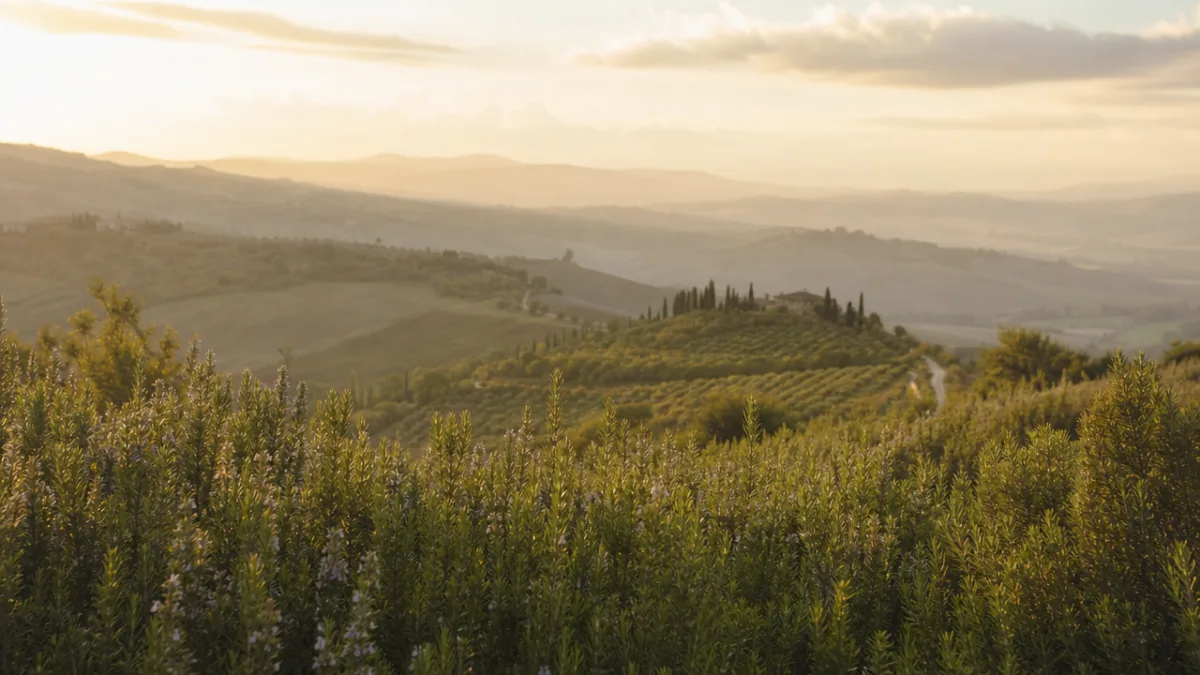
There’s something hard to put into words about the smell of rosemary growing wild across the Tuscan hills. It’s nothing like the tidy, polite fragrance you get from a supermarket herb packet — it’s wilder than that, sun-soaked and alive in a way that feels almost cinematic. A Climbing Tuscan Rosemary candle is trying to capture exactly that feeling: the experience of walking up a stone path in the late afternoon, the day’s heat pulling every last drop of fragrance from the rosemary bushes spilling over the walls on either side of you, the whole golden air thick with it.
A good Tuscan rosemary candle goes way beyond the sharp, almost medicinal edge most people know from cooking with the herb. At its best, the fragrance layers earthy, fresh green top notes over something woodier and more resinous underneath — a nod to the plant’s tough stems and its roots in dry, rocky Mediterranean soil. You’ll often find secondary notes of sage, lavender, or juniper woven through as well, since those are the plants rosemary actually grows alongside out in the Italian countryside. That’s what gives a well-made blend its authenticity, the kind you just can’t fake with a purely synthetic rosemary fragrance.
The word “climbing” isn’t just a pretty name — it really does describe how the scent behaves. Just like walking up a hillside where each step kicks up new waves of fragrance from the warm earth and crushed herbs beneath your feet, a great Tuscan rosemary candle reveals itself gradually as it burns. You might get a bright, almost citrusy green burst when you first light it, which slowly settles into a warmer, resinous heart, and eventually lands in a base of cool earth and faint mineral stone. It’s a little scent journey that mirrors the physical one it’s meant to evoke.
Craftsmanship and Wax: What Sets Artisan Candles Apart
The wax is everything when it comes to a great candle, and for serious candle makers, choosing it is anything but an afterthought. A fragrance as nuanced as Climbing Tuscan Rosemary needs a wax that can hold a complex scent load without flattening the delicate top notes, burn cleanly enough to let those notes actually express themselves in the air, and do all of that over a burn time that feels worth the price. Coconut wax, soy wax, and high-quality paraffin all have their passionate defenders among candle makers, and premium blends of two or more wax types have become increasingly common in artisan production.
Soy-coconut blends have become a go-to for many makers who care about both performance and sustainability. Coconut wax is a genuine powerhouse for scent throw — meaning how well the fragrance actually fills a room — while soy wax brings a creamy look and a slightly slower burn that helps the candle last longer. Together they create a carrier that works beautifully with a botanical fragrance like Tuscan rosemary, coaxing the essential oils and fragrance compounds out in a measured, layered way rather than all in one rush.
Wick selection is the other big variable that separates a thoughtfully made artisan candle from something mass-produced. The wick has to be matched to the vessel diameter, the specific wax being used, and the fragrance oil — it’s genuinely more complicated than it sounds. Too hot a wick means tunneling, soot, and a fragrance that smells harsh instead of beautiful. Too small a wick and you get that ring of unmelted wax around the edges, a wasted candle, and almost no scent throw to speak of. Most experienced candle makers will test dozens of wick combinations before they commit to the right one for a given formula.

The Art of Fragrance Blending: Recreating the Italian Hillside
Crafting a fragrance that genuinely transports you to a specific place and moment is one of the hardest things a perfumer can do. For a Climbing Tuscan Rosemary candle, the challenge isn’t just smelling like rosemary — it’s conjuring the whole sensory world around it: the warmth coming off sun-baked limestone in the afternoon, the dusty dryness of a late August breeze, a whisper of wildflowers somewhere in the distance, the cool relief of stepping under a stone archway.
Rosemary essential oil actually comes in several chemotypes, each with its own personality. The camphoraceous variety is sharper and more medicinal, while verbenone types are softer and rounder with a subtle fruity quality. Spanish rosemary tends to be bold and herbaceous, while French rosemary leans lighter and more floral. Skilled blenders often combine two or more rosemary sources to get the complexity they’re after — a fragrance that feels wild and climate-shaped rather than neatly cultivated.
Beyond the rosemary itself, a perfumer building a Tuscan hillside blend might reach for cistus absolute, which brings a rich, almost amber-like depth that speaks directly to sun-soaked Mediterranean landscapes. Cypress oil adds a dry, woody structure that echoes those tall, unmistakable trees dotting the Tuscan skyline. A touch of immortelle — the golden everlasting flower that grows throughout the region — brings a subtle, honey-like warmth to the heart of the blend. And a light sea salt note might make an appearance too, a nod to the distant Ligurian coast, keeping the whole thing feeling clean and mineral rather than heavy or overly sweet.
Setting the Scene: How to Use Your Rosemary Candle Effectively
A candle this carefully made deserves a little care in return, and a few simple habits can make a real difference in both how it performs and how it transforms your space. The single most important thing you can do is get the first burn right: let the wax melt all the way out to the edges of the vessel before you extinguish it. That first burn sets the candle’s “memory” — it determines how it will melt for its entire life. Blow it out before that full melt pool forms, and it will tunnel every single time from that point on, wasting wax and killing the scent throw.
Where you place the candle in a room matters more than you might expect. The aromatic compounds in rosemary are quite mobile and will travel happily through a space with gentle air movement — but put the candle in a direct draft from an open window or a fan, and you’ll get uneven burning plus fragrance that gets whisked away before it can settle and build. Somewhere around chest height, away from direct airflow but not in a completely sealed corner, gives the scent room to develop naturally and fill the space the way it’s designed to.
It’s also worth thinking about when you light it and what you’re doing at the time. Rosemary has ancient associations with memory, focus, and mental clarity — the Romans considered it sacred to remembrance, and there’s real research backing up its positive effects on cognitive performance. That makes a Climbing Tuscan Rosemary candle a natural fit for morning rituals, afternoon reading, or any creative work where you want a scent that sharpens the mind without jangling the nerves. It’s invigorating without being agitating, grounding without being sleepy.
- Always trim your wick to approximately 5mm before each lighting to prevent excessive soot and ensure a clean, even flame.
- Burn for no more than four hours at a time to prevent the vessel from overheating and to preserve the fragrance quality throughout the candle’s life.
- Keep the candle away from direct sunlight, which can cause the wax to discolor and the fragrance to degrade prematurely.
- Once approximately 1cm of wax remains in the bottom of the vessel, discontinue use to prevent heat damage to the surface beneath the candle.
- Store unlit candles in a cool, dark place with the lid on to preserve fragrance integrity between uses.

The Cultural Roots of Rosemary in Italian Life and Tradition
To really appreciate a Climbing Tuscan Rosemary candle, it helps to know just how deeply rosemary runs through Italian life and culture. In Tuscany especially, it’s not simply a kitchen herb — it’s woven into daily life, ritual, and a sense of place in ways that go far beyond cooking. Flowering rosemary branches are traditionally carried at weddings as symbols of fidelity and remembrance, and you’ll find the plant growing beside doorways and along garden walls all over the region, where it’s long been believed to bring good fortune and protection to a household.
The ancient Romans, who laid so much of the cultural groundwork for what would become Italy, held rosemary in particularly high regard. They called it ros marinus — dew of the sea — a name that captures both the plant’s coastal origins and its love of the salt-tinged, sun-soaked air along the Mediterranean shore. Roman brides wore crowns woven from it, scholars burned it to sharpen their minds during study, and physicians prescribed it for everything from digestive trouble to hair loss. That long heritage gives the plant a kind of cultural gravity that a really good fragrance can quietly invoke, connecting you to something much older and richer than you might consciously register.
In Tuscan cooking, rosemary is so constant a presence that it’s almost invisible to people who grew up with it — just part of what a kitchen smells like, as fundamental as olive oil or garlic. It perfumes the focaccia in every bakery, flavors the roasting meats at Sunday family dinners, and scents the honey made by bees foraging through the wild hillside stands where it grows untended and abundant. When a candle maker draws on all of this, they’re not just making a pleasant room fragrance — they’re invoking an entire way of life, a relationship between people, plants, and landscape that has been slowly building for thousands of years.
Gifting, Pairing, and Making the Most of the Tuscan Rosemary Experience
A Climbing Tuscan Rosemary candle is one of those genuinely versatile gifts that works for almost anyone and almost any occasion, precisely because it has real character without being polarizing. Unlike heavily sweet or aggressively floral fragrances, a good herbal and earthy rosemary candle tends to appeal across ages and gender preferences — it’s a safe choice, but nowhere near a generic one. Giving it says something: that you pay attention to quality, that you think about meaning, that you’d rather give something memorable than something forgettable.
When you start pairing the candle with other sensory elements, the experience can become genuinely remarkable. Try lighting it while you eat Tuscan food — bruschetta rubbed with garlic and drizzled with rosemary-infused olive oil, or a glass of Vernaccia di San Gimignano, whose clean, mineral qualities echo the limestone notes in the fragrance. Add some acoustic Italian music in the background, throw a lightweight linen blanket over the couch, and suddenly you’ve created something genuinely transportive: a whole sensory environment built outward from fragrance as its center, reaching into taste, sound, and touch.
For those who want to build a broader collection of home fragrance around the same Italian sensibility, here are some complementary scent directions worth exploring alongside Climbing Tuscan Rosemary:
- Warm stone and mineral: Fragrances built around vetiver, grey musk, and ambergris that echo the ancient limestone architecture of the Tuscan hill towns.
- Olive grove: Green, slightly bitter, and deeply evocative of the silver-leafed trees that define the Tuscan agricultural landscape from spring through autumn.
- Tuscan leather: A warm, slightly smoky blend that references the great leather craft tradition of Florence, with tobacco and beeswax undertones.
- Fig and dried grass: A late summer fragrance capturing the quality of the air in August when the fields have been cut and the figs are heavy and warm on the branch.
- Cypress and black pepper: Sharp, architectural, and slightly austere, evoking the tall cypresses that line the Via Francigena and the driveways of Tuscan villas.
At the end of the day, the Climbing Tuscan Rosemary candle is doing what the very best home fragrances aspire to do: it takes you somewhere. When travel isn’t possible, or when even a much-loved place feels distant and hard to hold onto, a candle that genuinely captures the spirit of a landscape and a living tradition offers something real. It’s not the same as actually standing on that hillside, feeling the Tuscan sun, smelling the real thing all around you — but it’s a beautiful, artful echo of that experience, waiting for you on any ordinary evening at home.








What do you think?
It is nice to know your opinion. Leave a comment.