










Candlelit Marble Mood: The Art of Luxe Neutral Decor
The Timeless Appeal of Neutral Luxury
There’s something almost magnetic about a room that draws you in quietly, without trying too hard. Luxe neutral decor has held designers and homeowners in its spell for decades, and honestly, it’s not hard to see why. When you let go of bold color and busy pattern, what you’re left with is this sense of calm confidence — a space that feels put-together without looking like it’s showing off. Creams, warm whites, taupe, greige, soft stone tones — they work together to create a visual stillness that lets every piece in the room actually breathe.
What takes a neutral space from flat and forgettable to genuinely stunning is all about layering — texture, material, light. A monochromatic room done well is never boring; it’s more like a study in nuance. Think about how a rumpled linen throw catches the light so differently from a polished marble surface, or the way a matte plaster wall plays off the glossy shine of a lacquered side table. Those subtle contrasts are really the whole secret — they do all the talking without anything ever needing to announce itself.
The feeling this aesthetic is really after is sanctuary. In a world that throws a lot at you, a home built around soft neutrals and natural materials becomes somewhere you actually want to come back to. This isn’t minimalism in the cold, bare-bones sense — it’s warmth expressed through simplicity. Every piece earns its place, every material is there for a reason, and nothing feels like it happened by accident.
Marble as the Cornerstone of Elevated Design
Few materials have the kind of history marble carries. It’s shown up in palaces, cathedrals, and the most celebrated private homes across centuries, and it communicates something effortlessly — partly because every single slab is one of a kind, shaped over millions of years, marked by veins of grey, gold, or soft blush that trace their own quiet paths across the stone. In a neutral decor scheme, marble pulls double duty: it anchors the room while also giving it movement and life, all without ever feeling out of place or overdone.
The marble varieties that tend to work best here each bring something a little different. Calacatta offers bold veining against a bright white base; Statuario has a sculptural, almost artistic quality and is genuinely rare; Arabescato brings a more intricate layering of grey and cream. If you’re after something warmer, Crema Marfil and Emperador Light have those honey and beige tones that feel especially beautiful in candlelight. Any of these can show up across surfaces — countertops, vanities, coffee tables, fireplace surrounds, or even smaller things like decorative trays and vessels.
Beyond how it looks, marble has a physical presence that’s hard to replace. Running your hand across a honed marble surface — cool, slightly textured, genuinely substantial — is its own kind of pleasure, and no synthetic material has really managed to recreate it. That’s why even a small marble accent in a neutral room makes such an outsized difference. A single marble vase on a console, some marble coasters on a coffee table, a small sculpture on a shelf — each one brings that quality of material authenticity that quietly lifts everything around it.
- Calacatta marble: bold veining, bright white base, ideal for statement surfaces like kitchen islands and fireplace surrounds
- Statuario marble: rare, sculptural veining patterns, considered among the most prestigious varieties available
- Crema Marfil marble: warm honey and cream tones, pairs beautifully with candlelight and natural fiber textiles
- Arabescato marble: intricate layered patterns, excellent for feature walls or decorative accessories
- Honed finish marble: matte surface that absorbs light softly, lending a more understated and contemporary feel
The Transformative Power of Candlelight
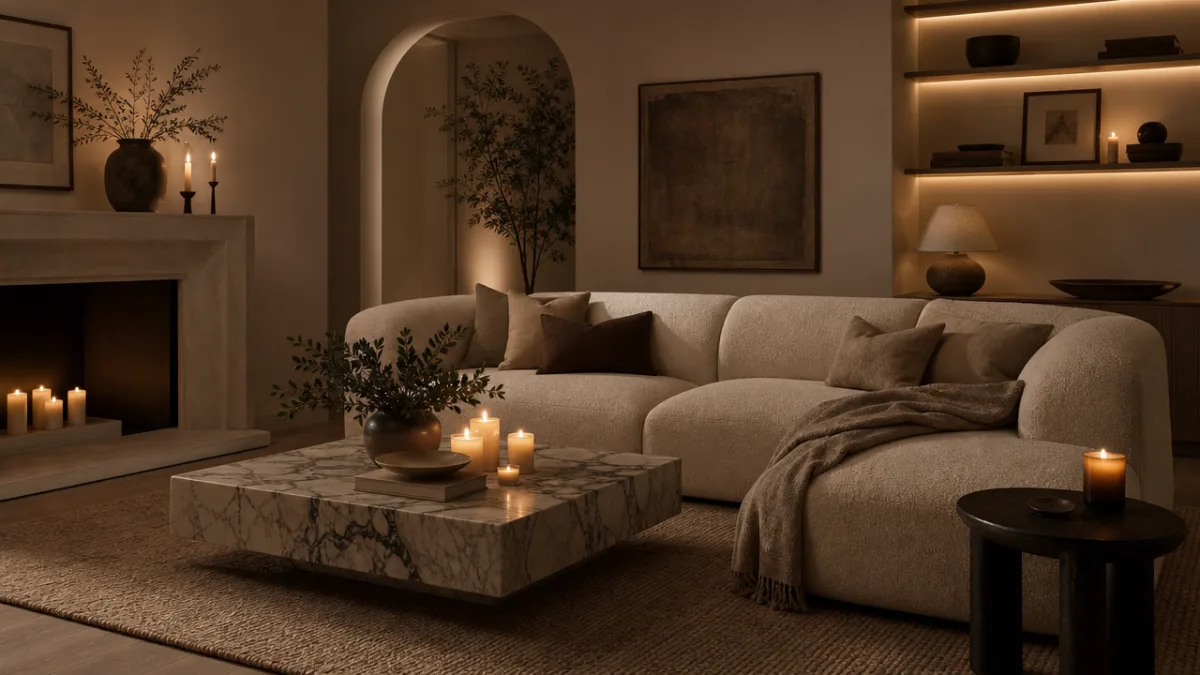
Candlelight does something to a room that electric light simply can’t touch. It flickers, it moves, it throws shadows with a rhythm that feels almost alive. In a space built around neutral tones and natural materials, it becomes the single most powerful tool you have. It warms the cool edges of marble, deepens the texture of linen and wool, and creates those soft pools of light that pull your eye toward the most beautiful parts of the room while letting everything else fade back naturally into shadow.
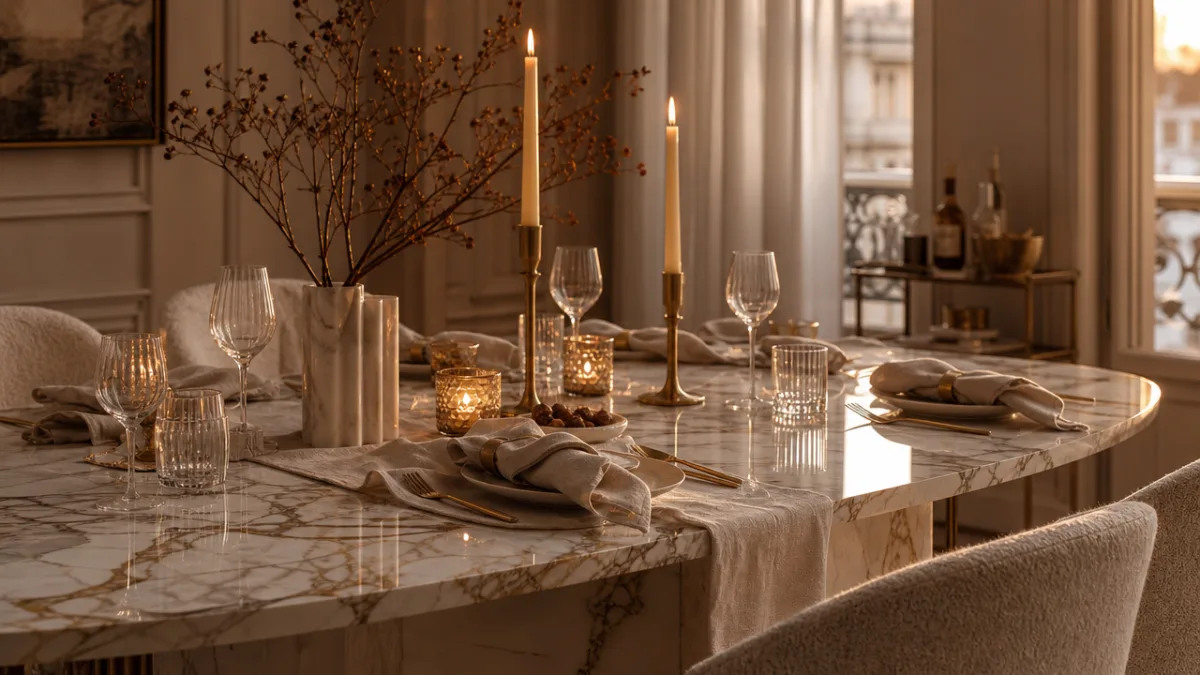
Where you place candles in a neutral luxe space matters more than you might think. Groupings of pillar candles at varying heights take on an almost architectural quality — they look deliberate, not just decorative. Candles on marble surfaces — a stone coffee table, a bathroom vanity, a kitchen island — create this lovely conversation between materials: the warmth of the flame against the cool solidity of the stone, the organic movement of light against the precise lines of cut marble edges. Taper candles in simple brass or matte black holders add vertical interest and a sculptural elegance that works especially well on dining tables and sideboards.
Scent is one of those dimensions people often overlook, but it adds a layer to a room that you feel more than you see. Fragrances that sit comfortably in this world include warm white musks, cedarwood, sandalwood, cashmere, vetiver, and soft vanilla — things that feel warm and considered without being overpowering. Candle houses like Diptyque, Aesop, and Cire Trudon make vessels beautiful enough to leave out even when the wick isn’t lit, which makes them a genuinely smart investment in this kind of space.
Building a Neutral Palette with Depth and Warmth
The biggest mistake people make with a neutral color scheme is treating all neutrals as basically the same thing. They’re not, and that difference can completely change how a room feels. Warm neutrals — ones with undertones of yellow, peach, terracotta, or red — feel enveloping and intimate. Cool neutrals — those leaning toward grey, blue, or green — tend to read as more expansive and serene. For the candlelit marble mood specifically, warm neutrals almost always win, because candlelight amplifies warmth and can make cool-toned rooms feel unexpectedly flat and cold once the sun goes down.
Building a palette that actually works means thinking in layers rather than picking one color and running with it everywhere. Start with your largest surfaces — walls and flooring — in your lightest, most neutral tone. Bring in slightly deeper, warmer shades through big furniture pieces like sofas and armchairs. Add another layer through rugs, curtains, and upholstered ottomans. Then bring in your darkest neutrals and natural materials through the smaller stuff — accent pieces, art, and accessories. That layered approach gives the room real dimension and movement even though you’re working within a pretty tight range of color.
Texture is really what holds a neutral room together and keeps it from feeling dull. When you’re not leaning on color contrast, material contrast becomes your main source of visual interest. The combination of materials that defines this look reads almost like a recipe: smooth marble, nubby boucle, matte plaster or limewash walls, warm brass or aged bronze hardware, natural linen and cotton, raw oak or walnut, and soft wool or silk rugs. Each one catches light a little differently, so the room shifts and changes subtly throughout the day — and especially once candlelight takes over in the evening.
- Start with walls in a warm off-white or creamy stone tone to establish the base of your palette
- Choose flooring in natural materials — wide plank oak, limestone, or warm-toned concrete provide grounding
- Select large upholstered furniture in boucle, linen, or velvet in a tone slightly deeper than your walls
- Layer in textiles — throws, cushions, and curtains — to add softness and tonal variation
- Introduce natural and metallic accent materials through lighting, hardware, art objects, and decorative accessories
- Finish with living elements such as dried botanicals, sculptural branches, or soft green trailing plants to add organic life
Furniture and Form: Choosing Pieces That Honor the Aesthetic
Furniture in a luxe neutral interior should prioritize quality, proportion, and honest materials above pretty much everything else. This isn’t a space for trendy pieces or things you’ll want to swap out in three years — it’s built around furniture that rewards you the longer you live with it. Sofas and armchairs with clean, architectural lines tend to work best here: shapes that feel timeless rather than of-the-moment. Deep, generous seating with good proportions signals that comfort matters as much as looks, which is important — a beautiful room that doesn’t feel comfortable to actually sit in has missed the point entirely.
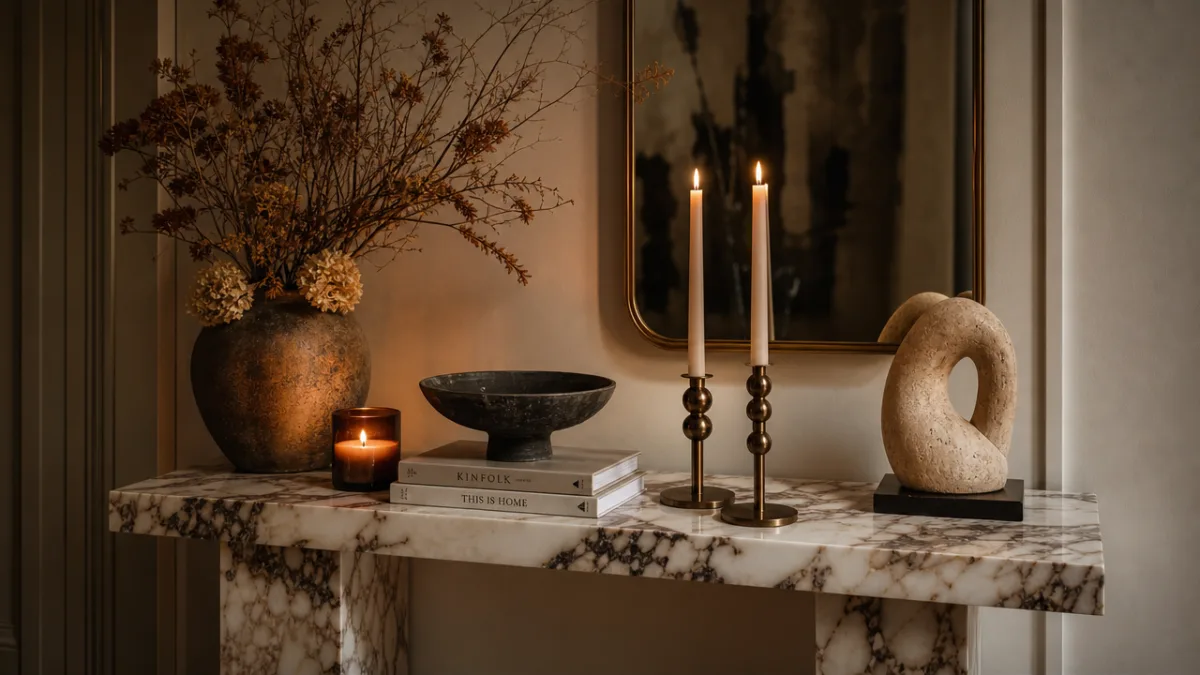
Tables and case pieces — side tables, consoles, coffee tables, sideboards — are where you have the best opportunity to bring marble and natural stone into the furniture layer of the room. A substantial marble coffee table anchors a seating area with real presence, while a slender marble-topped console in an entryway sets the tone for the whole home the moment someone walks through the door. When you’re choosing these pieces, pay attention to the scale of the veining relative to the size of the surface: bolder veining reads better on larger pieces, while smaller accessories tend to suit more delicate, subtle patterns.
Lighting fixtures deserve real attention in this aesthetic because they’re doing two things at once — they’re functional light sources and sculptural objects at the same time. Pendants and chandeliers in aged brass, antique bronze, or warm-toned rattan add texture and warmth overhead, while table lamps with ceramic, plaster, or stone bases contribute beautifully to the layered material story of the room. The goal is for every piece to feel like it belongs to the same quiet, considered family — connected by material, tone, and a shared commitment to beauty that doesn’t need to shout about itself.
The Art of Styling: Details That Complete the Mood
Styling — the arrangement of objects, art, books, botanicals, and accessories once a room is otherwise finished — is really where the candlelit marble mood comes fully to life. Even the most beautifully furnished space will feel like something’s missing without that final layer of carefully chosen objects that give it personality while keeping the whole thing visually cohesive. The key is being selective rather than just filling surfaces: everything on display should be beautiful, meaningful, or ideally both. The real enemy of this aesthetic is clutter — the accumulation of small, forgettable things that quietly erode the impact of the pieces that actually deserve attention.
Trays and pedestals are among the most underrated tools in a stylist’s kit. A marble or lacquered tray on a coffee table creates a defined little zone for a small grouping of objects — a stack of art books, a candle, something sculptural, maybe a simple bud vase with a single stem — that would just look scattered without that containing presence. A sculptural pedestal under a ceramic vase or plaster bust immediately gives the object more weight and visual authority. These are small moves, but they’re fundamental to the polished, considered quality that defines luxe neutral styling.
Natural elements bring a softness and life to the room that stone and metal and woven textiles can’t do on their own. Dried botanicals — pampas grass, dried palm leaves, eucalyptus, cotton branches — have become closely associated with this aesthetic for good reason: they bring organic form and delicate texture in tones that sit perfectly within a neutral palette, and they’re genuinely low-maintenance. Fresh flowers, when you use them, are most powerful in simple, almost architectural arrangements: a single large peony in a narrow vase, three stems of white tulips in a marble bud vase, or a generous armful of white ranunculus in a wide ceramic vessel. Less is always more here — and that restraint itself communicates a kind of confidence that might just be the most luxurious quality in the room.
- Use trays on all horizontal surfaces to create organized, intentional groupings of accessories
- Limit coffee table displays to three to five objects maximum, varying height and material
- Incorporate at least one organic or natural element on every significant surface
- Choose art in tones that echo rather than contrast the room’s palette — abstract works in cream, taupe, and warm grey
- Ensure that every candle in the space is the same scent family to create a cohesive olfactory experience
- Rotate seasonal accents — heavier textures and deeper tones in winter, lighter linens and softer botanicals in summer
Living With Luxe Neutrals: Practicality Meets Beauty
One of the most common worries people have when they start thinking seriously about a neutral luxury interior is whether it’s actually livable. Will all that pale upholstery show every mark? Will the marble scratch and stain? Will the whole palette feel clinical and cold on grey winter days when the light is barely there? These are fair questions, and they deserve real answers. The good news is that a few well-considered choices make it entirely possible to have a beautiful neutral interior without spending every day anxious about it. Performance fabrics in boucle and chenille weaves, for example, are considerably more durable and stain-resistant than they look.
Marble does require a bit of respect for what it actually is. It’s porous and can etch from acidic things — citrus, wine, vinegar are the main culprits — and can stain from oils and strongly pigmented liquids. But a properly sealed marble surface, resealed once a year or so, holds up much better in daily life than most people expect going in. For high-traffic surfaces like kitchen countertops, honed marble is a more practical choice than polished — it shows everyday marks less obviously, and any etching that does happen is far less visible. For decorative applications — a coffee table top, a console, a tray — the demands are minimal and the beauty is entirely uncompromised.
One of the most compelling practical arguments for a well-conceived neutral interior is simply how long it lasts. Because the palette isn’t tied to a specific trend or seasonal color moment, a neutral room doesn’t date the way a more assertively styled space eventually will. The investment in quality materials and timeless furniture just keeps paying off year after year, with only the occasional refresh of smaller accessories and textiles needed to keep it feeling alive. In an era of fast furniture and disposable interiors, that commitment to something enduring is maybe the most genuine luxury statement a home can make — and the candlelit marble mood, in all its quiet, glowing warmth, makes it beautifully.








What do you think?
It is nice to know your opinion. Leave a comment.