










The Art of Candle Gift Packaging: Why the Box Matters as Much as the Flame
When someone receives a candle as a gift, their experience begins long before they ever strike a match. The moment they spot the package — its weight in their hands, the texture of the paper, the way the ribbon falls — sets the emotional tone for everything that follows. Candle gift packaging is not mere wrapping; it is the opening act of a sensory story, and when done thoughtfully, it transforms an ordinary wax cylinder into something people genuinely talk about long after the wick has burned down to nothing.
The artisan candle market has exploded in recent years, with small-batch makers competing not just on scent profiles and burn times, but on the entire unboxing experience. Consumers have become remarkably attuned to presentation, shaped in part by the culture of sharing beautiful moments on social media. A candle that arrives in a forgettable paper bag disappears quietly from memory. One that comes tucked inside a thoughtfully constructed box, layered with tissue, sealed with wax, and finished with a sprig of dried eucalyptus — that one gets photographed, posted, and remembered. The packaging becomes part of the gift’s identity.
For makers, boutique shops, and thoughtful gift-givers alike, understanding the principles behind standout candle packaging is no longer optional — it is essential. This guide walks through the most impactful approaches to candle gift packaging, from choosing your structural container to adding those finishing flourishes that make recipients reach for their phones before they even open the lid. Whether you are packaging one candle or a hundred, these ideas will help you create a box that does the talking for you.
Choosing the Right Box Structure for Your Candle
The foundation of any memorable candle packaging is the box itself. Not all boxes are created equal, and the structural choice you make will determine how the rest of your design elements come together. For candles, you generally want a container that offers protection — candles can chip, crack, or shift during transit — while also serving as a display piece in its own right. The box should feel intentional, as if it were designed specifically for what lives inside it, rather than repurposed from a generic supply catalog.
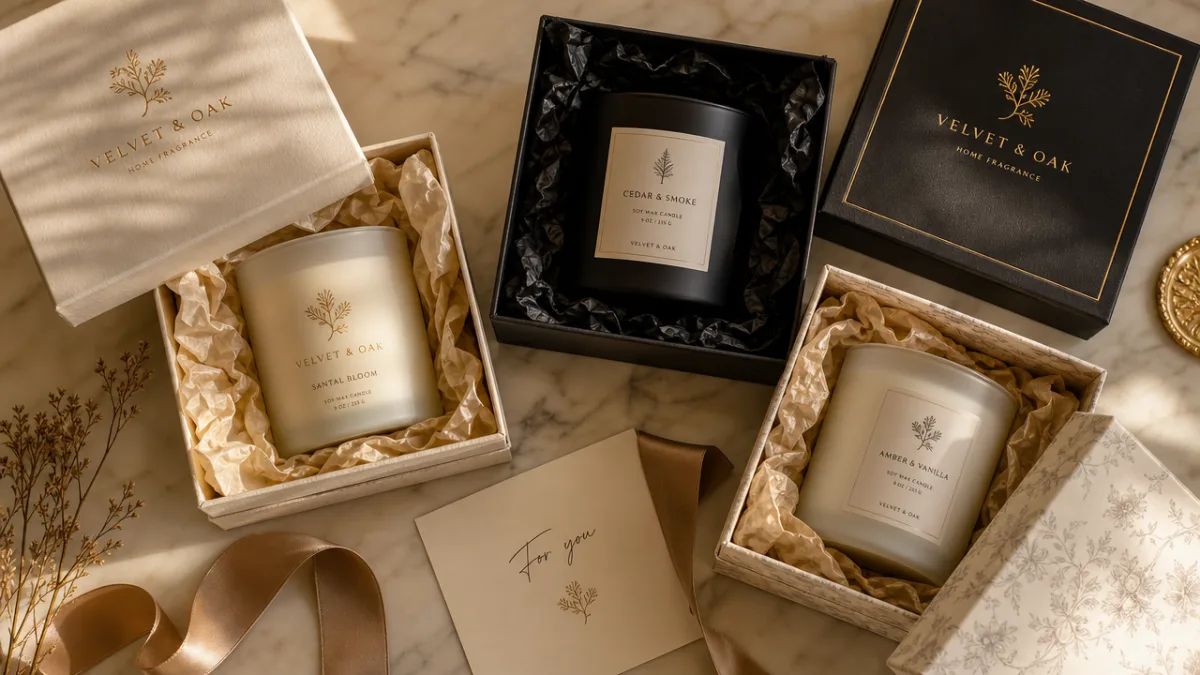
Rigid setup boxes, sometimes called gift boxes or shoulder boxes, are a popular choice for premium candle packaging. These are the kind with a separate lid and base, often lined with satin or textured paper on the interior. They hold their shape beautifully, feel luxurious to hold, and open with a satisfying, deliberate motion that heightens anticipation. Brands that price their candles in the mid-to-high range often default to rigid boxes because the packaging communicates value before the product even comes into view. The sturdiness also means the box is often repurposed by the recipient — kept on a shelf, used to store jewelry, or tucked into a drawer — which extends the brand’s physical presence in someone’s home.
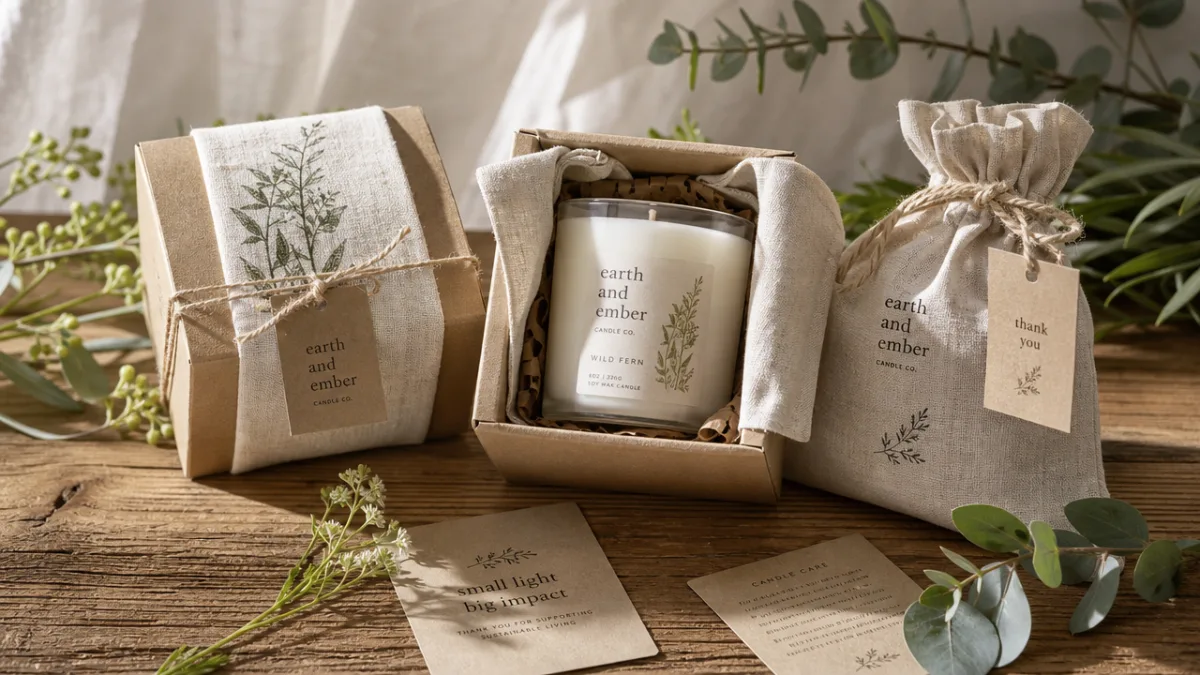
For a more artisan or handcrafted aesthetic, kraft paperboard boxes offer a wonderful alternative. Their natural, uncoated texture signals authenticity and sustainability — two qualities that resonate strongly with today’s candle buyer. Kraft boxes pair exceptionally well with twine, dried botanicals, and hand-stamped labels, creating a cohesive rustic-yet-refined look. Collapsible magnetic closure boxes split the difference between luxury and practicality, offering a premium feel at a slightly lower price point while still delivering that satisfying open-and-reveal moment. The key is matching your box structure to your brand’s visual language so the packaging feels like a natural extension of the candle inside.
- Rigid setup boxes: Best for luxury positioning; excellent for gift sets; lid and base construction feels premium and deliberate.
- Kraft paperboard boxes: Ideal for artisan or eco-conscious brands; pairs well with natural embellishments; highly customizable with stamps and labels.
- Magnetic closure boxes: Strong mid-luxury option; sleek and modern; great for single-candle gifts and corporate gifting.
- Drawer-style slide boxes: Dramatic reveal when opened; memorable unboxing; works beautifully for collections of two or three small candles.
- Window boxes: Allows the candle to be seen before opening; excellent for retail environments; builds desire before the purchase decision is made.
Interior Lining and Protective Inserts
What lines the inside of your box is just as important as the exterior. A candle dropped into a bare cardboard box with nothing to hold it in place signals carelessness and risks damage. Interior inserts — whether foam, molded pulp, or custom-die-cut cardboard — cradle the candle securely and create that satisfying moment when the lid is lifted and everything is perfectly in place. A well-fitted insert also prevents the candle from rattling or shifting, which matters enormously if the gift is being shipped rather than hand-delivered.
Tissue paper is perhaps the most accessible and versatile lining choice. Layered in complementary colors or in a single elegant tone — ivory, sage, deep navy — tissue paper creates softness and mystery. It invites the recipient to peel back layers, slowing down the reveal and making the moment of discovery more meaningful. For a truly artisan finish, crinkle-cut paper filler in natural or metallic tones adds dimension and visual warmth to the interior. Some makers even scent their tissue paper lightly, so the first breath of the box carries a whisper of what is to come. These small details accumulate into an experience that feels genuinely considered.
Labels, Typography, and the Power of Visual Identity
The label on a candle box is a small piece of real estate with enormous influence. It is the place where your brand voice, visual identity, and product information converge in a single printed moment. A label designed with care — thoughtful font choices, appropriate color palette, considered layout — can elevate even a simple kraft box into something that looks boutique and intentional. Conversely, a cluttered, poorly printed, or generic label can undermine even the most beautifully constructed packaging structure. Typography and visual identity are not decoration; they are communication.
Serif typefaces tend to evoke tradition, warmth, and craftsmanship — qualities that align naturally with the candle-making world. A classic serif in cream or gold on a dark background reads as sophisticated and timeless. Sans-serif fonts, especially modern geometric ones, create a cleaner, more contemporary aesthetic that appeals to minimalist design preferences. Many artisan candle brands blend the two: a serif for the brand name and a clean sans-serif for product details, creating hierarchy and visual interest. Hand-lettered or script fonts can add personality and the suggestion of the maker’s own hand, which is especially valuable for small-batch products where authenticity is part of the appeal.
Beyond the typeface itself, the material and finish of the label make a significant difference. Matte white labels disappear quietly into the design. Kraft labels reinforce the natural aesthetic. Foil-stamped labels — gold, copper, or silver — catch light in a way that feels genuinely luxurious and photographs beautifully. Embossed labels add tactile depth, encouraging the recipient to run a finger across the surface. Wax seals, either on the box itself or on a label band wrapped around the exterior, add an old-world charm that is especially popular in the artisan candle space. Every material choice is a signal, and the best packaging sends a coherent signal throughout.
Scent Naming and Storytelling on the Box
The words printed on a candle box do more than convey information — they set a mood and tell a story. Candle scents with evocative names (“Midnight Library,” “Rain on Warm Stone,” “November Hearth”) perform far better than clinical descriptors (“Lavender and Vanilla No. 4”) because they invite the recipient into a world rather than simply listing ingredients. When this naming philosophy extends to the box copy — a short poem, a fragment of description, a brief origin story about how the scent was developed — the packaging becomes a piece of literature in miniature. People read it, reread it, and share it.
Consider including a small insert card tucked into the box alongside the candle. This card might describe the inspiration behind the scent, suggest the ideal setting for burning the candle, or offer care instructions written in language that feels personal rather than clinical. “Light me on Sunday mornings” hits differently than “Keep wick trimmed to 6mm.” The former creates a relationship; the latter is maintenance documentation. Packaging that speaks to the recipient as a person — that imagines their life, their rituals, their moments — builds a loyalty that no amount of advertising can replicate. The box becomes a keeper, not just a wrapper.
Finishing Touches That Make the Box Unforgettable
Once the structure and labeling are in place, the finishing details are where truly memorable candle packaging comes to life. These are the touches that make someone pause before opening the box, that make them text a friend a photograph, that make them remember the gift months later. They are rarely expensive — often they cost almost nothing — but they require thought, taste, and a genuine desire to create a moment of delight for the person on the receiving end. The best finishing touches feel effortless, as if they simply belong there, even though they are the result of deliberate decision-making.
Ribbon and twine are among the most transformative finishing elements available. A wide grosgrain ribbon in a complementary color, tied in a full bow, reads as classic and celebratory. Natural jute twine knotted simply over kraft paper reads as artisan and sincere. Satin ribbon in a deep jewel tone conveys luxury without a word. The choice of ribbon communicates your brand’s personality as clearly as any logo. Layering multiple textures — a thin velvet ribbon alongside a sprig of dried lavender, for example — creates visual depth and a tactile experience that feels genuinely handcrafted, even in a production environment where many boxes are being assembled at once.
Dried botanicals have become one of the most talked-about finishing touches in the artisan candle space, and for good reason. A small bundle of eucalyptus, a few sprigs of dried rosemary, a pressed flower, or a cinnamon stick tucked under the ribbon does three things simultaneously: it adds visual beauty, it releases a subtle natural scent when handled, and it signals that the person who assembled this box cared enough to add something fresh and unexpected. Botanicals are seasonal, which keeps packaging feeling current and relevant throughout the year. They photograph exceptionally well and are almost always the element recipients mention when they describe the gift to others.
- Wax seals: Use a custom stamp with your brand monogram or a simple botanical motif to seal tissue paper, envelopes, or the box itself — instantly recognizable and deeply satisfying to break.
- Dried florals and botanicals: Eucalyptus, dried lavender, ruscus, or tiny pinecones tucked beneath ribbon add natural beauty and a light fragrance that enhances the unboxing moment.
- Hand-tied ribbon: Even a simple knot in the right ribbon transforms a box; bow styles communicate your brand personality, from formal and classic to relaxed and artisan.
- Insert cards with personal messages: A beautifully printed card with the scent story, care instructions, or even a hand-written note creates an intimate connection between maker and recipient.
- Outer wrapping layer: Wrapping the finished box in tissue, craft paper, or translucent vellum before the final ribbon adds one more layer of anticipation to the unboxing experience.

Personalisation and Custom Details
In an era of mass production, personalisation is one of the most powerful differentiators a candle gift can have. This does not necessarily mean printing each recipient’s name on the box — though that is certainly an option — but rather building a sense of individual consideration into the packaging experience. A hand-written gift tag with a personal message. A label with the recipient’s initials stamped in gold. A custom scent blend named after the occasion. These gestures communicate something that no algorithm can fake: that a human being thought about this specific person when putting this specific gift together, and made choices accordingly.
For small-batch candle makers and boutique gift curators, personalisation is a competitive advantage that larger brands genuinely cannot match at scale. Offering to hand-write a message on a beautiful card stock insert, or to swap out a standard ribbon for one in the recipient’s favorite color, costs very little but means a great deal. Some makers offer seasonal packaging upgrades — a Valentine’s edition with red velvet ribbon and rose petals, a holiday version with kraft paper, pine, and tartan — that allow a signature candle to feel new and occasion-specific throughout the year. Personalisation does not have to be complicated; it simply has to be thoughtful.
Sustainable Packaging Choices That Still Deliver Luxury
The modern candle buyer is increasingly conscious of the environmental impact of their purchases, and packaging is a significant part of that conversation. Single-use plastics, non-recyclable composites, and excessive wrapping materials are falling out of favor with consumers who care about sustainability — and that demographic overlaps substantially with the artisan candle buyer. The good news is that sustainable packaging and beautiful packaging are not mutually exclusive. In fact, many of the most visually compelling candle packaging approaches are also among the most environmentally responsible choices available.
Recycled kraft paperboard has already been mentioned as a structural option, but the sustainable credentials extend well beyond the box itself. Tissue paper made from recycled content or FSC-certified paper offers the same visual softness as conventional tissue without the environmental cost. Soy-based inks for labels and printing reduce VOC emissions and are more biodegradable than petroleum-based alternatives. Natural raffia, cotton ribbon, and jute twine are compostable finishing options that often look more beautiful than their synthetic counterparts. Even the dried botanicals that serve as decoration can be sourced locally and seasonally, reducing supply chain impact while keeping the packaging feeling fresh and place-specific.
Reusability is another dimension of sustainable packaging that deserves specific attention. A box that someone wants to keep — because it is beautiful, sturdy, or genuinely useful as a storage container — never enters the waste stream immediately. Rigid setup boxes with magnetic closures are often used to store jewelry, keepsakes, or small craft supplies long after the candle has been enjoyed. Some candle makers lean into this intentionally, designing boxes that double as display objects or small shelving pieces. When the packaging has a second life, the entire environmental calculation changes, and the brand benefits from continued visibility in the recipient’s home. Sustainability, in this sense, is also excellent marketing.
Communicating Your Sustainability Story
If your packaging choices are genuinely sustainable, say so — but say it with grace. A small line on the box that reads “This box is made from 100% recycled materials and is fully recyclable” does not have to be an environmental manifesto. It can be a quiet, confident statement that aligns with your brand values without overshadowing the beauty of the packaging itself. Consumers appreciate transparency, and knowing that their gift’s packaging was chosen thoughtfully adds another layer of positive feeling to the overall experience. It also invites them to align themselves with those values, which deepens brand loyalty.
Avoid greenwashing — making vague or unsubstantiated environmental claims that do not hold up to scrutiny. If your box is made from recycled content but your ribbon is polyester and your insert card is laminated, be accurate about what is and is not sustainable in your packaging system. Consumers are increasingly sophisticated about these distinctions, and honesty is always more compelling than marketing language that tries to claim more than the facts support. The most credible sustainable packaging stories are specific, verifiable, and improving over time, which is also a story worth telling.
Building a Signature Packaging System That Scales
For candle makers and gift brands that are growing beyond hobby scale, consistency becomes as important as creativity. A signature packaging system — a recognizable combination of box structure, color palette, label style, and finishing elements — is what transforms individual packaging moments into a recognizable brand aesthetic. When someone sees your candle box across a room, they should be able to identify it as yours before they read the label. That level of visual recognition is built not through any single inspired choice, but through the disciplined repetition of a coherent system applied consistently across all your packaging touchpoints.
Developing your signature system begins with identifying two or three non-negotiable elements that will appear on every piece of packaging you produce. For some brands, it is a specific shade of box combined with a gold foil logo. For others, it is always a sprig of dried rosemary under natural twine. For others still, it is the hand-lettered font on a cream label with a wax seal. These anchoring elements can coexist with seasonal variations and product-specific adaptations without losing coherence, because the foundation is always recognizable. Think of it as a wardrobe with a signature piece: the rest can change, but the identity remains consistent.
Scaling a packaging system also means thinking practically about sourcing, assembly time, and cost per unit. A finishing touch that takes five minutes to execute by hand is feasible for a maker producing fifty boxes a month and becomes a bottleneck at five hundred. Building your system with this trajectory in mind — identifying which elements can be pre-assembled, which can be partially automated, which vendors can supply materials in bulk without sacrificing quality — is part of treating packaging as a strategic function rather than an afterthought. The most beloved artisan packaging looks effortless because it was designed with intention from the beginning, not because it was improvised and hoped for the best.
Photography and Social Sharing as Part of the Packaging Strategy
The best candle packaging in the world creates its own marketing. When recipients photograph your box and share it, they are doing something that no paid advertisement can replicate: providing genuine, personal endorsement to their own networks. Designing your packaging with photography in mind — ensuring that it looks beautiful in natural light, that the colors are true and rich, that the composition of elements creates visual interest from multiple angles — is not vanity. It is strategy. The flat-lay photograph of a beautifully packaged candle gift is one of the most shared pieces of content in the lifestyle and gifting space, and your packaging is the subject.
Consider how your packaging looks both open and closed. The closed box should be beautiful and cohesive. The open box — lid offset, tissue folded back, candle visible, insert card propped against the side — should be equally compelling, a miniature still life that begs to be photographed. Some makers include a small prompt on the insert card: “Share your unboxing moment with us” followed by a brand hashtag. This is not presumptuous; it is an invitation that acknowledges what recipients are already inclined to do and channels that impulse into community-building content. When your packaging becomes part of someone’s story, your brand becomes part of their identity, and that is the most powerful form of loyalty there is.








What do you think?
It is nice to know your opinion. Leave a comment.