










“`html
Black Violet: The Mysterious Beauty of Nature’s Most Enigmatic Flower
The Allure of Black Violet: An Introduction
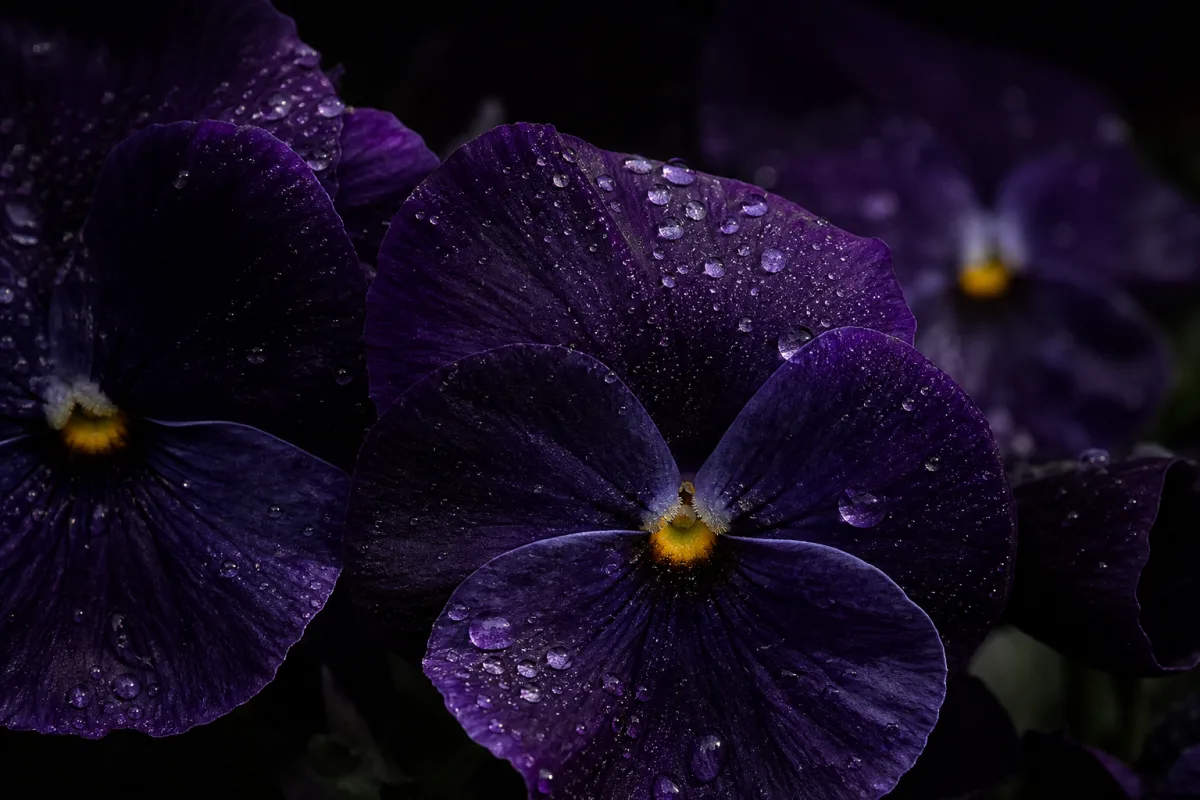
Of all the flowers you might encounter in a garden or a field, the black violet is probably the one that stops you cold. There’s something about it that doesn’t quite fit with what we expect flowers to be — it’s dark where most blooms are bright, brooding where others are cheerful, and strangely mesmerizing in a way that’s hard to put into words. With petals that range from the deepest burgundy to a color that honestly reads as almost black, these flowers have been turning heads for centuries. Gardeners, artists, perfumers, poets — people across cultures and continents have found themselves drawn to the black violet in ways that go well beyond casual admiration.
Part of what makes them so compelling is purely physical — the way those dark petals seem to absorb light rather than bounce it back. If you’ve ever stood in front of a fully bloomed black violet on a sunny day, you know exactly what I mean. While every other flower nearby is shimmering and glowing, the black violet just pulls you in. It creates this almost meditative depth that photographers and painters have been chasing for years, trying to capture what makes it feel both impossibly delicate and somehow powerfully present at the same time.
It’s also worth knowing from the start that “black violet” isn’t a single species — it’s more of a category. It covers a whole family of cultivars and varieties that breeders have developed specifically to achieve that near-black color, crossing different species and patiently selecting the darkest specimens over generations. The result is a surprisingly diverse group of plants that share a dramatic look but differ quite a bit in size, scent, form, and what they need to grow well. Getting to know that diversity is really where the appreciation for these flowers begins.
Botanical Origins and Classification
Violets belong to the genus Viola, which is genuinely enormous — we’re talking over five hundred species spread across temperate regions around the world. The family they belong to, Violaceae, is ancient even by botanical standards, with fossil evidence pointing to violet-like plants existing for tens of millions of years. Within this huge genus, the near-black coloration we find so striking comes down to genetics: specific expressions that concentrate anthocyanin pigments to such an extreme degree that the flowers end up so saturated with purple and red that our eyes read them as nearly black.
The most celebrated black violet cultivars come mainly from Viola wittrockiana (the common pansy), along with certain cultivars of Viola cornuta and some carefully selected wild violet varieties. Names like ‘Molly Sanderson’, ‘Bowles’ Black’, and ‘Penny Black’ get mentioned constantly in gardening circles, and for good reason — they’re remarkably consistent in their dark coloration. Each one has its own personality, though: subtle differences in petal texture, bloom size, how strongly it smells, and those little yellow-centered eye markings that create such a striking pop against the dark petals.
Here’s something interesting worth knowing: a truly black flower is actually botanically impossible. Plant pigments simply can’t absorb all wavelengths of light the way true black would require. What we see as black in these violets is really an extraordinarily deep, rich blend of purple, red, and blue pigments all working together. Far from being a letdown, this actually makes them more fascinating — the “blackness” is an optical experience, a kind of visual magic created by pigment chemistry and the quirks of human perception. The black violet turns out to be as much a biological marvel as an aesthetic one.
Growing Black Violets: Cultivation and Care
Black violets are cool-season plants through and through — they really hit their stride in the mild temperatures of spring and autumn rather than the heat of summer or the depths of winter. In most temperate climates, you can get them in the ground in early spring as soon as the soil is workable, then plant again in late summer or early autumn for a second flush of blooms. If you’re lucky enough to garden in a mild coastal climate, you might find they’ll carry on beautifully through winter, giving you color and life right when the garden needs it most.
Getting the soil right matters a lot with these plants. They like a rich, well-draining mix with a pH that’s somewhere between slightly acidic and neutral — roughly 5.5 to 7.0 is the sweet spot. Working in plenty of organic matter before planting, whether that’s compost, aged leaf mold, or well-rotted manure, will set you up well by improving both drainage and nutrient availability. Black violets are relatively hungry compared to some other viola species, so a balanced slow-release fertilizer applied through the growing season is a good idea. Just don’t go overboard with nitrogen — too much pushes the plant toward lots of leafy growth at the expense of the flowers you’re actually there for.
The light situation is a little more nuanced than you might expect. Unlike most flowering plants that want as much sun as they can get, black violets actually do best with morning sun and some afternoon shade, especially in warmer regions. That hot afternoon sun can fade the petals faster than you’d like, washing out the rich dark color that makes them special. In cooler climates or during the shoulder seasons, they’ll handle more direct sun just fine. One of the great advantages of growing black violets in containers is that you can move them around to find their ideal light conditions as the seasons shift.
Watering needs a bit of attention too. These plants want consistently moist soil, but they won’t tolerate sitting in waterlogged conditions — root rot and crown rot can set in quickly. Watering at the base rather than overhead goes a long way toward preventing the fungal diseases that tend to show up in cool, damp weather. A layer of organic mulch around the base helps lock in moisture and keeps soil temperatures steadier during dry spells. Like most plants, they need the most attentive watering right after transplanting, but once they’re settled in they develop a decent amount of drought tolerance on their own.
Symbolism, History, and Cultural Significance
Violets have meant something to people for a very long time, and the black violet carries a particularly layered symbolic history. In ancient Greece, violets were tied to Persephone and the mythology of the underworld — a flower connected to both beauty and darkness felt like a natural fit for a goddess who traveled between the living world and the realm of the dead. That association between the black violet and themes of mystery, transformation, and the beauty found in dark places has never really gone away in Western culture.
During the Victorian era, when the language of flowers — floriography — was taken quite seriously, violets in general stood for faithfulness, modesty, and remembrance. Darker violet varieties carried extra weight: melancholy, deep reflection, the kind of thoughtful introspection that Victorians genuinely admired. They turned up frequently in mourning bouquets and memorial arrangements, acknowledging that grief can be both painful and strangely beautiful. Black violets were also associated with mystery and secrecy, which made them useful for sending messages that couldn’t be spoken out loud in the era’s highly formal social world.
In more recent decades, the black violet has found a natural home in gothic aesthetics, alternative fashion, and the broader cultural appreciation of dark beauty that really took hold from the late twentieth century onward. Tattoo artists love incorporating black violet imagery, and the flower shows up constantly in gothic literature, fantasy art, and alternative wedding design — where its combination of traditional floral femininity and dramatic darkness creates a visual language that speaks to people who find beauty in the unconventional.
It’s not just a Western phenomenon, either. Black violets resonate strongly with Japanese aesthetics, particularly the concept of wabi-sabi, which finds beauty in imperfection and transience. The Japanese appreciation for mono no aware — that bittersweet awareness of how fleeting things are — fits the dark violet beautifully. Its brief blooming season and intense, passing beauty make it almost a living illustration of the philosophy. That this flower speaks to something universal across such different cultures suggests it’s touching on something deep in how humans respond to the combination of beauty and darkness.
Black Violets in Perfumery and Fragrance
Violets and perfumery go back an incredibly long way — ancient Egyptians, Greeks, and Romans were all using violet flowers and leaves in their aromatic preparations. The scent is distinctive: a complex, powdery-sweet aroma with green, slightly earthy undertones that comes mainly from chemical compounds called ionones. What makes violet fragrance particularly fascinating is that these compounds temporarily desensitize the very receptors that detect them, which is why the violet scent seems to come and go as you keep smelling it — it’s not your imagination, it’s just biology being interesting.
Black violet cultivars, especially those related to Viola odorata, tend to have a scent that experienced perfumers describe as a little different from lighter-colored varieties — deeper, more complex, with a slightly resinous quality compared to the brighter, cleaner scent of pale purple or white violets. Whether this is a genuine chemical difference or partly a psychological effect of the flower’s dramatic appearance is still debated, but the perception is consistent enough among people who work closely with fragrance materials that it’s influenced how perfumers actually source and use violet.
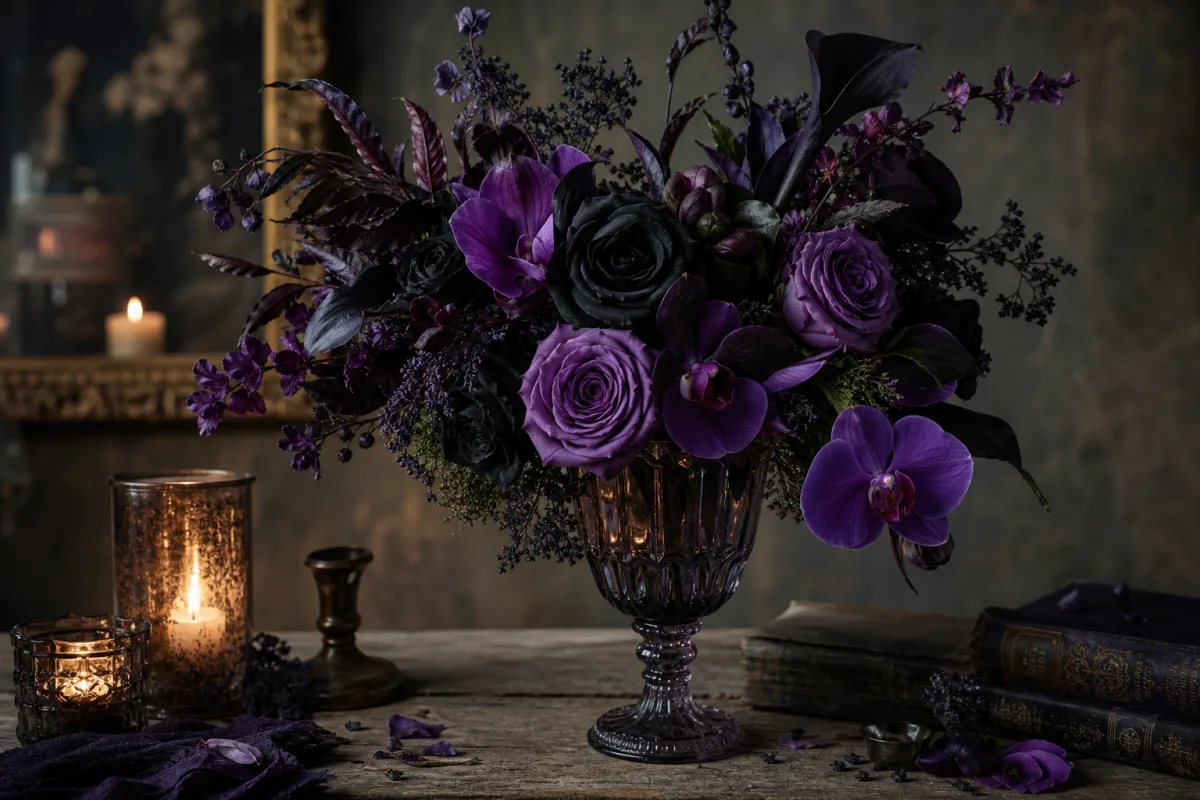
In modern perfumery, violet accords pop up across an enormous range of fragrance families — powdery florals, chypres, woody orientals, fresh aquatics. Its versatility is one of the reasons perfumers keep reaching for it, whether they need it as a lead note or as something that quietly adds depth to other materials. Violette de Parme, a cultivar historically grown around Parma in Italy, became so famous in fragrance that it gave its name to an entire perfume tradition. Today, black violet absolute and essential oil from the darkest cultivars is increasingly sought after by niche perfumers who want materials that bring genuine sophistication and a touch of mystery to their work.
Companion Planting and Garden Design with Black Violets
Black violets are such visually striking plants that choosing what to put alongside them is worth thinking through carefully. The wrong companions can actually work against them, while the right ones will make the dark flowers look extraordinary. Some of the most effective pairings include:
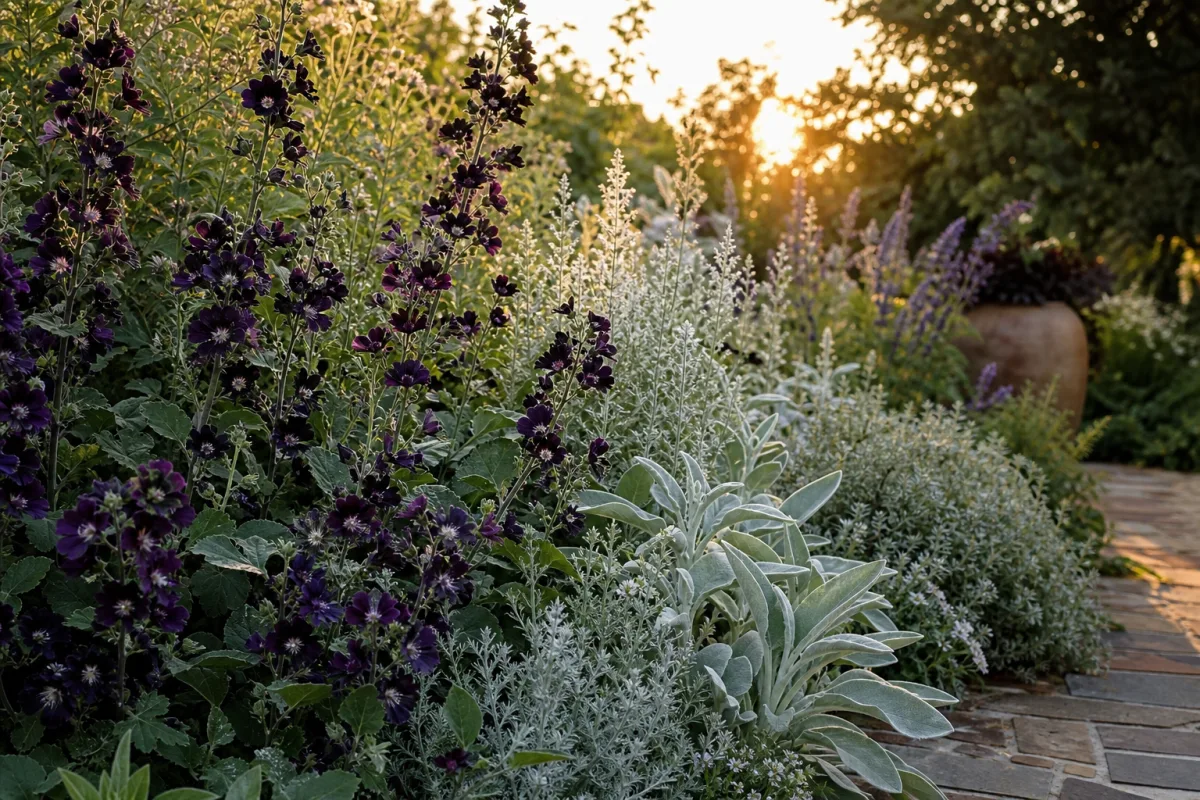
- Silver and grey foliage plants such as Stachys byzantina (lamb’s ears), artemisia varieties, and dusty miller, which create a luminous contrast that makes the dark violet flowers seem to float against a silvery backdrop.
- Pale yellow and cream flowers including primroses, pale wallflowers, and cream-colored narcissus, which provide a complementary color relationship based on the near-complementary position of yellow and violet on the color wheel.
- White-variegated foliage from plants like Lamium maculatum ‘White Nancy’ or variegated hostas, which provide interest even when not in flower while maintaining the high-contrast aesthetic throughout the season.
- Deep burgundy and purple companions such as heucheras with dark foliage, which create a tonal harmony that feels luxurious and deeply sophisticated in garden settings.
Containers are especially fun for showcasing black violets, because you have so much more control over both the planting and the presentation. A classic combination that really works: black violets with silver-leaved plants and trailing ivy in a dark-colored pot — black, deep navy, or charcoal grey all complement the flowers beautifully. The whole arrangement makes a strong statement on a patio, balcony, or doorstep. The bonus with containers is that you can move them front and center when the plants are at peak bloom, then tuck them somewhere less prominent when they need a bit of maintenance.
In a larger garden, black violets make wonderful edging plants along pathways and borders. Their low, compact habit creates a tidy boundary while that extraordinary flower color adds real drama right at ground level. A ribbon of black violets running alongside a path planted with white tulips and pale spring bulbs is a genuinely elegant picture. They also work beautifully as underplanting beneath deciduous shrubs or roses, filling in with color early in the season before the larger plants leaf out and claim all the available light.
It’s worth thinking ahead about how black violets fit into the bigger seasonal picture, since they perform best in cool weather. Designing a planting scheme that transitions between spring and autumn violet displays — with summer-appropriate plants filling the gap in between — takes a bit of planning, but it pays off with a garden that has real character across multiple seasons. Bulbs that push up through established violet plantings, summer annuals slipped in between the crowns, and autumn-flowering plants that extend the display after the heat fades are all worth factoring into the overall strategy.
Conservation, Seed Saving, and the Future of Black Violets
Like a lot of specialized horticultural cultivars, black violets don’t preserve themselves — it takes real, deliberate effort from growers, collectors, and plant organizations to keep these varieties alive. Quite a few beloved historic black violet cultivars have already been lost over the years, casualties of commercial pressures that push nurseries toward easy-to-produce, broadly popular varieties. Every time a cultivar disappears, a unique combination of traits — the product of years or even decades of careful selection — is gone permanently. The black violet community has been increasingly clear-eyed about this, and conservation efforts have become a more prominent part of the conversation.
Seed saving is one of the most practical things individual growers can do to help. Unlike hybrid cultivars that don’t breed reliably true from seed, open-pollinated black violet varieties can be maintained through careful collection and storage. The main thing to watch is cross-pollination between different varieties, which can gradually blur the distinct characteristics of each cultivar. Dedicated growers who maintain isolated populations and share seeds through plant exchange networks are genuinely doing important work, keeping these genetic resources accessible for future gardeners who haven’t even discovered black violets yet.
Climate change adds another layer of complexity to the picture. As average temperatures rise and weather becomes less predictable, the cool-season nature of black violets may make them harder to grow in regions where they’ve historically done well. But changing conditions might also open up new possibilities — higher altitudes and latitudes where suitable growing conditions are emerging for the first time. Breeders are already working on cultivars with better heat tolerance that don’t sacrifice the dark coloration, and early results are promising, even if it’s genuinely challenging work.
Perhaps the most encouraging thing about the future of black violets is the community that has grown up around them. Online groups, specialist nurseries, and horticultural societies have connected enthusiasts across continents who share seeds, plants, and knowledge freely. Social media in particular has expanded this community dramatically, and black violet photography has become something of an art form in itself — growers chasing the exact quality of light that reveals all that depth and complexity in the dark petals. That visual culture keeps drawing new people in, and it’s those new enthusiasts who will ultimately carry the conservation and breeding work forward.
“`








What do you think?
It is nice to know your opinion. Leave a comment.