










The Enchanting World of Crochet Dresses for Barbie Dolls
A Brief History of Doll Fashion and the Rise of Handmade Crochet
Barbie dolls have had a special place in the hearts of kids and collectors since they first hit shelves back in 1959. Fashion was always a huge part of what made Barbie, well, Barbie — Ruth Handler and the Mattel design team made sure her wardrobe kept up with the times decade after decade. And as doll culture grew, so did the community of crafters who wanted to put their own spin on these iconic figures. That’s really where the handmade doll clothing tradition was born, and it’s still going strong today.
Of all the handmade techniques people have brought to doll fashion, crochet has always been one of the most beloved. It’s a craft with centuries of history across many cultures — and when you scale it down to fit a Barbie doll, it becomes something else entirely. We’re talking about a miniature art form that demands real precision and patience. Every tiny stitch has to be just right, because even a small inconsistency can throw off how a finished dress drapes, fits, or looks.
The crochet doll dress community has absolutely exploded in the age of social media and platforms like Pinterest. Crafters from all over the world now share their intricate little creations, push each other to try new things, and take the craft to levels nobody could have imagined decades ago. What started as a quiet hobby in living rooms and sewing circles has grown into a vibrant global community with free and paid pattern libraries, step-by-step tutorial videos, and a lively marketplace where finished pieces attract serious admirers and dedicated followings.
The Art of Miniature Crochet: Techniques and Tools
Making a crochet dress for a Barbie doll is genuinely challenging in a way that’s hard to fully appreciate until you try it. You need a solid handle on standard crochet technique, but you also have to be willing to adapt everything you know to an almost impossibly small scale. Most Barbie dresses are worked in very fine thread — typically size 10 crochet cotton — paired with a steel hook somewhere between size 7 and size 12. These tools are tiny compared to what you’d use for regular yarn crochet, and working with them for any length of time means you’ll want good lighting, steady hands, and sharp eyes.
The basic stitches are familiar ones — single crochet, half double crochet, double crochet, and various specialty stitches — but they feel completely different at miniature scale. Tension becomes everything. Pull too tight and the fabric puckers and distorts; go too loose and you end up with something floppy and shapeless. Experienced miniature crochet artists develop an almost intuitive feel for the exact tension needed to get those clean, structured silhouettes that make a well-made Barbie dress so satisfying to look at.
And then there are the more advanced techniques that really separate the good from the breathtaking. Filet crochet creates those gorgeous lacy, grid-like patterns that work beautifully for overlay skirts and delicate bodice panels. Tunisian crochet gives you a woven, fabric-like texture that’s great for structured mini dresses. Shell stitches, picot edging, and bobble details add dimension and visual interest that can completely transform a simple silhouette. When a designer layers multiple techniques within a single garment, that’s when you get something truly special.
Popular Styles of Crochet Mini Dresses for Barbie
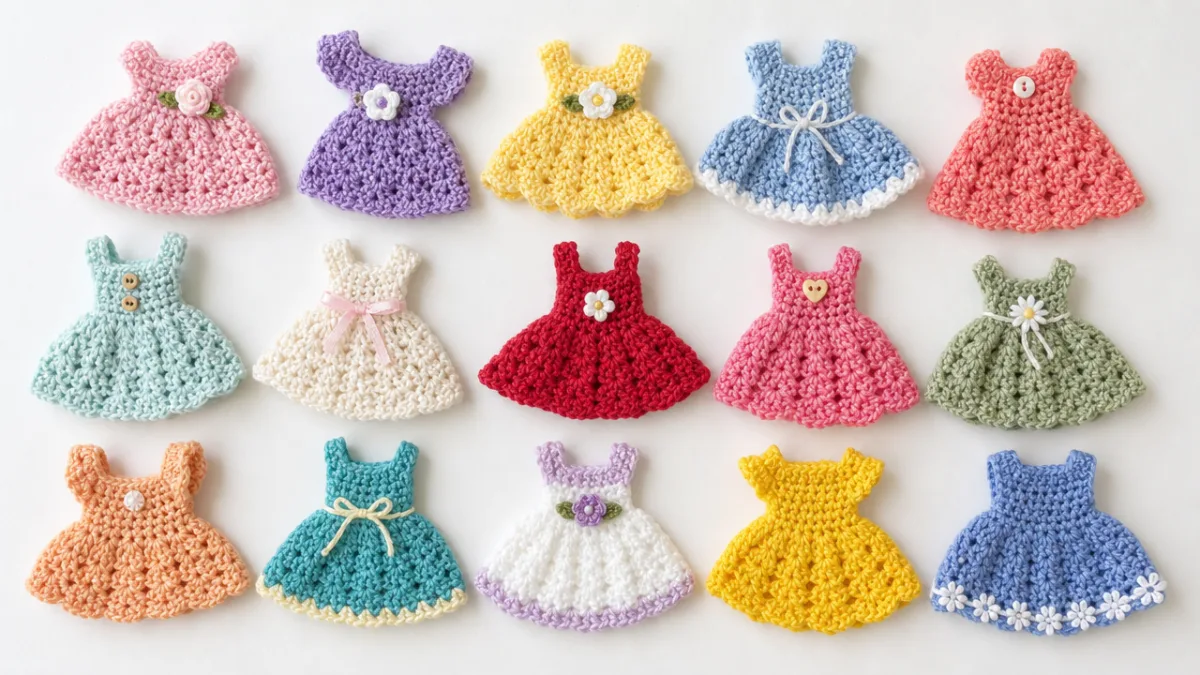
The styles available in Barbie crochet dress design are just as varied as full-size fashion, which is part of what makes this niche so fun. One of the most popular silhouettes is the classic A-line mini dress — fitted through the bodice, then flaring gently toward the hem. Crochet is actually a natural fit for this shape, because the organic drape of crocheted thread creates exactly the kind of graceful flare you’re going for. These dresses are often worked in a single color with contrasting edging, and they photograph really well.
Boho and bohemian-inspired designs have become incredibly popular within the doll crafting world, which honestly makes a lot of sense when you think about it. The open lace patterns, fringe hems, and earthy color palettes — terracottas, sage greens, creamy neutrals — all translate beautifully into crochet. The craft’s inherent texture gives these pieces that authentically handcrafted, charmingly rustic look that’s so central to the bohemian aesthetic.
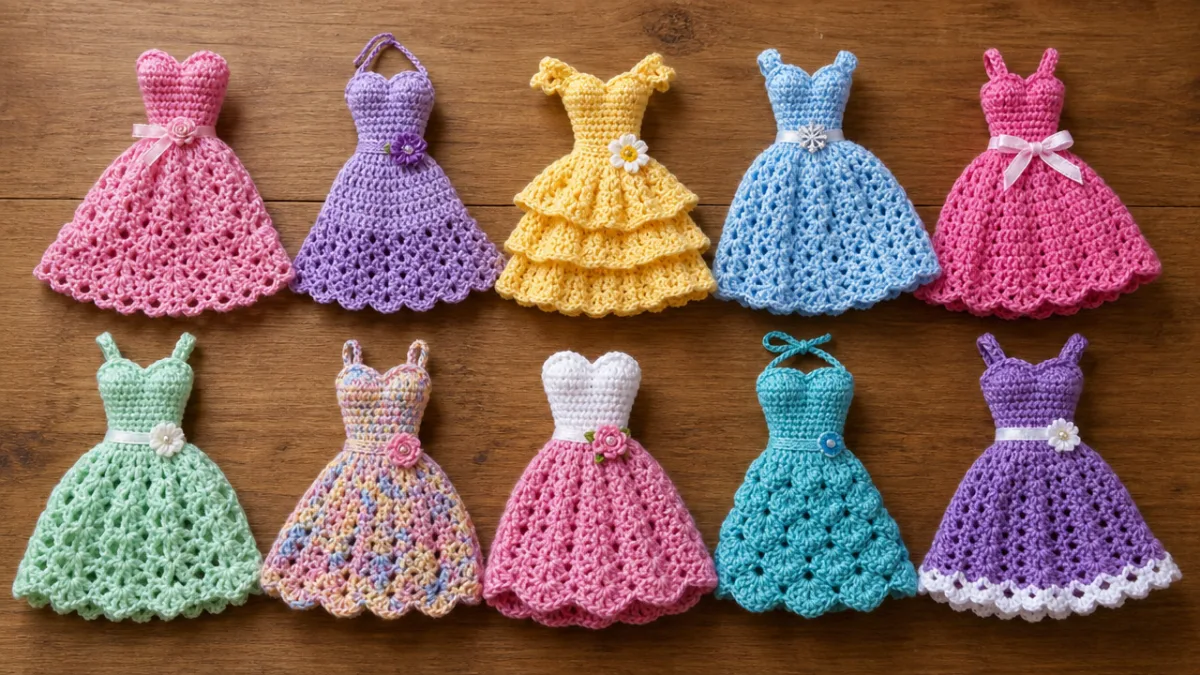
Ball gowns and formal evening styles are where things really get impressive. These elaborate designs might feature tiered skirts with cascading ruffles, intricate floral motifs worked separately and then attached to the bodice, or metallic thread that catches the light with every tiny movement. Some designers bring in seed beads, sequins, or ribbon accents to create miniature gowns that honestly rival any couture creation. The fact that these designs do so well on Pinterest says a lot about the ambition and artistry alive in this community.
Contemporary designers have also been enthusiastically embracing modern streetwear aesthetics — think color-blocked knit dresses, ribbed bodycon styles, and festival-inspired fringe two-piece sets in miniature form. This willingness to engage with current fashion trends keeps the craft feeling fresh and exciting, which is a big part of why younger crafters are discovering it who might never have picked up a hook otherwise. The result is a design landscape that keeps evolving, and it’s one of the reasons crochet Barbie dresses aren’t going anywhere.
Choosing the Right Materials for Barbie Crochet Dresses
Choosing your materials is one of the most important decisions you’ll make when starting a new Barbie dress project. The classic go-to is size 10 crochet cotton thread, and for good reason — it’s smooth, consistent, dimensionally stable, and comes in a huge range of colors. Cotton produces garments with a crisp, clean finish that holds its shape beautifully on a doll’s body, and it responds really well to both liquid starch blocking and steam blocking, so you can fine-tune the fit and silhouette after the fact.
If you want something softer and more luxurious, fine lace-weight wool or a wool blend is worth exploring. These fibers give finished pieces a slightly hazy, romantic quality that can be especially lovely in boho or fairy-tale styles. That said, fine wool at miniature scale does require extra care — it’s more prone to splitting and can be trickier to work with on small steel hooks. If you’re transitioning from cotton thread, superwash-treated wool is a good middle ground, since its machine-washable finish helps the fiber stay more consistent as you work.
Metallic threads and specialty novelty yarns are where things get really exciting. Fine metallic thread — the kind often sold alongside embroidery floss — can be worked alone or held together with cotton to create garments that shimmer beautifully. Variegated threads that transition through multiple colors along their length can produce stunning gradient effects within a single dress without a single color change. The trick with specialty materials is to take your time adjusting hook size and tension until the thread behaves the way you want it to.
- Size 10 crochet cotton — the gold standard for crisp, structured miniature garments with a clean finish and excellent color range
- Lace-weight wool or wool blend — ideal for soft, romantic styles with a dreamy, heirloom quality
- Metallic thread — perfect for evening gowns and formal styles that need to catch and reflect light
- Variegated thread — creates stunning gradient and multicolor effects without complicated color changes
- Embroidery floss — an accessible and affordable option available in hundreds of colors, excellent for beginners
Color selection deserves just as much thought as your fiber choice. Classic Barbie pink in all its shades is eternally popular, of course, but the pieces that really turn heads online tend to feature unexpected, sophisticated combinations. Dusty rose with antique gold, ivory with soft lavender, deep jewel tones offset by delicate cream edging — these kinds of thoughtful pairings are what make a crochet dress feel genuinely designed rather than just assembled. Looking to color theory, fashion editorials, nature photography, or interior design for inspiration can help you develop a more refined and distinctive aesthetic over time.
Finding and Following Crochet Patterns for Barbie Dresses
One of the real pleasures of getting into miniature crochet is discovering just how many patterns are out there waiting for you. Free patterns for Barbie doll dresses are scattered across crafting blogs, Pinterest boards, Ravelry project pages, and YouTube tutorials, which means a motivated beginner can absolutely dive in without spending a dime beyond basic materials. These free resources run the full spectrum from simple single-crochet mini dresses that are genuinely beginner-friendly, all the way to elaborate designs with detailed stitch diagrams and row-by-row written instructions.
Paid patterns, available through Etsy, Ravelry, and independent designer sites, tend to offer a higher level of detail, professional photography, and technical support that really does make a difference when you’re tackling something complex. Designers who specialize in Barbie doll crochet typically spend a lot of time testing and refining their patterns across different doll body types and thread weights before releasing them, which shows in how reliably the instructions work. If you’re serious about leveling up your skills, investing in a small collection of quality paid patterns is genuinely worth it.
Knowing how to read and adapt patterns is a skill that will serve you well in this hobby. Many patterns written for standard yarn or different doll sizes need tweaking when you’re working in fine thread with Barbie’s specific proportions in mind. Once you understand how to calculate gauge, adjust stitch counts, and modify shaping, you can take almost any pattern you love and make it work for your materials and goals. Online communities and forums dedicated to doll crochet are incredibly helpful here — experienced members are often wonderfully generous about sharing their notes and modifications.
Sharing, Selling, and Building a Community Around Crochet Doll Fashion
Social media — and Pinterest especially — has genuinely changed the game for miniature crochet artists. A single well-photographed Barbie dress pinned to the right board can reach tens of thousands of people within days, inspiring other crafters, attracting potential customers, and connecting the maker with a global community of people who get it. That kind of visibility has helped lift miniature crochet from quiet domestic hobby to recognized art form with a passionate, international following.
Plenty of talented crochet artists have built real small businesses around their miniature doll dress work, selling both finished pieces and original patterns through online marketplaces. Finished crochet Barbie dresses — especially elaborate or one-of-a-kind designs — can command prices that genuinely reflect the time and skill that went into making them. Pattern designers who develop a signature style and build a loyal following can earn meaningful income from PDF sales, sometimes selling a single pattern hundreds or even thousands of times over. For anyone with both creative drive and an entrepreneurial streak, this niche offers some really exciting possibilities.
But honestly, beyond the commerce, it’s the community itself that keeps so many people coming back. Online groups, virtual crafting meetups, and in-person conventions bring together people who share not just a craft but a genuine love of the intersection of artistry, nostalgia, and play. Beginners find encouragement and guidance from people who’ve been at it for years, while experienced designers get fresh perspective and inspiration from newcomers. That generous, collaborative spirit is what keeps the community welcoming and growing, and it’s why so many people who stumble into miniature crochet end up staying for life.
- Start a dedicated Pinterest board to collect inspiration, organize patterns by style, and track your own completed projects over time.
- Join an online crochet community such as a Facebook group or Ravelry forum specifically focused on miniature or doll crochet.
- Document your work with quality photographs using good natural or artificial lighting to showcase the detail and craftsmanship in your pieces.
- Consider opening an Etsy shop to sell finished pieces or original patterns once you have developed a consistent style and reliable pattern-writing skills.
- Attend or follow crafting events such as doll conventions, fiber arts festivals, and online crafting challenges to stay connected and motivated.
The world of crochet dresses for Barbie dolls is a genuinely rich and rewarding one. There’s creative satisfaction, community connection, and the quiet meditative pleasure of making something beautiful with your own hands. Whether you’re a longtime collector who wants to personalize your Barbie’s wardrobe, an experienced crafter looking for a fresh technical challenge, or a complete beginner searching for a creative outlet, miniature crochet fashion has something real to offer. And with platforms like Pinterest continuing to amplify the visibility of these tiny masterpieces, there’s never been a better time to pick up a hook, thread a length of fine cotton, and start stitching your way into this enchanting little world.








What do you think?
It is nice to know your opinion. Leave a comment.