










Apple Pie Candle: The Ultimate Guide to Bringing Warm, Homey Fragrance Into Your Home
The Timeless Appeal of Apple Pie Fragrance
There’s something almost magical about the smell of a freshly baked apple pie cooling on the windowsill. It’s the kind of scent that stops you in your tracks — one that feels less like a fragrance and more like a memory. Apple pie candles have become a staple in the home fragrance world for exactly this reason: they tap into something deeply familiar, conjuring cozy kitchens, lazy autumn afternoons, and the kind of family gatherings that stick with you for years. Whether baking was a weekly ritual growing up in your house or you just associate that warm spiced apple smell with holidays you love, lighting one of these candles has an almost instant way of making any room feel more like home.
In recent years, people have been putting a lot more thought and intention into how their homes feel — not just how they look. And in a world that often feels relentlessly busy and overstimulating, the small ritual of lighting a candle and letting a comforting scent settle into the room has become genuinely meaningful for a lot of people. Apple pie fragrance has carved out a special place in that world because it’s doing a lot of things at once — you’re getting the bright tartness of fresh apple, the warmth of cinnamon and nutmeg, and that unmistakable richness of buttery pastry, all layered together into something that feels both complex and completely familiar the moment you smell it.
What’s also great about apple pie candles is that they’re not nearly as season-specific as you might expect. Yes, they’re absolutely perfect for fall and winter — no question there — but the warm, spiced, slightly sweet scent profile actually works year-round in a way that, say, a heavy floral or a sharp aquatic fragrance often doesn’t. Interior designers and lifestyle folks frequently point to warm, gourmand-style candles like this as one of the easiest and most affordable ways to bring a sense of true coziness — what the Danes call hygge — into any living space.
Understanding the Scent Profile: What Makes Apple Pie Smell So Irresistible
To really get why a great apple pie candle works so well, it helps to think about what’s actually going on with the fragrance as it burns. Candle makers approach a scent like this the same way a chef thinks about a dish — in layers, with a beginning, middle, and end. The top notes hit you first when you light the wick: usually a bright, crisp apple accord that smells like freshly sliced fruit, sometimes lifted by a touch of citrus to keep things feeling clean and fresh right out of the gate.
As the candle settles into its burn and the wax pool gets going, the middle notes take over — and this is really where the magic happens. The warm spices come forward here: cinnamon, clove, nutmeg, allspice. This is the part that starts to smell like something actually baking in an oven. Getting this balance right is genuinely tricky. Too little spice and you end up with something that smells more like apple candy than apple pie. Push it too hard and the whole thing tips sharp and medicinal. Good candle makers spend a serious amount of time calibrating this, and you can usually tell the difference between a candle that got there and one that didn’t.
The base notes round everything out and give the fragrance its staying power. Think vanilla, caramel, brown sugar — occasionally a quiet woodsy or slightly musky note underneath all of that to keep the sweetness from going over the top. These are the notes that give the candle its “throw,” meaning how well the fragrance travels through a room and hangs around even after the initial burst settles down. A well-built base is what makes a candle feel like it belongs in the space rather than just sitting on your shelf smelling nice in a six-inch radius.
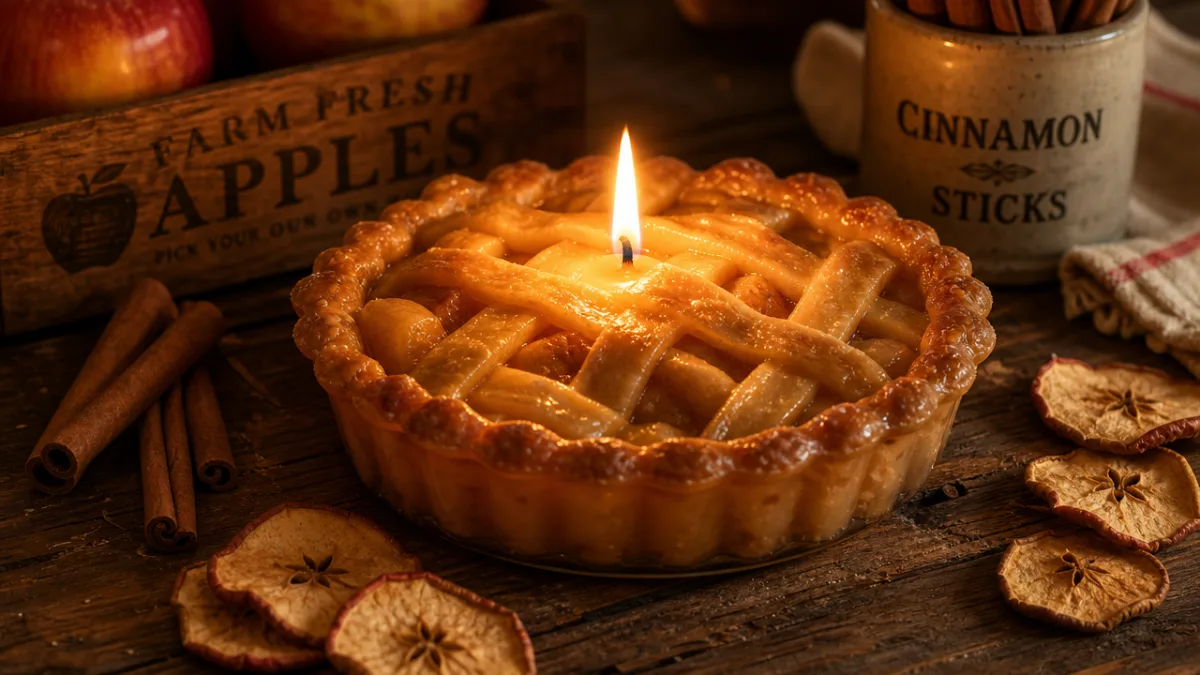
Types of Apple Pie Candles: Wax, Wick, and Everything In Between
Not all apple pie candles are made the same, and knowing a little about what goes into them makes it a lot easier to find one you’ll actually love. The biggest variable is the wax. Paraffin wax has been the go-to for mass-market candles for decades — it’s inexpensive, holds fragrance really well, and gives you a strong scent throw. The downside is that it’s a petroleum byproduct, and it can release a bit of soot when burned, which is enough to put some people off.
Soy wax has become the popular alternative, especially among smaller artisan makers, and for good reason. It’s made from soybean oil, burns more slowly and cleanly than paraffin, and tends to let the more delicate notes in a fragrance come through without that slightly synthetic edge you sometimes get with paraffin. If you’ve ever noticed a soy candle with a frosty or slightly textured top, that’s just the nature of the material — totally normal, nothing wrong with it, and actually kind of charming once you know what it is. For an apple pie scent specifically, soy tends to let those fresh, fruity top notes shine a little more clearly.
Then there’s coconut wax and beeswax, both worth knowing about if you want to go a step further. Coconut wax has a beautiful creamy color, throws scent exceptionally well, and is sustainably sourced — but you’ll pay more for it. Beeswax is one of the oldest candle materials around, burns incredibly cleanly, and has a natural sweetness to it that actually pairs nicely with apple pie fragrance. It’s also on the pricier end. A lot of artisan makers land somewhere in the middle by using blends — soy plus coconut, or soy with a small amount of paraffin — to get the best of multiple materials. Whatever you’re buying, it’s worth taking a second to read the label and understand what you’re actually getting.
How to Choose the Perfect Apple Pie Candle for Your Space
Picking the right apple pie candle isn’t just about finding one that smells good in the store — you also want one that’s actually going to work in the room where you plan to use it. Room size matters more than most people realize. A small four-ounce single-wick jar is lovely in a bathroom or a home office, but it’s going to struggle to make much of an impression in a large open living space. For bigger rooms, look for something with a higher wax weight — eight ounces or more — or consider a multi-wick candle, which burns more surface area at once and produces a noticeably stronger scent throw without having to run the candle for hours on end.
The vessel is worth paying attention to too, and not just for aesthetic reasons. Apple pie candles come in all kinds of containers — clear glass jars, matte ceramic, tins, wooden vessels, and plenty of novelty containers shaped like apples or autumn leaves or little pie dishes. But the material of the container actually affects how the candle burns. Glass and ceramic tend to distribute heat evenly, which leads to a more consistent melt pool and steadier fragrance release over time. They’re also easy to clean out and repurpose once the candle is done, which is a nice bonus if you’re thinking about reducing waste.
Burn time is the other big practical consideration. A well-made eight-ounce soy candle, burned correctly, should give you somewhere around forty to fifty hours of use. The key phrase there is “burned correctly” — and the single biggest factor is what happens on your very first burn. You want to let the wax melt all the way to the edges of the container before you put it out. If you blow it out too early, you’ll get tunneling, where a hole forms down the center of the candle and the wax around the edges never melts. Once that happens it’s pretty hard to fix, and you end up wasting a significant amount of fragrance and wax. Give it a solid first burn and you’ll be in great shape for the rest of the candle’s life.
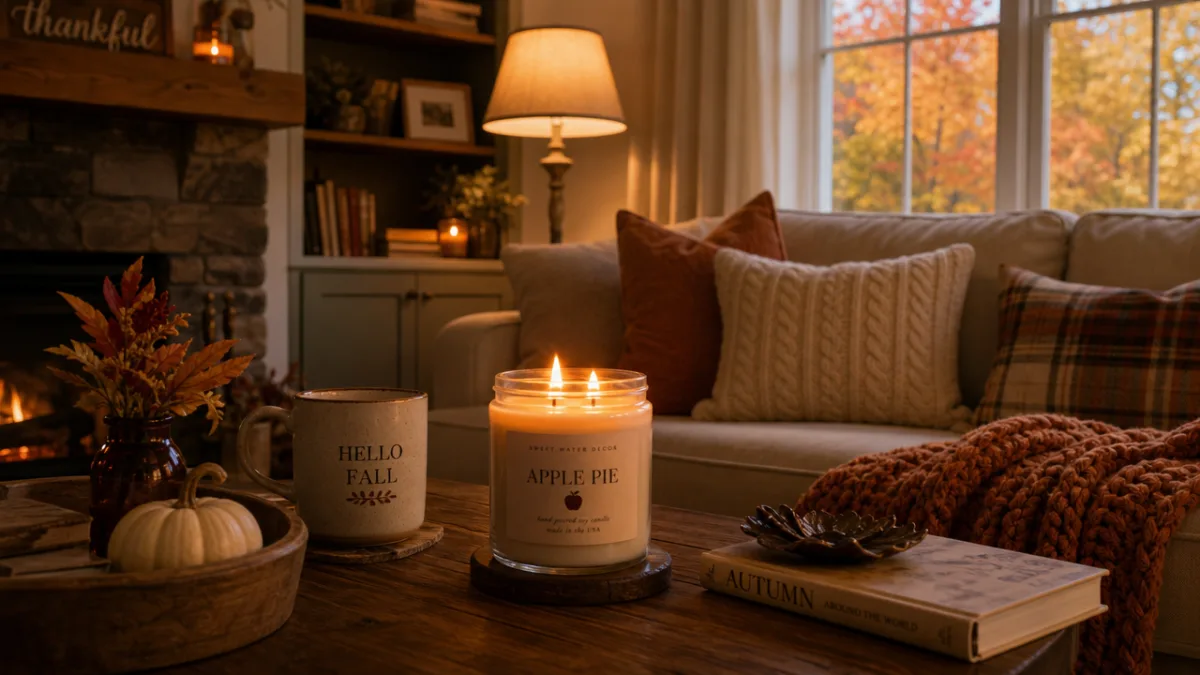
Making Your Own Apple Pie Candle: A Beginner’s Guide
If you’ve ever thought about making your own candles, apple pie is genuinely one of the best places to start. It’s a familiar scent profile that most people can calibrate by nose pretty intuitively — you know pretty quickly if it smells right or if something’s off. The supplies are affordable and easy to find, and while the process does take some attention and a little trial and error, it’s very accessible even if you’ve never done anything like this before. A lot of people get hooked on it fast.
Here’s a basic list of what you’ll need to get started:
- Soy wax flakes or a wax blend of your choice, approximately one pound for a standard eight-ounce candle
- Apple pie fragrance oil or a custom blend of apple, cinnamon, and vanilla fragrance oils
- Pre-tabbed cotton or wood wicks sized appropriately for your container diameter
- A heat-safe pouring pitcher or repurposed tin can for melting wax
- A reliable candy or wax thermometer
- Glass jars or other heat-safe containers in your preferred size
- Wick centering tools or wooden skewers to hold wicks in place during pouring
- A kitchen scale for accurate measurements
- Dye chips or liquid dye in warm amber or golden tones, if desired
The process starts with melting your wax using a double boiler setup — never directly over an open flame — until it hits the right temperature for your wax type, which for soy is typically somewhere between 170 and 185 degrees Fahrenheit. Once it’s fully melted and has cooled down a bit to around 140 to 150 degrees, you stir in your fragrance oil at roughly one ounce per pound of wax. Stir slowly and thoroughly for at least two full minutes — you want the fragrance to really bind with the wax rather than just floating around in it. Then wait a little longer for the wax to cool to around 125 to 135 degrees before you pour. That temperature window tends to give you a smoother surface on the finished candle and better fragrance retention overall.
Apple Pie Candle Care, Safety, and Getting the Most Out of Every Burn
Even a really excellent apple pie candle will underperform — or worse, become a hazard — if it’s not cared for properly. Candle safety is worth taking seriously. Candles cause thousands of house fires in the US every year, and the overwhelming majority of them are completely preventable. The most basic rule is simply never leaving a burning candle unattended, even if you’re just stepping out of the room for a few minutes. Beyond that, always place candles on a stable, heat-resistant surface, well away from anything flammable — curtains, books, paper, decorative stuff on a shelf — and well out of reach of kids and pets.
Trimming your wick is the single most impactful habit you can build around candle care. Before every burn, trim it down to about a quarter inch. You can use a proper wick trimmer, small scissors, or honestly just your fingers if needed. A wick that’s too long produces a bigger, flickering flame that generates soot, burns through your wax faster than it should, and tends to develop that telltale mushroom-shaped tip that can pop and drop black debris into the wax. A properly trimmed wick burns steadily and cleanly, giving you that gentle, consistent glow and fragrance release that makes a good candle such a pleasure.
Equally important is knowing when to call it. Stop burning a container candle once you’re down to about half an inch of wax at the bottom. Burning it completely dry can cause the container — especially glass — to overheat, which risks cracking or shattering. Once your apple pie candle has given you everything it has, you can clean out any remaining wax by warming the jar in the oven or popping the wax out using the freezer method, then repurpose the container however you like — a little planter, a desk organizer, a drinking glass. It’s a small thing, but it feels good to close the loop on something that brought a lot of warmth and comfort into your home.









What do you think?
It is nice to know your opinion. Leave a comment.