










Transform Your Living Space: A Complete Guide to Home Décor Projects
There is something deeply satisfying about transforming the space you live in through your own creativity and effort. Home décor projects offer a unique opportunity to express your personality, improve your environment, and add tangible value to your property — all at the same time. Whether you are a seasoned DIY enthusiast or someone picking up a paintbrush for the very first time, the world of home décor is welcoming, endlessly varied, and remarkably rewarding. This guide will walk you through everything you need to know to begin, sustain, and finish meaningful home projects that you will be proud of for years to come.
The beauty of decorating your home lies in the fact that there are no hard rules. Unlike professional interior design commissions that must satisfy a client brief, your personal home is a canvas that belongs entirely to you. You can blend vintage pieces with modern accents, mix bold colors with neutral backdrops, or take inspiration from a single ceramic vase and build an entire room concept around it. The key is to approach each project with intention, patience, and a willingness to learn as you go. Even mistakes tend to become part of the charm when you are working in a space that is authentically yours.
In the sections that follow, you will find practical guidance on planning your projects wisely, choosing the right décor style for your personality and lifestyle, working with color and texture, incorporating handmade and upcycled elements, and finally, styling and staging your finished spaces so they look their absolute best. Each section is designed to be both informative and actionable, so you can start applying ideas immediately rather than feeling overwhelmed by theory alone.
Planning Your Home Décor Projects the Right Way
Before you buy a single item or move a single piece of furniture, thoughtful planning is the single most important investment you can make in your home décor journey. Many people dive into projects impulsively, driven by excitement after scrolling through inspiration images, only to find themselves halfway through a room refresh with mismatched elements, a blown budget, and a space that feels more chaotic than curated. Taking even a few hours to map out your vision, set a realistic budget, and prioritize projects by impact will save you enormous amounts of time, money, and frustration down the road.
Start by conducting an honest audit of each room you want to improve. Walk through your home with fresh eyes — or better yet, take photographs and look at them on a screen, which often reveals clutter, proportion issues, and color problems that the eye tends to overlook when you are physically present in the space. Make notes about what is working and what is not. Identify the structural bones of each room: the flooring, ceiling height, natural light sources, and architectural details. These are the elements that are either costly or impossible to change, so your décor decisions should work with them rather than against them.
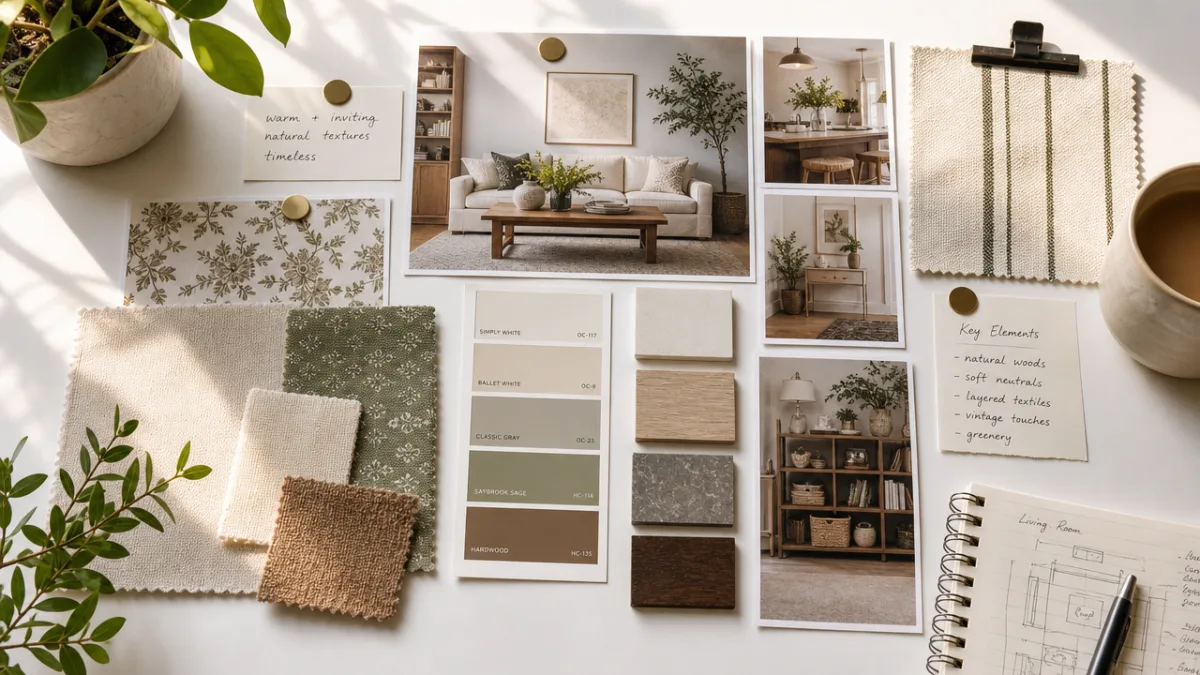
Once you have a clear picture of where you are starting from, create a mood board for each room. Digital tools like Pinterest boards, Canva, or even a simple folder of saved images make this easy and enjoyable. Look for recurring themes in the images you are drawn to — particular color palettes, furniture silhouettes, material combinations, or levels of visual complexity. This pattern recognition is enormously valuable because it reveals your authentic taste rather than passing trends, and it helps you make purchasing decisions with confidence. A well-developed mood board acts as a north star throughout the project, keeping you focused when you encounter attractive distractions along the way.
Setting a Realistic Budget
Budgeting for home décor is an area where realism is far more valuable than optimism. Costs almost always exceed initial estimates, partly because people undercount items they need and partly because once a room starts coming together, the desire to add finishing touches grows. A useful strategy is to divide your total budget into three categories: major investments such as furniture and lighting, mid-range items like textiles and artwork, and small accidentals like hardware, hooks, and styling accessories. Allocating roughly fifty percent to major investments, thirty percent to mid-range, and keeping twenty percent flexible for accidentals tends to produce balanced, complete-feeling results.
Prioritizing Projects by Visual Impact
Not all home improvements deliver equal visual return on investment. Painting walls, replacing lighting fixtures, and adding new window treatments are among the highest-impact, relatively low-cost changes you can make in any room. Conversely, buying a new sofa — while often necessary — may have less transformative effect than swapping out dated light fittings and adding layered textiles to the existing seating. When working with a limited budget, always prioritize the changes that will be seen most frequently, by the most people, and from the most angles. Entry halls, living rooms, and kitchen dining areas typically deserve the lion’s share of early attention.
Finding Your Décor Style: From Inspiration to Identity
One of the most common challenges that home decorators face is the confusion that comes from being exposed to too many beautiful styles simultaneously. Social media and design publications present an endless parade of perfectly styled spaces — Scandinavian minimalism, maximalist eclectic grandeur, rustic farmhouse warmth, sleek industrial cool, cottagecore softness — and it can feel impossible to choose just one direction. The truth is that most of the most compelling home interiors are not purely one style; they are thoughtful, confident blends that share a coherent underlying philosophy even when they draw from multiple aesthetic traditions.
The most reliable way to identify your authentic style is to pay attention to the spaces where you feel most at ease. Think about hotels, restaurants, friends’ homes, or even fictional spaces in films and television shows that have made you feel immediately comfortable and happy. Analyze what those spaces have in common. Is it the warmth of the lighting? The abundance of natural materials? The sense of order and calm? The layering of personal objects and collected items? The answers to these questions point directly toward your instinctive preferences, and those instincts are a far more trustworthy guide than any trend report.
It is also worth considering your lifestyle honestly when defining your style. A home filled with delicate, light-colored textiles and open shelving displaying fragile ceramics may look beautiful in photographs, but if you have young children, pets, or simply a busy and active household, that aesthetic will cause you daily stress rather than joy. The best décor style for any person is one that aligns both with their visual preferences and their practical reality. Style and function are not opposing forces — the most livable, beautiful homes achieve both simultaneously through thoughtful choices about materials, scale, and organization.
Popular Décor Styles Worth Exploring
While your ultimate style will be personal and hybrid, familiarizing yourself with established design traditions gives you a useful vocabulary and a set of principles to draw from. Scandinavian design emphasizes simplicity, functionality, natural materials, and a restrained palette punctuated by warmth. Bohemian or eclectic style celebrates layering, global influences, handmade objects, and rich color. Modern farmhouse blends clean contemporary lines with rustic, tactile materials like reclaimed wood and aged metal. Mediterranean style embraces terracotta, linen, whitewash, and the feeling of sun-warmed architecture. Each tradition has at its core a coherent set of values that you can borrow from selectively to build something uniquely your own.
Working with Color and Texture to Transform a Room
Color is arguably the single most powerful tool available to a home decorator, and understanding even its basic principles can help you make dramatically better decisions with confidence. The relationship between colors — their temperature, saturation, and undertones — determines whether a room feels harmonious or jarring, spacious or cramped, energizing or calming. Learning to see these relationships clearly, rather than simply reacting emotionally to individual colors in isolation, is a skill that develops quickly with practice and pays enormous dividends in every project you undertake.
A useful starting point is the concept of a dominant color, a secondary color, and one or two accent colors. The dominant color — typically applied to walls or large upholstered pieces — sets the overall tone of the space. The secondary color, used on secondary furniture, large textiles, or architectural details, creates balance and visual interest. Accent colors, used sparingly in cushions, artwork, small ceramics, or plants, provide the moments of surprise and personality that make a room feel curated rather than formulaic. Keeping this hierarchy in mind prevents the common mistake of introducing too many competing colors at equal visual weight, which creates restlessness rather than richness.
Texture is the often-underappreciated partner to color in creating rooms that feel truly layered and inviting. A room decorated entirely in similar textures — even if the color palette is excellent — will feel flat and uninspiring. Contrast between smooth and rough, matte and reflective, soft and hard is what gives a space its tactile depth. Consider a linen sofa paired with a chunky knit throw, a polished concrete floor softened by a woven jute rug, or glazed ceramic vessels grouped alongside raw, unfinished wooden objects. These contrasts register subconsciously as richness and completeness, contributing enormously to the overall feeling of quality and care.
Paint Techniques That Go Beyond a Single Coat
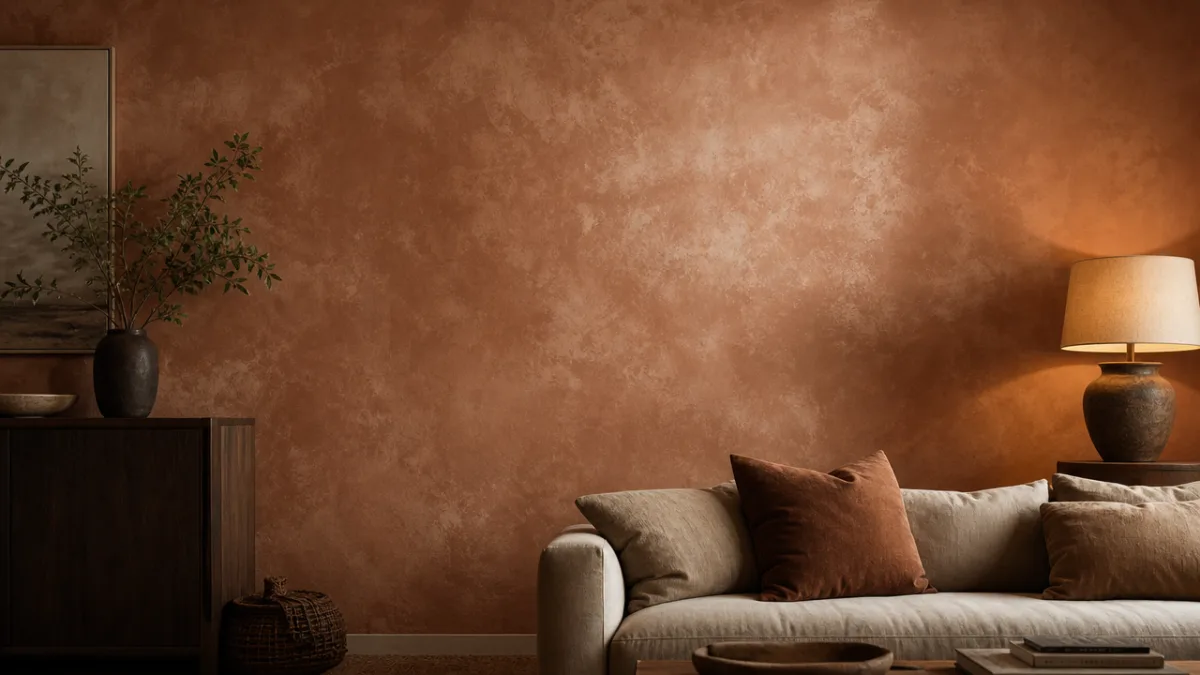
Once you are comfortable with color selection, exploring decorative paint techniques can take your walls from flat backgrounds to genuine design features. Color washing creates a soft, layered, watercolor-like effect that adds warmth and organic variation to a surface. Limewashing — currently experiencing a significant revival in popularity — produces a chalky, aged, deeply textural finish that suits rustic, Mediterranean, and contemporary spaces alike. Two-tone walls, where the lower portion is painted in a deeper shade than the upper, visually lower the ceiling height and add architectural interest to plain rooms. Painted ceilings, once considered unusual, are now widely celebrated as one of the most transformative and underutilized decorating moves available.
Upcycling, Handmade Elements, and the Art of Collected Décor
Some of the most characterful and visually interesting homes are not those filled with the latest products from premium design brands, but rather those layered with found objects, upcycled furniture, handmade pieces, and items collected meaningfully over time. This approach to decorating is not only more sustainable and budget-conscious than buying everything new; it produces interiors that feel genuinely lived in, personal, and impossible to replicate — qualities that no amount of money spent in a single shopping trip can achieve. The practice of upcycling and collecting is essentially the practice of telling a story through objects, and that story is what gives a home its soul.
Upcycling furniture is one of the most accessible and satisfying home projects available to anyone willing to invest a little time and effort. A tired wooden dresser found at a thrift store or estate sale can be transformed with fresh paint, new hardware, and perhaps a liner of patterned paper inside the drawers. An old wooden ladder becomes a striking towel rail or blanket storage piece. Mismatched dining chairs, painted in a uniform color, become a deliberately collected set with far more character than a matched suite from a furniture showroom. The key to successful upcycling is identifying pieces with good bones — solid construction, interesting shapes, and quality materials — regardless of their current condition or finish.
Handmade elements add a warmth and intentionality to a home that mass-produced items simply cannot replicate. This does not mean you need to be a skilled craftsperson. Simple projects — hand-painted plant pots, macramé wall hangings, hand-stamped linen cushion covers, or even a gallery wall of your own sketches or photographs — introduce a human quality that softens and personalizes a space enormously. The slight imperfections inherent in handmade work are not flaws to be minimized; they are the very quality that signals care and attention, and that draws the eye in a way that machine-perfect surfaces do not. Incorporating even a handful of handmade elements in a room elevates the entire space.
Building a Thoughtful Collection of Decorative Objects
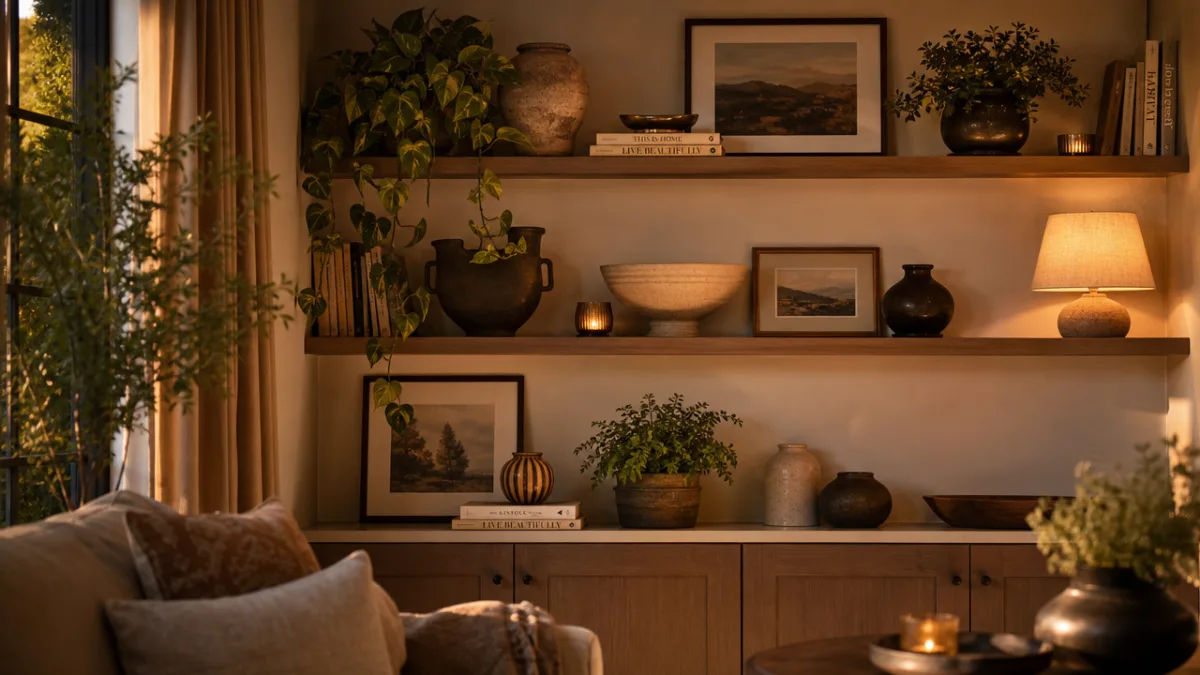
Decorating with collected objects is an art form in itself, and the difference between a thoughtfully curated collection and a cluttered accumulation of random items often comes down to a few key principles. Grouping objects in odd numbers — particularly threes — is a foundational styling rule that creates visual balance without symmetry. Varying the heights within a group adds movement and prevents the eye from moving past the arrangement too quickly. Limiting the palette within a collection to two or three colors, or unifying objects through material — all ceramics, all wood, all glass — creates cohesion even when the individual items are wildly varied in form. These principles work equally well on bookshelves, mantlepieces, console tables, and kitchen open shelving.
Sourcing Unique Pieces Without Breaking the Budget
Finding distinctive décor items at accessible prices is one of the genuine pleasures of the home decorating hobby. Charity shops, thrift stores, estate sales, and flea markets remain the best sources for interesting pieces with history and character. Online marketplaces have dramatically expanded access to secondhand and vintage items, making it possible to find specific pieces — a particular style of ceramic, a specific era of glassware, an exact type of wooden stool — that would have required years of patient searching in the pre-internet era. Developing relationships with local dealers and becoming a familiar face at regular markets also means that sellers will begin to set pieces aside for you when they know your taste, creating a pleasurable and ongoing sourcing relationship.
Styling and Staging Your Finished Spaces
Styling is the final layer of home decoration and the stage that separates a room that looks assembled from one that looks truly finished and intentional. It is the practice of arranging, editing, and presenting the elements of a room so that they work together as a coherent visual composition rather than as a collection of individual items that happen to share a space. Professional interior stylists and property stagers spend years developing their eye for this kind of spatial composition, but the fundamental principles are learnable by anyone and make an enormous difference to how a room is perceived and felt by everyone who enters it.
The concept of visual balance is central to effective styling. Balance does not require symmetry — in fact, symmetrical arrangements can feel stiff and formal unless that is specifically the effect you are seeking. Asymmetrical balance, where items of different sizes and visual weights are arranged so that no single side of a composition feels heavier than the other, is generally more dynamic and livable. A large lamp on one side of a console table can be balanced by a grouping of three smaller objects on the other side. A tall vase on a shelf can be balanced by a shorter, wider bowl and a leaning artwork at the opposite end. Training yourself to see visual weight rather than physical size is the key perceptual shift that makes asymmetrical balance possible.
Editing is just as important as adding when it comes to styling. Many rooms that feel cluttered or overwhelming are not necessarily filled with bad objects; they simply contain too many objects competing for attention simultaneously. A useful exercise is to clear a surface or shelf completely and then reintroduce items one by one, stopping when the arrangement feels complete rather than continuing until all the original items are back in place. The items left out can be stored and rotated in seasonally, which has the double benefit of keeping your home feeling fresh and giving beloved objects the visual breathing room they deserve. Restraint in styling is not minimalism — it is respect for the individual pieces you have chosen to display.
Lighting as the Final Transformative Element
No styling effort will reach its full potential without appropriate lighting, and yet lighting is consistently the most neglected element in home decoration projects. Overhead ceiling lights, particularly recessed downlights or bare pendant bulbs, cast a flat, shadowless light that strips texture and warmth from every surface it touches. Layered lighting — combining ambient overhead sources with table lamps, floor lamps, wall sconces, and candles — creates the kind of warm, dimensional atmosphere that makes a room feel genuinely inviting at any hour. The goal is to illuminate objects and surfaces rather than simply flooding the room with uniform brightness, and to create multiple pools of softer light that draw the eye through the space rather than illuminating everything equally.
Bringing Nature Indoors for a Living, Breathing Interior
Plants, flowers, branches, and natural materials are among the most powerful and accessible styling tools available to any home decorator. Living plants introduce color, texture, movement, and freshness that no manufactured object can replicate, and their presence consistently makes spaces feel more alive and welcoming. Even a single well-chosen plant in a beautiful pot can anchor a corner, soften a hard architectural edge, or add the final note of life that a room was quietly missing. Beyond living plants, cut flowers changed weekly, seasonal branches in a tall vase, a bowl of stones or shells, or arrangements of dried botanicals all bring the natural world into your interior in ways that feel grounding and genuine, connecting your home to the rhythms of the wider world outside its walls.
Ultimately, the most important thing to remember throughout any home décor project is that the process itself — the searching, the experimenting, the rearranging, and the gradual discovery of what truly makes you feel at home — is just as valuable as the finished result. Homes are never truly finished; they evolve continuously as your life, tastes, and circumstances change. Embracing that evolution with curiosity and creativity rather than anxiety is what transforms home decoration from a task into a genuinely joyful practice. Every project completed, every space thoughtfully improved, is an investment not just in your property but in your daily quality of life — and that is a return worth every effort.








What do you think?
It is nice to know your opinion. Leave a comment.