










Palo Santo, Juniper & Cedarwood Soy Candle: A Complete Guide to Earthy Aromatherapy at Home
The Ancient Origins of Palo Santo, Juniper, and Cedarwood
Long before the modern wellness industry discovered the power of sacred wood and forest botanicals, indigenous cultures across South America, North America, and the Mediterranean were burning these resins, barks, and branches in ritual ceremonies. Palo Santo, whose name translates directly from Spanish as “holy wood,” has been used for thousands of years by shamans and healers across Ecuador, Peru, and Bolivia. The wood comes from the Bursera graveolens tree, and when burned it releases a warm, slightly citrusy smoke that has long been associated with spiritual cleansing, energetic protection, and deep emotional healing. Its reputation as a purifying agent has never faded, and today it remains one of the most sought-after aromatic ingredients in the candle and wellness markets.
Juniper berries and branches carry an equally storied past. In ancient Greece and Rome, juniper was burned in temples as an offering to the gods and used medicinally to ward off disease. Norse and Celtic peoples wove juniper branches into protective charms and burned them at threshold ceremonies marking seasonal transitions. The sharp, clean, slightly resinous scent of juniper is unmistakably tied to conifer forests and crisp mountain air, which is why it has long been associated with clarity, protection, and the invigorating quality of nature untouched by human hands. Bringing juniper into a home environment through a carefully crafted candle is an act of invoking that ancient forest wisdom.
Cedarwood, arguably the most versatile of the three, has roots stretching back to biblical antiquity. The cedars of Lebanon were prized by Egyptian pharaohs for embalming and by Phoenician traders for their ships. The scent of cedarwood is universally described as grounding, warm, and deeply calming — a woody base note that gives any fragrance blend a sense of permanence and stability. When these three powerful aromatic traditions come together in a single soy candle, the result is not merely a pleasant home fragrance. It is a layered olfactory experience that connects the user to thousands of years of human relationship with sacred plants, making every moment of burning a quiet act of remembrance and reverence.
Why Soy Wax Makes All the Difference
The choice to use soy wax as the candle base is not simply a marketing decision — it is a meaningful commitment to quality, sustainability, and fragrance integrity. Soy wax is derived from soybeans, a renewable agricultural resource, and it burns significantly cleaner than paraffin wax, which is a petroleum byproduct. When you light a paraffin candle, you are effectively burning fossil fuel in your living room, releasing soot, toxins, and carcinogens into the air you breathe. Soy wax, by contrast, produces minimal soot and does not release the same volatile organic compounds, meaning the air in your home stays cleaner even as you enjoy the candle’s fragrance.
Beyond the environmental and health advantages, soy wax has a uniquely low melting point that creates an extended burn time compared to paraffin alternatives of the same size. A well-made soy candle will typically burn between 25 and 50 percent longer than a comparable paraffin candle, giving you more hours of aromatic enjoyment per dollar spent. Additionally, soy wax has a superior ability to hold fragrance oils and essential oil blends, releasing them slowly and evenly rather than in an overwhelming burst that fades quickly. This means the scent throw of a palo santo, juniper, and cedarwood soy candle remains consistent and nuanced from the first burn to the last.
There is also an aesthetic consideration. Soy wax sets with a naturally creamy, matte finish that suits the warm, earthy color palette of a terracotta ceramic vessel beautifully. Unlike paraffin, which can look plasticky or overly shiny, soy wax has an organic, handmade quality that reinforces the artisanal character of a candle meant to evoke forest floors, ancient wood smoke, and desert rains. For anyone who cares deeply about what they bring into their home — both in terms of environmental impact and visual harmony — a soy wax candle is the clear, unambiguous choice.
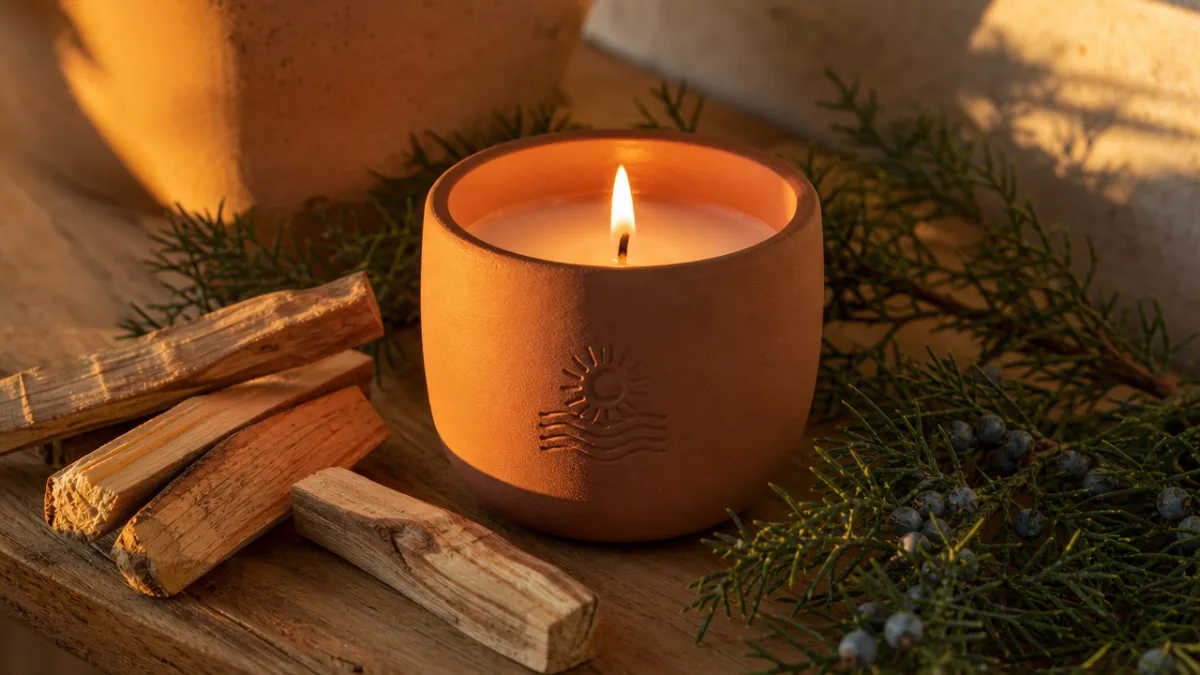
The Terracotta Ceramic Vessel: Beauty with Purpose
The vessel that holds a candle is as important as the candle itself, and terracotta ceramic represents one of the most thoughtful and historically resonant choices a maker can offer. Terracotta, which means “baked earth” in Italian, is one of humanity’s oldest ceramic traditions, with a history stretching back over ten thousand years across cultures as geographically diverse as ancient Greece, pre-Columbian Mesoamerica, ancient China, and sub-Saharan Africa. Its warm reddish-orange hue is the color of the earth itself — ochre, rust, and clay — and it carries an inherent warmth and earthiness that plastic, glass, or even most glazed ceramics simply cannot replicate. Pairing this vessel with earthy, forest-forward scents like palo santo, juniper, and cedarwood creates an aesthetic coherence that feels intentional and deeply considered.
From a practical standpoint, ceramic vessels offer significant advantages over their glass or tin counterparts. Ceramic is an excellent insulator, which means it distributes heat from the burning candle gently and evenly, allowing the soy wax to create a full melt pool without overheating the sides of the vessel. This careful heat management protects the integrity of the fragrance and extends the overall life of the candle. Additionally, ceramic is thick and sturdy, providing a sense of weight and permanence that makes the candle feel like an object of genuine value rather than a disposable commodity.
Perhaps most importantly, a terracotta ceramic vessel is designed to outlive the candle it contains. Once the soy wax has burned down, the vessel remains as a beautifully crafted object that can serve any number of second lives in the home. It can hold small succulents or air plants, serve as a desk organizer for pens and brushes, store kitchen staples like salt or spices, or simply function as a sculptural object on a shelf or windowsill. This built-in longevity is a form of sustainability that goes beyond the candle’s wax and fragrance, ensuring that nothing about this product is truly disposable. The terracotta vessel is an heirloom in miniature.
Understanding the Scent Profile: A Deep Dive
To truly appreciate what this candle offers, it helps to understand how professional perfumers think about fragrance structure. Every well-composed scent has three layers: top notes, which are the first impression you smell when the candle is lit and tend to be lighter and more volatile; middle or heart notes, which emerge as the candle warms and represent the core personality of the fragrance; and base notes, which are the deepest and most persistent elements, lingering long after the candle is extinguished. In a palo santo, juniper, and cedarwood blend, each ingredient plays a distinct structural role.
Juniper typically functions as the top note in this kind of composition. Its sharp, piney, slightly citrusy character hits the senses first, immediately evoking an outdoor, forested quality that feels clean and clarifying. This initial impression wakes up the olfactory system and sets the expectation for the warmer, more complex notes to follow. Palo santo then emerges as the heart of the fragrance — its warm, resinous, slightly sweet wood smoke quality is neither as sharp as juniper nor as deeply earthy as cedarwood, but it occupies a middle space that is deeply comforting and uniquely itself. It is the scent that most people find themselves reaching toward when they want to create a calm, contemplative atmosphere at home.
Cedarwood anchors the entire composition as a base note. Its warm, dry, slightly pencil-shaving quality gives the blend a sense of groundedness and longevity. Without cedarwood, palo santo and juniper might feel a little unmoored — pleasant but insubstantial. With cedarwood as the foundation, the entire scent profile takes on a depth and permanence that makes the fragrance feel genuinely luxurious. The three notes together create something greater than the sum of their parts: a scent that manages to be simultaneously invigorating and calming, wild and warm, ancient and completely contemporary. It is the kind of fragrance that smells different depending on your mood, which is the mark of a truly well-crafted blend.
- Top Note — Juniper: Sharp, piney, and slightly citrusy. Evokes crisp mountain air and ancient forests. The first scent you encounter when the candle is lit, it immediately establishes the outdoor, natural character of the blend.
- Heart Note — Palo Santo: Warm, resinous, subtly sweet, and richly aromatic. The emotional core of the candle, it creates a meditative, grounding atmosphere associated with clearing negative energy and inviting calm.
- Base Note — Cedarwood: Dry, warm, and deeply earthy. It provides the olfactory foundation that prevents the brighter notes from becoming fleeting, giving the entire composition staying power and a sense of deep, quiet luxury.
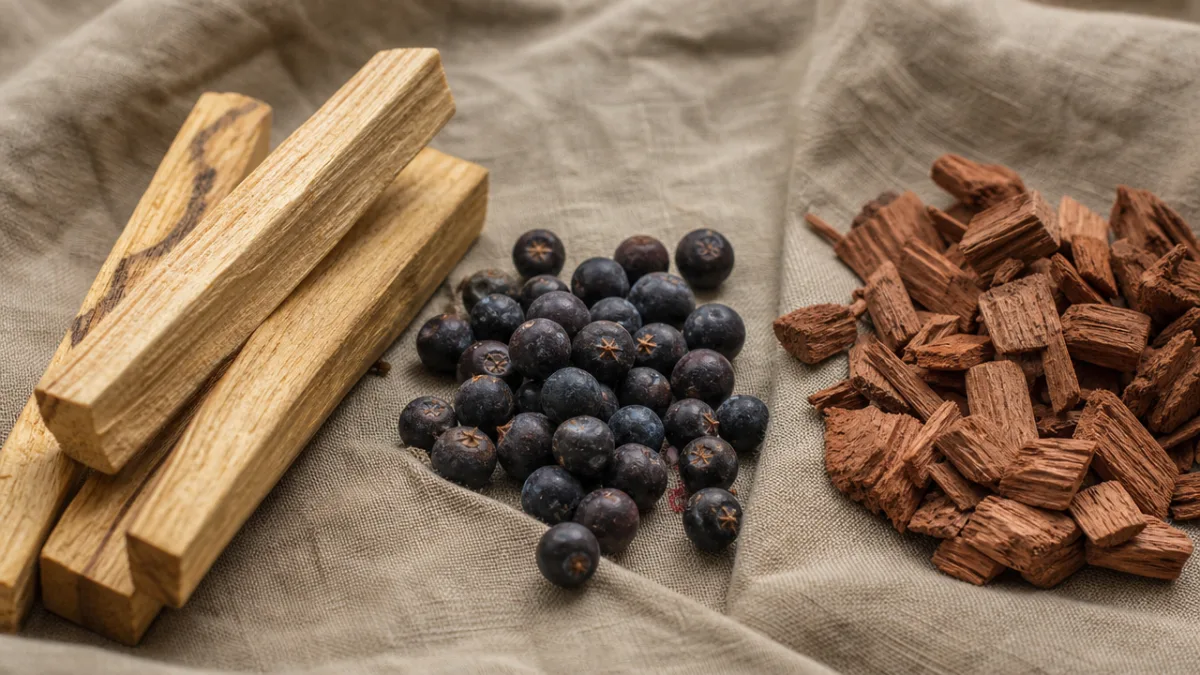
Creating a Ritual: How to Get the Most from Your Candle
A candle of this quality deserves more than simply being lit and forgotten on a shelf. Developing a small ritual around its use transforms an ordinary act into something meaningful and restorative. Before lighting your candle for the first time, take a moment to set an intention — this does not need to be mystical or elaborate. It might be as simple as deciding that for the next hour, you will close your laptop, put down your phone, and simply be present in your own home. The act of lighting the candle then becomes a signal to your nervous system that a different mode of being has begun, one associated with rest, pleasure, and the unhurried enjoyment of your surroundings.
On a more practical level, proper candle care significantly extends the life and performance of your soy wax candle. Always trim the wick to approximately a quarter of an inch before each burn. An untrimmed wick creates a larger, unstable flame that burns through the wax too quickly, produces excessive soot, and can cause the candle to tunnel — a frustrating phenomenon in which the flame burns a narrow hole straight down the center of the candle, leaving a ring of wasted wax around the sides. Additionally, always allow the candle to burn long enough on the first use that the entire surface of the wax melts to the edge of the vessel. This sets what candle makers call the “memory” of the wax, ensuring it melts evenly on every subsequent burn.
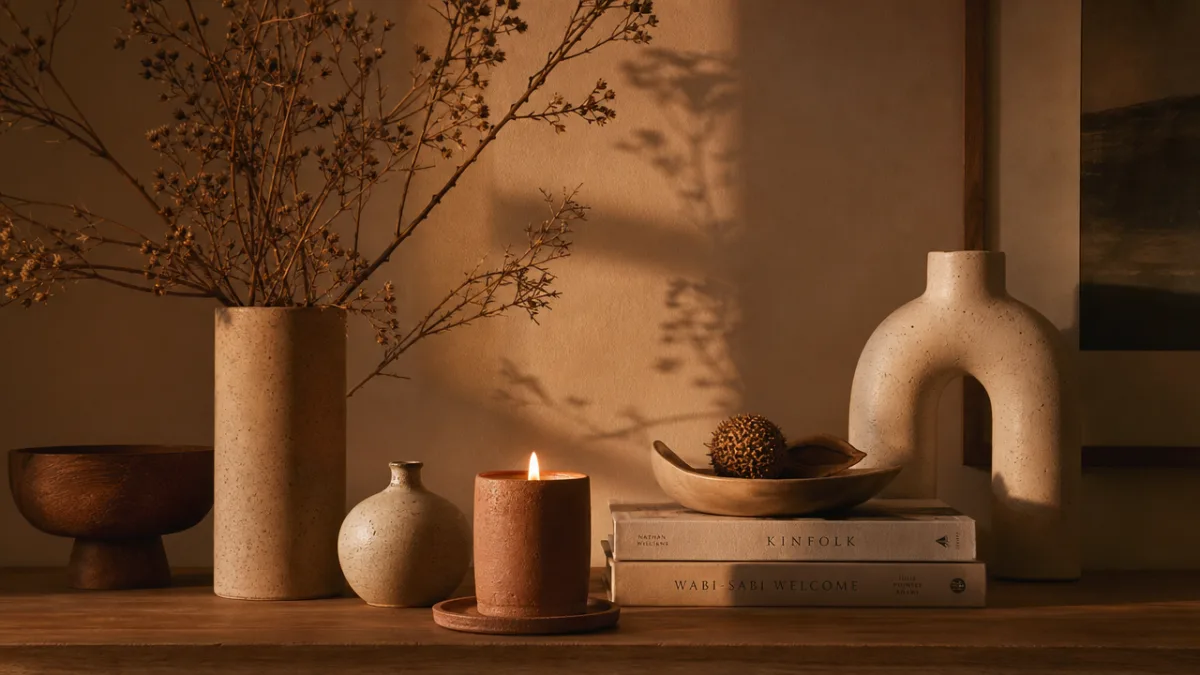
Consider where you place your candle as part of the ritual as well. A terracotta ceramic candle looks most at home in spaces that celebrate natural materials and textures — a bathroom shelf lined with linen towels and smooth river stones, a living room coffee table alongside books and a small vase of dried botanicals, a bedroom nightstand where its warm light creates the ideal transition into sleep. The scent of palo santo, juniper, and cedarwood is particularly well suited to evening use, when the body naturally begins to shift toward rest and the grounding, slightly smoky quality of the fragrance feels appropriate to the quieting hour. Allow the candle to become part of how you close your day.
Gifting, Styling, and the Broader Wellness Context
A handcrafted soy candle in a terracotta ceramic vessel, scented with palo santo, juniper, and cedarwood, is one of those rare gifts that manages to feel both personal and universally appealing. It requires no knowledge of the recipient’s size, taste in clothing, or dietary preferences. It communicates something specific and thoughtful — that you want to give them something that enhances the quality of their everyday life, that you appreciate beautiful objects and meaningful aromas, and that you understand the growing desire so many people feel to create a home environment that genuinely supports wellbeing. It is the kind of gift that people remember, not because it is expensive, but because it is considered.
From a home styling perspective, the terracotta vessel fits effortlessly into several of the most popular contemporary interior aesthetics. In a warm minimalist or Japandi-inspired space, it reads as an earthy accent that adds life and texture without visual clutter. In a maximalist bohemian interior filled with textiles, plants, and handmade objects, it disappears comfortably into the richness of the composition while still contributing its own distinct character. On a shelf styled with art books, ceramic figurines, and trailing plants, it reads as a curated, intentional object rather than a functional afterthought. The terracotta option in particular bridges the gap between rustic and refined in a way that its white ceramic counterpart, while equally beautiful, does not quite replicate.
Within the broader context of the wellness movement, this candle represents a meaningful intersection of several important trends: the growing preference for natural and sustainable materials, the renewed interest in ancient botanical and healing traditions, the desire to transform everyday domestic spaces into sanctuaries of calm and beauty, and the shift toward conscious consumption — buying fewer, better things that are made with care and designed to last. Choosing a palo santo, juniper, and cedarwood soy candle in a terracotta ceramic vessel is a small but genuinely meaningful act of alignment with these values. It is an acknowledgment that the objects we surround ourselves with shape the quality of our inner lives, and that choosing well — even in something as seemingly minor as a candle — is always worth the effort.
- Set an Intention: Before lighting, take a breath and decide what quality you want to cultivate — calm, focus, creativity, or simple rest. Let the candle mark the beginning of that chosen state.
- Trim the Wick: Always trim to one quarter inch before each burn to ensure a clean, even flame and prevent soot buildup on the inside of your beautiful ceramic vessel.
- Allow a Full Melt Pool: On the first burn, let the candle burn until the entire wax surface has melted to the edges — typically two to three hours — to set the wax memory and prevent tunneling.
- Burn in Appropriate Sessions: Limit burns to four hours at a time to protect the vessel and maintain fragrance quality throughout the life of the candle.
- Repurpose the Vessel: Once the candle is finished, clean the vessel with warm water and use it as a planter, organizer, or decorative object. Nothing goes to waste.








What do you think?
It is nice to know your opinion. Leave a comment.