










Common White Monkshood (Aconitum napellus ‘Album’): A Complete Guide to Growing This Elegant Perennial
Introduction to Aconitum napellus ‘Album’
Among the most striking late-season perennials available to gardeners, Common White Monkshood — known botanically as Aconitum napellus ‘Album’ — occupies a rare and coveted place in the ornamental garden. With its tall, upright spires of pure ivory-white flowers and deeply divided, dark green foliage, this cultivar offers a level of sophistication that few other plants can match. Unlike the more commonly seen deep blue or violet species, ‘Album’ presents an almost ghostly elegance that looks particularly stunning when planted against darker backdrops or allowed to naturalize in dappled woodland settings.
Aconitum napellus, the species from which ‘Album’ is derived, belongs to the Ranunculaceae family and originates from the mountainous regions of Europe, particularly the Alps, Pyrenees, and Carpathians. The species has been cultivated in formal gardens since at least the medieval period, valued as much for its dramatic architectural form as for its late-summer to early-autumn blooming season. The white-flowered ‘Album’ cultivar is considered one of the most refined selections within this genus, prized by garden designers and enthusiastic home gardeners alike for its ability to bridge the gap between summer and autumn color in the border.
Oakland Nurseries, with its long reputation for carrying exceptional and sometimes hard-to-find ornamental perennials, is one of the nurseries that makes Aconitum napellus ‘Album’ available to gardening enthusiasts. Finding a reliable source for this cultivar matters, because quality propagation ensures that plants are true to type, vigorous, and free from the viruses that can sometimes plague inferior stock. Whether you are a seasoned perennial gardener or someone just beginning to explore the world of shade-tolerant flowering plants, ‘Album’ represents a worthwhile and rewarding addition to the landscape.
Botanical Characteristics and Identification
Aconitum napellus ‘Album’ is a clump-forming herbaceous perennial that typically reaches between three and five feet in height when grown under ideal conditions. Its stems are erect and sturdy, rarely requiring staking except in very exposed or particularly fertile sites where lush growth can make the plant top-heavy. The leaves are deeply palmate, cut into five to seven narrow lobes that give them a finely textured, almost fern-like appearance. This foliage remains attractive throughout the growing season and provides excellent structural interest even when the plant is not in bloom.
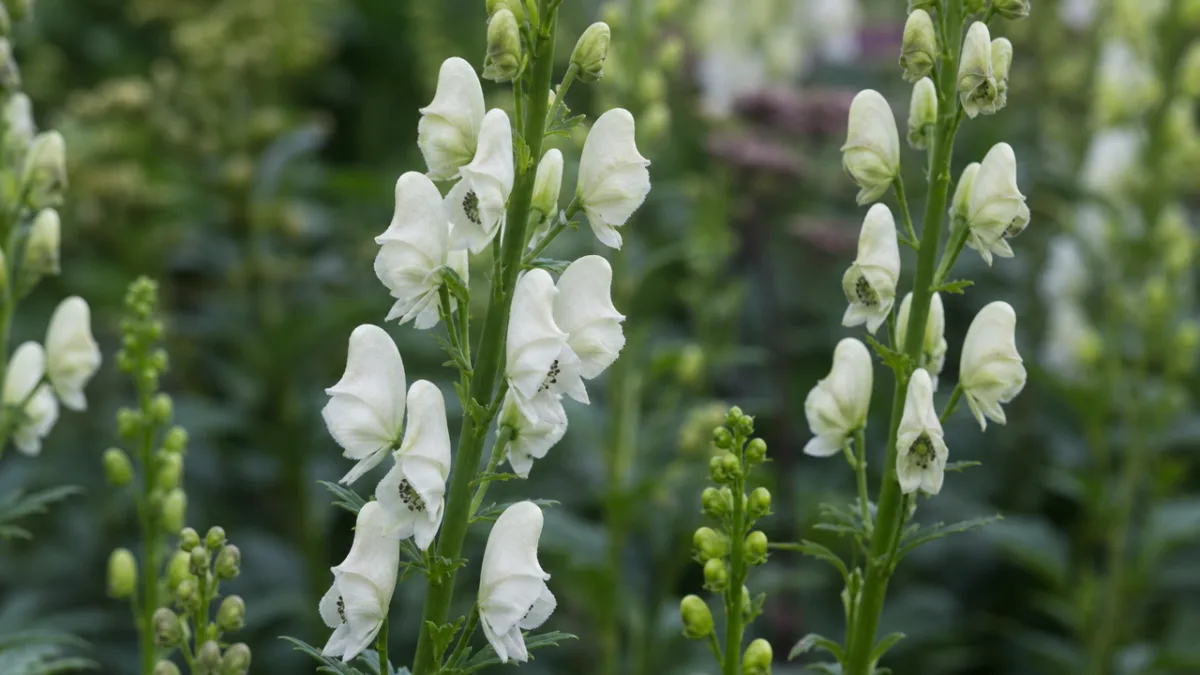
The flowers of ‘Album’ are the feature that truly sets this cultivar apart. Borne on tall, branching racemes, each individual bloom is helmet-shaped — a distinctive form that gives rise to the common name “monkshood,” as the upper sepal curves over and down to resemble a medieval monk’s cowl. In ‘Album’, these helmets are a pure, clean white, sometimes with the faintest blush of pale green in cooler weather, creating a luminous quality that practically glows in low-light garden conditions. Each flower measures roughly an inch to an inch and a half across, and the racemes may carry dozens of blooms, creating a truly impressive floral display.
Bloom time for Aconitum napellus ‘Album’ falls primarily in late summer to early autumn, typically from August through September in most temperate climates. This timing is strategically valuable in the garden, as it fills a period when many spring and early summer perennials have already finished their display. The plant goes fully dormant in winter, dying back to the ground and re-emerging reliably each spring from its tuberous root system. Its cold hardiness is generally rated at USDA zones 3 through 7, making it a reliable perennial across a wide swath of North America and Europe.
Growing Conditions and Site Requirements
Selecting the right growing site is crucial for the long-term success of Aconitum napellus ‘Album’. This plant is native to cool, moist mountain meadows and forest margins, and it performs best when those conditions are approximated in the garden. It prefers consistently moist, humus-rich, well-drained soil with a slightly acidic to neutral pH, ideally between 5.5 and 7.0. Heavy clay soils should be amended with generous quantities of compost or leaf mold before planting to improve both drainage and moisture retention simultaneously.
In terms of light, ‘Album’ is more flexible than many gardeners assume, thriving in conditions ranging from full sun to partial shade. However, in warmer climate zones — particularly in areas where summer temperatures regularly exceed 85 to 90 degrees Fahrenheit — partial shade becomes essentially mandatory. Morning sun with afternoon shade, or dappled light beneath high-branching trees, represents the ideal exposure in such regions. In cooler northern climates, a position in full sun can actually enhance flowering, provided the soil moisture is carefully maintained throughout the growing season.
Moisture is the single most important environmental factor for this plant. Aconitum napellus ‘Album’ will not tolerate prolonged drought, and plants allowed to dry out severely will decline rapidly, sometimes failing to re-emerge the following season. Mulching around the base of established plants with two to three inches of shredded bark or leaf mold helps retain soil moisture, regulate root temperature, and suppress competing weeds. In exceptionally dry summers, supplemental irrigation should be applied at the base of the plant, keeping foliage dry to reduce the risk of foliar disease.
Planting and Establishment
The best time to plant Aconitum napellus ‘Album’ is either in early spring, as new growth begins to emerge, or in early autumn, which allows the plant several weeks to establish roots before the ground freezes. Container-grown nursery specimens from suppliers such as Oakland Nurseries can be planted throughout the growing season with proper aftercare, but spring and autumn plantings typically result in the best establishment rates. When planting, dig a hole approximately twice as wide as the root ball and to the same depth, ensuring that the crown of the plant sits at or just slightly below the soil surface.
Spacing is an important consideration for long-term garden performance. Individual plants should be placed approximately 18 to 24 inches apart to allow for adequate air circulation and to accommodate the natural spreading of mature clumps over several years. Monkshood dislikes being crowded, and poor air circulation can encourage the development of powdery mildew, particularly in humid summers. When positioning plants in the border, consider their mature height and ensure they are placed toward the back of mixed perennial plantings, where their tall spires can serve as a dramatic vertical backdrop to shorter companions.
After planting, water thoroughly and apply a two to three inch layer of mulch, keeping it pulled away from direct contact with the plant’s crown to prevent rot. During the first growing season, consistent watering every five to seven days during dry spells will help establish a deep and resilient root system. It is perfectly normal for newly planted monkshood to produce limited foliage and few or no flowers in the first year; this is simply the plant investing its energy in root development rather than above-ground growth. By the second and third years, plants typically flower with great abundance and vigor.
Care, Maintenance, and Propagation
Once established, Aconitum napellus ‘Album’ is a relatively low-maintenance perennial that rewards gardeners with consistent performance year after year. In early spring, as new growth emerges, apply a balanced slow-release granular fertilizer around the base of the plant, or top-dress generously with well-composted organic matter. Avoid excessive high-nitrogen fertilizers, which promote lush leafy growth at the expense of flower production and can create soft, weak stems more prone to flopping. A light dressing of bone meal or superphosphate at planting and again in early spring can support vigorous blooming.
Deadheading spent flower spikes after they fade can help maintain a tidy appearance and may encourage a modest second flush of bloom on side branches, though ‘Album’ is not a reliably reblooming cultivar. If you are allowing the plant to set seed, be aware that seedlings may not come true to the white-flowered form and may revert to the blue or violet coloration of the species. Cutting plants back to the ground in late autumn after the first frost cleans up the garden and removes any overwintering disease spores or insect eggs that may have accumulated on old foliage.
Propagation of Aconitum napellus ‘Album’ is most reliably accomplished by division, which simultaneously refreshes the vigor of older clumps and provides additional plants for expanding the planting or sharing with other gardeners. Division is best performed in early spring just as new growth is beginning to emerge, or in early autumn after flowering has concluded. Carefully dig up the entire clump, separate it into smaller sections using a sharp spade or garden fork, and replant divisions promptly at the same depth, watering thoroughly. Divisions typically establish quickly and bloom the following season.
Toxicity, Safety, and Garden Context
Perhaps the most important piece of information any gardener should know about Aconitum napellus ‘Album’ — and indeed about all monkshoods — is that the entire plant is profoundly toxic. Every part of Aconitum napellus, from root to flower, contains potent alkaloids, particularly aconitine, that can cause serious harm or death if ingested by humans, pets, or livestock. This toxicity has been recognized since antiquity; the plant appears in classical mythology and historical texts as one of the most dangerous plants known. Gardeners must handle all parts of this plant with care, ideally wearing gloves, and should always wash hands thoroughly after working with it.
Despite its toxicity, Aconitum napellus ‘Album’ presents no danger to people or animals simply by growing in the garden, as long as reasonable precautions are observed. The plant is not a contact irritant under normal circumstances, and its presence in the landscape poses no risk to those who do not handle or ingest it. That said, gardens frequented by young children or pets where unsupervised access to plant material is possible should probably position monkshood in a less accessible part of the property, or consider whether other tall white-flowering perennials might be more appropriate alternatives in that specific context.
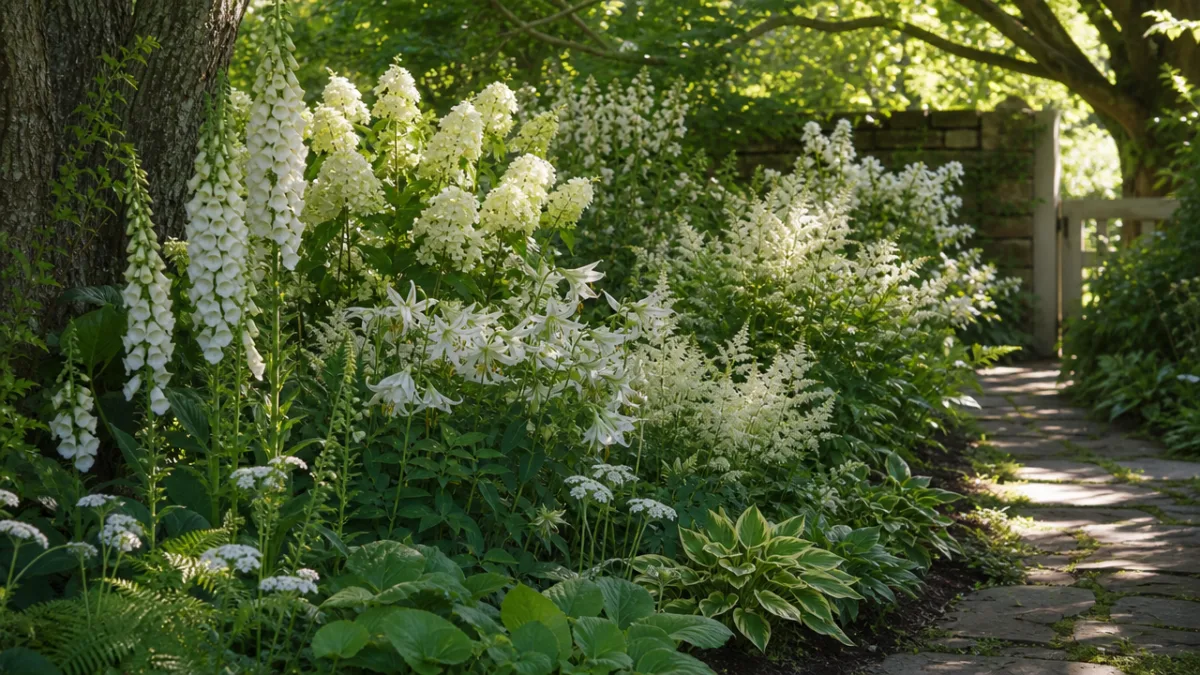
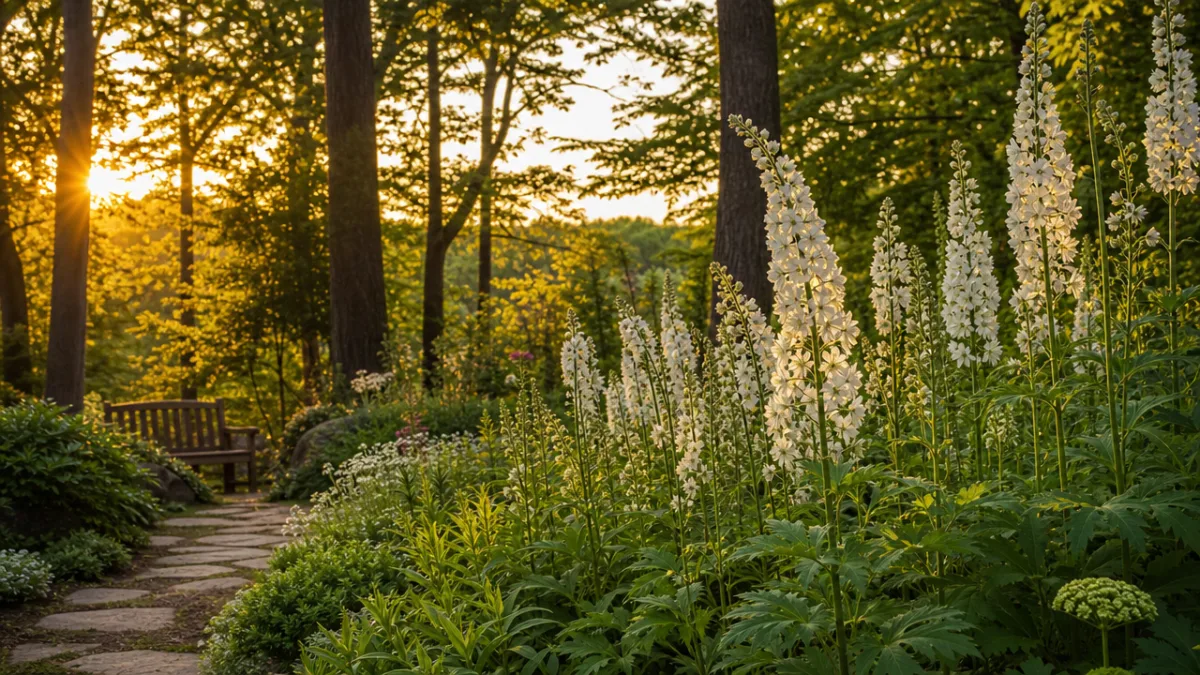
From a purely aesthetic standpoint, ‘Album’ has enormous value as a garden plant and pairs beautifully with a wide range of companion perennials and shrubs. Its white flowers and vertical form make it an ideal candidate for moon gardens designed to be viewed in the evening, where pale-colored blooms seem almost luminous as daylight fades. Some particularly effective companion planting combinations include:
- Astilbe chinensis ‘Purple Candles’ — shares similar moisture requirements and provides complementary vertical purple plumes in midsummer before ‘Album’ peaks
- Rodgersia aesculifolia — large, bold foliage contrasts beautifully with monkshood’s finely cut leaves, creating textural interest throughout the season
- Actaea simplex ‘Brunette’ — dark burgundy foliage and white late-season bottlebrush flowers create a dramatic pairing with ‘Album’
- Hosta ‘Halcyon’ — blue-green hosta foliage provides a cool, harmonious foreground to the tall white spires rising behind
- Thalictrum rochebruneanum — tall, airy meadow rue with lavender flowers blooms slightly earlier and creates an elegant visual transition into monkshood’s peak display
In the broader ecological context, Aconitum napellus and its cultivars are visited by bumblebees, which are among the few pollinators strong enough to force open the hooded flowers and access the nectar within. This makes ‘Album’ a valuable late-season resource for pollinator populations at a time when many other flowering plants are declining. While deer and rabbits typically avoid the plant due to its toxicity, this browsing resistance is an additional practical advantage in gardens where wildlife pressure on ornamental plantings is a persistent challenge.
Purchasing and Sourcing Quality Plants
Finding a reliable, high-quality source for Aconitum napellus ‘Album’ is not always straightforward, as this cultivar — while well-regarded among knowledgeable gardeners — is less commonly stocked than many mainstream perennials. Specialty nurseries with a focus on uncommon or hard-to-find perennials, such as Oakland Nurseries Inc., are typically the most reliable sources for true-to-type, vigorous plants. When evaluating any nursery plant, look for specimens with healthy, dark green foliage free from yellowing, spotting, or signs of pest damage, and a well-established root system that holds together firmly when the plant is gently removed from its container.
Mail-order and online specialty nurseries can also be excellent sources, particularly for gardeners who do not have access to well-stocked local nurseries. When ordering by mail, request that shipments be scheduled for spring or early autumn arrival to minimize plant stress during transit, and plant immediately upon receipt. Many reputable mail-order nurseries ship Aconitum as dormant tubers rather than containerized plants, which is perfectly acceptable — dormant tubers often establish just as readily as growing plants when handled properly and planted without delay into well-prepared soil.
Once you have successfully established Aconitum napellus ‘Album’ in your garden, you will likely find that propagation by division every three to four years not only maintains the vigor of your existing planting but also provides a supply of additional plants. Many gardening communities, plant swaps, and horticultural societies welcome divisions of unusual perennials, making monkshood an excellent candidate for sharing with other enthusiasts. Growing your own divisions also ensures that your plants remain true to the white-flowered ‘Album’ form, since seed-grown plants from nurseries are not always reliably selected for color consistency and may introduce unwanted variation into your planting.
Conclusion: Why ‘Album’ Deserves a Place in Your Garden
Aconitum napellus ‘Album’ represents one of those rare plants that combines genuine horticultural excellence with a long and fascinating history, offering gardeners beauty, structural interest, late-season color, ecological value, and a certain dramatic mystique that few other perennials can equal. Its pristine white flowers on tall, dark-stemmed spires bring a refinement and architectural clarity to the late summer and early autumn garden that is genuinely difficult to replicate with other plant choices. For gardeners who take the time to understand and respect its needs — consistent moisture, appropriate siting, careful handling — it rewards that investment with decades of reliable, increasingly impressive performance.
The key requirements for success with this plant can be summarized clearly: rich, moist, well-drained soil; a position in partial shade to full sun depending on climate; consistent moisture throughout the growing season; minimal fertilization with an emphasis on phosphorus over nitrogen; and division every few years to maintain vigor. Beyond these fundamentals, ‘Album’ asks very little and gives a great deal in return. Its toxicity, while certainly something that must be acknowledged and managed responsibly, should not discourage gardeners from growing this magnificent plant in appropriate settings.
Whether you first encountered Aconitum napellus ‘Album’ on a Pinterest board, in a gardening book, or at a specialty nursery like Oakland Nurseries Inc., the impulse to grow this plant reflects good gardening instincts. It is a plant with depth — historically rich, ecologically useful, visually spectacular, and architecturally valuable across three seasons of the year. As late summer transitions to autumn and much of the garden begins its annual retreat, the tall white spires of ‘Album’ rise to meet that seasonal change with quiet, luminous authority, reminding us why the most enduring garden plants are so often those with the greatest combination of beauty, character, and resilience.








What do you think?
It is nice to know your opinion. Leave a comment.