










Composting Guide: How to Make Your Own Garden Compost
What Is Composting and Why Every Gardener Should Do It
Composting is one of the most rewarding and environmentally responsible practices a gardener can adopt. At its core, composting is the natural process of recycling organic matter — kitchen scraps, garden waste, leaves, and more — into a rich, dark, crumbly material that acts as a powerful soil amendment. This finished compost, often called “black gold” by seasoned gardeners, feeds your plants, improves soil structure, and reduces the amount of waste you send to landfill. Whether you have a sprawling backyard or a modest balcony, composting can fit into your lifestyle with just a little planning.
The environmental benefits of composting extend far beyond your garden fence. When organic waste ends up in a landfill, it breaks down in anaerobic conditions — meaning without oxygen — and produces methane, a greenhouse gas significantly more potent than carbon dioxide. By composting at home, you intercept that waste cycle and redirect valuable nutrients back into the earth where they belong. Studies suggest that the average household generates hundreds of pounds of compostable material every year, most of which currently ends up buried in a landfill rather than enriching someone’s flower bed or vegetable patch.
Beyond the environmental argument, the practical benefits for your garden are substantial. Compost improves heavy clay soils by breaking up compaction and improving drainage, while simultaneously helping sandy soils retain moisture and nutrients more effectively. It introduces beneficial microorganisms that support healthy root development and natural disease suppression. Regular compost application reduces the need for synthetic fertilizers, saving you money while keeping harsh chemicals out of your garden ecosystem. Simply put, a commitment to composting is a commitment to gardening smarter, not harder.
Understanding the Science: What Makes Compost Work
To compost successfully, it helps enormously to understand the basic science driving the process. Decomposition is carried out by billions of microorganisms — bacteria, fungi, and actinomycetes — that feed on organic material. These microorganisms need four key ingredients to thrive: carbon, nitrogen, oxygen, and water. Carbon-rich materials, often called “browns,” provide energy for the microbial workforce. Nitrogen-rich materials, known as “greens,” supply the protein that helps microbes grow and reproduce rapidly. When these elements are balanced correctly, the pile heats up, speeds through decomposition, and produces finished compost in a matter of weeks or months.
The carbon-to-nitrogen ratio, commonly referred to as the C:N ratio, is the single most important variable in composting. Ideally, your pile should contain roughly 25 to 30 parts carbon for every one part nitrogen. In practical terms, this means mixing approximately two to three times as much brown material as green material by volume. A pile that is too heavy on greens will become slimy and emit an unpleasant ammonia smell. Conversely, a pile overwhelmed by browns will decompose very slowly because the microbial population does not have enough nitrogen to grow. Getting this balance right is the art and science of composting.
Heat is one of the most visible signs that your compost pile is working correctly. An active, well-balanced pile can reach internal temperatures between 130°F and 160°F (54°C to 71°C), which is hot enough to kill most weed seeds and harmful pathogens. This thermophilic, or heat-loving, phase of composting is where the fastest breakdown occurs. As the pile cools, different microbial communities take over to finish the job. Monitoring temperature with a long compost thermometer is a great way to track the health and progress of your pile, and turning the pile regularly introduces fresh oxygen that reignites microbial activity.
Choosing the Right Composting Method for Your Space
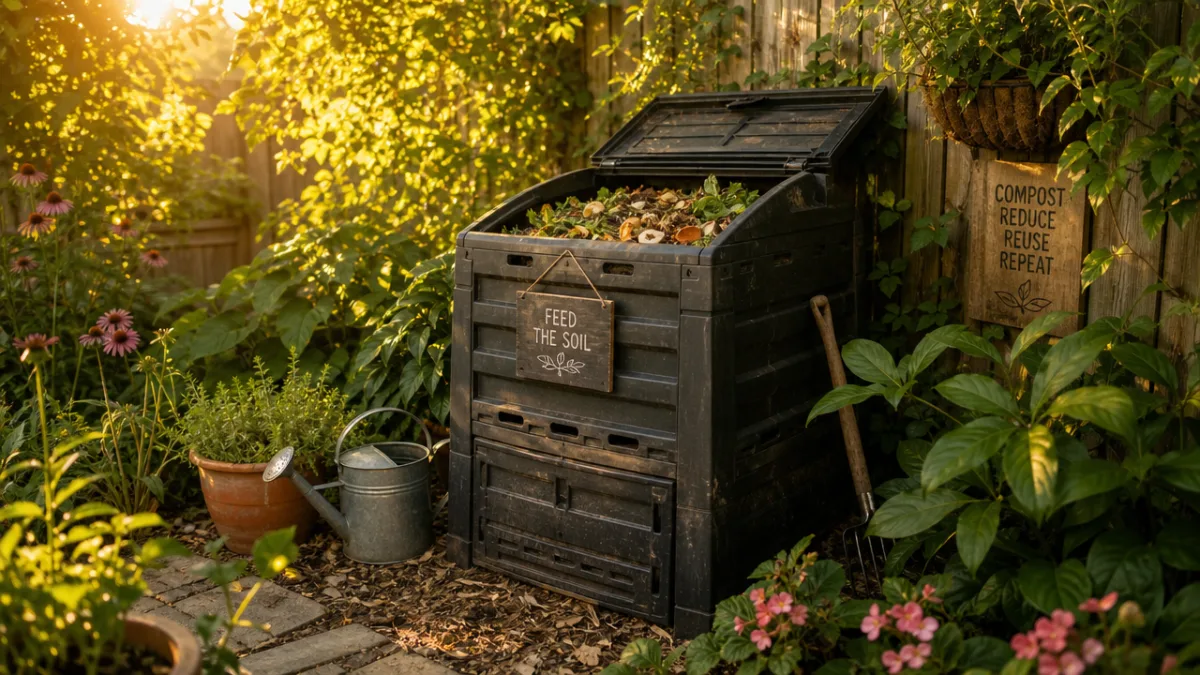
One of the first decisions you will make as a composter is which method suits your living situation and gardening goals best. For those with generous outdoor space, a simple open pile or a three-bin system is often the most practical and highest-capacity option. A three-bin system allows you to move material from bin to bin as it progresses through stages of decomposition, so you always have a batch cooking while another is maturing and a third is ready to use. This continuous production model is ideal for serious gardeners who want a steady supply of finished compost throughout the growing season.
If space is at a premium, enclosed compost tumblers are an excellent alternative. These drum-style containers sit on a frame and rotate with a simple turn of a handle, making it easy to aerate your pile without digging or pitchforking. Tumblers are particularly popular in suburban gardens because they contain any odors, keep pests out, and have a tidy, contained appearance that neighbors tend to appreciate. They do tend to have a smaller capacity than open systems, and they can dry out faster, requiring occasional watering, but for many gardeners the convenience more than compensates for these minor drawbacks.
For apartment dwellers or those without outdoor space, vermicomposting — composting with worms — is a surprisingly efficient and odor-free option that can be done entirely indoors. A worm bin, or vermicomposter, uses red wiggler worms to break down kitchen scraps into incredibly rich worm castings, a form of compost that many experts consider superior to conventionally composted material. The bins are compact, can fit under a kitchen sink or on a balcony, and process food waste quickly. With a little attention to moisture and feeding habits, a worm bin produces a continuous supply of castings that your houseplants and garden containers will absolutely love.
What to Compost: The Complete List of Greens and Browns
Knowing exactly what materials to add to your compost pile is essential for maintaining a healthy, productive system. The world of compostable material is broader than most people initially realize, and expanding your inputs beyond just fruit peels and grass clippings can significantly speed up your composting and improve the quality of the finished product. Materials generally fall into two categories — greens (nitrogen-rich) and browns (carbon-rich) — and learning to identify each will help you keep your pile balanced and thriving throughout the year.
Excellent green materials to add to your compost include a wide variety of everyday kitchen and garden waste. These nitrogen sources feed the microbial population and encourage rapid decomposition. Consider collecting the following greens consistently:
- Fruit and vegetable scraps, including peels, cores, and trimmings
- Fresh grass clippings (in thin layers to prevent matting)
- Coffee grounds and paper coffee filters
- Tea bags (remove staples) and loose leaf tea
- Fresh plant trimmings and spent flowers from the garden
- Eggshells (technically neutral but a valuable mineral addition)
- Seaweed and kelp (excellent nitrogen and mineral source)
Browns are equally important and often even easier to source in abundance, particularly in autumn when leaves fall by the bagful. Carbon-rich materials provide structure to the pile, prevent compaction, and absorb excess moisture that can lead to anaerobic conditions. Key brown materials include:
- Dry autumn leaves (shred them for faster breakdown)
- Cardboard and corrugated paper (torn into small pieces, tape and staples removed)
- Plain newspaper and office paper
- Dry straw and hay
- Sawdust and untreated wood chips
- Dried plant stalks and corn cobs
- Paper bags and paper egg cartons
There are also materials you should always keep out of your compost pile, regardless of how tempting it might seem to toss them in. Meat, fish, dairy products, and cooked foods can attract pests such as rats and raccoons while creating unpleasant odors. Diseased plants should never be composted unless your pile reliably reaches very high temperatures, as pathogens can survive and spread back into your garden. Avoid adding pet waste from dogs and cats, as these can carry parasites harmful to humans. Treated wood products, glossy printed paper, and anything containing synthetic chemicals have no place in a healthy compost pile.
Step-by-Step: How to Build and Maintain Your Compost Pile
Building your first compost pile is easier than most beginners expect, and starting strong sets the foundation for fast, efficient decomposition. Begin by choosing a location that receives partial sun — too much direct sun can dry the pile out, while deep shade slows microbial activity. A spot that is convenient to your kitchen door and close to your garden beds will encourage consistent use. If you are building a free-standing pile, aim for a minimum size of three feet wide by three feet tall, as this critical mass is needed to generate and retain the heat necessary for hot composting.
Start with a base layer of coarse brown material — wood chips, straw, or torn cardboard — about four to six inches deep. This bottom layer promotes airflow from below, which is crucial for aerobic decomposition. Add a layer of greens on top, then cover with another layer of browns, alternating as you add new material. Think of the pile like a lasagna of organic matter. If you have access to finished compost or garden soil, adding a thin layer occasionally will introduce beneficial microorganisms and give the pile a biological head start. Water each layer as you build to ensure the pile is moist throughout, aiming for the dampness of a wrung-out sponge.
Maintenance is where many beginners struggle, but the core tasks are straightforward once they become habit. Turning the pile is the single most impactful thing you can do to speed up decomposition. Use a garden fork or compost aerator to move material from the outside edges of the pile to the center, where temperatures are highest, and vice versa. During warm weather, turning every one to two weeks keeps the pile cooking aggressively. Monitor moisture regularly — if the pile looks pale and dusty, water it; if it smells and looks waterlogged, add more dry browns and turn thoroughly to introduce air.
Over the weeks and months, you will notice the pile shrinking as organic matter breaks down. Eventually, the material at the bottom and center of the pile will transform into a dark, crumbly, earthy-smelling substance that no longer resembles any of its original ingredients. This is your finished compost, and it is ready to use in the garden. Harvest it by sifting through the pile and setting aside any large unfinished chunks to go back into the active pile. Finished compost can be dug into vegetable beds, used as a mulch around trees and shrubs, added to potting mixes, or made into compost tea for liquid feeding.
Troubleshooting Common Composting Problems
Even experienced composters run into problems from time to time, and knowing how to diagnose and fix issues quickly will save both your pile and your patience. The most common complaint among beginners is a pile that simply is not decomposing, sitting unchanged for weeks or months. In most cases, this is caused by one of three things: the pile is too dry, there is not enough nitrogen to fuel microbial activity, or the materials have not been chopped or shredded finely enough. Large, whole pieces of material take dramatically longer to break down than shredded or torn material, so investing in a garden shredder or simply running your lawn mower over leaf piles before adding them to the bin can make a significant difference.
Unpleasant odors are the second most common issue, and they are almost always fixable with a simple adjustment in materials or management. A sour, vinegary smell usually indicates that the pile has become too wet and acidic, which is common when green materials dominate and air cannot circulate properly. Adding a generous amount of dry brown material and turning the pile thoroughly to introduce oxygen will usually resolve this within a few days. A strong ammonia smell, on the other hand, signals an excess of nitrogen — too many greens relative to browns. Balance this by incorporating carbon-rich materials such as torn cardboard, dry leaves, or straw.
Pest problems, particularly from rodents, are a concern that puts many people off composting altogether, but with the right precautions they are largely preventable. The most effective deterrents include using an enclosed bin or tumbler with no ground access, avoiding the addition of meat, fish, dairy, and cooked foods, and burying fresh kitchen scraps in the center of the pile rather than placing them on top. If you have a persistent rodent problem, lining the base and sides of an open bin with hardware cloth creates a physical barrier that most pests cannot penetrate. Keeping the area around your compost bin tidy and free of spilled material also reduces the attraction for wildlife.
A less discussed but equally important challenge is managing compost during winter months, particularly in cold climates where freezing temperatures can halt microbial activity almost entirely. The good news is that your pile does not die in winter — it simply pauses. Insulating the pile with a thick layer of straw bales or cardboard around the outside helps retain heat and extend the active composting season. Continuing to add kitchen scraps through winter means the pile will spring back into action very quickly as temperatures rise. In spring, give the pile a thorough turning, check moisture levels, and add a fresh layer of greens to reactivate the microbial community and get your composting season back on track in earnest.
Using Your Finished Compost: Getting the Most from Your Black Gold
After weeks or months of patient tending, the reward of harvesting rich, finished compost is one of gardening’s most satisfying moments. Knowing how and when to apply it ensures that all that effort translates into maximum benefit for your plants and soil. The most common application method is digging compost into garden beds before planting season begins. Incorporate a two- to four-inch layer into the top six to eight inches of soil to improve its texture, drainage, and nutrient content. This is particularly transformative in new garden beds or in soils that have been heavily cultivated over many years without organic matter replenishment.
Compost also functions brilliantly as a surface mulch when applied in a two-inch layer around the base of plants, trees, and shrubs. As a mulch, compost conserves soil moisture, moderates soil temperature, suppresses weed germination, and feeds the soil as it slowly breaks down further with rain and microbial activity. When mulching, take care not to pile compost directly against the stems or trunks of plants, as this can encourage rot and disease. Leaving a small gap of a few inches around plant bases ensures good air circulation while still delivering all the benefits of a generous mulch application throughout the growing season.
For container gardeners and those who want to give transplants a particularly strong start, blending finished compost into potting mixes is an excellent strategy. A typical ratio is one part compost to three parts potting mix, which enriches the growing medium without making it too dense or waterlogged for container use. Compost can also be steeped in water to create compost tea — a liquid extract teeming with beneficial microorganisms and soluble nutrients that can be applied as a soil drench or foliar spray. While compost tea requires a bit more preparation, many gardeners swear by its ability to suppress foliar diseases and give seedlings a fast, vigorous start when transplanted into the garden.
Ultimately, composting is not just a gardening technique — it is a philosophy of working with natural cycles rather than against them. Every fruit peel, every fallen leaf, every coffee ground that goes into your compost pile is a small act of ecological responsibility that compounds over time into meaningful impact. As your garden improves with each application of homemade compost, the motivation to keep the cycle going grows naturally. You will find yourself thinking differently about what you once called waste, seeing it instead as raw material waiting to be transformed. That shift in perspective, as much as the compost itself, is perhaps the greatest gift this practice has to offer.








What do you think?
It is nice to know your opinion. Leave a comment.