










Discover Sedum Varieties for Ground Cover: A Complete Guide
What Is Sedum and Why Use It as Ground Cover?
Sedum, commonly known as stonecrop, is a remarkably diverse genus of succulent plants belonging to the Crassulaceae family. With over 400 recognized species, sedum thrives in an extraordinary range of climates and conditions, from rocky alpine slopes to arid desert plains. These plants have evolved to store water in their thick, fleshy leaves, making them exceptionally drought-tolerant and well-suited to low-maintenance garden settings. Their adaptability is one of the primary reasons gardeners around the world have embraced sedum as a ground cover solution.
When it comes to ground cover plants, few options can rival sedum in terms of practicality and visual appeal. Traditional lawn grass demands constant mowing, fertilizing, and watering, whereas sedum quietly spreads across slopes and bare patches with minimal intervention. For homeowners looking to reduce their environmental footprint, sedum presents an attractive alternative that conserves water, supports pollinators, and prevents soil erosion simultaneously. Many municipalities experiencing water shortages are actively encouraging the replacement of turf with low-water alternatives like sedum.
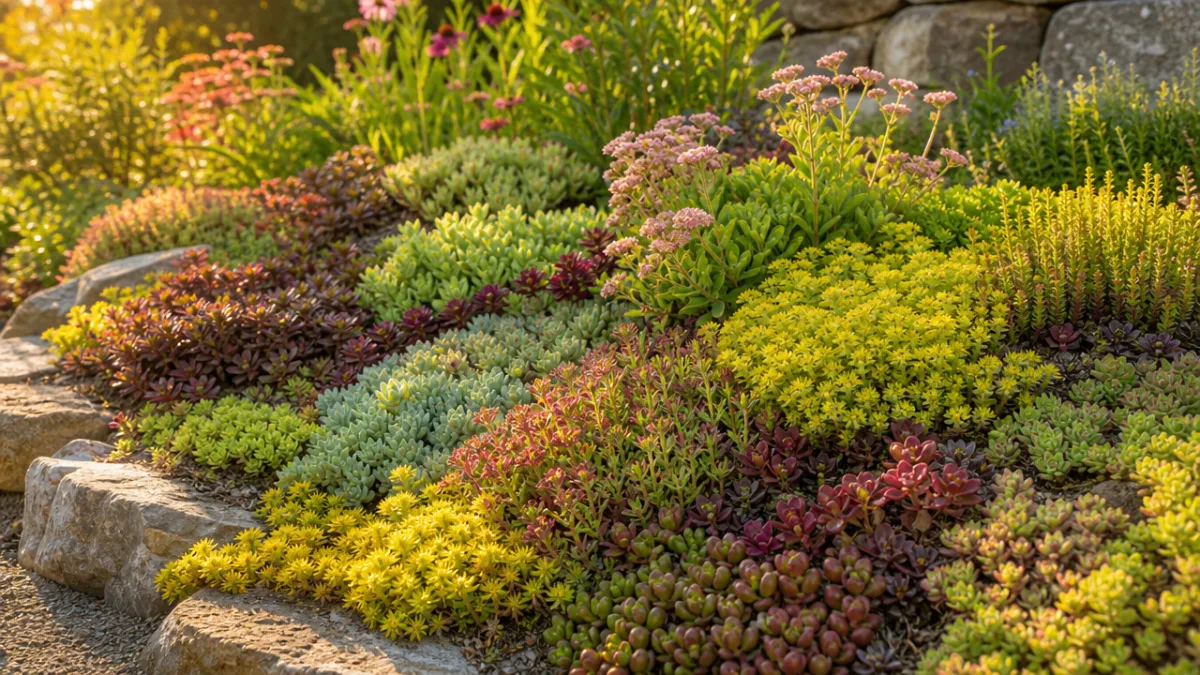
Beyond its environmental benefits, sedum offers genuine ornamental value across all four seasons. In spring and summer, vibrant rosettes and spreading mats emerge in shades of green, blue-green, burgundy, and silver. As autumn arrives, many varieties put on a spectacular floral display, with star-shaped blooms in pink, yellow, red, and white. Even in winter, the skeletal seed heads and evergreen foliage of hardier varieties provide textural interest when most other plants have retreated below the frost line. Choosing sedum as a ground cover is truly a year-round investment in your landscape.
Top Low-Growing Sedum Varieties for Ground Cover
Among the hundreds of sedum species available, a handful stand out as exceptional performers for ground cover applications. Sedum spurium, often called Caucasian stonecrop, is perhaps the most widely planted creeping sedum in temperate gardens. It forms a dense, mat-like carpet that hugs the soil closely, reaching only about three to four inches in height. Popular cultivars such as ‘Dragon’s Blood’ feature deep red-tinted foliage that intensifies in color as temperatures drop in autumn, culminating in brilliant crimson blooms that attract late-season pollinators.
Sedum album, the white stonecrop, is another superb low-growing option with tiny, cylindrical leaves arranged along slender stems. This species spreads efficiently through creeping rhizomes and self-seeding, filling gaps between stepping stones or covering sunny banks with a dense, emerald-green mat. In summer, it produces clouds of small white flowers that attract bees and butterflies. The cultivar ‘Coral Carpet’ is particularly prized for its foliage that transitions from bright green in summer to vivid coral and bronze tones as cooler weather sets in, providing multi-season visual interest.
Sedum acre, known as golden moss stonecrop or biting stonecrop, is one of the toughest and most cold-hardy options available. Despite its delicate, moss-like appearance, this species can survive in USDA hardiness zones 3 through 9 and tolerates poor, sandy, or gravelly soils where other plants simply give up. It produces cheerful yellow flowers in late spring that practically glow in the sun. For covering large, difficult areas such as gravel driveways, rocky slopes, or thin-soiled rooftops, Sedum acre is virtually unmatched in its resilience and spreading ability.
- Sedum spurium ‘Dragon’s Blood’ — Deep red foliage, pink-red flowers, zones 3–8, spreads vigorously
- Sedum album ‘Coral Carpet’ — Green to coral foliage, white flowers, zones 4–9, excellent between pavers
- Sedum acre — Moss-like texture, bright yellow flowers, zones 3–9, superb on slopes
- Sedum rupestre ‘Angelina’ — Golden-yellow needle foliage, zones 5–9, stunning color contrast
- Sedum sexangulare — Fine-textured mat, yellow flowers, zones 4–9, tolerates poor soil
Sedum rupestre ‘Angelina’ deserves special mention as one of the most visually striking ground cover sedums available today. Its needle-like foliage glows in shades of chartreuse and gold during the growing season, turning rich orange and copper as temperatures fall in autumn. Growing only four to six inches tall but spreading widely, ‘Angelina’ creates a luminous carpet that contrasts beautifully with dark-foliaged plants or the cool tones of ornamental grasses. It performs equally well in containers, spilling over the edges with brilliant cascades of golden foliage throughout the season.
Growing Conditions and Soil Requirements
Understanding the preferred growing conditions for sedum is essential to establishing a healthy and long-lasting ground cover planting. The single most important requirement for nearly all sedum species is excellent drainage. These succulents have evolved in environments where water passes quickly through the soil rather than pooling around the roots. Consistently wet or waterlogged soil is the primary cause of sedum failure, leading to root rot and the eventual collapse of otherwise healthy plants. Before planting, assess your soil drainage carefully and amend heavy clay soils with coarse sand, perlite, or fine gravel as needed.
Sunlight is the second critical factor for thriving sedum ground covers. The vast majority of species and cultivars perform best in full sun, requiring at least six to eight hours of direct sunlight per day for optimal growth, compact form, and vivid foliage color. Plants grown in shadier conditions often become leggy and sparse, losing much of their decorative appeal and ground-covering effectiveness. However, a small selection of sedum varieties, including Sedum ternatum and certain forms of Sedum kamtschaticum, will tolerate partial shade, making them suitable for planting under the dappled canopy of deciduous trees.
Soil fertility is one area where sedum actually thrives on neglect. Rich, heavily fertilized soils tend to produce lush but floppy growth that is more susceptible to disease and less visually appealing than plants grown in lean conditions. Sedum naturally grows in poor, nutrient-sparse environments and has adapted its metabolism accordingly. A soil pH between 6.0 and 7.0 is generally ideal, though many species tolerate slightly acidic or alkaline conditions without difficulty. If your native soil is reasonably well-drained and not excessively fertile, you may find that sedum requires virtually no soil amendment at all before planting.
Temperature and climate hardiness vary considerably across sedum species, so it is important to match your variety selection to your local hardiness zone. Many of the most popular creeping sedums are exceptionally cold-hardy, surviving temperatures well below zero degrees Fahrenheit without damage. Others, particularly those with origins in warmer Mediterranean or subtropical climates, may require protection from hard frosts or be grown as annuals in colder regions. In climates with hot, humid summers, ensuring excellent air circulation around plants and avoiding overhead watering can help prevent the fungal issues that occasionally trouble sedum in these conditions.
Planting and Establishment Tips
Planting sedum ground cover successfully begins with proper site preparation, even though these plants are famously unfussy once established. Clear the planting area thoroughly of existing weeds and grass, as sedum’s low, mat-forming growth habit makes it vulnerable to being overwhelmed by aggressive competitors during its first season. Hand weeding or using a non-persistent herbicide well in advance of planting are both effective approaches. Installing a layer of landscape fabric is generally not recommended, as it can interfere with the natural spreading and self-rooting behavior that makes sedum such an effective ground cover.
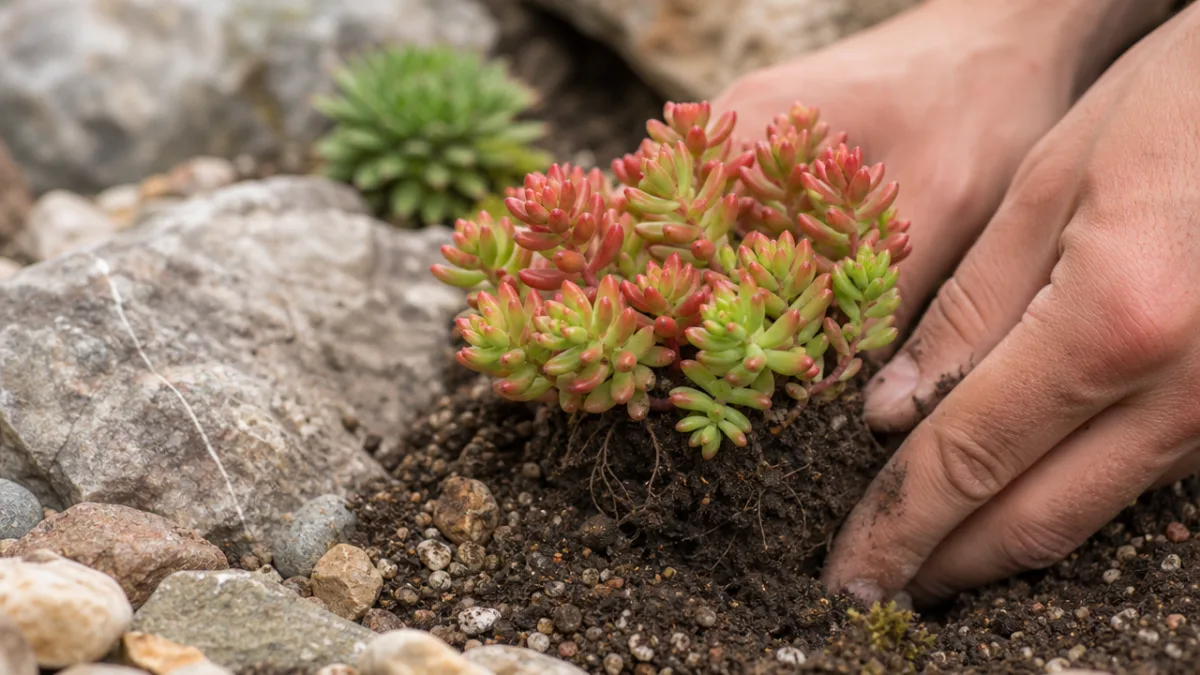
Sedum can be propagated and planted in several ways, each with its own advantages. Purchasing established plugs or potted plants from a nursery is the most reliable method for covering specific areas quickly, though it can be expensive for large spaces. Fortunately, sedum propagates extremely easily from stem cuttings, which can be taken from existing plants in spring or summer, allowed to callus for a day or two, and then pressed lightly into prepared soil where they will root within a few weeks. Division of mature clumps in early spring is another effective propagation method that allows gardeners to multiply their plantings at minimal cost.
Spacing your sedum plants appropriately during installation will determine how quickly you achieve full coverage. For most creeping varieties, spacing plugs or cuttings six to twelve inches apart will result in complete ground coverage within one to two growing seasons. Closer spacing of four to six inches speeds up the process but increases initial plant costs. When planting on slopes to control erosion, it is beneficial to plant at the denser end of the spacing range and to use biodegradable erosion control netting during the establishment period to hold soil in place while the sedum roots and begins to spread on its own.
- Clear the area of weeds and grass at least two weeks before planting
- Amend heavy clay soil with coarse sand or perlite to improve drainage
- Space plants six to twelve inches apart depending on desired coverage speed
- Water newly planted sedum regularly for the first four to six weeks
- Reduce watering gradually as plants establish and show new growth
- Apply a thin layer of gravel mulch around plants to conserve moisture and deter weeds
Watering newly planted sedum during the establishment period is perhaps the most counterintuitive aspect of growing these drought-tolerant plants. While established sedum requires very little supplemental irrigation, newly planted specimens have not yet developed the extensive root systems that allow them to tap into deeper soil moisture. Regular watering every few days during the first month after planting encourages rapid root development and reduces transplant shock. Once plants show vigorous new growth, typically within four to six weeks, you can begin reducing watering frequency gradually until the plants are receiving only natural rainfall supplemented by occasional deep watering during prolonged drought.
Maintenance, Care, and Problem Solving
One of the greatest advantages of sedum as a ground cover is its exceptionally low maintenance requirements once the plants have established themselves in the landscape. Unlike traditional lawn grass, sedum does not require regular mowing, though an annual trim in early spring can help rejuvenate older plantings that have become overly woody or untidy in appearance. Using shears or a string trimmer set to a height of two to three inches removes old growth and spent flower heads, stimulating fresh new growth and maintaining the dense, attractive appearance of the planting. This light annual grooming also improves air circulation and reduces the risk of fungal disease.
Fertilization of established sedum ground covers is rarely necessary and can actually be counterproductive. Plants fed with nitrogen-rich fertilizers tend to produce soft, elongated growth that sprawls rather than forming the tight, attractive mats that characterize healthy sedum. If your plants show signs of nutrient deficiency such as pale foliage or extremely slow growth, a single application of a balanced, slow-release fertilizer in early spring at half the recommended rate is sufficient to address the issue. In most garden situations, however, sedum performs best when left to manage on its own without any supplemental feeding.
Pest and disease problems are relatively uncommon with sedum, particularly when plants are grown in conditions that match their natural preferences. Aphids occasionally target the tender new growth of sedum in spring but are easily controlled with a strong spray of water or a diluted insecticidal soap solution. Slugs and snails can damage low-growing varieties in moist, shaded conditions, and this provides yet another reason to site sedum in well-drained, sunny locations where these pests are far less active. Root rot caused by poor drainage is the most serious and common problem facing sedum, underscoring the critical importance of proper soil preparation before planting.
Over time, the centers of sedum clumps may become woody and bare, a natural process known as die-out that occurs in many mat-forming perennials. Rather than viewing this as a problem, experienced gardeners treat it as an invitation to refresh and expand their plantings. Simply dig out the older, woody growth from the center of affected areas, loosen the soil, and replant with fresh divisions or cuttings taken from the healthy outer growth of the same clump. This periodic renovation, typically needed every three to five years depending on the species and growing conditions, keeps sedum ground cover looking dense and vibrant indefinitely without significant expense or effort.
Creative Landscaping Applications for Sedum Ground Cover
The versatility of sedum in the landscape extends far beyond simple erosion control and lawn replacement. One of the most popular creative applications is planting sedum between stepping stones, flagstones, or pavers in garden paths and patios. Low-growing varieties such as Sedum album or Sedum acre tolerate light foot traffic remarkably well, releasing a pleasant subtle fragrance when their foliage is gently brushed. This living carpet between paving stones eliminates the need for gravel or bark mulch, suppresses weeds naturally, and creates a charming, cottage-garden aesthetic that hard paving alone cannot achieve.
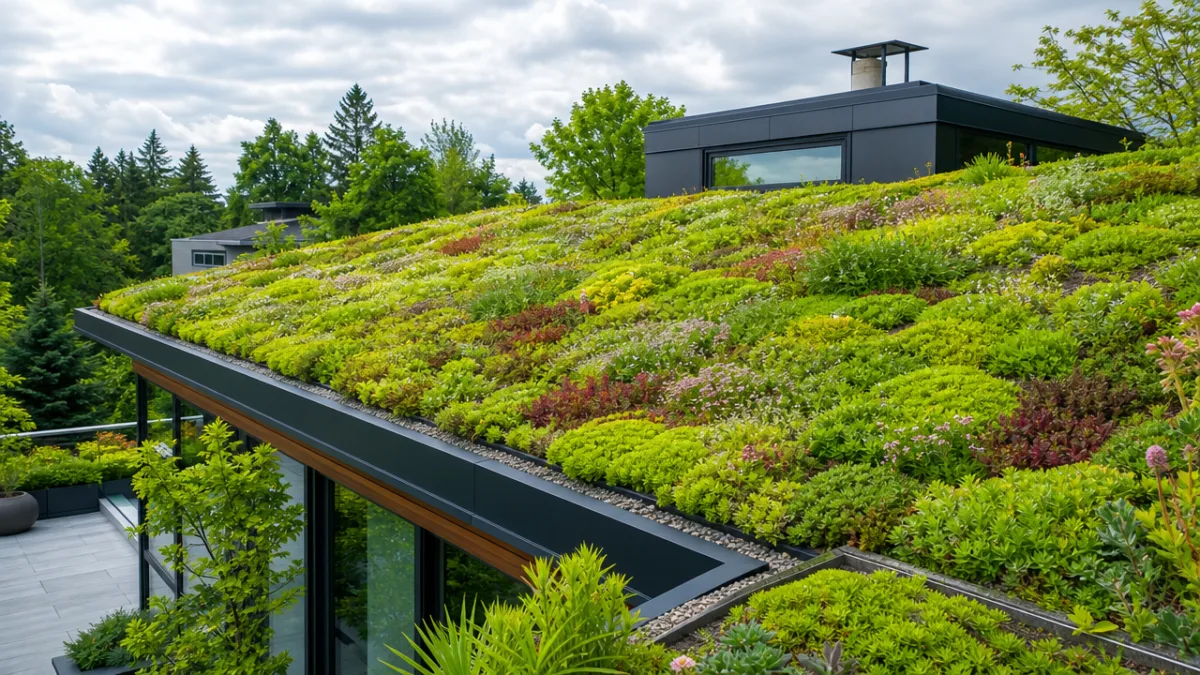
Green roof installation represents one of the most exciting and environmentally significant applications of sedum in contemporary landscaping and architecture. Sedum’s shallow root system, extreme drought tolerance, and low weight make it ideally suited for growing on rooftop garden installations above buildings of all types, from garden sheds to commercial office buildings. Green roofs planted with sedum mixtures provide meaningful environmental benefits including reduced stormwater runoff, improved building insulation, mitigation of the urban heat island effect, and the creation of valuable pollinator habitat in densely built urban environments where green space is scarce.
Rock gardens represent perhaps the most naturalistic setting for showcasing the beauty and diversity of sedum varieties. These plants evolved in rocky, mountainous environments and look completely at home tumbling over boulders, filling crevices between stones, and cascading down dry-stacked retaining walls. Mixing several sedum varieties with contrasting foliage colors, textures, and bloom times creates a dynamic tapestry that changes throughout the seasons. Pairing sedum with other rock garden plants such as sempervivum, thyme, and ornamental grasses enhances the naturalistic effect while creating a cohesive, low-maintenance planting that rewards close inspection.
- Between pavers: Use Sedum acre or Sedum album for traffic-tolerant living pathways
- Slope stabilization: Plant Sedum spurium or Sedum rupestre to control erosion on banks
- Green roofs: Mix varieties for diverse textures and extended bloom on rooftop plantings
- Rock gardens: Layer multiple species among boulders for naturalistic, four-season displays
- Container spill-overs: Use trailing types to cascade dramatically over pot edges
- Lawn alternatives: Replace thirsty turf in sunny areas with drought-resistant sedum carpets
Perhaps the most transformative application of sedum in residential landscapes is its use as a complete lawn alternative in sunny, well-drained garden areas. Homeowners tired of the expense, environmental impact, and labor demands of traditional grass lawns are increasingly turning to sedum carpets as a sustainable, beautiful substitute. A well-established sedum lawn requires no mowing, minimal watering after establishment, no pesticides, and no fertilizer, while providing a visually rich, textured surface that supports far more biodiversity than closely mowed grass ever could. As water restrictions tighten in many regions and environmental awareness grows, sedum lawn alternatives are poised to become an increasingly mainstream landscaping choice for the decades ahead.








What do you think?
It is nice to know your opinion. Leave a comment.