










Mother’s Day DIY Flower Crafts for Kids: A Complete Guide to Handmade Gifts from the Heart
Why Handmade Flower Crafts Make the Most Meaningful Mother’s Day Gifts
There’s just something about a handmade gift that hits differently — and when it comes from a kid, that feeling goes even deeper. Mother’s Day is really about celebrating love and the bond between a mom and her children, and nothing says that quite like something made by little hands. A store-bought gift is nice, but a DIY creation carries the actual fingerprints, creativity, and real effort of the child who made it. Suddenly a piece of paper or a bit of fabric becomes something priceless.
Kids naturally gravitate toward flowers when they think about their moms, and honestly, it makes perfect sense. Flowers represent growth, beauty, and care — which pretty much describes a mother-child relationship in a nutshell. When kids make flower-themed crafts, they’re not just putting together something decorative. They’re actually saying something real and heartfelt. Choosing colors, cutting out petals, figuring out how things fit together — all of that teaches kids that love is something you can show through patience and effort, not just by spending money.
From a developmental angle, DIY crafts are genuinely great for kids at every age. Cutting, folding, and gluing all build fine motor skills. Figuring out how to bring an idea to life exercises creativity and problem-solving. And when kids see what they’ve made and feel proud of it — especially when it makes their mom cry happy tears — that’s an emotional win they carry with them for a long time. It quietly teaches them that thoughtful gestures really do matter.
Essential Materials and Tools to Gather Before You Begin
A little prep goes a long way with any craft project. Taking a few minutes to gather everything you need before you start makes the whole session so much smoother — less running around mid-project, fewer meltdowns, more fun. Before you dive in, do a quick scan of what you already have at home and jot down anything you’re missing. The good news is that most flower crafts for kids use inexpensive, easy-to-find supplies. Your local dollar store or craft shop will have pretty much everything, and you might already have a lot of it lying around.
The basics you’ll want on hand include a good variety of colored paper — construction paper, cardstock, tissue paper, and crepe paper all work beautifully depending on the style of flower you’re going for. Make sure your scissors are age-appropriate: safety scissors for little ones, sharper craft scissors for older kids who are working with an adult nearby. Glue sticks, craft glue, and double-sided tape each shine in different situations, so having all three is handy. Pipe cleaners in multiple colors are great for stems, and buttons or beads make really cute flower centers. Don’t forget markers or paint for adding personality and detail.
Once you’ve got the basics covered, a few extra supplies can take things from “cute” to genuinely impressive. It’s worth picking up some of these if you can:
- Foam sheets in pastels and bright colors — great for dimensional petals that actually hold their shape
- Cupcake liners in different sizes and patterns, which instantly double as flower bases
- Coffee filters that you can color with washable markers or watercolors for soft, translucent petals
- Recycled bits like egg cartons, toilet paper rolls, and bottle caps for a fun eco-friendly twist
- Ribbon and twine for wrapping stems and giving the finished product a polished look
- Googly eyes and felt scraps for making whimsical, character-style flowers that kids absolutely love
Setting up your workspace before you begin is just as important as gathering supplies. Throw a plastic tablecloth or some newspaper over the table to protect it from glue and paint. If multiple kids are working at the same time, set up individual little stations so no one feels crowded. Small containers or a muffin tin work really well for sorting beads, buttons, and other tiny pieces — it keeps things tidy and stops younger kids from getting overwhelmed by the mess. A well-organized space also sends kids a subtle message: this activity matters, so let’s do it with care.

Step-by-Step Flower Craft Projects for Different Age Groups
One of the best things about flower-themed Mother’s Day crafts is how flexible they are. A two-year-old and a ten-year-old can both make something truly lovely for their mom — they just need very different projects. Matching the craft to where a child actually is developmentally keeps the experience fun and doable rather than frustrating. The whole point is for kids to feel like the finished creation is genuinely theirs.
For toddlers and preschoolers in the two-to-four range, handprint and fingerprint flowers are a classic for very good reason. A child’s hand, painted in a bright color and pressed onto paper with fingers spread wide, makes the most adorable flower petals you’ve ever seen. Add a green stem underneath, dot a yellow circle in the center of the handprint, and you’ve got a flower that most moms will immediately frame and keep forever. Sponge stamping is another winner for this age group — cut a sponge into a simple flower shape, dip it in paint, and even the youngest kids can create a pattern that looks both intentional and impressive.
Kids aged five to eight can handle more structured projects and really run with them. Paper accordion flowers are a favorite at this stage: fold a rectangle of colorful paper back and forth in accordion pleats, pinch the middle, fan the ends out, and secure the center with a pipe cleaner. The result is a full, dimensional flower that looks way more complicated than it actually is. Coffee filter flowers are another hit — color them with washable markers, then give them a light mist of water and watch the colors bleed and blend into a gorgeous tie-dye effect. Kids in this age range find that part completely magical.
Older kids aged nine and up can take on more ambitious, multi-step projects. Tissue paper pom-pom flowers involve layering, careful cutting, and gently separating delicate paper to create lush blooms that look almost like real peonies or carnations. These same kids might love making a whole fabric flower bouquet out of felt — hand-stitching or hot-gluing petals into roses, daisies, and tulips that their mom can display year after year. Encouraging older kids to design their own flower varieties, mixing colors and shapes in original ways, gives them a real sense of creative ownership that’s worth nurturing.
Creative Presentation Ideas to Make the Gift Extra Special
Even the most beautiful handmade flower deserves a little thought put into how it’s presented. The way a gift looks when it’s handed over adds another layer of care that makes the whole thing feel even more special. Getting kids to think about presentation as part of the process teaches them something genuinely valuable — that giving a gift well, from the making to the moment of surprise, is all one big act of love.
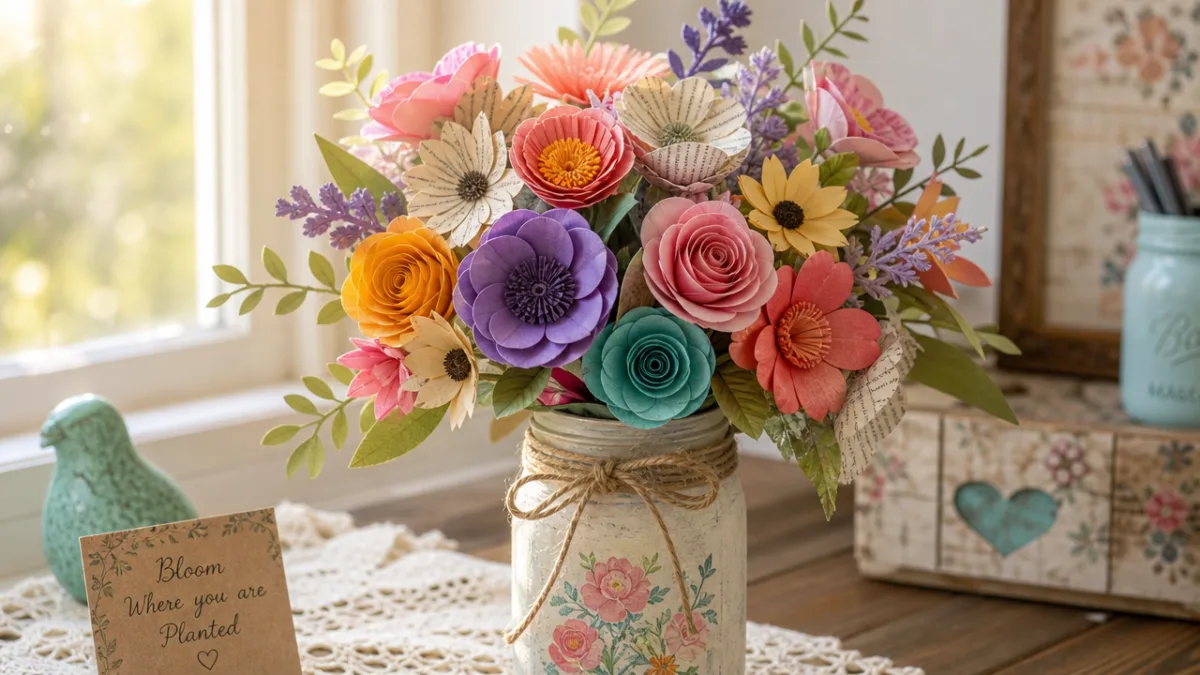
One of the sweetest presentation ideas is making a handmade vase to go along with the flowers. A plain glass jar wrapped in twine or covered with strips of colored tissue paper becomes a beautiful little vessel that pairs perfectly with the blooms. Kids can personalize it further by writing “Happy Mother’s Day” in paint marker, adding stickers, or gluing on a strip of paper covered in their own drawings. When the handmade flowers are arranged in the handmade vase, the whole thing becomes a cohesive little display piece — the kind most moms keep on their desk or windowsill for years.
For moms who love things they can actually use, consider pairing the flower craft with something practical. A handmade flower card attached to a favorite tea, a small framed handprint flower print, or a flower-decorated photo frame with a recent family photo tucked inside all add a warm, everyday-usable element to the sentimental gift. Kids can also build a “bouquet” that’s more than just flowers — roll up little love notes and tuck them among the paper petals, each one describing something the child loves about their mom. Suddenly the bouquet becomes a collection of tiny love letters that she’ll come back to again and again.
Tips for Making the Crafting Experience Joyful and Stress-Free
The crafting session itself should be just as good as the gift that comes out of it. But if you’ve ever tried to do a craft project with kids, you know it can go sideways fast — when expectations are too high, time is too short, or the project is just too hard for where a child is right now. With a bit of planning and the right attitude going in, though, it can genuinely be one of those mornings everyone looks back on with a smile — full of creativity, laughter, and the warm feeling of making something beautiful together.
First things first: let go of what you think the finished product “should” look like. Kids’ crafts are supposed to look like kids made them, and that’s honestly what makes them so irreplaceable. Try not to swoop in and fix every crooked cut or uneven petal. The slightly lopsided flower, the wild color combination, the extra glitter that was definitely not part of the plan — those are the details that make it authentically theirs. No perfectly executed adult version could ever have the same charm. Celebrate the quirks instead of smoothing them out.
Timing matters more than people realize. Don’t schedule the craft session when kids are tired, hungry, or already overstimulated. A morning slot after a good breakfast and before anyone’s had screen time tends to bring out the most engaged, creative versions of kids. Keep it short for younger children — under thirty minutes is a good target to match their attention spans. Older kids can go longer, especially if they’re genuinely excited about the person they’re making the gift for. Some soft, happy background music can also do a lot to keep the mood relaxed and creative throughout.
While you’re crafting, talk about Mom. Ask kids what their favorite memory with her is, what makes her laugh, what they love most about her. These conversations don’t just make the whole thing more meaningful — they also give kids the words to express feelings they might not know how to put into language on their own. Some of what they say might even inspire something new: a note tucked into the bouquet, a little drawing added to the card. The conversation itself becomes part of the gift-making, filling kids up with warm feelings about the person they’re celebrating.
Keeping the Tradition Alive Year After Year
One of the really beautiful things about making DIY flower crafts a Mother’s Day tradition is watching how it changes as the kids grow. A handprint flower made by a three-year-old and a tissue paper rose made by the same child at thirteen are ten years apart in time — but they’re equally precious expressions of the same love. Keeping each year’s crafts in a dedicated box or album creates a tangible record of childhood that most moms treasure more deeply than almost anything else they own.
Think about building a simple annual ritual around the whole experience to really anchor it as a family tradition. Maybe every year on the first Saturday in May, everyone gathers around the kitchen table with fresh supplies, puts on a favorite playlist, and spends the morning making things together. Older kids can help younger ones. Dads can join in and add their own flowers to the bouquet. Grandparents can be there via video call to watch and cheer everyone on. When the craft session becomes a consistent family event rather than a one-time thing, it starts to build a sense of shared identity and belonging that kids carry with them long into adulthood.
As kids get older, their flower crafts naturally become more ambitious — but the heart behind them stays exactly the same. A teenager spending an afternoon hand-painting a watercolor flower illustration or assembling a fabric flower wreath for their mom is doing the exact same fundamental thing as the toddler pressing a paint-covered palm onto paper. They’re saying, with their hands and their time and their creativity, that this person deserves something made just for them. That message, expressed through the universal language of flowers and the irreplaceable medium of something handmade, is one of the most powerful things a child can give. And it costs almost nothing except care — which, as any mom will tell you, is the most valuable thing of all.








What do you think?
It is nice to know your opinion. Leave a comment.