










The Timeless Appeal of Retro Candle Label Design
There is something undeniably magnetic about retro design aesthetics that continues to captivate consumers and small business owners alike. In the world of handmade candles, where the market grows more competitive every year, a beautifully crafted label can be the single most important factor in whether a customer picks up your product or walks past it. Retro design — with its warm color palettes, vintage typography, distressed textures, and nostalgic imagery — communicates authenticity, craftsmanship, and character in a way that modern minimalist design often cannot. It tells a story before the candle is even lit.
The resurgence of vintage aesthetics in packaging and branding is not merely a passing trend. Across industries from food and beverage to beauty and home goods, consumers are actively seeking products that feel handcrafted, intentional, and rooted in tradition. A retro candle label taps into this emotional landscape beautifully. It evokes a sense of warmth and familiarity, transporting the buyer to a simpler time — perhaps a grandmother’s kitchen, an old apothecary shop, or a beloved bookstore. That emotional resonance is an incredibly powerful sales tool, and smart candle makers are leveraging it effectively.
For independent candle makers and small Etsy shop owners, professional-looking packaging has historically required either expensive graphic design services or a significant investment of time learning complex design software. Editable candle label templates have completely disrupted this dynamic. A well-designed retro label template gives makers immediate access to a polished, cohesive aesthetic that they can customize with their own brand name, scent descriptions, and personal touches — without spending hundreds of dollars or countless hours on design. It democratizes professional branding in the most practical and empowering way possible.
Why Retro Works So Well for Candle Branding
Candles are inherently nostalgic products. They are associated with cozy evenings, holiday traditions, celebrations, and moments of quiet self-care. The warm glow of a candle flame itself carries a kind of timeless, pre-electric quality that connects us to something older and slower-paced. Retro label design honors and amplifies that intrinsic quality of the product itself. When the packaging aligns with the emotional experience of the product, the entire brand identity becomes more coherent, memorable, and persuasive. This alignment is what separates good branding from truly great branding.
From a purely visual standpoint, retro design elements tend to look exceptionally striking on candle labels. The combination of aged textures, serif fonts, botanical or geometric ornaments, and earthy or jewel-toned color palettes photographs beautifully — which is critically important in the age of social media marketing. A candle with a stunning retro label practically begs to be photographed and shared on Instagram or Pinterest, generating organic word-of-mouth marketing that money simply cannot buy. Many successful candle brands have built their entire following on the strength of their visual aesthetic alone.
There is also a practical dimension to retro design that is often overlooked: it ages well. Trendy, ultra-modern design can start to feel dated within a year or two, forcing brand refreshes and new label investments. Retro design, by contrast, draws from an aesthetic vocabulary that has already proven its longevity. A label that looks like it could have been printed in 1940 or 1975 will look just as compelling and intentional five years from now as it does today. For small business owners who need to manage costs carefully, this durability of design is a genuine financial advantage.

Understanding Editable Digital Templates: What You Get and Why It Matters
When you purchase an editable candle label template as a digital download, you are essentially acquiring a professionally designed layout file that you can open and customize on your own device without any prior graphic design experience. These templates are typically formatted for popular tools such as Adobe Acrobat, Canva, or Microsoft Word, making them accessible to an enormous range of users regardless of their technical skill level. The file comes ready with all the design elements in place — the retro typography, the decorative frames, the color scheme, the ornamental details — and all you need to do is swap in your own text and, optionally, adjust colors to suit your specific brand identity.
The value proposition of a digital download template is substantial when you consider the alternative. Hiring a professional graphic designer to create a custom candle label can easily cost between $150 and $500 or more, depending on the complexity of the design and the designer’s rates. Even using a freelance platform might mean waiting days or weeks for revisions and final files. A digital template delivers an immediately usable, professionally crafted design at a fraction of that cost, often for under $15. And because it is fully editable, you are not locked into a generic look — you can truly make it your own while benefiting from the designer’s expertise and eye for composition.
Digital downloads are also environmentally and logistically advantageous. There is no shipping to wait for, no physical product that can be damaged in transit, and no packaging waste. The moment your purchase is complete, the file is available in your downloads folder and you can begin customizing immediately. For business owners who need labels quickly — perhaps for a craft fair coming up this weekend or a wholesale order with a tight deadline — this immediacy is not just convenient, it is essential. The instant availability of digital templates has become a cornerstone of the modern maker economy, and platforms like Etsy and Creative Market have built thriving ecosystems around it.
Key Features to Look for in a Quality Retro Label Template
Not all label templates are created equal, and knowing what to look for will help you invest wisely. The most important technical specification to check is the resolution of the file. Any label intended for print should be designed at a minimum of 300 DPI (dots per inch) to ensure crisp, professional-looking results. A template designed at screen resolution (72 or 96 DPI) will appear pixelated and blurry when printed, which is the exact opposite of the polished impression you are trying to make. Always check the product listing or description for print-quality resolution before purchasing.
Beyond resolution, pay close attention to the dimensions and format options offered by the template. A versatile retro candle label template should ideally include multiple size variants to accommodate different candle formats — from small votive and tea light labels to larger labels sized for pillar candles, mason jars, and four-ounce tins. Templates that come in a range of shapes (rectangular, oval, round, and square) give you maximum flexibility as your product line grows and evolves. Some premium templates also include coordinating hang tags, box labels, or thank-you card designs, which can be enormously useful for building a cohesive brand package.
The ease of editing is another factor that deserves careful consideration. Look for templates that include clear, written instructions for customization, particularly if you are new to the software being used. High-quality template sellers typically include a separate instruction document or link to a tutorial video walking you through the editing process step by step. Templates built on Canva are particularly beginner-friendly since they require no software download and can be edited entirely in a free web browser. For makers who want maximum design control, layered Photoshop or Illustrator files offer greater flexibility but require more technical know-how.
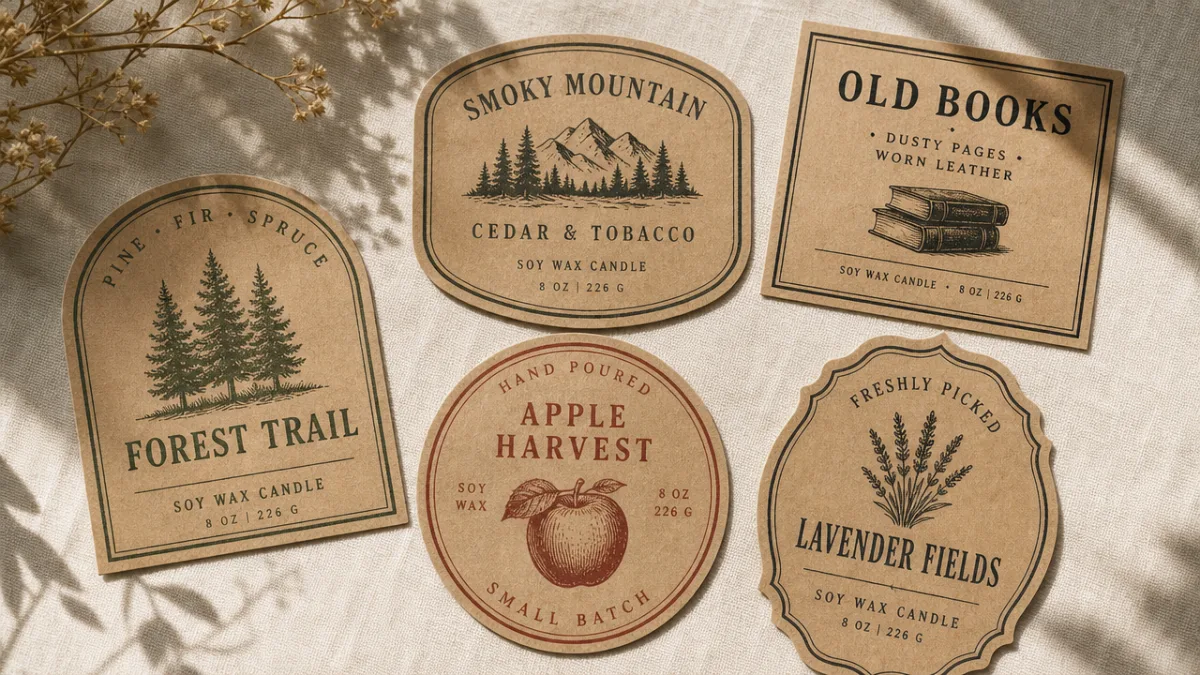
Customizing Your Retro Candle Label: A Step-by-Step Approach
Once you have downloaded your retro label template and opened it in the appropriate program, the customization process is typically more straightforward than most first-time users expect. The golden rule is to start with text and work your way outward to colors and decorative elements. Begin by replacing the placeholder brand name with your actual business name. This is the most visually prominent piece of text on the label and it will immediately begin to feel personal and real. Take your time choosing how to capitalize it, since all caps often reads as more vintage and authoritative while title case can feel warmer and more approachable.
Next, focus on the scent name and any descriptive text included on the label template. Many retro designs include small blocks of text for things like burn time, wax type, fragrance notes, and safety warnings — all of which need to be accurate and specific to each individual candle you produce. This is where customization becomes genuinely practical rather than merely aesthetic. If your retro template was designed with placeholder lorem ipsum text or generic descriptors, replace these carefully and thoroughly. Customers appreciate — and regulators in many jurisdictions require — accurate and complete product information on candle labels.
Color customization is where many makers get to truly express their unique brand identity within the retro aesthetic framework. A retro color palette typically draws from dusty, muted tones — think terracotta, sage green, cream, burgundy, navy, and warm mustard yellow — rather than bright, saturated hues. Most editable templates allow you to adjust these color values to suit your specific brand palette while maintaining the overall vintage feel. If you want to differentiate spring and summer candle collections from fall and winter ones, seasonal color adjustments within the same retro template framework are an elegant and cost-effective approach that maintains brand consistency.
Printing Options for Your Custom Retro Labels
Once your labels are customized and ready, you have several excellent printing options to choose from, each with its own set of advantages. For small batches and initial runs, printing at home on a quality inkjet printer with adhesive label paper is a practical and affordable choice. Look for full-sheet label paper or pre-cut label sheets in your chosen dimensions. Matte finish label paper is particularly popular for retro candle labels because it has a natural, understated quality that complements vintage aesthetics, whereas glossy paper can feel too slick and modern for the retro look you are cultivating.
For larger orders or for makers who want a truly professional finished product, online print services such as Canva Print, Avery WePrint, Sticker Mule, or local print shops offer excellent results at competitive prices. Many of these services can print on specialty materials such as kraft paper labels, clear vinyl, or foil-embossed stock that can take your retro aesthetic to an entirely new level of sophistication. Kraft paper labels in particular are enormously popular in the handmade candle space because they reinforce the artisanal, handcrafted brand story that retro design communicates so effectively.
It is worth investing in a small test print before committing to a large run, regardless of which printing method you choose. Colors can shift significantly between how they appear on screen and how they appear in print, particularly if your monitor is not color-calibrated. Print one or two labels first, apply them to actual candle containers, and assess how they look in real-world lighting conditions. Check that all text is fully legible, that none of the design elements are being cut off, and that the overall proportions feel balanced and attractive. This small investment of time and materials can save you from a costly and frustrating large-print mistake.
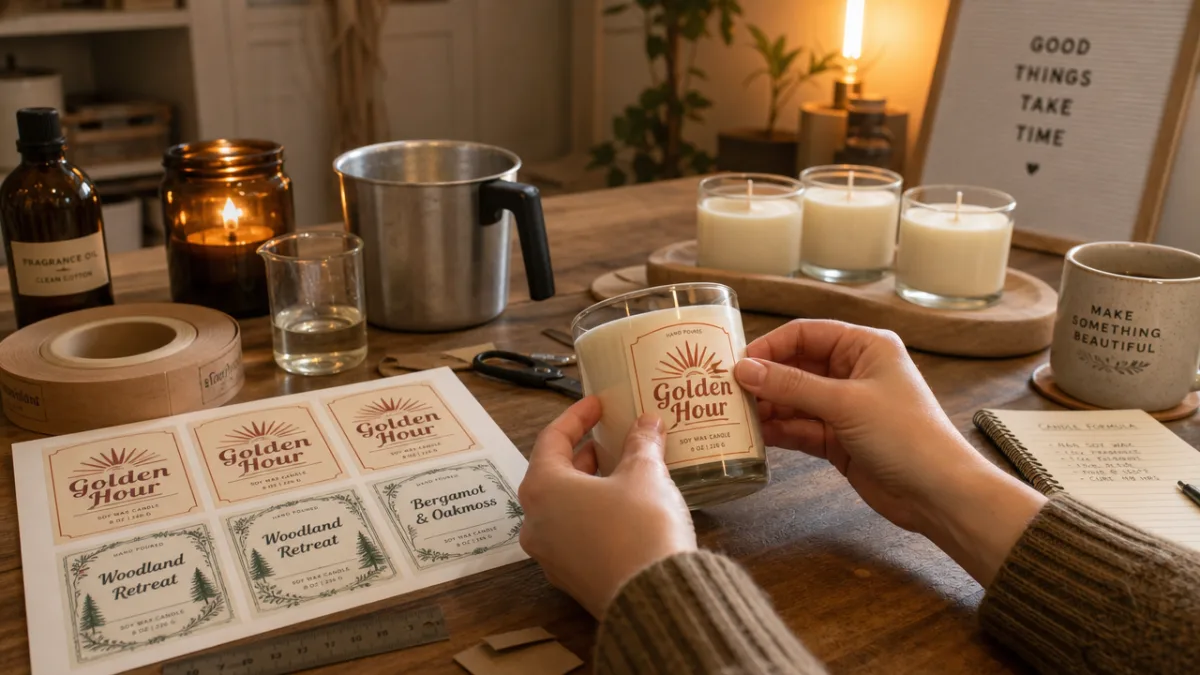
Building a Cohesive Candle Brand with Retro Design Elements
A single well-designed label is a wonderful starting point, but the most successful candle brands think beyond individual products to build a comprehensive and cohesive visual identity. Your retro candle label should be the cornerstone of a broader brand story that carries through every customer touchpoint — from your Etsy shop banner and social media profile to your packaging tissue, thank-you cards, and any trade show or craft fair displays. When a customer encounters your brand, they should immediately recognize a consistent visual language that feels considered, professional, and distinctive. That recognition builds trust, and trust builds loyalty.
Consider how the retro aesthetic of your labels can be extended into your product photography. Styling your candle photos with vintage props — antique books, dried botanicals, aged wooden surfaces, linen textiles, and ceramic or brass accessories — creates a visual world that reinforces your brand identity and makes your product images immediately stand out in crowded social media feeds and search results. Many successful candle brands have essentially created a recognizable signature through their photography style alone, and a strong retro aesthetic gives you a rich visual vocabulary to draw from when building that signature look.
Your written brand voice should also complement your visual aesthetic. If your labels have an old-world apothecary feel, your product descriptions, social media captions, and email newsletters might lean into evocative, slightly literary language that describes scent experiences and ambiance in rich, sensory detail. If your retro aesthetic skews more mid-century American — think 1950s diner or roadside motel — your copy might be warmer, more conversational, and touched with gentle humor. The most powerful brands ensure that what they say and how they say it is as intentional and aligned as how they look. The label is just the beginning of that conversation with your customer.
Leveraging Your Retro Labels for Pinterest and Social Media Marketing
Pinterest is one of the most powerful and underutilized marketing platforms available to candle makers and product-based small businesses, and a beautifully designed retro label is a genuine asset on this highly visual platform. Pinterest users actively search for home décor inspiration, gift ideas, and artisan products, and a striking product image with a well-designed retro label can earn repins and profile visits for months or even years after it is first posted. Unlike Instagram or TikTok, where content often has a lifespan of hours or days, Pinterest content compounds in value over time, making it an extraordinarily efficient marketing channel for small businesses with limited time and budget.
To maximize your retro candle labels’ impact on Pinterest and other platforms, focus on the quality and composition of your product photography. Natural light is almost always more flattering than artificial light for candle and lifestyle photography, particularly for a retro aesthetic where warmth and softness are central to the mood. Shoot near a large window in the morning or late afternoon when the light is golden and directional. Use simple, uncluttered backgrounds that do not compete with your labels, and include human elements — a hand holding the candle, a partially visible cozy sweater in the background — to make the image feel relatable and lived-in rather than sterile and commercial.
Consistency is key when building a social media presence around your candle brand. Develop a small set of go-to photography setups and props that you can return to reliably for new product launches and seasonal collections. This consistency helps your feed develop a recognizable look that makes your brand instantly identifiable even before a viewer reads your name. Many successful makers use a simple content calendar to plan their photography sessions and posting schedule in advance, batching their photo shoots to be efficient with their time while maintaining a steady, professional online presence that keeps their audience engaged and their brand top of mind.
Legal and Practical Considerations for Candle Labels
Beyond aesthetics, candle labels carry genuine legal and safety responsibilities that every candle maker must understand and take seriously. In the United States, candles are regulated by the Consumer Product Safety Commission (CPSC), and proper warning labels are not merely best practice — they are a legal requirement. At minimum, candle labels should include a burn warning advising consumers to keep the candle within sight while burning, to keep it away from flammable materials and children and pets, and to stop using the candle when only a small amount of wax remains. Many premium retro label templates come with a preformatted warning block that you can retain as-is to ensure compliance.
If you sell candles scented with fragrance oils that contain specific allergens, you may also have labeling obligations depending on where you sell and ship your products. The European Union has particularly stringent fragrance allergen labeling regulations that apply to any candle maker selling into EU markets, including through international Etsy sales. Even if you primarily sell domestically, it is good practice to research the labeling requirements of any market you ship into and ensure your labels can accommodate the necessary information. A well-designed retro template with generous text areas makes it easier to include all required disclosures without cluttering the visual design.
Finally, think carefully about the practical durability of your printed labels in the context of how your candles will be used, stored, and transported. Candle containers can sweat condensation, particularly in warm environments, and wax drips from burning candles can damage labels that are not properly coated. For jar candles, consider applying a light layer of clear matte Mod Podge over the label after application to protect against moisture and minor abrasion. Alternatively, printing on waterproof vinyl label material is an excellent investment for makers who want maximum durability with minimum fuss. A beautiful retro label that stays pristine through storage, shipping, and use is infinitely more valuable than one that peels or smears at the first sign of moisture.
- Always include the required CPSC burn warning text on every candle label, formatted clearly and legibly even when design space is limited.
- List fragrance allergens if required by the markets you sell in, particularly if selling internationally into the EU or UK.
- Include your brand name and contact information so customers can reach you with questions or reorder requests.
- Specify wax type (soy, coconut, beeswax, paraffin, or blend) as this is important information for buyers with sensitivities or strong material preferences.
- Note the net weight of the candle in both ounces and grams if selling internationally to meet labeling standards in multiple markets.
- Include approximate burn time as a helpful and often expected piece of product information that helps customers assess value.
- Print at 300 DPI minimum and always do a test print before committing to a full production run to verify colors and dimensions are accurate.
Investing in a high-quality editable retro candle label template is one of the smartest decisions a small candle business owner can make early in their entrepreneurial journey. It delivers immediate, professional-grade results at an accessible price point, gives you the creative control to build a truly personal brand, and provides a design foundation that can grow and evolve with your business for years to come. When that label is designed with the warmth, character, and timeless appeal of retro aesthetics, it does something no generic label ever could: it makes your candle feel like it belongs in someone’s home, someone’s story, someone’s memory. And that is exactly the kind of connection that turns first-time buyers into lifelong customers.








What do you think?
It is nice to know your opinion. Leave a comment.