










15 Iris Flowers Garden Ideas That Every Gardener Should Try
The Timeless Beauty and Versatility of Iris Flowers
Iris flowers have captivated gardeners for centuries with their extraordinary range of colors, graceful sword-like foliage, and architectural elegance. Whether you are tending a formal English garden or a relaxed cottage-style landscape, irises offer a depth of character that few other perennials can match. With thousands of cultivars spanning nearly every color of the spectrum, from deep midnight violet to pristine white to fiery copper and gold, the iris is truly one of nature’s most spectacular achievements in floral design.
What makes the iris especially beloved among experienced gardeners is its remarkable adaptability. Depending on the variety, irises can thrive in boggy waterside conditions, dry rocky slopes, shaded woodland borders, or full sun flower beds. This flexibility means that no matter what kind of garden space you are working with, there is very likely an iris variety perfectly suited to your conditions. Bearded irises, Siberian irises, Japanese irises, and Dutch irises each bring distinct personalities and growing requirements to the garden palette.
Beyond their visual appeal, irises are also celebrated for their relative ease of care, their long-lived nature as perennials, and their tendency to multiply over time, filling your garden with increasing abundance year after year. Once established, a well-placed iris planting can become one of the most rewarding and low-maintenance features in your entire landscape. This article explores fifteen inspiring ideas for incorporating these extraordinary flowers into your garden in fresh, creative, and deeply satisfying ways.
Understanding Iris Types Before You Plant
Before diving into specific garden design ideas, it helps enormously to understand the main categories of irises available to home gardeners. Bearded irises are perhaps the most recognizable, distinguished by the fuzzy “beard” on the lower petals called falls. These are the classic cottage garden irises that bloom in late spring and come in an almost overwhelming array of colors and bicolored combinations. They prefer well-drained soil and full sun, making them ideal for traditional flower borders and raised beds.
Siberian irises, by contrast, are more refined in appearance with slender, upright foliage and elegant, somewhat smaller flowers that tend to come in shades of purple, blue, white, and yellow. They are exceptionally hardy, tolerating cold winters with ease and adapting well to moist soils. Japanese irises (Iris ensata) produce some of the largest and most dramatic flowers in the genus, often flat and wide like lily pads, and they particularly thrive near water features. Dutch irises, the bulbous type commonly sold by florists, are wonderful for spring cutting gardens and add early season color when little else is blooming.
Knowing which type suits your garden conditions will save you considerable frustration and help ensure success. Planting a moisture-loving Japanese iris in a dry, sandy border, or positioning a bearded iris in a poorly drained clay bed, are mistakes that are easy to avoid once you understand the basic preferences of each group. Take time to assess your soil, drainage, and sunlight conditions before selecting your varieties, and the results will far exceed your expectations.
Designing a Dedicated Iris Border
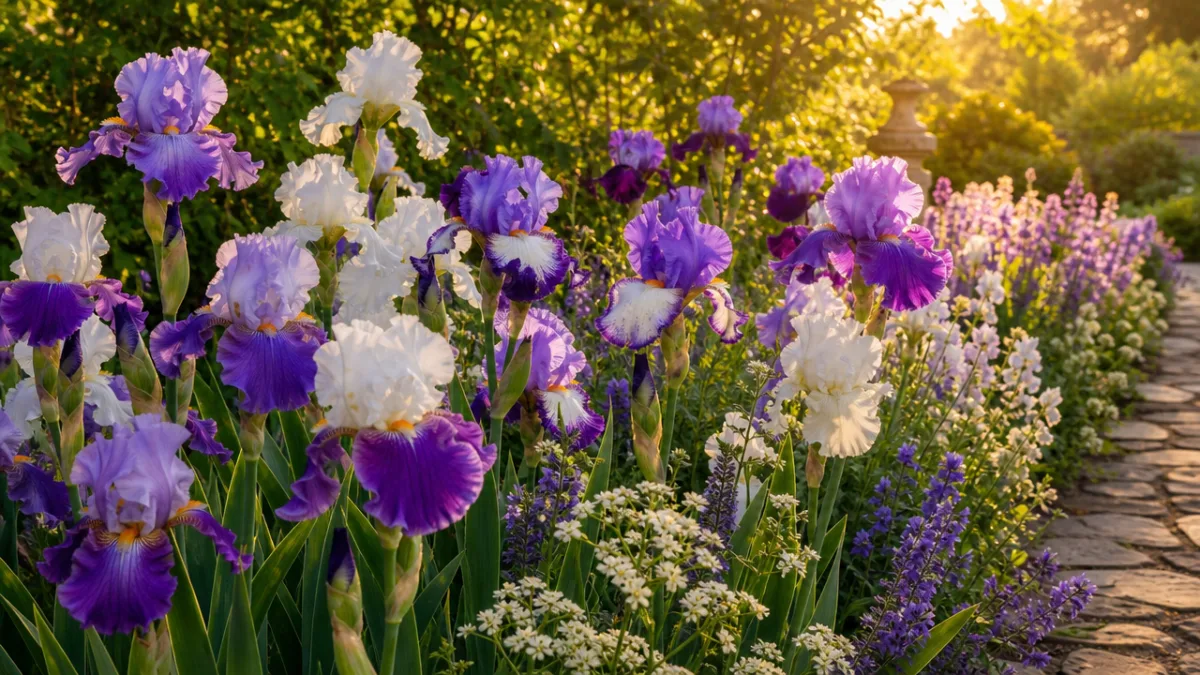
One of the most impactful ways to showcase irises in your garden is to dedicate an entire border exclusively to them, allowing these spectacular flowers to take center stage during their peak bloom period. An iris border can be designed along a fence line, flanking a garden path, or stretching across the back of a mixed perennial bed. When planning your layout, think in drifts of color rather than single plants — groupings of five to seven plants of the same variety create a bold visual impression that can be seen from across the garden.
Color sequencing is a key design consideration in a dedicated iris border. You might choose to move from soft pastels at one end — creamy whites, pale lavender, and blush pink — through to deeper saturated hues like royal purple, deep burgundy, and electric blue at the opposite end. Alternatively, a monochromatic border featuring every shade of purple and violet can be breathtakingly sophisticated and easier to manage from a design perspective. Complementary color schemes pairing yellows with purples or oranges with blues create a vibrant, energetic feel that is full of visual drama.
Do not neglect the foliage when designing your iris border. Even when irises are not in bloom, their tall, sword-shaped leaves provide strong vertical structure and textural contrast that enrich the overall design. Pair your irises with low-growing companions like catmint (Nepeta), lady’s mantle (Alchemilla mollis), or ornamental alliums that bloom in sequence to extend the season of interest. Edging the border with a neat hedge of boxwood or a low stone wall adds formality and helps define the space beautifully.
Companion Planting Strategies for Iris Gardens
Thoughtful companion planting can elevate your iris garden from attractive to truly extraordinary, extending the season of bloom and creating layered compositions of incredible depth and beauty. The trick is choosing companions that either bloom simultaneously to create complementary color combinations, or that flower before and after the irises to maintain interest throughout the growing season. Roses are perhaps the most classic iris companions, with their shared love of sun and well-drained soil, and the combination of rose and iris has graced formal European gardens for hundreds of years.
Alliums are another superb companion for bearded irises, their spherical purple flower heads emerging on tall, naked stems at precisely the right time to mingle with the iris blooms. Peonies also pair magnificently, their lush, layered blossoms in shades of pink, white, and red providing a romantic softness that balances the crisp architectural form of the iris. Salvias and hardy geraniums weave through and around iris clumps to fill gaps and soften edges. After the irises finish, hostas, daylilies, and ornamental grasses can take over to carry the composition forward through summer.
Consider the role of foliage plants in your iris companion planting scheme. Silver-leafed plants like artemisia, lamb’s ears (Stachys byzantina), or Russian sage (Perovskia) create luminous contrast with deeply colored irises and help the border appear cooler and more spacious. Bronze fennel adds a feathery, cloud-like quality to the composition. Boxwood topiary, formal hedging, or even large ornamental containers placed strategically can add structure and anchor the design throughout the seasons when herbaceous companions die back.
Creating a Water Garden with Iris Plants
Water-loving iris species, particularly Japanese irises, Louisiana irises, and the native yellow flag iris (Iris pseudacorus), are among the most spectacular choices for pond margins, stream banks, and bog gardens. Positioned at the water’s edge, their reflections doubling their beauty on the water’s surface, these irises create scenes of breathtaking tranquility. The visual effect of tall iris foliage and bold blooms rising from or near the water is one of the quintessential images of the Japanese-inspired garden, evoking scenes immortalized by Claude Monet at Giverny.
When designing an iris water garden, consider varying the planting depths and distances from the water’s edge to create a naturalistic, layered effect. Louisiana irises can grow with their roots submerged, making them ideal for shallow planting shelves at the pond margin. Japanese irises prefer moist but not permanently waterlogged soil, so plant them just above the waterline where they will receive ample moisture without sitting in standing water during winter. Yellow flag irises are the most tolerant of truly wet conditions and will spread vigorously in the right environment — a quality to manage carefully to prevent them from overwhelming other plantings.
Combine water irises with other moisture-loving plants such as Japanese primulas, astilbes, rodgersias, and hostas to create a lush, layered planting that transforms the pond margin into a rich tapestry of texture and color. Ornamental grasses like Miscanthus and Carex provide movement and structure, while large-leafed gunnera or skunk cabbage add dramatic tropical flair. A well-designed iris water garden becomes a living ecosystem that attracts dragonflies, frogs, and birds, turning your outdoor space into a sanctuary of natural beauty.
Incorporating Iris into Cottage and Wildflower Gardens
The cottage garden aesthetic, with its charming informality, abundance of color, and romantic mixing of flowers, is perfectly suited to many iris varieties. Bearded irises were staples of traditional cottage gardens for generations, their stately height and jewel-like colors fitting naturally into the glorious chaos of a well-planted cottage border. The key to using irises successfully in this style is to allow them to be surrounded by and interwoven with other cottage garden favorites, creating the feeling of generous, almost accidental abundance that defines the style at its best.
In a cottage garden setting, combine your irises freely with foxgloves, sweet Williams, lupins, aquilegias, and poppies for a spectacular late spring display. Allow some self-seeding annuals like larkspur and love-in-a-mist to weave through your iris clumps, softening their edges and adding a sense of natural spontaneity. Climbing roses scrambling over nearby arches or fences, their blooms peering down into the iris border, complete the picture beautifully. Do not be afraid of apparent disorder — in a cottage garden, lush profusion is the goal.
For those interested in wildflower gardening or naturalistic planting styles inspired by designers like Piet Oudolf, certain iris species integrate beautifully into meadow-inspired compositions. Native iris species, such as Iris versicolor (blue flag iris) or Iris cristata (crested iris), thrive in naturalistic settings and provide important forage for native pollinators including specialist bees. Siberian irises, with their fine, grassy foliage and tolerance for a range of conditions, also blend seamlessly into prairie-style plantings alongside rudbeckias, echinacea, and native grasses. These approaches celebrate ecological sensitivity alongside aesthetic beauty.
Color Theming Your Iris Garden
One of the most exciting design possibilities offered by irises is the sheer breadth of colors available, making them ideal subjects for color-themed garden schemes. A white garden in the tradition of Vita Sackville-West’s famous White Garden at Sissinghurst could feature white bearded irises alongside white peonies, white roses, white alliums, and silver-leafed foliage plants. The purity and luminosity of white irises in evening light is particularly magical, making them an excellent choice for garden areas viewed at dusk.
A purple and blue garden incorporating irises at multiple scales is another breathtaking possibility. Tall bearded irises in deep violet and indigo could anchor the back of a border, while shorter intermediate bearded irises in lavender and periwinkle fill the middle ground. Low-growing Siberian irises in pale blue advance to the front, with companions of salvia, catmint, veronica, and muscari weaving throughout. The coherence of a carefully executed color theme creates a sense of intention and artistry that elevates the entire garden.
Warm color themes featuring yellow, bronze, copper, and russet irises pair beautifully with fellow warm-toned perennials like heleniums, kniphofias, and late-season rudbeckias, extending the warm palette from late spring through autumn. Bicolored irises that blend warm and cool tones, such as falls of deep purple with standards of pale gold, can serve as sophisticated bridges between adjacent color zones in a complex border design. The iris truly is one of the most versatile tools in the garden designer’s color palette.
Practical Tips for Growing and Maintaining Iris Gardens
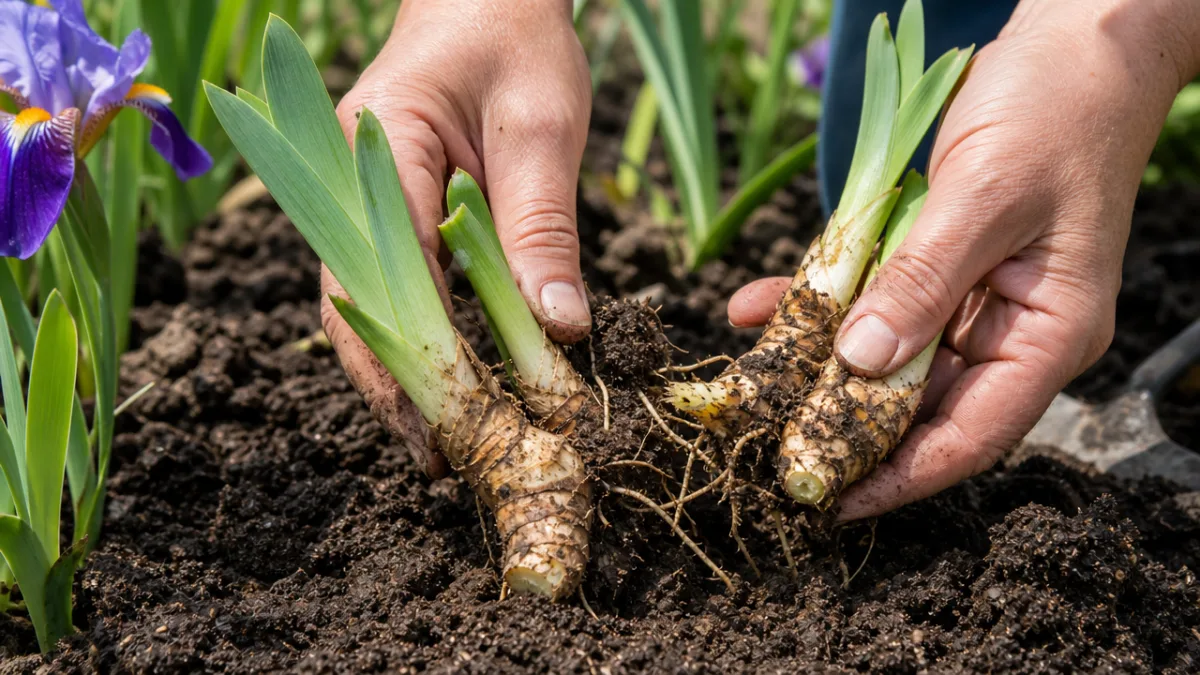
Successful iris gardening begins with proper planting technique, and getting this right from the start makes all the difference in how vigorously your plants establish and bloom. Bearded irises are planted from rhizomes, which should be set at the soil surface with the top of the rhizome just barely exposed to sunlight — a common mistake is planting them too deep, which results in lush foliage but few or no flowers. Choose a planting site in full sun with well-drained soil, amending heavy clay with grit or raised bed construction to ensure adequate drainage, which is critical to preventing rhizome rot.
Feeding irises correctly supports their long-term health and flowering performance. A low-nitrogen fertilizer applied in early spring as growth begins, and again shortly after flowering, provides the nutrients needed for strong rhizome development and bud formation for the following season. Avoid high-nitrogen feeds, which promote excessive leaf growth at the expense of flowers. Deadheading spent flower spikes down to the base after blooming, and removing old or damaged leaves throughout the growing season, keeps the planting looking tidy and prevents disease from taking hold in decaying plant material.
Division is an essential maintenance task that keeps bearded iris plantings vigorous and free-flowering. Over time, iris clumps become congested, with old central rhizomes dying off and younger, more productive growth pushed to the outer edges. Every three to five years, lift and divide your iris clumps in mid to late summer, immediately after flowering, discarding the old central portions and replanting only the freshest, healthiest rhizomes. This simple practice rejuvenates the planting dramatically and gives you an excellent opportunity to redesign, share plants with fellow gardeners, or expand your iris collection into new areas of the garden.
Seasonal Care Calendar for Iris Gardeners
Keeping track of seasonal tasks ensures your iris garden remains healthy, attractive, and productive throughout the year. In spring, as new growth emerges, remove any winter-damaged foliage, apply a balanced fertilizer, and watch carefully for the early signs of iris borers — a serious pest in many regions whose larvae tunnel into rhizomes and cause devastating damage. Check for soft, mushy rhizomes that may indicate borer activity or rot, removing and destroying affected material promptly. Treat the surrounding soil with appropriate measures if borers have been a problem in previous years.
Summer brings the glorious reward of bloom, and this is the time to enjoy your irises at their peak while also taking notes on which varieties are performing well, which color combinations work beautifully, and which areas of the garden might benefit from additional planting. After the flowers fade, resist the temptation to cut back the foliage entirely — the leaves continue to photosynthesize and build up energy in the rhizomes for next year’s display. Do, however, cut fan-shaped foliage back to about six inches if it becomes diseased or unsightly.
Autumn is the ideal time for planting new Dutch iris bulbs for spring interest, and for making any additions or rearrangements to your bearded iris borders before the ground freezes. Clean up dead foliage to reduce disease and pest overwintering sites, but leave some structure if you are in a region where irises need protection from freeze-thaw cycles. A light mulch of straw or dry leaves can be applied around (but not over) the rhizomes in cold climates to moderate temperature fluctuations without causing the moisture retention that promotes rot. With these seasonal attentions, your iris garden will reward you generously year after year.
- Spring: Remove damaged foliage, fertilize, and inspect for iris borers and signs of rhizome rot.
- Late Spring: Enjoy peak bloom, deadhead spent flowers, and stake tall varieties if needed in exposed sites.
- Early Summer: Divide congested clumps if needed and plant divisions or new acquisitions promptly after flowering ends.
- Late Summer: Plant new bearded iris rhizomes acquired from nurseries or fellow gardeners.
- Autumn: Plant Dutch iris bulbs, clean up foliage, and apply light protective mulch in cold regions.
- Winter: Plan next year’s additions, order from specialist nurseries, and review your garden notes from the previous season.
The iris garden is not merely a collection of beautiful flowers — it is a living, evolving expression of the gardener’s vision, patience, and passion. Each spring, as the first buds open to reveal their extraordinary colors and intricate petal architecture, the garden becomes a place of genuine wonder. Whether you choose to grow a single species in mass for bold simplicity, combine dozens of varieties in a complex tapestry of color and form, or weave irises through a rich tapestry of companion plants, you will find in these remarkable flowers a lifetime’s worth of discovery and delight. The fifteen ideas explored in this article are only a beginning — the true iris garden is limited only by your imagination and the seeds of inspiration you choose to plant.








What do you think?
It is nice to know your opinion. Leave a comment.