










Simple and Low Budget Home Organizer Ideas: Transform Your Space Without Breaking the Bank
Home organization does not have to be an expensive or overwhelming undertaking. With a little creativity, some basic materials, and a willingness to rethink how you use everyday objects, you can completely transform cluttered, chaotic spaces into calm, functional areas that make daily life easier. The growing trend of budget-friendly home organization, popularized through platforms like TikTok and Pinterest, has shown millions of people that a beautifully organized home is achievable for anyone, regardless of income level or home size.
The key to successful home organization on a budget lies in shifting your perspective. Rather than purchasing expensive storage systems or hiring a professional organizer, you begin by assessing what you already own and identifying simple, affordable solutions that solve your specific problems. This approach not only saves money but also results in a more personalized space that genuinely reflects your lifestyle and daily routines, making the organizational systems you create far more sustainable over the long term.
1. Start With a Decluttering Mindset Before You Buy Anything
Before spending a single dollar on organizers, bins, or storage accessories, the most important step is to declutter ruthlessly. Going through every drawer, cabinet, and closet with honest eyes helps you understand exactly how much stuff you truly have versus how much you actually use and need. Many people discover that a significant portion of their clutter is made up of items they forgot they owned, duplicates of things they already have, or possessions they feel guilty letting go of despite never actually using them.
The decluttering process works best when approached one zone at a time rather than trying to tackle the entire home in a single marathon session. Start with one drawer, one shelf, or one corner of a room. Pull everything out, sort items into categories — keep, donate, trash, and relocate — and then make decisions quickly without overthinking. Studies in behavioral psychology suggest that decision fatigue sets in rapidly during decluttering, so shorter, more focused sessions spread over several days tend to produce better and more lasting results than one exhausting weekend overhaul.
Once you have completed the decluttering phase, take stock of what remains and measure your available storage spaces. Knowing the dimensions of your shelves, drawers, cabinets, and closets before purchasing any organizational products prevents the common and costly mistake of buying containers that do not actually fit your space. At this stage, you may also realize that you need far fewer organizational products than you initially thought, because decluttering alone often solves a large portion of the problem without any financial investment at all.
It is also worth building a decluttering habit into your regular routine going forward. A quick five-minute tidy at the end of each day, combined with a monthly check of specific zones like the junk drawer or medicine cabinet, prevents the slow accumulation of clutter that makes spaces feel overwhelming over time. Organization is not a one-time project but a daily practice, and establishing small consistent habits is far more effective than periodic large-scale efforts that leave you feeling exhausted and discouraged.
2. Repurpose Items You Already Own for Creative Storage Solutions
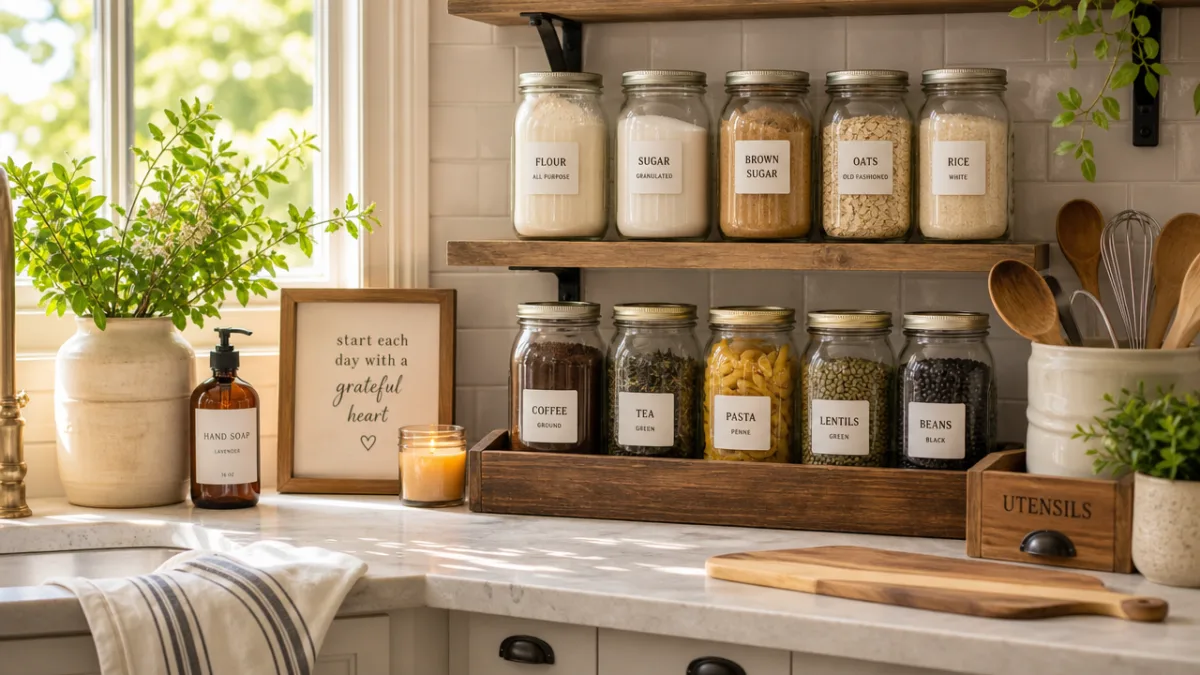
One of the most satisfying and cost-effective approaches to home organization is finding new uses for items you already own. Mason jars, for example, are endlessly versatile storage containers that can hold kitchen utensils, bathroom cotton balls and swabs, desk supplies like pens and scissors, craft materials, and even small hardware items like screws and nails. Rather than buying a matching set of expensive containers, simply wash and label whatever glass jars you have accumulated from pasta sauce, jam, pickles, or other grocery items, and you have a charming and cohesive storage system at zero cost.
Cardboard boxes from online shopping deliveries, cereal boxes, and shoeboxes can be transformed into drawer dividers and shelf organizers with minimal effort. Cut cereal boxes down to create custom-sized compartments inside deep drawers that would otherwise become chaotic catch-all spaces. Cover them with wrapping paper, washi tape, or leftover fabric scraps to give them a polished, intentional look. These DIY dividers work particularly well in junk drawers, bathroom vanity drawers, and kitchen utility drawers where small items tend to mix together and become impossible to locate quickly.
Tension rods, typically purchased for curtains, have dozens of organizational applications throughout the home. Install a tension rod under the kitchen sink to hang spray bottles by their trigger handles, instantly doubling usable space in that often-neglected cabinet. Use them inside deep cabinets to create vertical dividers for baking sheets, cutting boards, and serving platters. Place a tension rod across a lower cabinet shelf to keep pot lids neatly upright rather than stacked in unstable piles. These clever applications of a single inexpensive product demonstrate how thinking laterally about common household items unlocks powerful organizational solutions.
- Use shower curtain rings to hang multiple scarves, belts, or bags from a single closet rod, dramatically multiplying storage capacity without adding any new furniture.
- Repurpose an old magazine holder as a vertical file organizer for the kitchen, holding aluminum foil, plastic wrap, and parchment paper boxes upright and easily accessible.
- Transform a pegboard left over from a garage project into a wall-mounted organizer for the Craft room, home office, or even the kitchen.
- Use a spare muffin tin inside a drawer to sort and store small accessories like jewelry, paper clips, hair ties, and buttons in neat individual compartments.
3. Dollar Store and Discount Store Finds That Make a Huge Difference
Dollar stores, discount chains, and thrift shops are treasure troves of organizational tools that cost a fraction of what you would pay at specialty home stores. Plastic bins, baskets, drawer dividers, command hooks, over-the-door organizers, and tension rods are commonly available at dollar stores for one to three dollars each, compared to the five to twenty dollar price tags found at home goods retailers. Shopping at these stores strategically, with your measurements and a list of specific needs in hand, allows you to build a comprehensive organizational system for an entire room for under twenty dollars.
Basket and bin organization is one of the most visually impactful and practically effective methods for bringing order to any space. Grouping like items together inside labeled baskets creates immediate visual calm because the eye reads the organized containers as a cohesive whole rather than a collection of individual objects. Dollar store wicker, wire, and fabric baskets may not be identical in style or finish, but painting them all the same color or adding uniform labels creates a coordinated look that appears thoughtful and intentional rather than mismatched. White spray paint is particularly effective at unifying a collection of inexpensive containers from different sources.
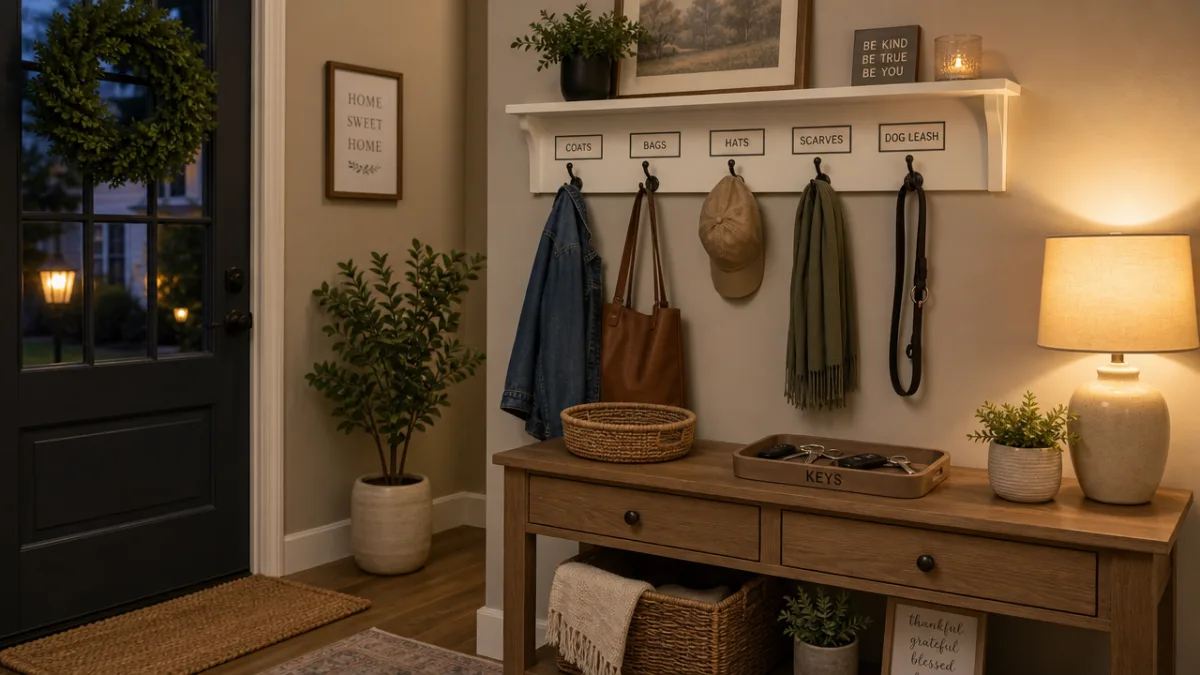
Command hooks and adhesive strips available at dollar stores and discount retailers offer damage-free hanging solutions throughout the home without requiring any tools or permanent alterations to walls and surfaces. Inside cabinet doors, they can hold measuring spoons, pot lids, cleaning supplies, and hair tools. On the back of bathroom doors, they create additional towel and robe hanging space. In entryways, a row of command hooks at varying heights creates an organized landing zone for coats, bags, hats, and keys that prevents the front door area from becoming a dumping ground of disorganized items.
Thrift stores deserve particular attention as organizational resources because they often carry high-quality storage items like wooden boxes, glass containers, decorative trays, and vintage drawer organizers at deeply discounted prices. Unlike dollar stores, thrift shops occasionally stock items from more premium brands that were simply donated rather than discarded due to damage. Visiting thrift stores with an open and creative mindset, rather than looking for specific products, tends to yield the most interesting and useful finds. A decorative tray purchased for fifty cents can become the stylish centerpiece of a bathroom countertop organization system that looks expensive and carefully curated.
4. Zone-by-Zone Organization Strategies for Every Room in the House
Effective home organization requires thinking about each room in terms of functional zones rather than simply finding places to put things away. A zone is a defined area within a room that is dedicated to a specific activity or category of items. In the kitchen, zones might include the coffee and breakfast station, the baking supply area, the everyday cooking tools zone, and the snack and lunch prep area. Defining these zones and organizing the items within them accordingly dramatically reduces the time spent searching for things and makes it easier to put items back in their correct place after use.
In the bathroom, the limited counter and cabinet space can be maximized through strategic zone organization even with budget tools. A simple acrylic or plastic tray on the counter corrals daily-use items like toothbrushes, face wash, and moisturizer, keeping them accessible while preventing counter sprawl. Inside cabinet doors, small adhesive pockets or wire racks hold hair products, medications, and first aid supplies. Under the sink, tension rods, stackable bins, and small lazy Susans transform what is typically a disorganized cabinet into a highly functional storage system where everything is visible and reachable without items falling onto each other.
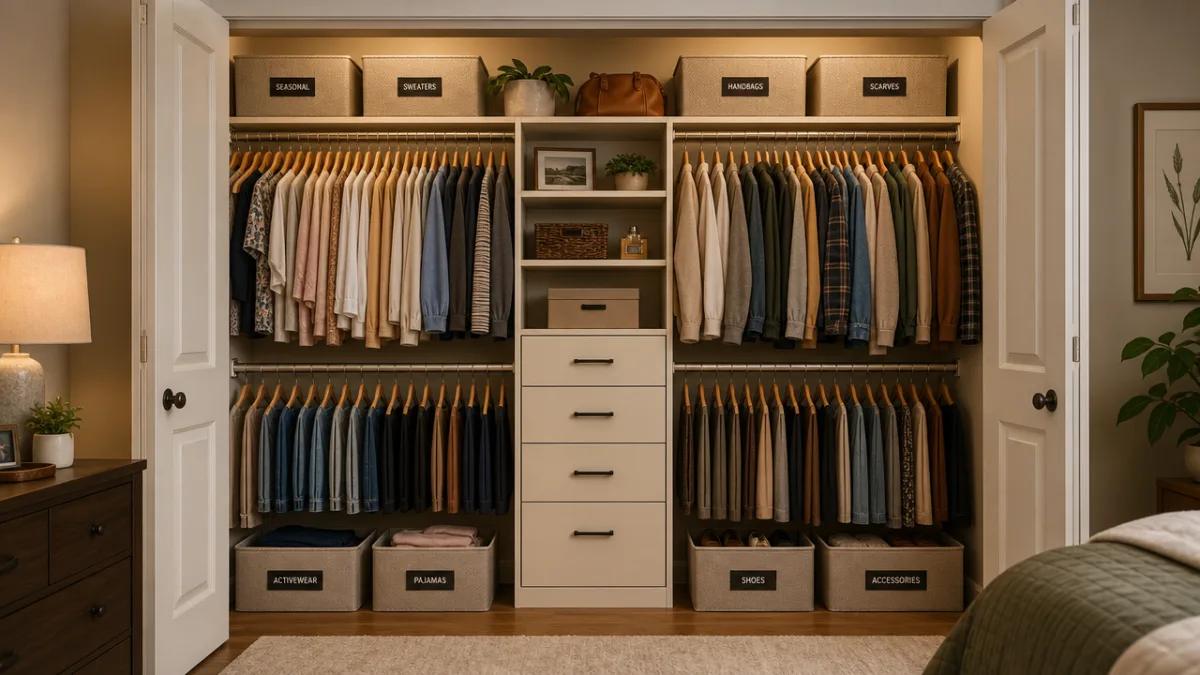
The bedroom closet often represents the greatest organizational challenge and the greatest opportunity for improvement without significant expense. The most impactful closet change is typically doubling the hanging rod space by installing a second rod below the existing one to accommodate shorter items like shirts, jackets, and folded pants. This single modification, achievable with a basic extender rod costing just a few dollars, can effectively double the usable hanging space in any standard closet. Combining this with shelf dividers for sweaters and bins for accessories creates a closet that feels custom-built despite requiring minimal investment.
- Kitchen: Create a dedicated mail and paperwork station near the entrance to prevent papers from spreading across countertops, using a simple wall-mounted file organizer or a repurposed cereal box holder.
- Bathroom: Install an over-the-toilet shelf unit to add vertical storage in a space that is typically completely unused, providing room for towels, toiletries, and decorative elements.
- Bedroom: Use flat under-bed storage containers for seasonal items like winter sweaters or extra bedding, making use of otherwise wasted space without purchasing additional furniture.
- Living Room: Designate a specific basket or bin for remotes, chargers, and electronics accessories to eliminate the daily frustration of hunting for these small but essential items.
- Entryway: Create a daily essentials station with a hook for keys, a small tray for wallets and sunglasses, and a designated spot for bags and shoes right at the door.
5. Labeling Systems That Keep Organization Maintained Long-Term
The single most important factor in maintaining an organizational system over time is a clear and consistent labeling approach. Without labels, even the most beautifully organized spaces gradually deteriorate as family members return items to the wrong containers and the original system becomes unclear. Labels remove ambiguity and make it easy for everyone in the household to participate in maintaining order, distributing the organizational burden rather than placing it entirely on one person. This shared understanding is particularly crucial in households with children, who respond well to clear visual cues about where things belong.
Budget-friendly labeling options are plentiful and require minimal equipment. A basic label maker, available at discount stores for around fifteen to twenty dollars, produces clean, professional-looking labels that adhere to almost any surface and create visual consistency throughout the home. Alternatively, a fine-tip black marker on white masking tape or painter’s tape creates a charmingly handwritten label aesthetic that is perfectly suited to rustic or farmhouse-inspired organizational displays. For a more polished look without the cost of a label maker, free printable label templates are widely available online and can be printed at home and attached with double-sided tape.
Chalkboard labels offer a particularly versatile and budget-friendly labeling solution because they can be erased and rewritten as your storage needs evolve over time. Chalkboard sticker labels are available at most dollar stores and craft shops, and they adhere to bins, jars, baskets, and boxes. This reusability makes them especially practical in areas like the pantry or refrigerator where the contents of containers change frequently. They also add a cohesive, slightly vintage aesthetic to organizational displays that photographs beautifully and has become enormously popular in home organization content on social media platforms.
Beyond container labels, consider adding zone labels to shelves and areas within cabinets and closets using removable adhesive labels or simple paper tags tied with twine. When the pantry shelf clearly says “Baking Supplies” or “Canned Goods,” family members instinctively return items to the correct shelf rather than placing them wherever space is available. This one additional step transforms an organized space into a self-maintaining system, which is the ultimate goal of any home organizational effort. The time invested in comprehensive labeling is repaid many times over in the reduced effort required to maintain tidiness going forward.
6. Building Sustainable Organizational Habits That Last
Creating an organized home is only half the challenge. The other half, which many people underestimate, is developing the daily habits and routines that keep organizational systems functioning effectively over months and years. The most common reason beautifully organized spaces return to chaos within weeks is not a failure of the organizational system itself but a failure to establish the small behavioral habits required to maintain it. Understanding this distinction is empowering because it shifts the focus from the physical environment to the daily practices that support it.
The one-in, one-out rule is one of the most effective habits for preventing clutter from accumulating even in well-organized homes. This principle simply states that whenever a new item enters the home, an existing item of similar size or category must leave. If you purchase a new shirt, an old shirt is donated. If you bring home a new kitchen gadget, an existing gadget that sees little use is donated or discarded. Consistently applying this rule prevents the slow accumulation of possessions that eventually overwhelms even the most thoughtfully designed storage system, and it encourages more mindful purchasing decisions over time.
Evening reset routines, which have gained significant popularity through social media organization communities, involve spending just five to fifteen minutes before bed returning everything in the main living areas to its designated place. This brief daily investment prevents the gradual spread of misplaced items that eventually creates the feeling of chaos and disorder. Walking through the kitchen, living room, and entryway to restore order each evening means waking up to a calm, organized space that starts the day on a positive note and prevents small disorder from compounding into overwhelming clutter over weeks and months.
Involving all members of the household, including children, in organizational maintenance creates a shared sense of responsibility and significantly reduces the burden on any single individual. Creating age-appropriate organizational systems for children, such as low hooks for backpacks, clearly labeled bins for toys sorted by type, and a simple morning routine checklist, teaches valuable life skills while ensuring that their spaces remain functional. When everyone in the household understands the organizational system and feels ownership over maintaining it, the entire home benefits from collective effort rather than relying on one person to constantly restore order that others continually disrupt.
- Schedule a fifteen-minute weekly reset session for specific problem areas like the junk drawer, bathroom cabinet, or entryway to prevent gradual disorder from accumulating between deeper cleaning sessions.
- Use the “two-minute rule” — if returning an item to its proper place takes less than two minutes, do it immediately rather than setting it down temporarily, which is how most clutter forms.
- Photograph your organized spaces right after completing the initial organization project to use as a visual reference for what the space should look like when maintained properly.
- Revisit and refine your organizational systems every few months as your daily routines and possessions evolve, adjusting zones and containers as needed rather than forcing your habits to fit a rigid system that no longer serves you.
7. Final Thoughts: The Joy and Freedom of a Simply Organized Home
The journey toward a more organized home is ultimately about creating an environment that supports your daily life rather than working against it. When you can find what you need quickly, when surfaces are clear enough to work and relax on comfortably, and when the process of putting things away is easy and intuitive, the entire pace and quality of daily life improves in ways that extend far beyond the aesthetic pleasure of a tidy room. Research consistently shows that cluttered environments contribute to elevated stress levels, reduced focus, and a persistent low-grade sense of being overwhelmed, while organized spaces have the opposite effect.
Perhaps the most important takeaway from the budget home organization movement that has flourished on platforms like TikTok and Pinterest is the democratization of beautiful, functional living spaces. You do not need a large home, a generous renovation budget, or custom built-in storage to live in an organized environment that you genuinely enjoy. With creativity, intention, and a willingness to work with what you already have, any space — regardless of its size, age, or rental restrictions — can be transformed into a calm and welcoming environment that reflects care and intentionality without significant financial investment.
Starting small, staying consistent, and celebrating incremental progress rather than waiting for a perfect total transformation are the habits that make the difference between sustained organization and temporary tidiness that quickly collapses back into disorder. Choose one drawer, one shelf, or one small corner of your home and organize it thoughtfully this week. Experience the satisfaction and motivation that comes from completing even a small organizational project, and let that positive momentum carry you through the rest of your home at whatever pace suits your energy, schedule, and budget. The simple, beautiful, organized home you have been imagining is far more accessible than it might currently appear.








What do you think?
It is nice to know your opinion. Leave a comment.