










Do Daisies Need Fertilizer? (Daisy Fertilizer Needs)
Understanding Daisy Nutrition: What These Cheerful Flowers Actually Need
Daisies are one of those plants that just make a garden feel alive — those simple, bright blooms have a way of winning over pretty much everyone. And while daisies are famously tough and adaptable, that doesn’t mean they can survive on good vibes alone. Like any plant, they need proper nutrition to truly thrive. Understanding what your daisies are actually hungry for is the first step toward getting those abundant, season-long blooms you’re after. Whether you’re growing Shasta daisies, African daisies, or the classic English daisy, they all share some common nutritional needs — with a few individual quirks thrown in.
Here’s the thing about daisies: they’re moderate feeders. They don’t need the heavy fertilizing schedule that some fussier flowers demand, but ignoring them altogether will eventually show — weak stems, not many blooms, and foliage that’s more yellow than it should be. Daisies rely on three main macronutrients: nitrogen for leafy, vigorous growth; phosphorus for strong roots and flower production; and potassium for overall health and disease resistance. They also appreciate a range of secondary nutrients and trace minerals along the way.
Something worth knowing before you even open a bag of fertilizer: your soil quality has a huge say in how much supplemental feeding your daisies will actually need. Plants growing in rich, well-amended beds might need very little extra help, while daisies struggling along in sandy, nutrient-poor soil will genuinely benefit from regular feeding. A simple soil test before you start can tell you exactly what you’re working with — and it can save you money, time, and the headache of accidentally over-fertilizing, which creates its own problems.
When and How Often Should You Fertilize Daisies?
Timing really does make a big difference when it comes to fertilizing daisies. These plants have a pretty predictable growth cycle, and if you sync your feeding schedule with what the plant is naturally doing, you’ll get much better results. The most important time to fertilize is early spring, right as new growth starts poking up from the soil. Feeding at this point gives your daisies the boost they need to build strong roots and set themselves up for a great bloom season later on.
For most varieties, a second round of fertilizer in late spring or early summer — just before they hit their main flowering period — can make a noticeable difference in bloom size and quantity. That said, once your daisies are in full flower, it’s time to back off the nitrogen-heavy stuff. Too much nitrogen at that stage pushes the plant into producing more leaves rather than more blooms, which is pretty much the opposite of what you want. If you want to feed during blooming, switch to something low in nitrogen and higher in phosphorus to support those flowers without sending the plant into leafy overdrive.
As summer winds down and your daisies start preparing for dormancy, it’s time to ease off fertilizing and eventually stop entirely. Feeding — especially with nitrogen — in late summer or fall can actually do more harm than good by stimulating soft new growth that won’t have a chance to toughen up before the first frost hits. That tender growth is vulnerable and can genuinely weaken the plant heading into winter. A good rule of thumb: make your last fertilizer application at least six to eight weeks before your average first frost date, so the plant has time to wind down naturally and store energy in its roots.
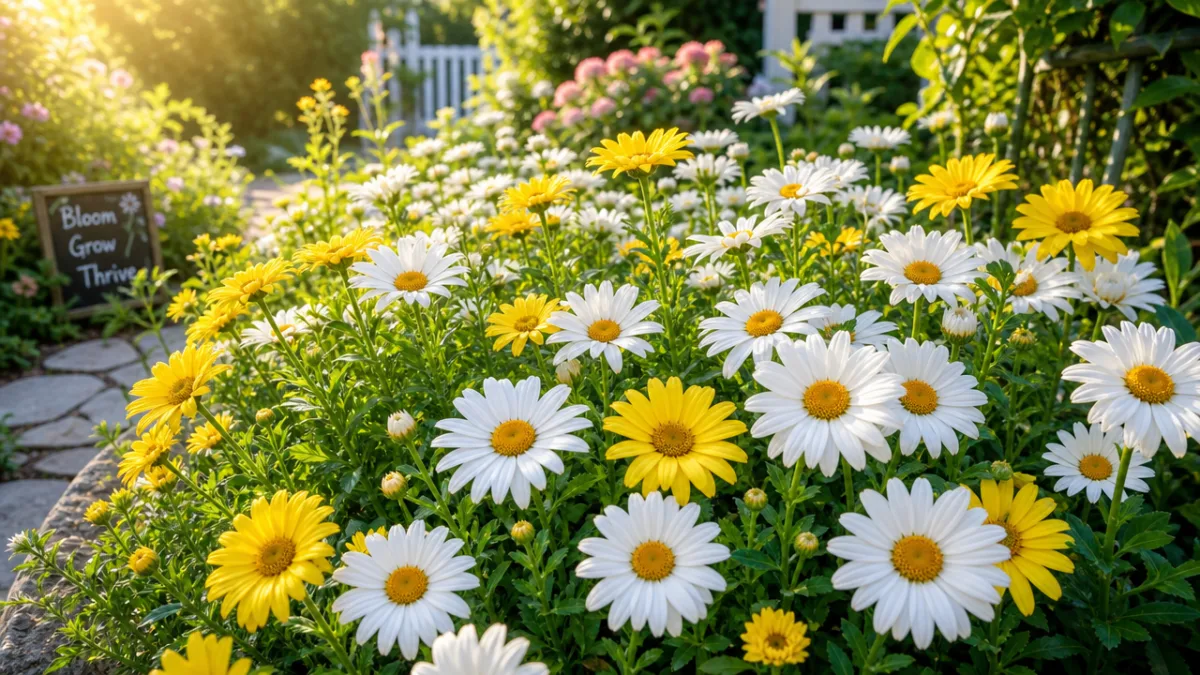
Choosing the Right Fertilizer for Daisies
Walk into any garden center and the fertilizer aisle can feel a little overwhelming — granular, liquid, slow-release, organic, synthetic. For daisies, the good news is you don’t need to overthink it. A balanced, all-purpose fertilizer with an NPK ratio of 10-10-10 or 5-10-5 is a solid starting point for most varieties. These give your plants a well-rounded nutritional base without pushing any single nutrient out of proportion.
Organic fertilizers are a great fit for daisies and have some real advantages over synthetic options. Compost, fish emulsion, bone meal, and kelp meal all release nutrients slowly and steadily, feeding your plants gradually over time instead of delivering a sudden surge that can burn roots or push weak, rapid growth. They also improve your soil over time — loosening heavy clay, helping sandy soils hold onto moisture better. If you care about long-term soil health, organic feeding is a genuinely effective approach.
Slow-release granular fertilizers are another option that works really well for daisies. They’re coated in a material that breaks down gradually over weeks or months, delivering a small, consistent dose of nutrients throughout the growing season. Application is simple — just scratch them into the soil around the base of the plant at the start of the season — and because they don’t dump a large amount of nutrients all at once, the risk of over-fertilizing is much lower. If you’d rather not fuss with a strict feeding calendar, slow-release fertilizers are about as low-maintenance as it gets.
Here’s a quick comparison of common fertilizer types suited for daisies:
- Balanced granular fertilizer (10-10-10): A versatile option for most daisy varieties, applied at the start of the growing season and again before blooming.
- Fish emulsion: A gentle organic liquid fertilizer rich in nitrogen, ideal for early spring feeding to encourage vigorous leafy growth.
- Bone meal: High in phosphorus, this organic option supports strong root development and promotes abundant blooming when applied in spring.
- Slow-release granules: Convenient and consistent, these reduce the risk of nutrient burn and provide steady feeding throughout the season.
- Compost: More of an amendment than a fertilizer, but compost improves soil fertility broadly and reduces the need for supplemental feeding.
- Kelp meal: A trace mineral–rich organic option that supports overall plant health, stress resistance, and vibrant flower color.
How to Apply Fertilizer to Daisies Without Causing Damage
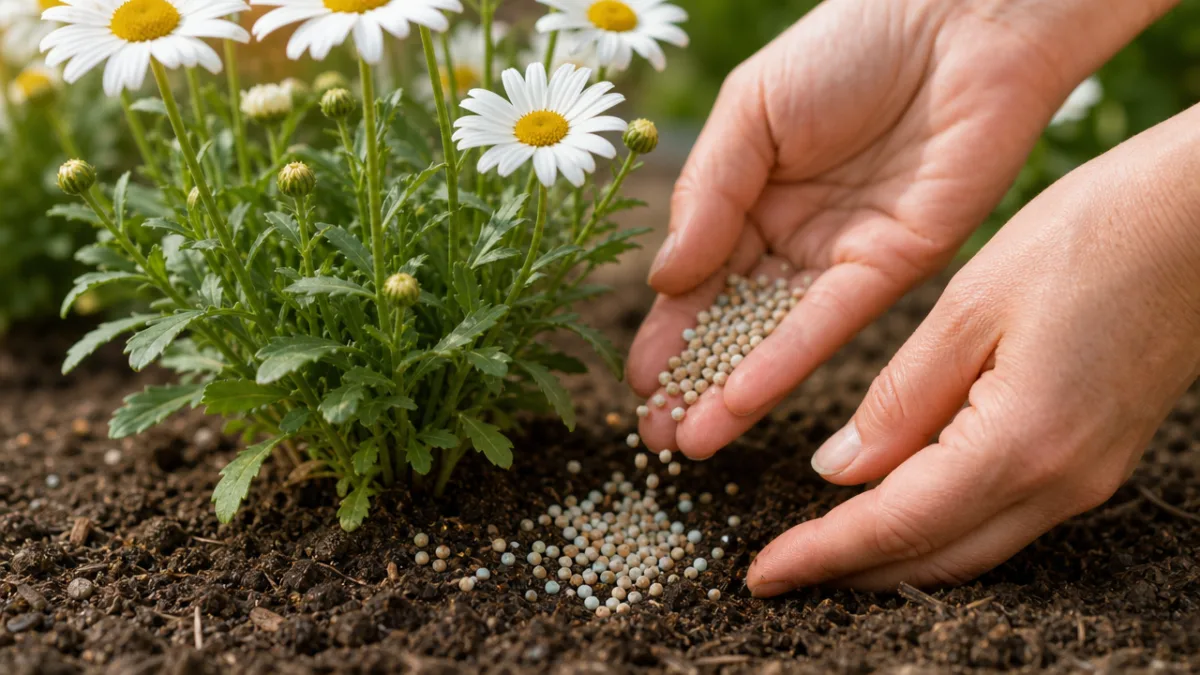
Even the right fertilizer can cause problems if you apply it the wrong way. One of the most common mistakes is piling granules right up against the base of the plant stem — that concentrated contact can chemically burn the sensitive tissue at the crown. Instead, spread granular fertilizer in a ring around the plant, starting a few inches out from the stem and working outward to the drip line (the outer edge of the plant’s canopy). This mirrors how roots naturally spread outward to find nutrients, so you’re putting the food right where it’ll actually be used.
Liquid fertilizers need a bit more care. Always dilute them according to the package directions — more is not better here — and never apply them to dry soil. Water your daisies thoroughly first, then apply the liquid fertilizer. Moist soil helps distribute nutrients evenly and prevents them from concentrating in one spot and burning the roots. Following up with another watering after application helps move everything down into the root zone where the plant can actually reach it.
Foliar feeding — spraying diluted liquid fertilizer directly onto the leaves — can work as a quick fix when a plant is showing signs of deficiency and needs a fast response. That said, it’s really more of a supplemental trick than a primary feeding strategy for daisies. If you go this route, do it in the early morning or late afternoon when it’s cooler, since applying liquid to leaves in hot, direct sun can cause scorch marks. Use a fine mist and coat both the tops and undersides of the leaves for the best absorption.
Signs Your Daisies Need More (or Less) Fertilizer
Your daisies will actually tell you when something’s nutritionally off — you just need to know the language. Yellowing leaves where the color fades between the veins while the veins themselves stay green is a classic sign of a deficiency, often iron or magnesium. Pale, washed-out foliage across the whole plant usually means the plant is short on nitrogen. And if you’re seeing sparse, small blooms on an otherwise healthy-looking plant, phosphorus might be the missing piece. Once you know what to look for, you can respond specifically rather than just guessing and dumping in more fertilizer.
Over-fertilizing — especially with nitrogen — produces its own very recognizable symptoms. Plants that have had too much nitrogen tend to go big on lush, dark green foliage and produce surprisingly few flowers. The stems can get long and floppy, needing staking just to stay upright. In more severe cases, the tips and edges of leaves turn brown and crispy, almost like they’ve been scorched, which chemically speaking is pretty much what’s happened.
Root health is trickier to observe directly, but you’ll notice it through how the plant behaves overall. When excessive fertilizer buildup raises the salt levels in the soil, it actually interferes with the plant’s ability to take up water — so your daisies might wilt even when the soil is plenty moist. This is sometimes called root-level fertilizer burn, and the fix is to flush the soil thoroughly with plain water over several waterings to wash out the excess salts. If your daisies are consistently underperforming despite everything you’re doing right, a soil test might reveal that a nutrient buildup is actually the thing working against you.
Fertilizing Daisies in Containers vs. In-Ground Gardens
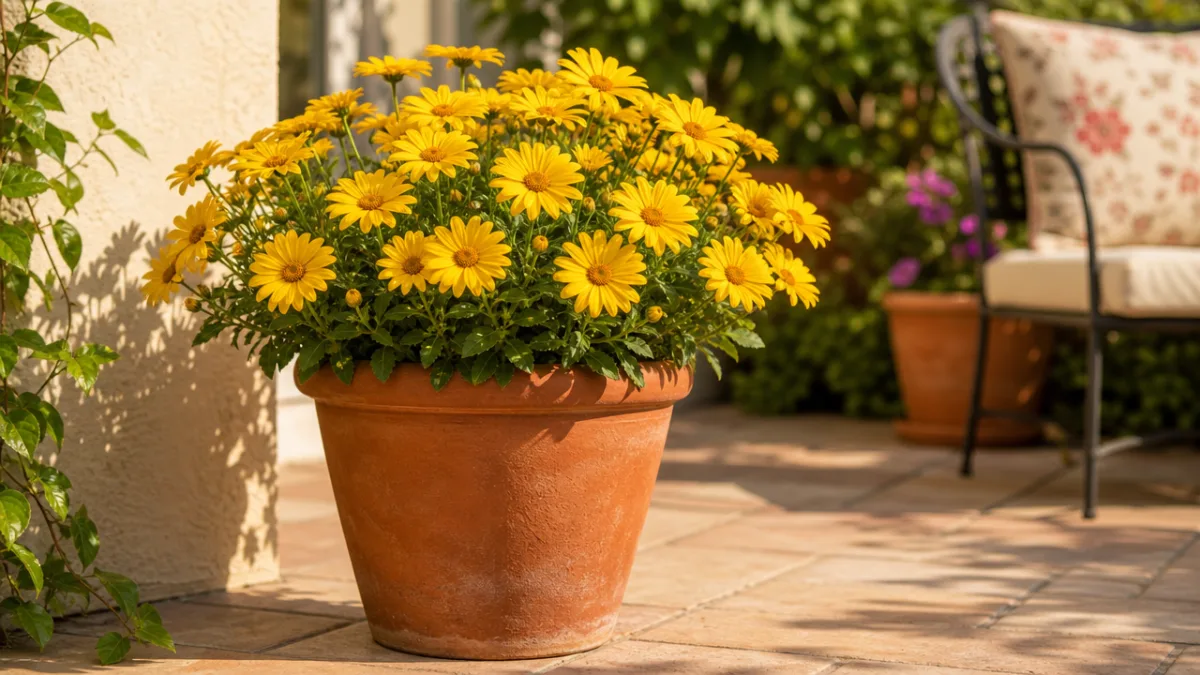
Growing daisies in containers changes the nutritional equation quite a bit compared to planting them in the ground. Container soil has a limited volume, which means nutrients get used up faster and regular watering continuously flushes soluble minerals out through the drainage holes. Because of this, container-grown daisies need more frequent feeding — typically every two to four weeks during the active growing season with a balanced liquid fertilizer.
The potting mix you choose matters just as much as your fertilizer. A good-quality mix that includes compost or organic matter gives your plants a better nutritional starting point and means you don’t need to supplement quite as aggressively. Some potting mixes even come with slow-release fertilizer pellets already blended in, which can carry your plants through the first few months without any additional feeding. It’s worth checking the label before you set up a feeding schedule — otherwise you might end up doubling up and giving your plants way more than they need.
In-ground daisies have it a bit easier. They have access to a much larger volume of soil along with all the microbial life, organic matter, and mineral content that comes with it. That doesn’t mean they never need feeding, but the schedule can be a lot more relaxed. Many gardeners find that one application of slow-release granular fertilizer in spring, plus an annual top-dressing of compost, is all their in-ground daisies need to look great. The real difference between containers and garden beds comes down to how quickly nutrients are consumed and washed away — once you understand that, you can adjust your approach accordingly.
Organic Soil Amendments That Support Long-Term Daisy Health
Fertilizers are good for addressing what your plants need right now, but building genuinely healthy soil is what keeps your daisies — and really everything in your garden — performing well year after year. Adding organic matter to your beds annually is one of the most impactful things you can do to reduce how much you rely on supplemental fertilizers. Well-aged compost is the gold standard: it delivers a wide range of nutrients in slow-release form, improves soil texture, helps drainage in clay-heavy soils, and boosts the biological activity that makes nutrients accessible to plant roots in the first place.
Mulching around your daisies with shredded leaves, straw, or wood chips does more than just keep weeds down and hold moisture in. As organic mulch breaks down, it slowly enriches the soil with humus and trace nutrients. Earthworms and other beneficial soil organisms are drawn to the moist, mulched environment, and as they work through it they aerate the soil and convert organic material into forms plants can actually use. Over time, a consistently mulched garden bed develops a naturally rich, biologically active quality that nourishes your plants with very little effort on your end.
Green manures and cover crops are worth considering if you’re willing to plan a season ahead. Planting a nitrogen-fixing cover crop like clover or legumes in a bed during the off-season — then turning it into the soil before planting daisies in spring — can meaningfully boost soil fertility without buying a single thing. It’s essentially mimicking the natural processes that build rich, fertile soil in wild ecosystems, and it’s about as sustainable as garden nutrition gets. It takes a bit more planning upfront, but the long-term improvement in soil quality and plant performance makes it genuinely worthwhile.
To summarize a practical fertilizing approach for healthy, blooming daisies throughout the season, consider this general framework:
- Test your soil in late winter or early spring to understand its baseline fertility and pH before adding anything.
- Amend the soil with compost at planting time or as a top-dressing around established plants at the start of each growing season.
- Apply a balanced slow-release granular fertilizer (10-10-10 or similar) in early spring as new growth begins to emerge.
- Follow up with a phosphorus-forward liquid fertilizer in late spring or early summer, just before the main bloom period.
- Stop all nitrogen-heavy feeding once plants are in full bloom, and discontinue all feeding six to eight weeks before the first expected frost.
- Mulch around plants throughout the season to conserve moisture and gradually enrich the soil as the organic material breaks down.
Daisies are wonderfully forgiving plants, and honestly, they don’t ask for much. A little nutritional attention goes a long way — these plants genuinely want to bloom for you, and your job is mostly just to make sure nothing is holding them back. Get the fertilizer right, apply it at the right time, and you’ll be rewarded with wave after wave of those cheerful, sun-catching blooms that make all the garden effort feel completely worth it.








What do you think?
It is nice to know your opinion. Leave a comment.