










30 Budget-Friendly DIY Garden Projects for a Stunning Backyard
Why DIY Garden Projects Are Worth Your Time and Money
Transforming your backyard into a beautiful outdoor retreat doesn’t have to drain your savings account. DIY garden projects offer an incredible opportunity to create something genuinely personal while keeping costs remarkably low. When you build or plant something yourself, you invest not just money but creativity, effort, and a sense of ownership that purchased solutions simply cannot replicate. The pride you feel walking through a garden you shaped with your own hands is a reward that compounds over every season.
Beyond the emotional satisfaction, the financial case for DIY gardening is compelling. Professional landscaping services can run thousands of dollars for projects that cost a fraction of that when you supply the labor yourself. A stone pathway installed by a contractor might cost $2,000 or more, while doing it yourself with reclaimed or inexpensive materials could bring that number under $200. Multiplied across a full backyard transformation, those savings add up to a genuinely life-changing difference in your household budget.
There’s also a practical learning dimension that makes DIY gardening particularly valuable. Each project teaches you something — about soil, drainage, plant biology, basic carpentry, or masonry. Those skills compound over time, making each successive project faster, cheaper, and better than the last. Many experienced DIY gardeners find that after a few seasons, they can accomplish in a weekend what would take professionals days to complete, and they do it with a creative flair that reflects their unique vision for the space.
Raised Garden Beds: The Foundation of Any Productive Backyard
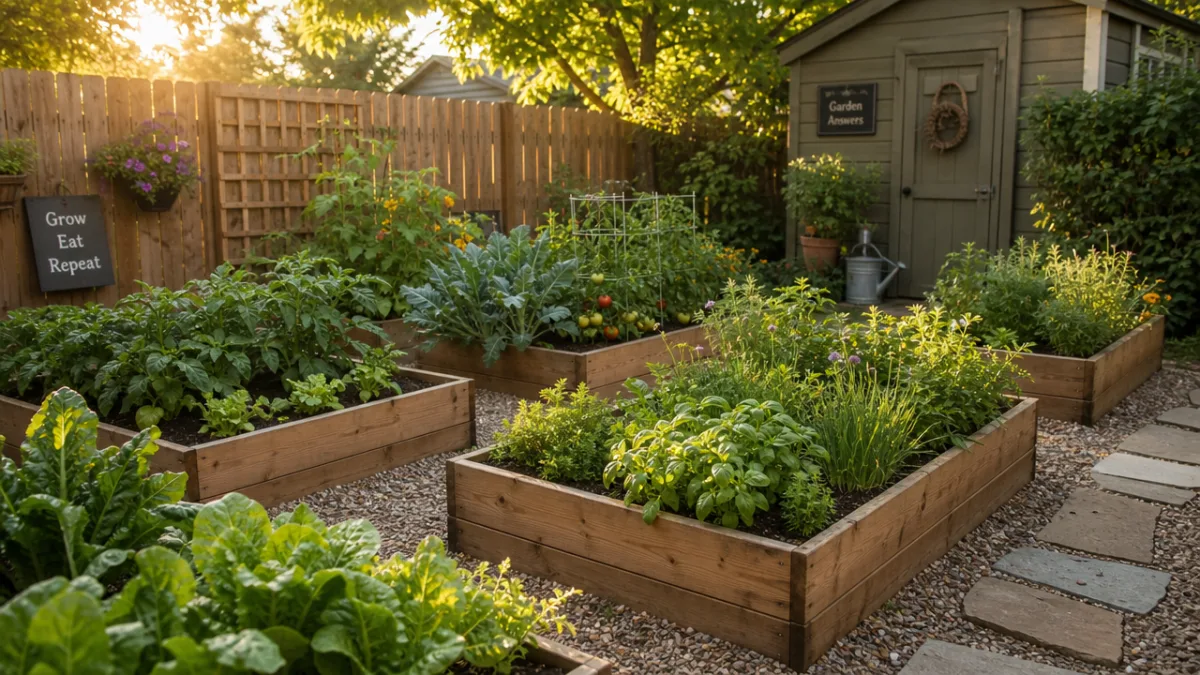
Raised garden beds are arguably the single most impactful DIY project you can undertake in a backyard. They improve drainage, warm soil faster in spring, reduce weeding significantly, and make gardening physically easier by bringing plants to a more comfortable working height. Building a basic raised bed from untreated cedar or pine planks requires only a saw, screws, and a free afternoon. A standard 4-by-8-foot bed costs between $30 and $80 in materials depending on your local lumber prices, which is a fraction of what pre-made kits cost.
The filling strategy for your raised beds is where many beginners overspend unnecessarily. A technique commonly known as the “lasagna method” or hugelkultur-inspired approach lets you fill the bottom two-thirds of a deep bed with logs, cardboard, straw, wood chips, kitchen scraps, and other organic matter before topping it with quality soil. This approach dramatically cuts the volume of bagged or delivered soil you need to purchase, while simultaneously creating a self-feeding compost layer that improves the bed’s fertility for years with minimal additional investment.
Stacking and configuring multiple raised beds opens the door to beautiful, structured garden design. Arrange three or four beds in a U-shape to create a dedicated kitchen garden with a central pathway. Use varying heights — some beds six inches deep for herbs and lettuce, others twelve inches or more for root vegetables and tomatoes — to add visual interest and match each crop’s needs. painting or staining the exterior of your beds in a coordinating color instantly elevates the aesthetic from rustic utility to intentional backyard design.
Creative Pathways and Ground Cover on a Shoestring Budget
Pathways define the structure of a garden more than almost any other single element. They direct movement, create visual rhythm, and separate planting zones from walking areas in a way that transforms a chaotic yard into an organized, inviting outdoor space. The good news is that stunning garden paths can be built for very little money using materials that are often free or deeply discounted. Salvaged bricks, broken concrete pieces arranged as stepping stones, flat river rocks, or reclaimed paving slabs sourced from online marketplaces are all excellent candidates for a budget-conscious path project.
Gravel paths are among the most affordable and lowest-maintenance options available to DIY gardeners. A cubic yard of pea gravel or crushed stone costs between $30 and $60 depending on your region, and that quantity is enough to lay a 3-foot-wide path roughly 10 feet long at a 2-inch depth. Line the path with landscape fabric before laying gravel to suppress weeds effectively and extend the life of the installation considerably. Edge the gravel with inexpensive metal garden edging, repurposed wine bottles buried neck-down, or salvaged timbers to keep the stones in place and sharpen the visual definition of the path.
Ground cover plants offer a living alternative to hard surfaces that costs remarkably little once established. Creeping thyme, clover, and ajuga are all vigorous spreaders that can be started from inexpensive plugs or even propagated by dividing established clumps from a neighbor’s garden. Plant them between stepping stones or as a lawn alternative in areas with lighter foot traffic, and within a season or two you’ll have a lush, fragrant carpet that requires almost no mowing, little watering once established, and provides valuable habitat for pollinators at the same time.
Upcycled Planters and Container Gardens That Look Expensive
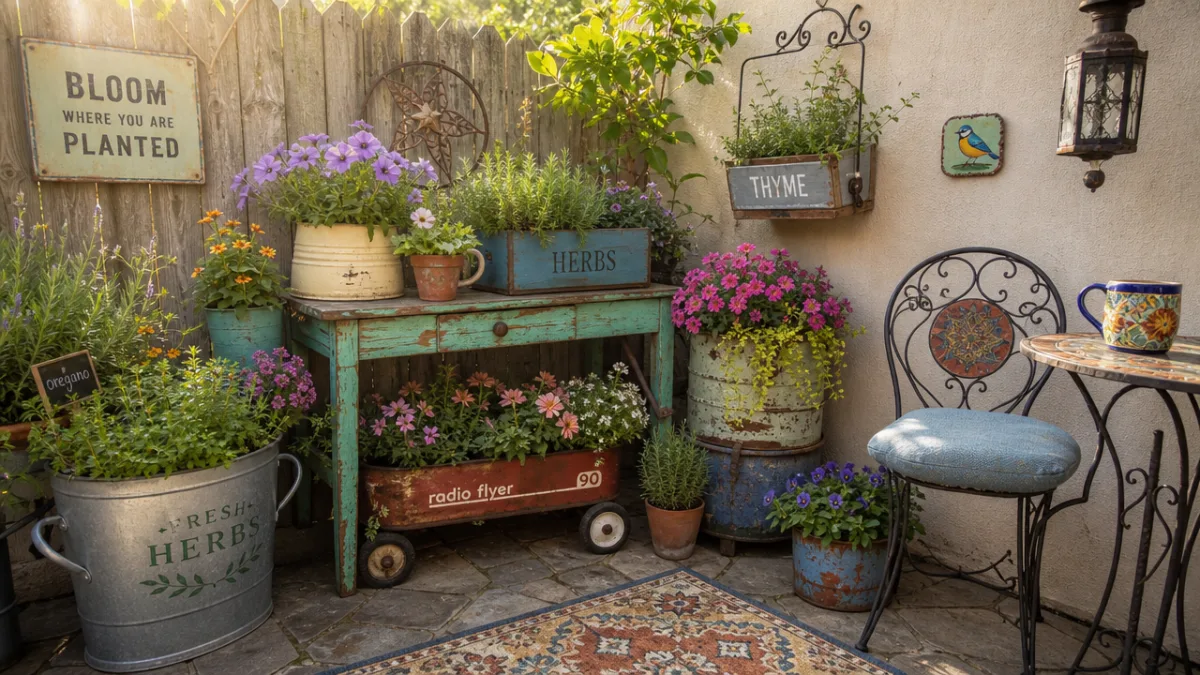
Some of the most visually striking container gardens in beautifully photographed backyards are built from objects that cost nothing at all. Old wooden wine crates, cracked terracotta pots repaired with metal clamps and styled as a design feature, galvanized stock tanks from farm supply stores, vintage colanders, worn-out rubber boots, and even old kitchen colanders can all become charming, characterful planters with minimal effort. The key is grouping containers at varying heights — use overturned pots, wooden crates, or decorative stools as risers — so the arrangement reads as a composed vignette rather than a random collection.
Galvanized metal stock tanks deserve special mention as a DIY garden investment that punches well above its price point. Available at agricultural supply stores for between $60 and $150 depending on size, these tanks are incredibly durable, look effortlessly stylish, and can hold enough soil to grow almost anything from lettuce and herbs to dwarf fruit trees. Simply drill several drainage holes in the bottom, add a layer of gravel, fill with quality potting mix, and plant. The industrial-meets-garden aesthetic they create is extremely popular and genuinely difficult to distinguish from much more expensive designer planters.
Vertical planters are a space-multiplying solution perfect for small backyards, apartment balconies, or any wall or fence that currently serves no functional purpose. A simple pallet planter — made by stapling landscape fabric across the back and bottom of a clean wooden shipping pallet before filling the gaps with soil and plants — can be built in under an hour for effectively zero cost if you can source a free pallet. Mount it vertically on a fence and plant trailing herbs, succulents, strawberries, or flowering annuals in the openings. Within a few weeks the pallet disappears beneath the plants and you’re left with a stunning living wall that visitors will ask about every time.
Water Features and Lighting That Transform the Ambiance
Nothing signals “considered outdoor design” quite like the sound of moving water, and building a simple garden water feature is far more accessible than most people assume. A basic container pond requires only a watertight vessel — a half whiskey barrel with a liner, a large glazed pot sealed with waterproof sealant, or even a repurposed stock tank — a small submersible pump costing $20 to $40, and a few aquatic plants. Set up in an afternoon, this kind of installation creates the peaceful, nature-rich atmosphere that homeowners spend thousands trying to achieve with professional pond installations.
Solar-powered garden lighting has become genuinely good in recent years, and the price-to-performance ratio makes it an easy win for budget-conscious DIY gardeners. A set of solar stake lights for pathways costs as little as $15 to $30 and requires zero wiring or electrical knowledge to install. String lights hung between fence posts or across a pergola create an instantly warm and inviting atmosphere for evening entertaining. Look for warm white bulbs rather than cool white or blue-tinted options, as the color temperature makes an enormous difference in how inviting the space feels after dark.
Combining water and light takes an outdoor space into genuinely magical territory. Submersible LED lights placed in a container pond or birdbath create a shimmering, reflective effect that seems far more expensive and complex than it actually is. Position a small spotlight to illuminate a water feature from the side and you’ll capture the movement of the water in a way that’s mesmerizing on summer evenings. These effects, achievable for well under $100 in total materials, are the kinds of finishing touches that make guests assume you hired a professional designer to create the space.
Vertical Gardening and Structures That Add Height and Drama
A backyard without vertical elements often feels flat and unfinished, regardless of how much is planted at ground level. Trellises, arbors, pergolas, and obelisks introduce height, frame views, create shade, and give climbing plants the support they need to become major design features rather than sprawling nuisances. Building basic vertical structures from lumber, bamboo poles, or even branches harvested during tree pruning is well within the capability of any DIY gardener with a few basic tools and a free weekend afternoon to spend on the project.
A simple fan trellis built from inexpensive 1-by-2-inch lumber and mounted to a fence or wall costs under $20 in materials and takes less than an hour to build. Planted with a climbing rose, jasmine, clematis, or passionflower vine, that same trellis becomes an extraordinary floral display within one to two growing seasons. A freestanding bamboo teepee trellis — made by bundling five or six long bamboo poles at the top with twine and spreading the bases in a circle — creates a charming focal point that supports beans, cucumbers, or sweet peas beautifully while costing almost nothing at all.
A DIY pergola represents a larger commitment of time and materials, but remains very achievable on a budget if you plan carefully and source materials wisely. A basic 10-by-12-foot pergola built from pressure-treated lumber can be completed for $400 to $800 in materials, compared to $3,000 to $10,000 for a professionally installed version. Draped with string lights and a climbing vine, or fitted with a simple shade sail across the top, a DIY pergola becomes the defining feature of an outdoor living space — the element around which furniture, planters, and pathways all orient themselves to create a genuinely cohesive backyard design.
Soil Health and Composting: The Cheapest Long-Term Investment You Can Make
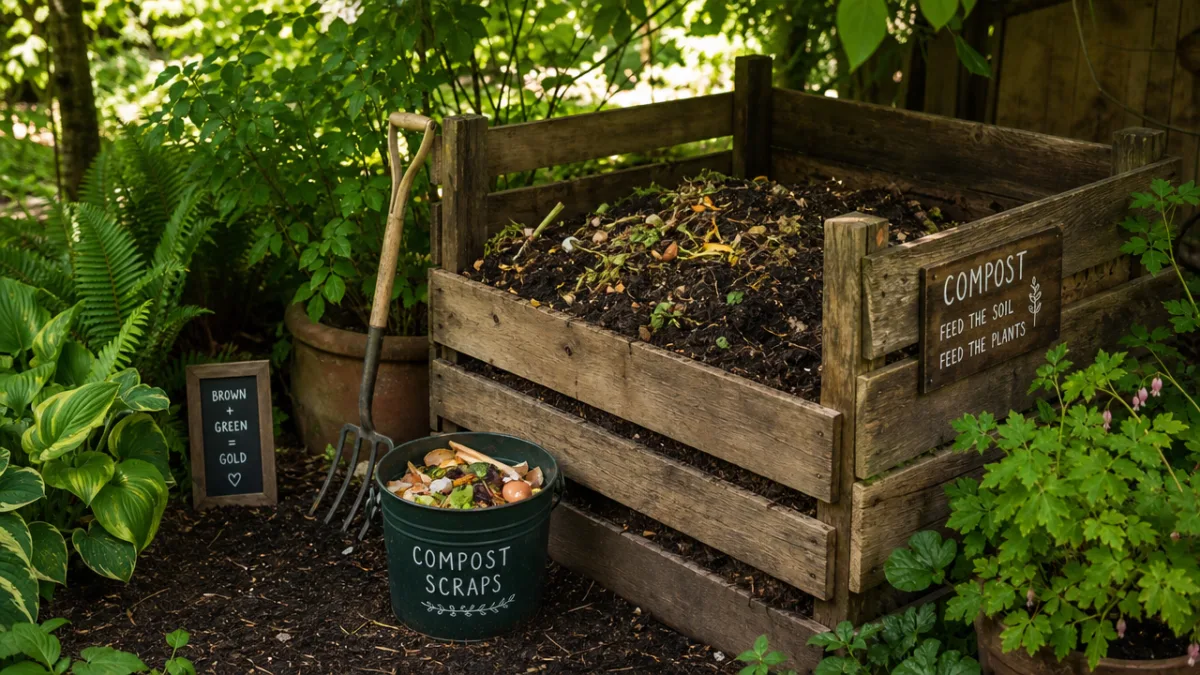
Every beautiful garden rests on healthy soil, and the most cost-effective way to build and maintain that foundation is through composting. A basic compost bin can be constructed from four wooden pallets wired together at the corners, a simple cylinder of wire mesh staked in a corner of the yard, or a purpose-built three-bin system made from inexpensive lumber and hardware cloth. Any of these approaches converts kitchen scraps, garden waste, grass clippings, and cardboard — materials that would otherwise go to landfill — into a rich, living soil amendment that professional gardeners call “black gold.”
The ongoing savings from a productive compost system are substantial. A bag of quality compost or garden soil amendment costs between $8 and $15 at most garden centers, and a productive backyard garden might require dozens of bags annually to maintain fertility. A home compost system, once established, provides essentially unlimited quantities of this material for free. The quality of home compost is also frequently superior to commercial products, as it’s made from diverse organic materials and contains a richer community of beneficial microorganisms that support plant health in ways that bagged products cannot match.
Beyond composting, inexpensive soil improvement strategies include sheet mulching with cardboard and wood chips, growing nitrogen-fixing green manure crops like clover or mustard between planting seasons, and collecting rainwater for irrigation to avoid the mineral buildup that tap water can cause in containers over time. These practices, taken together, build increasingly fertile soil year after year with minimal ongoing cost. Gardeners who invest in their soil’s biology early find that over time they spend less on fertilizers, pesticides, and replacement plants because their garden ecosystem becomes progressively more resilient, productive, and beautiful with each passing season.
Putting It All Together: Planning Your Budget-Friendly Backyard Transformation
The most successful DIY backyard transformations share a common characteristic: they begin with a plan. Before purchasing a single material or digging a single hole, sketch your space on paper and identify your priorities. Ask yourself which elements will deliver the greatest visual and functional impact for your specific yard, lifestyle, and climate. For most people, the high-impact starting points are defining a clear seating area, establishing at least one raised bed or productive growing zone, and creating a pathway that gives the garden a sense of structure and intentionality. Everything else can be added gradually as time and budget allow.
Phasing your projects across multiple seasons is not a compromise — it’s actually a strategic advantage. Plants grow, materials weather, and your vision for the space will evolve as you spend time in it. Building everything at once locks in design decisions you may later regret and concentrates financial outlay in a way that can feel overwhelming. Instead, completing one or two projects per season lets you learn from each one, source materials more opportunistically through free marketplaces and end-of-season sales, and allow earlier plantings to mature so they’re contributing real beauty by the time later projects are completed.
Community resources are dramatically underutilized by most DIY gardeners and represent significant opportunities for both savings and inspiration. Local tool libraries, garden clubs, community seed swaps, online neighborhood groups, and municipal composting programs can all reduce the cost of a backyard transformation substantially. Many municipalities offer free wood chips from tree-trimming operations to residents who request them — enough to mulch an entire backyard delivered to your driveway at no cost whatsoever. Connecting with other DIY gardeners in your community also opens the door to plant divisions, propagation cuttings, and the kind of hard-won local knowledge about soil conditions, climate, and plant performance that no website or book can fully provide.








What do you think?
It is nice to know your opinion. Leave a comment.