










Crochet Purse Ideas for Kids: A Complete Guide to Crafting Adorable Bags
Why Crochet Purses Make Perfect Accessories for Kids
Crochet purses have become one of the most charming and practical accessories you can create for children. Unlike store-bought bags that often lack personality, a handmade crochet purse brings together color, texture, and creativity in a way that kids absolutely love. Whether your child is heading to a birthday party, a family outing, or simply playing dress-up at home, a crochet purse adds a delightful finishing touch to any little outfit. Parents and grandparents have long treasured the tradition of making handcrafted items for children, and a crochet purse continues that beautiful legacy.
Beyond their visual appeal, crochet purses offer a surprising level of durability when made with the right materials. Cotton yarn, for example, holds up exceptionally well through washing and everyday handling, which is exactly what you need for an accessory that a child will use repeatedly. The flexibility of crochet construction also means the purse can stretch slightly to accommodate small treasures, toy coins, little notebooks, and all the other essentials that children tend to carry around with enormous pride. A well-made crochet bag can last through multiple seasons and even be handed down to younger siblings.
There is also a deeply educational dimension to introducing children to crochet purses. When a child watches a parent or grandparent create something from a simple ball of yarn, it sparks curiosity about how things are made. Many children eventually want to learn the craft themselves, making the crochet purse a gateway into a lifelong creative skill. Even if the child does not pick up a hook right away, carrying a handmade item teaches them to appreciate craftsmanship and the love that goes into creating something by hand rather than purchasing it from a shelf.
Popular Styles and Shapes to Try
The variety of styles available for crochet kids’ purses is genuinely impressive, and the right shape can make all the difference in how much a child loves their bag. The classic bucket bag is a perennial favorite because its wide opening makes it easy for small hands to reach inside without frustration. A simple circular base worked in the round, with straight sides built up using single or double crochet stitches, forms the foundation of this style. Adding a long shoulder strap makes it hands-free and practical for active little ones who need their arms free to play.
Mini crossbody bags are another wildly popular choice, especially for slightly older children who want something that looks more grown-up and fashionable. These bags feature a narrow rectangular or oval body with an adjustable strap long enough to drape across the chest. The small size is actually a feature rather than a limitation, as children tend to lose items in large bags, while a compact crossbody keeps things organized and within easy reach. You can personalize these bags endlessly with buttons, zippers, or embroidered initials to make them feel truly special and one-of-a-kind.
Animal-shaped purses deserve their own special mention because they are consistently the most requested style among young children. Imagine a little green frog bag with embroidered eyes and tiny felt feet, or a fluffy bunny purse with long crocheted ears that flop adorably to the side. These novelty shapes require a bit more advanced planning in terms of construction, but the finished result is absolutely worth the extra effort. Many crochet designers have published free and paid patterns for animal purses featuring cats, bears, owls, unicorns, and even popular cartoon-inspired creatures that children recognize and adore immediately.
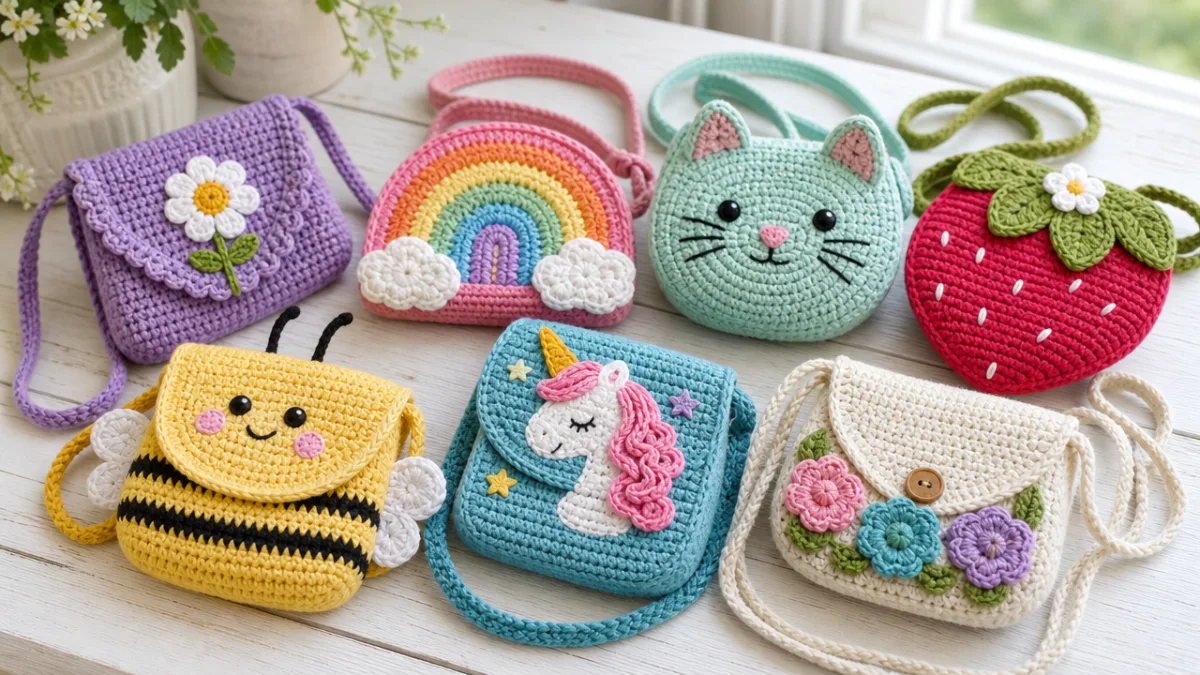
Best Yarn Choices and Materials for Kids’ Crochet Bags
Choosing the right yarn is one of the most important decisions you will make when crafting a crochet purse for a child, and it goes far beyond simply picking a pretty color. Cotton yarn is widely regarded as the gold standard for kids’ accessories because it is soft against the skin, machine washable, and holds its shape beautifully over time. Brands like Paintbox Simply DK Cotton, Lion Brand 24/7 Cotton, and Drops Safran are beloved by crochet makers for their smooth texture and wide range of vibrant colors that appeal to children. Cotton also has the advantage of being hypoallergenic, which is an important consideration for children with sensitive skin.
Acrylic yarns offer an excellent budget-friendly alternative and come in an almost unlimited range of colors, including specialty options like self-striping, sparkle, and color-changing variegated yarns that children find absolutely magical. A sparkle or metallic yarn worked through a solid color can give a purse a fairy-tale quality that makes a child feel like they are carrying something truly enchanted. The main consideration with acrylic is ensuring it is a soft, quality variety rather than a scratchy budget option, as lower-quality acrylics can feel rough against the skin and lose their shape more quickly with use.
In addition to yarn, several other materials will elevate the finished quality of a kids’ crochet purse significantly. Consider keeping the following supplies on hand when starting your project:
- Sturdy nylon or cotton webbing for shoulder straps, which is more durable than crocheted straps alone and less likely to stretch out of shape over time with the weight of the bag’s contents.
- Purse frames or magnetic snap closures to give the bag a professional, secure closure that children can manage independently without struggling with complicated clasps.
- Fabric lining material cut and hand-stitched to the inside of the bag, which prevents small items from slipping through the crochet stitches and gives the bag a neat, polished interior.
- Safety eyes and embroidery floss for adding facial features to animal-shaped designs, giving them personality and expression that children immediately connect with emotionally.
- Stitch markers, a tapestry needle for weaving in ends, and a good pair of sharp scissors to ensure clean, professional finishing on every project.
The weight of the yarn matters considerably when constructing a bag that will actually hold its shape under the weight of a child’s belongings. A worsted weight yarn, typically labeled as size 4 on the yarn label, strikes the ideal balance between a fabric that is thick enough to be sturdy and flexible enough to crochet comfortably at a reasonable pace. Using a hook one size smaller than the yarn label recommends creates a tighter gauge with fewer gaps between stitches, which means smaller items will not fall through the bottom of the bag and the overall structure will feel more solid and reliable.
Simple Beginner-Friendly Patterns and Techniques
One of the wonderful things about crochet purses for kids is that some of the most adorable designs are also the easiest to make, which means even a beginner crocheter can create something truly impressive. The granny square purse is perhaps the most iconic beginner-friendly project in the entire world of crochet bags. By working a handful of classic granny squares and joining them together, you can construct a fully functional bag with almost no shaping or complex stitch counts required. Granny squares also lend themselves beautifully to scrap yarn projects, allowing you to use up leftover yarn from other projects in a cheerful, patchwork-inspired design that children love.
The basic tote silhouette is another excellent starting point for newer crochet makers. This design involves working a simple rectangle in rows of double crochet, then folding it in half and seaming the sides to create the bag body. Two crocheted chains or a length of purchased ribbon serve as handles, and the whole project can realistically be completed in a single afternoon. Despite its simplicity, the resulting bag looks polished and purposeful, and you can customize it with stripes, color blocks, or a simple row of shell stitches along the top edge to add a decorative border that elevates the overall design considerably.
For crocheters who want to try something slightly more adventurous, the jellyfish purse pattern has become enormously popular on crafting platforms and social media in recent years. This design creates a rounded dome shape for the bag body, with long crocheted tentacles hanging from the bottom that sway as the child walks, creating a delightful sense of movement and play. The construction relies primarily on increases and decreases worked in the round, which is an excellent technique to practice for anyone looking to expand their crochet skills beyond basic rectangles and squares. Children are consistently enchanted by the whimsical result, and the pattern teaches valuable three-dimensional shaping skills.
Creative Customization Ideas to Make Purses Truly Unique
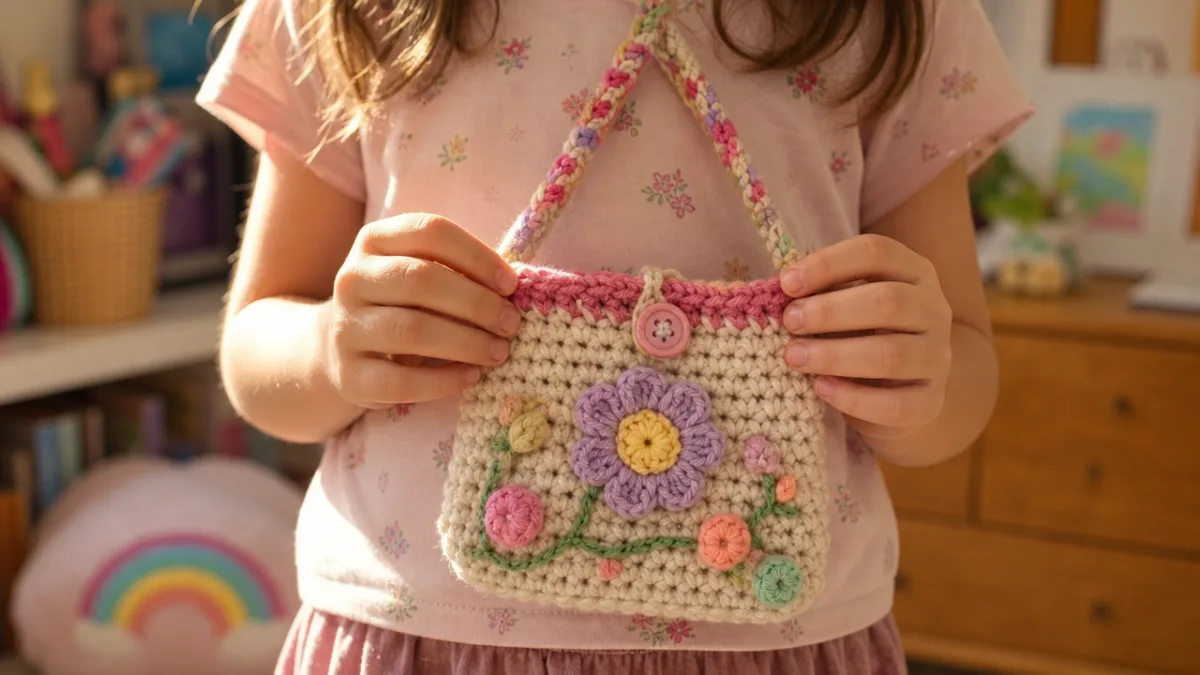
Customization is where a crochet purse truly transforms from a simple craft project into a treasured personal item that a child will carry with genuine pride. Appliqués are one of the easiest and most impactful ways to personalize a bag, as you can crochet small flowers, stars, hearts, butterflies, or any shape imaginable and then sew them onto the finished bag with just a few stitches. These three-dimensional embellishments add texture and visual interest that flat embroidery cannot replicate, and they can be repositioned or swapped out as the child’s tastes evolve. A simple crochet flower appliqué worked in three colors takes only a few minutes to make but completely transforms the personality of a plain bag.
Embroidery using a tapestry needle and contrasting yarn opens up an entirely different world of customization possibilities. You can stitch a child’s name in bold block letters across the front panel of the bag, turning it into a personalized keepsake that also helps prevent mix-ups at school or at parties. Simple cross-stitch patterns, running stitch outlines of favorite animals, or even small pixel-art inspired designs worked in tiny stitches can turn a plain crocheted surface into a miniature canvas. Children who are old enough to hold a needle often enjoy participating in this step themselves, adding a few of their own stitches to make the bag feel even more personally meaningful and special.
Consider these additional customization ideas that consistently delight children and make gifted crochet purses feel absolutely unique:
- Add a small interior pocket by sewing a square of fabric or working a small crocheted rectangle to the inside wall of the bag, giving children a dedicated spot for especially precious small items like hair clips or a favorite eraser.
- Incorporate a zipper closure along the top opening to prevent items from spilling out during active play, using a colorful zipper that matches or contrasts with the yarn for a design detail that looks intentional and professional.
- Attach decorative charms, small bells, or pom-poms to the strap or corners of the bag, adding sensory interest and a playful jingle that children find irresistible as they move around throughout the day.
- Use tapestry crochet or intarsia techniques to work a multicolored design, such as a rainbow, a simple animal face, or a child’s initial, directly into the fabric of the bag without the need for any additional embellishment afterward.
- Line the inside of the bag with a favorite fabric print, such as stars, dinosaurs, or florals, creating a surprise interior that delights children every time they open their bag and reinforces the overall theme of the design.
Color selection itself is a powerful form of customization that should never be underestimated when creating a bag for a specific child. Involving the child in the yarn-choosing process is a wonderful way to ensure they will love and use the finished bag, as children have remarkably strong opinions about color from a very young age. Some children want a bag in their absolute favorite color worked in a solid, bold block of color, while others are drawn to stripes, color gradients, or the delightfully chaotic energy of a multicolored scrappy design. Honoring these preferences from the very beginning of the project ensures the finished item feels personal and considered rather than generic.
Making Crochet Purses as Gifts and for Special Occasions
A handmade crochet purse is one of the most thoughtful and memorable gifts you can give a child for any occasion, from birthdays and holidays to the first day of school or a flower girl role in a family wedding. Unlike mass-produced gifts that a child may quickly forget, a handmade item carries an inherent emotional weight because it represents the time, care, and skill of the person who made it. Children are often more perceptive about this distinction than adults realize, and many grown adults can vividly recall specific handmade items they received as children precisely because those objects carried a feeling of being truly seen and loved by someone who took the time to create something just for them.
For a flower girl or ring bearer at a wedding, a small crochet basket or clutch made in white, ivory, or a color matching the wedding palette makes an absolutely enchanting accessory that photographs beautifully and gives the child something meaningful to carry beyond the ceremony itself. A delicate shell stitch or lace pattern worked in a fine cotton thread gives the bag an elegant, heirloom quality appropriate for the formality of the occasion, while still being soft and approachable for a young child to handle. Adding a ribbon bow, a small cluster of crochet flowers, or a pearl button closure elevates the finished piece into something that feels genuinely bridal and special rather than simply cute.
Seasonal and holiday-themed crochet purses make wonderful gifts that tie into the excitement of special times of year. An Easter basket-style purse worked in soft pastel colors with a crocheted chick or flower appliqué delights young children while also being practical for collecting Easter eggs during a hunt. A Halloween treat bag shaped like a pumpkin or a friendly ghost can replace a plastic bucket for trick-or-treating while adding a handmade charm to the occasion. Christmas-themed bags in red and white stripes, adorned with tiny crochet snowflake appliqués or a small jingle bell on the strap, make delightful stocking stuffers or gift bags for presenting other small presents in a way that makes the container itself part of the gift experience.
Encouraging Kids to Learn Crochet Through Purse Projects
Teaching a child to crochet using a purse project as the goal is a brilliantly motivating approach because children are naturally driven by the desire to create something tangible and beautiful that they can actually use and show off to others. Unlike abstract practice swatches that feel purposeless to a young learner, a purse project gives a child a clear, exciting destination to work toward from the very first stitch. The combination of a useful finished object and the pride of having made it themselves creates a powerful positive feedback loop that keeps children engaged even through the inevitable moments of frustration that come with learning any new skill.
The best starting point for a child learning to crochet is mastering the chain stitch and single crochet, both of which involve simple, repetitive hand movements that children can develop muscle memory for relatively quickly with patient practice. A simple flat rectangle worked entirely in single crochet rows can be folded and seamed to make a basic clutch-style purse, giving a beginner crocheter a finished project within just a few practice sessions. The sense of accomplishment a child feels when they hold up a bag they have made with their own two hands is extraordinary and often becomes the spark that turns a casual introduction into a genuine lifelong passion for the craft.
Consider creating a dedicated crafting kit for a child who is learning to crochet their first purse, assembling all the tools and materials they need into a small basket or box that they can call their own crafting workspace. Include a child-sized crochet hook in a comfortable size such as a 5mm or 5.5mm, a skein of smooth worsted weight cotton yarn in their favorite color, a blunt-tipped tapestry needle for seaming, a small pair of safety scissors appropriate for their age, and a simple printed pattern with illustrations rather than just written instructions. Having everything organized in one dedicated space gives the child ownership over their craft and makes it easy to pick up and practice for a few minutes whenever the mood strikes, building consistency and skill over time without it ever feeling like a structured lesson or homework assignment.








What do you think?
It is nice to know your opinion. Leave a comment.