










Charming Cottage Garden Ideas for Small Yards
The Magic of Cottage Gardens in Compact Spaces
There’s something undeniably romantic about a cottage garden — the tumbling roses, the fragrant lavender, the cheerful chaos of flowers spilling over stone paths. For a lot of homeowners, that kind of lush, storybook landscape feels like a pipe dream when you’re working with a small yard. But here’s the thing: cottage gardens were actually born in modest surroundings, tended by rural workers who had little space and even fewer resources. A small yard isn’t a limitation — it’s an invitation to get creative.
What makes the cottage garden style so special is that it embraces abundance over empty space. Where a formal garden uses negative space to create drama, the cottage approach layers plants densely, letting them intermingle and self-seed in ways that feel completely natural. In a small yard, that layering philosophy becomes especially powerful, because every square inch is earning its keep. A climbing rose on a fence, creeping thyme tucked between stepping stones, and a cluster of foxgloves in the corner can turn even a tiny strip of land into something genuinely breathtaking.
Getting started really comes down to a shift in mindset more than anything. Rather than trying to squeeze a grand English estate into a smaller footprint, the goal is to cultivate intimacy. Small gardens draw visitors in close — you notice the bee landing on a single bloom, or the way morning light filters through tall feathery grasses. When you lean into the scale of your space instead of fighting it, what you end up with is a garden that feels like a secret world: personal, cozy, and utterly charming.
Choosing the Right Plants for a Lush, Layered Look
Plant selection is really the heart of any cottage garden, and in a small yard, every choice carries a bit more weight. You want plants that offer multiple seasons of interest, bloom for a good long stretch, and play well together in terms of color, texture, and height. Classic cottage favorites like peonies, foxgloves, sweet William, hollyhocks, and salvia have stood the test of time for good reason — they’re generous plants that give you beauty, fragrance, and wildlife habitat all at once.
Layering is how you create that sense of depth and fullness in a tight space. Think in three tiers: tall plants for the back, medium-height plants for the middle, and low-growing things along the edges. Against fences or at the back of borders, taller plants like delphiniums, verbascum, or climbing clematis add vertical drama without eating up precious ground space. In the middle, cottage staples like echinacea, rudbeckia, and catmint carry the bulk of seasonal color. Up front, low growers like lady’s mantle, creeping phlox, or dwarf lavender soften edges and spill gracefully over pathways.
Self-seeding plants are honestly a cottage gardener’s best friend, especially in small spaces where buying and replacing annuals every season gets old fast. Plants like love-in-a-mist, California poppy, sweet alyssum, and borage scatter their seeds freely each autumn and come back the following spring in new and unexpected combinations. That natural reseeding is exactly what gives cottage gardens their spontaneous, unplanned character. Over time, the garden starts to design itself — filling gaps, softening hard edges, doing a lot of the work for you.
- Spring bloomers: Tulips, forget-me-nots, wallflowers, and bleeding heart set the stage with soft pastels and romantic tones.
- Summer showstoppers: Roses, peonies, foxgloves, delphiniums, and sweet peas provide peak cottage garden drama.
- Autumn interest: Sedums, asters, rudbeckia, and ornamental grasses keep the garden alive well into the cooler months.
- Year-round structure: Evergreen shrubs, boxwood, and architectural plants like cardoon anchor the garden through winter.
Design Principles That Make Small Spaces Feel Grand
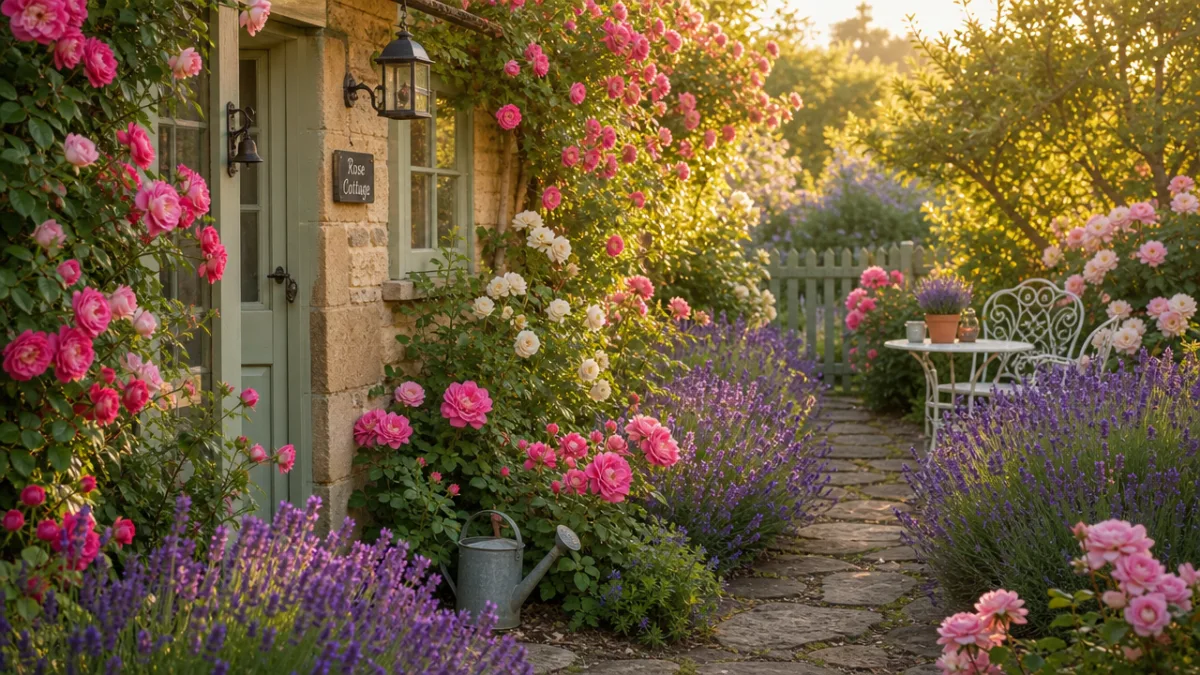
Designing a small cottage garden is as much about visual tricks as it is about plant choices. One of the most effective things you can do is create a focal point — a single element that draws the eye and anchors the whole space. It could be an antique birdbath, a rustic wooden arch draped in climbing roses, a painted garden gate, or a beautiful ceramic pot overflowing with trailing plants. A well-placed focal point gives the garden a sense of purpose and depth, so it feels curated rather than cramped.
Paths matter more than people often realize, both for function and for feeling. Even in a tiny yard, a winding or gently curved path creates a sense of journey and discovery that a straight walkway just can’t pull off. Lay irregular stepping stones slightly off-center through densely planted beds, and let plants spill over the edges to soften the stone. Plant creeping thyme or chamomile between the stones and you’ll get fragrance underfoot — a lovely bonus. The path doesn’t even need to lead anywhere in particular. Its whole job is to invite you to slow down and explore.
Vertical space is one of the most underused resources in a small garden, and the cottage style makes wonderful use of it. Trellises, obelisks, arches, pergolas, and fences all give you room to grow upward instead of outward, effectively multiplying your planting area without expanding your footprint. Climbing roses, jasmine, sweet peas, honeysuckle, and clematis are naturals for this. Even a simple bamboo obelisk in a pot can support a cloud of sweet peas, adding real height and fragrance to a paved courtyard or balcony.
Color cohesion is worth thinking about carefully too. The cottage garden is all about abundance, but a loose color palette keeps a small space from feeling visually overwhelming. A lot of successful small cottage gardens lean on soft pastels — blush pink, lavender, creamy white, pale yellow, soft blue — with the occasional deeper purple or burgundy thrown in for contrast. That kind of restrained palette feels calm and surprisingly spacious. If you’re drawn to richer tones, a sunset palette of coral, gold, burnt orange, and deep red can work beautifully as long as you anchor it with plenty of green foliage.
Hardscaping and Decorative Elements That Define the Cottage Aesthetic
Plants alone don’t make a cottage garden — it’s the combination of lush planting with the right hardscaping and decorative touches that really brings the style to life. In a small yard, those choices matter a lot, since anything too large or too formal can easily overpower the space. Natural materials like weathered wood, aged terracotta, reclaimed brick, and mossy stone hit the right notes every time. They have a texture and a sense of history that new synthetic materials just can’t fake, and they only get better looking as they age.
Rustic accessories are what give a cottage garden its personality. A watering can repurposed as a planter, an old wooden crate filled with trailing nasturtiums, a vintage enamel sign propped against a stone wall, a wind chime, a lantern — these details build up into that layered, lived-in feeling the style is known for. The trick in a small space is to be selective. One or two well-chosen pieces will always look more at home than a crowded collection of knickknacks. Think of them as punctuation marks in the garden’s visual story, placed where they can really be noticed and appreciated.
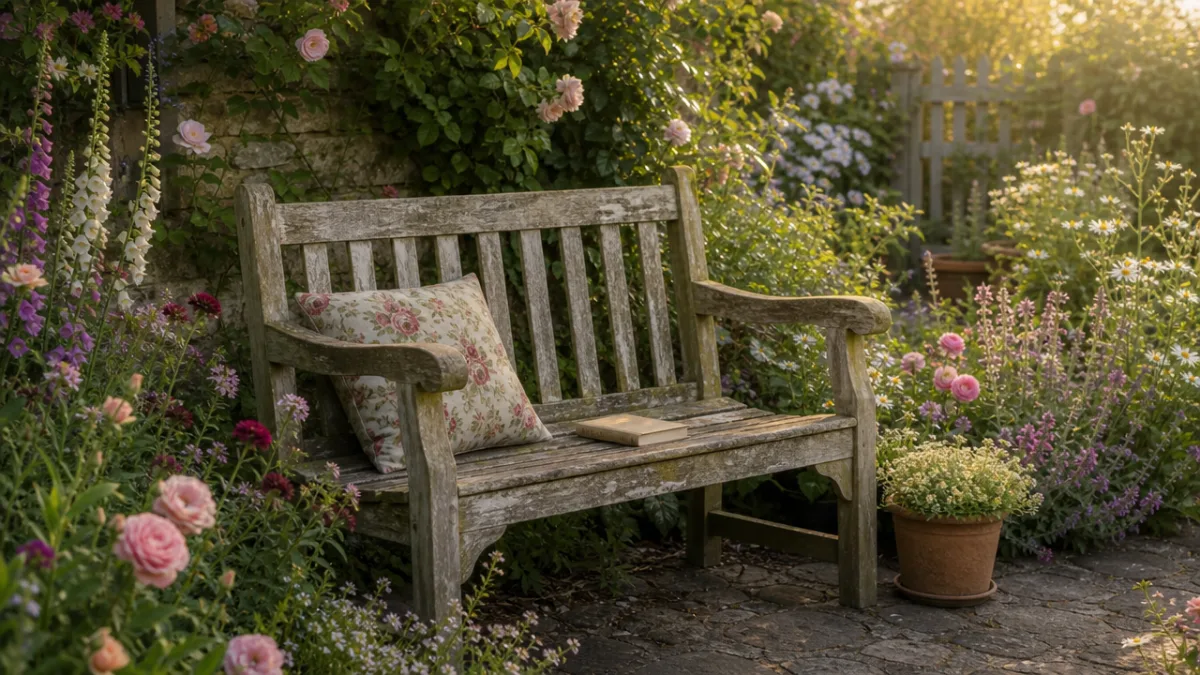
Seating is something you don’t want to skip, even in a very small space. The goal is to create a garden you actually sit in, not just look at. Even a single bench tucked into a corner, wrapped in fragrant roses and softened by creeping plants at its base, can transform a space. A pair of rustic wooden chairs beside a small table, screened by tall grasses and draped in climbing jasmine, can feel like a private outdoor room. That sense of being held within the garden — enclosed, sheltered, part of it — is one of the real pleasures of the cottage style.
- Choose natural, aged materials for paths, walls, and edging to establish the cottage character from the ground up.
- Incorporate one strong focal point — an arch, a birdbath, or a specimen plant — to give the garden a sense of purpose and direction.
- Select two or three decorative accessories with personal meaning rather than filling the space with generic ornaments.
- Create at least one seating area, however small, to make the garden a place you actually inhabit rather than merely observe.
- Use containers generously to add flexibility, allowing you to rearrange the garden’s composition as seasons and preferences change.
Working With Wildlife and Sustainability in the Cottage Garden
One of the most rewarding things about a cottage garden is how naturally it supports local wildlife. That dense, diverse planting style provides habitat and food for pollinators, birds, and beneficial insects in ways that tidy, monoculture plantings really can’t match. In a small yard, that feels especially meaningful — your little patch of land becomes a genuine refuge for bees, butterflies, and birds that are increasingly losing habitat to urban development. Plants like borage, phacelia, echinacea, and alliums are particularly good for this, keeping the garden buzzing with life from early spring right through to late autumn.
Sustainable practices fit the cottage garden ethos naturally, since the style has always been about working with nature rather than against it. Composting kitchen and garden waste returns nutrients to the soil and cuts down on the need for synthetic fertilizers. Collecting rainwater reduces your dependence on the tap. Leaving seedheads on plants through winter feeds the birds and shelters overwintering insects, while also giving the garden some lovely structural interest during its quietest season. None of this feels like sacrifice — it’s more like a set of habits that make the garden progressively more resilient and alive.
Organic pest management fits right in here too. Rather than reaching for pesticides at the first sign of trouble, experienced cottage gardeners rely on a diverse plant community to keep things in balance. Companion planting — growing pest-repelling plants like marigolds, nasturtiums, and garlic alongside more vulnerable ones — is a time-honored technique for good reason. Encouraging natural predators like ladybirds, lacewings, and ground beetles by leaving undisturbed corners and log piles helps the garden regulate itself. A healthy, biodiverse garden is a resilient one, far better equipped to handle the occasional pest outbreak without falling apart.
Seasonal Maintenance and Evolving Your Cottage Garden Over Time
The cottage garden is sometimes described as low-maintenance, which is both true and a little misleading. It doesn’t demand the rigid precision of a formal garden — edges don’t need to be perfectly trimmed, and a bit of cheerful disorder is actually welcome — but it does need attentive, regular care to stay healthy and beautiful rather than just chaotic. The key is knowing what needs doing and when. Deadheading spent blooms keeps things flowering longer and stops enthusiastic self-seeders from taking over. Dividing overcrowded perennials every few years keeps plants vigorous and gives you extras to move around or share with friends.
Spring is the most energetic season in the cottage garden — demanding in the best possible way. Early weeds arrive with real enthusiasm as the ground warms, and getting on top of them before they set seed saves you a lot of work later. It’s also the time to cut back last year’s growth, top-dress beds with compost, plant hardy annuals and biennials, and stake anything that’ll need support as it grows. A few focused hours in early spring sets everything up for a great season. It’s the kind of effort that pays dividends for months.
Autumn is a season of transition and preparation, and in a cottage garden it’s also one of real beauty. Seedheads catch the low light, berries glow on shrubs, and the faded tones of dying perennials take on a mellow, almost melancholy grace. Resist the urge to cut everything back too aggressively — many plants benefit from their old growth as winter protection, and the structural interest they provide is genuinely invaluable in the quiet months. Use autumn to plant spring bulbs, divide overgrown clumps, collect seeds for next year, and take note of what worked and what didn’t. The cottage garden is always evolving, always teaching you something, and in the hands of an attentive gardener, always becoming more beautiful with each passing year.
More than anything, a cottage garden is a deeply personal creation. Unlike styles built on strict rules and symmetry, this one invites you to follow your instincts, experiment freely, and let the garden reflect your own tastes and memories. Maybe you love old roses above everything else, and your garden gradually becomes a collection of heritage varieties. Maybe you’re passionate about feeding pollinators, and every plant you choose has that purpose in mind. Maybe there’s a childhood garden that still haunts you, and you find yourself spending years trying to recreate that particular magic in your own small yard. Whatever your inspiration, the cottage garden gives you room to chase it — slowly, joyfully, and with growing confidence as the seasons roll by.








What do you think?
It is nice to know your opinion. Leave a comment.