










Amazingly Beautiful Kitchen Makeover: A Complete Guide to Transforming Your Cooking Space
The Power of a Kitchen Makeover: Why Your Kitchen Deserves a Fresh Start
The kitchen is often called the heart of the home, and for good reason. It is the place where families gather every morning over coffee, where children do homework at the counter while dinner simmers on the stove, and where memories are created through shared meals and laughter. When this central space feels outdated, cluttered, or uninspiring, it can affect the entire energy of your home. A kitchen makeover is not just about aesthetics — it is about reclaiming a space that functions beautifully and makes you genuinely excited to cook, entertain, and spend time in.
Many homeowners put off kitchen renovations because they assume the process is overwhelming, prohibitively expensive, or disruptive to daily life. The reality, however, is that a thoughtful and well-planned kitchen makeover can be accomplished in phases, on a variety of budgets, and with results that are nothing short of stunning. Whether you are working with a compact galley kitchen or a sprawling open-plan layout, the principles of good design remain the same: prioritize function, embrace light, and choose materials that will stand the test of time while reflecting your personal style.
One of the most exciting aspects of a kitchen makeover is the sheer variety of approaches available to today’s homeowners. From full gut renovations that strip the room down to the studs to cosmetic refreshes that involve little more than paint, new hardware, and updated lighting, there is a transformation strategy for every situation. The key is to begin with a clear vision, understand your priorities, and work systematically toward a result that makes your kitchen feel like an entirely new space. The journey from dull to dazzling is more accessible than most people realize, and the rewards are immeasurable.
Planning Your Dream Kitchen: Setting Goals, Budgets, and Timelines
Before a single cabinet door is removed or a paint color is chosen, the planning stage is where successful kitchen makeovers are truly born. Taking the time to articulate exactly what you want to achieve — and what problems you want to solve — will save you enormous amounts of time, money, and frustration down the road. Start by spending a week or two living consciously in your current kitchen, noting every moment of frustration. Is there never enough counter space? Does the layout force you to walk in circles while cooking? Is the lighting so poor that chopping vegetables feels dangerous? These observations become the foundation of your renovation goals.
Budgeting honestly and thoroughly is the next critical step. Kitchen renovations have a reputation for cost overruns, and that reputation exists for a reason. It is wise to establish your total available budget and then immediately set aside ten to fifteen percent of that figure as a contingency fund for unexpected discoveries, like outdated wiring or plumbing that needs updating once walls are opened. Within your working budget, prioritize spending on elements that will have the greatest impact on both function and resale value: cabinetry, countertops, and appliances tend to deliver the most return on investment, while decorative touches can often be achieved affordably.
Timeline planning deserves as much attention as the financial plan. A cosmetic kitchen refresh involving painting cabinets, replacing hardware, and installing a new backsplash might be accomplished over a long weekend or a few evenings of work spread across a couple of weeks. A full renovation involving new cabinets, countertops, plumbing relocation, and flooring replacement could take anywhere from four to twelve weeks depending on contractor availability and the complexity of the work. Building a realistic timeline that accounts for material lead times, contractor schedules, and your own family’s need to maintain some semblance of normalcy during the process will make the entire experience far less stressful.
It is also worth considering which elements of the makeover you can realistically handle yourself versus which require professional expertise. Painting is a satisfying and cost-effective DIY project for most homeowners. Installing new cabinet hardware is similarly approachable. However, tasks involving electrical work, plumbing modifications, or structural changes should always be handled by licensed professionals. Being honest about your skills and available time will protect both your budget and your safety, and will ensure that the finished result meets the standards of quality you are aiming for.
Cabinetry and Storage: The Backbone of Any Beautiful Kitchen
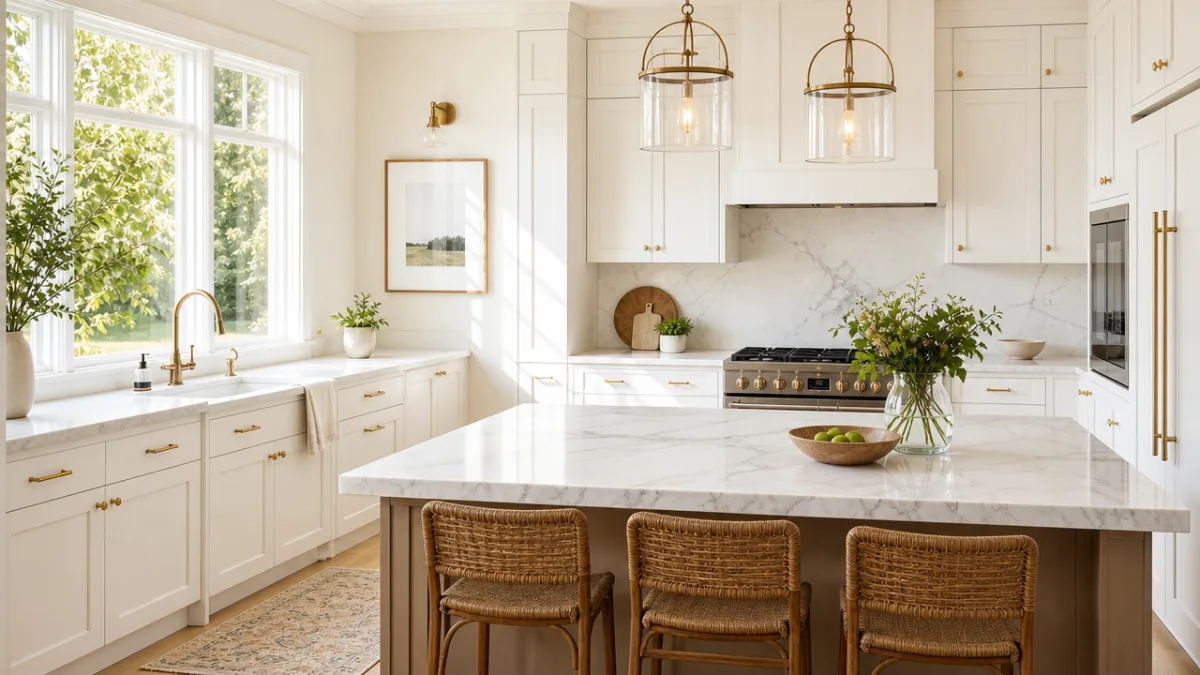
Cabinetry accounts for a significant portion of any kitchen’s visual impact, and it is also the element that most directly affects how the space functions on a daily basis. If your existing cabinets are structurally sound but simply look dated, refacing or repainting them is one of the highest-value improvements you can make for the money spent. Painting cabinets in a fresh, modern color — deep navy, warm sage, creamy white, or sophisticated charcoal — can make a kitchen look as though it has been entirely rebuilt, at a fraction of the cost of replacement. The quality of the paint, the preparation of the surfaces, and the application technique all matter enormously to the final result.
For kitchens where the existing cabinets are truly beyond saving, or where the layout needs to change substantially, new cabinetry opens up a world of possibilities. Semi-custom and stock cabinets from reputable manufacturers offer far more style and quality than they did even a decade ago, making it possible to achieve a high-end look without the price tag of fully custom work. Consider the full range of cabinet types available to maximize your storage and organization, including the following options that have become increasingly popular in beautifully designed kitchens:
- Pull-out pantry cabinets that make every inch of depth accessible without awkward reaching or rummaging
- Deep drawer base cabinets, which are dramatically more practical for pots, pans, and dishes than traditional shelved base cabinets
- Corner solutions such as lazy Susans, magic corners, or diagonal cabinets that eliminate wasted space
- Tall cabinet towers that extend all the way to the ceiling, maximizing vertical storage in rooms where floor space is limited
- Open shelving sections intentionally designed to display beautiful dishware, cookbooks, and carefully curated objects
Hardware is often described as the jewelry of the kitchen, and it is no exaggeration. Swapping out dated brass or chrome hardware for brushed gold, matte black, or satin nickel pulls and knobs can completely transform the character of your cabinetry at minimal cost. The scale and style of hardware should be chosen with intention — oversized statement pulls can make a bold modern declaration, while slim bar handles convey sleek minimalism, and classic cup pulls evoke a warm, traditional sensibility. This is one area of the kitchen makeover where spending a little extra on quality pieces genuinely shows in the finished result.
Countertops, Backsplashes, and Surfaces: Where Beauty Meets Function
Countertops are the workhorse surfaces of the kitchen, enduring daily contact with knives, hot pots, moisture, food stains, and everything else that cooking entails. Choosing the right countertop material means finding the intersection of beauty, durability, and maintenance requirements that aligns with how you actually use your kitchen. Quartz engineered stone has become enormously popular in recent years for very good reasons: it offers the luxurious appearance of natural stone with greater consistency of pattern and color, and it requires virtually no sealing or special maintenance. It is available in an extraordinary range of colors and veining styles, from quiet solids to dramatic marble-like patterns.
Natural stone countertops — marble, granite, quartzite, and soapstone — bring an irreplaceable sense of depth, warmth, and geological beauty to a kitchen. Each slab is unique, which means your countertop is genuinely one of a kind. Marble, in particular, has experienced a tremendous resurgence in popularity as homeowners embrace its romantic veining and luminous quality. It does require more care than engineered alternatives, being susceptible to etching from acids and staining from oils, but many design enthusiasts consider the patina that develops over time to be part of marble’s charm. Butcher block countertops offer yet another entirely different aesthetic — warm, natural, and inviting — and are particularly well-suited to kitchen islands or prep areas.
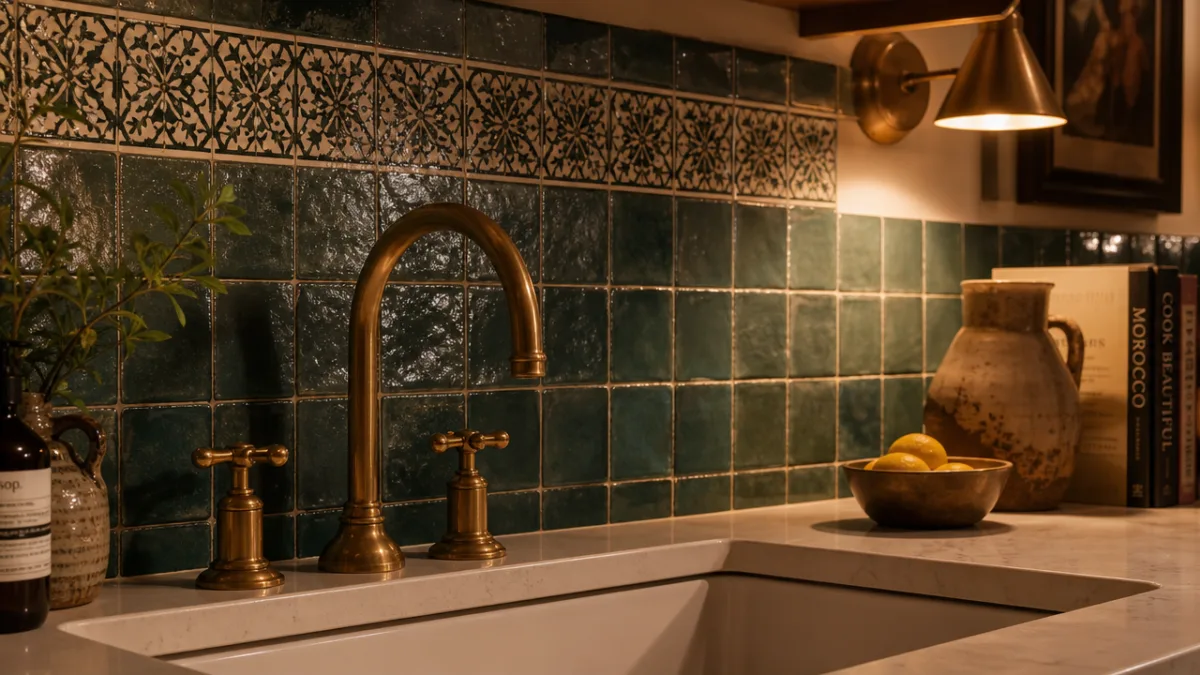
The backsplash is one of the most visually exciting decisions in a kitchen makeover because it offers the opportunity to introduce pattern, color, and texture in a contained and manageable way. A well-chosen backsplash can serve as the focal point that ties the entire kitchen design together, bridging the gap between countertops and cabinetry with artistry and intention. Classic subway tile remains perennially appealing in its clean simplicity and is available in an almost limitless range of colors, finishes, and sizes. Zellige tile, with its handmade irregularity and jewel-like glazes, brings extraordinary warmth and character. Large-format porcelain slabs offer a contemporary, seamless look that is particularly dramatic when used behind a range or cooktop.
Flooring is the final surface element to consider, and it anchors the entire kitchen design. Hardwood floors bring warmth and continuity when the kitchen flows into adjacent living areas. Porcelain tile offers durability and water resistance that make it practical in high-traffic cooking environments. Luxury vinyl plank has improved dramatically in both appearance and quality, making it a compelling option for renovators who want the look of wood with greater resilience and a friendlier price point. Whatever flooring material you choose, ensure that it complements rather than competes with your countertops, cabinetry, and backsplash — the surfaces of a beautiful kitchen should work together as a cohesive composition.
Lighting Design: The Secret Ingredient That Transforms Every Kitchen
Lighting is perhaps the most underestimated element of kitchen design, yet it has an outsized impact on how the space looks, feels, and functions. A kitchen needs to work hard across multiple lighting scenarios: bright and even illumination for safe food preparation, focused task lighting directly above work surfaces, ambient warmth for casual dining or entertaining, and the ability to adjust the mood as the time of day or occasion demands. Achieving all of this requires a layered approach to lighting design that most homeowners do not naturally think about when planning a renovation.
The three fundamental layers of kitchen lighting are ambient, task, and accent. Ambient lighting provides the overall illumination of the space and is typically delivered through ceiling-mounted fixtures, recessed downlights, or a central pendant or chandelier. Task lighting focuses specifically on work surfaces and is ideally placed close to where work actually happens — under-cabinet LED strips that wash countertops in bright, even light are one of the most practical and transformative upgrades available to any kitchen. Accent lighting adds depth and drama by highlighting architectural features, open shelving, or the interior of glass-fronted cabinets. Interior cabinet lighting, in particular, elevates the appearance of beautifully organized dishware and creates a warmly inviting glow in the evening hours.
Pendant lights above a kitchen island or peninsula have become one of the signature design elements of the modern kitchen, and for excellent reason — they provide task lighting where it is needed while also serving as sculptural focal points that express the kitchen’s design personality. The scale of pendant lights should be chosen carefully in relation to the size of the island and the ceiling height. A pair of medium-scale pendants often works better than a single large fixture over a standard island, while longer islands can accommodate three pendants or a single elongated linear fixture. Materials, finishes, and shapes should harmonize with the broader design direction of the kitchen, whether that is industrial, farmhouse, contemporary, or transitional.
Dimmer switches are a small investment that delivers tremendous value in any kitchen. The ability to lower ambient lighting in the evening, create a more intimate atmosphere during dinner parties, or brighten every corner during intense cooking sessions gives you complete control over how the space feels at any given moment. LED lighting, which has now become the standard for energy efficiency and longevity, is fully compatible with most dimmer systems and is available in a range of color temperatures from warm white to cool daylight. Choosing the right color temperature for your kitchen — typically between 2700K and 3000K for a warm, welcoming quality — is a nuanced decision that can significantly affect how all of your other design choices appear in the finished space.
The Finishing Touches: Color, Decor, and Personality in Your New Kitchen
Once the structural and functional elements of your kitchen makeover are in place, the finishing touches are where your kitchen stops looking like a showroom and starts feeling genuinely like yours. Color is the most powerful tool available for this purpose, and its influence extends far beyond wall paint. The interplay of cabinet color, countertop tone, backsplash hue, hardware finish, and accessory palette creates the overall color story of the space. A kitchen that feels beautifully cohesive is one where these elements have been selected with an awareness of how they relate to one another, not in isolation but as parts of a unified composition.
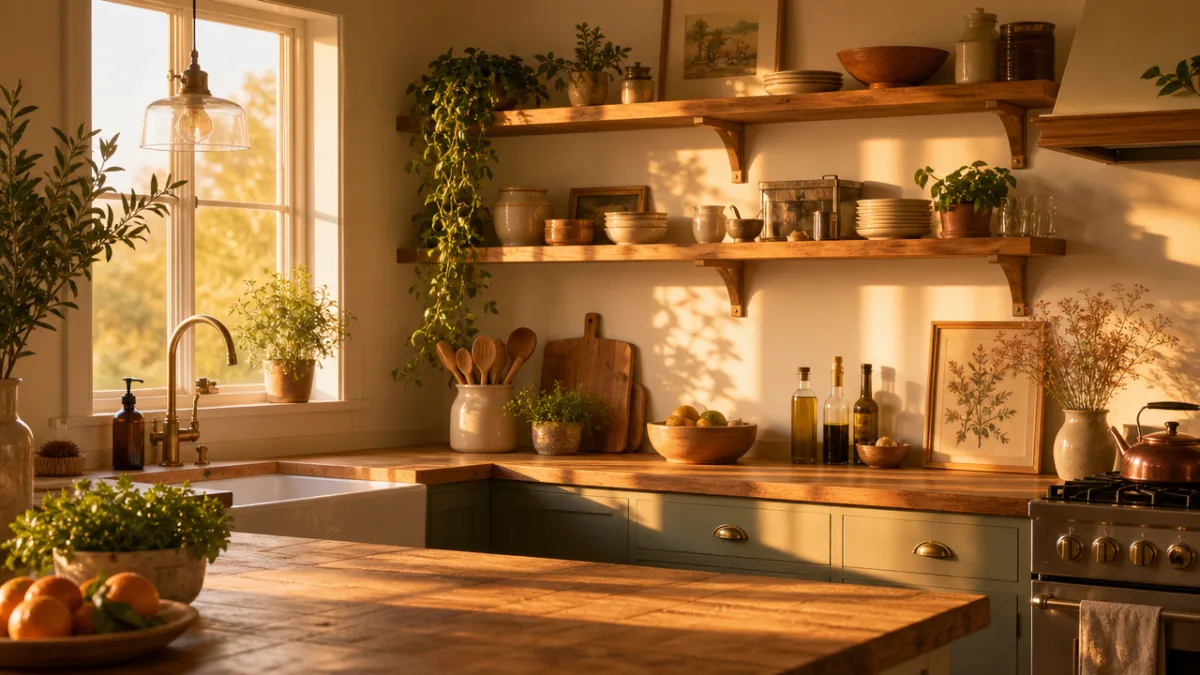
Plants bring life and freshness to any kitchen in a way that no designed object can fully replicate. A pot of fresh herbs on the windowsill — rosemary, basil, thyme, or mint — serves the double purpose of being both beautiful and immediately useful in cooking. A trailing pothos on a high shelf, a cluster of succulents on the counter, or a single dramatic fiddle-leaf fig in a floor planter can introduce organic shapes and natural color into a space that might otherwise feel overly hard and geometric. The kitchen, with its typically good window light and the warmth generated by cooking, is actually a hospitable environment for many plant varieties.
Textiles are another often-overlooked element that contributes enormously to the comfort and warmth of a finished kitchen. A generously sized runner rug in front of the sink provides both cushioning for tired feet and a soft visual counterpoint to hard tile or wood flooring. Linen or cotton window treatments filter light beautifully and add a layer of softness to what can otherwise be a room dominated by hard surfaces. Fresh, well-chosen dish towels, a quality oven mitt, and a beautiful apron are small functional objects that can also be sources of genuine delight when they reflect your aesthetic sensibilities.
The objects you choose to display openly in your kitchen tell the story of who you are and how you live. A collection of vintage ceramic bowls, a wooden bread board leaned against the backsplash, a beautiful knife block, an antique colander repurposed as a fruit bowl — these are the details that give a kitchen soul. The most memorable and beautiful kitchens are never those that look perfectly staged and untouched, but rather those that feel genuinely inhabited, where evidence of real cooking and real living coexists happily with considered design. Aim for that balance: beautiful but not precious, curated but never sterile.
Ultimately, the most amazingly beautiful kitchen makeover is one that succeeds on its own terms — serving your specific life, reflecting your unique taste, and making every ordinary task feel just a little more pleasurable than it did before. Whether your transformation involved a complete structural overhaul or a series of carefully chosen cosmetic updates, the result should be a kitchen that you are genuinely proud of, eager to share with others, and deeply happy to inhabit every single day. That is the true measure of a successful makeover, and it is entirely within your reach.








What do you think?
It is nice to know your opinion. Leave a comment.