










Eco-Friendly Bath Knit Patterns: A Sustainable Collection for the Conscious Crafter
Why Sustainable Knitting Matters for Your Bathroom
When you think about the rooms in your home that have the biggest environmental footprint, the bathroom probably isn’t the first one that comes to mind — but it really should be. Between plastic-wrapped loofahs and washcloths made from petroleum-based synthetic fibers, the average bathroom is a lot less green than most of us would like. Knitting your own bath accessories from eco-friendly materials is one of the most tangible, satisfying ways to actually do something about that.
Making your own bath accessories means you know exactly what’s going into them — and onto your skin. When you reach for natural, sustainable fibers and well-loved patterns, you end up with things that are biodegradable, free of mystery chemicals, and genuinely more durable than anything you’d grab off a store shelf. A hand-knitted cotton washcloth, for instance, can outlast dozens of disposable alternatives and still be fully compostable when it finally wears out.
There’s also just something deeply satisfying about it. Every stitch is a small, deliberate act — a choice to slow down, make something that matters, and prioritize quality over convenience. The knitting community has really embraced this in recent years, and it’s easy to see why: sustainable bath knits aren’t just better for the planet, they’re softer, more personal, and honestly more enjoyable to use than anything mass-produced.
Choosing the Right Eco-Friendly Fibers
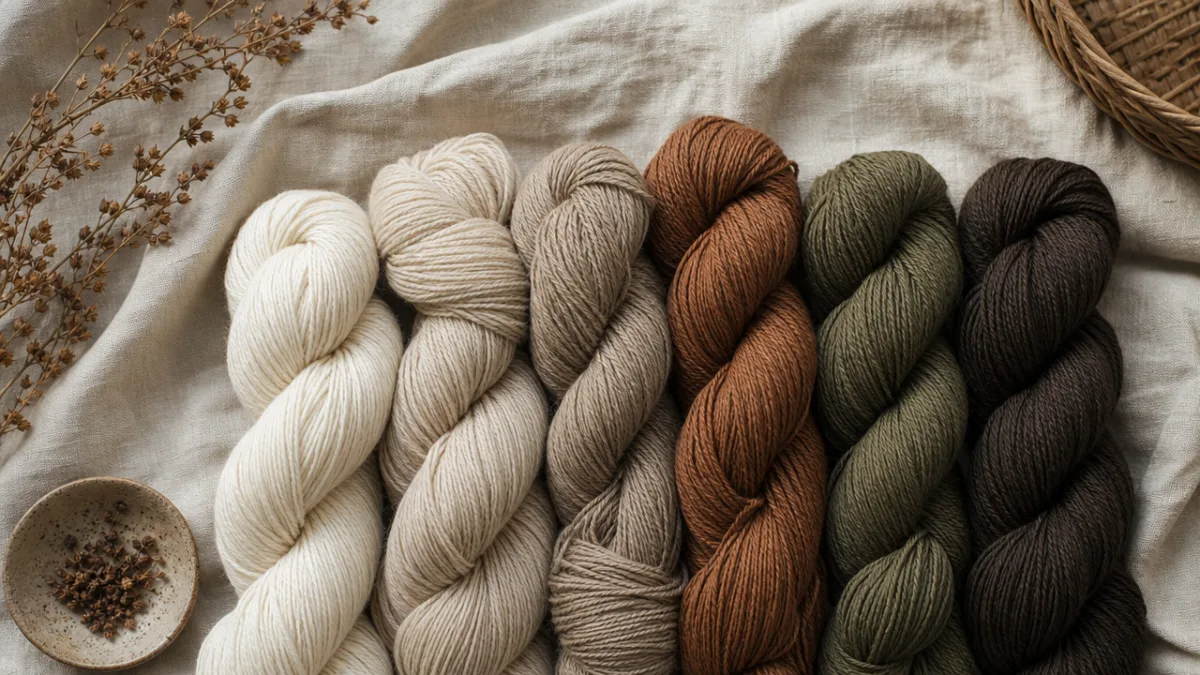
The yarn you choose really is the foundation of everything here, and the good news is there are more great options than ever. Organic cotton is probably the most popular pick for bath knits, and it earns that reputation. It’s grown without synthetic pesticides or fertilizers, it’s naturally gentle on skin, it absorbs moisture really well, and it holds up to the constant washing that bath accessories need. Just look for GOTS certification (Global Organic Textile Standard) when you’re shopping — that’s your assurance that the “organic” claim actually means something.
Linen is another fantastic choice that doesn’t always get the attention it deserves. It comes from the flax plant and needs far less water to produce than conventional cotton, which alone makes it worth considering. But what really wins people over is how it behaves over time — linen actually gets softer and more absorbent with every wash, so your bath mitts and face cloths genuinely improve with use. It’s also naturally antibacterial, which is a real bonus in a warm, damp bathroom environment.
Bamboo yarn has had a big moment in the sustainable crafting world lately, and for good reason. Bamboo grows incredibly fast without pesticides and generally doesn’t need irrigation beyond natural rainfall, so the environmental footprint is very low. The resulting fiber is naturally hypoallergenic, moisture-wicking, and wonderfully silky. A lot of crafters love blending bamboo with organic cotton to get the best of both worlds — the absorbency of cotton plus the luxurious softness of bamboo. Hemp, Tencel-based blends, and recycled cotton spun from textile industry offcuts are all worth exploring too.
- Organic Cotton: GOTS-certified, highly absorbent, durable, and skin-friendly
- Linen: Low water footprint, naturally antibacterial, improves with washing
- Bamboo: Fast-growing, hypoallergenic, silky texture, moisture-wicking
- Hemp: Extremely durable, naturally mold-resistant, requires minimal resources
- Recycled Cotton: Diverts textile waste, reduces production emissions significantly
- Tencel/Lyocell Blends: Closed-loop production process, biodegradable, very soft
Essential Bath Knit Patterns for Beginners
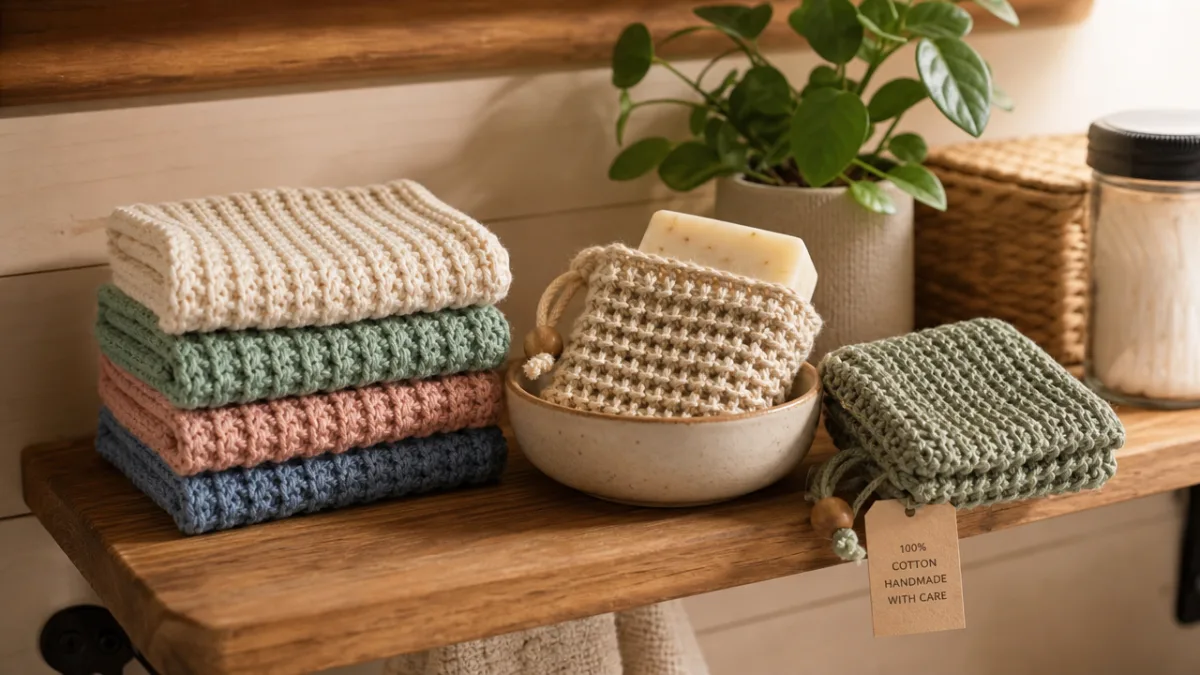
If you’re just getting started with eco-friendly bath knitting, here’s the encouraging part: some of the most useful projects are also the easiest. A simple seed stitch washcloth is the perfect first project. You only need to know how to knit and purl, but the resulting texture is beautiful on both sides and works just as well for washing your face as scrubbing down in the shower. Cast on somewhere between 30 and 40 stitches in a worsted-weight organic cotton, work seed stitch all the way through, and you’ll have a finished cloth in an afternoon that’ll genuinely last you for years.
Knitted bath mitts are another beginner project with a huge practical payoff. Whether you knit one flat and seam it on three sides or work it in the round on double-pointed needles, a hand-sized mitt holds soap beautifully and reaches places a flat cloth just can’t. A small eyelet row near the cuff with a cotton cord loop threaded through gives you a hanging loop so the mitt can dry properly between uses — which goes a long way toward preventing the kind of bacterial buildup that makes synthetic alternatives so unpleasant over time.
Honestly, though, soap saver bags might be the most impactful beginner project of all. These little open-weave pouches hold a bar of soap so you can use every last sliver rather than tossing a nearly-finished bar in the bin — something most of us are guilty of. They also provide a gentle exfoliating effect as you wash. A mesh soap saver takes less than an hour to knit, and it makes one of those gifts that people are surprised to love as much as they do.
Intermediate and Advanced Sustainable Bath Knit Projects
Once you’ve got the basics down, things get really fun. Knitted bath mats are one of the most rewarding projects an intermediate knitter can take on — they make an immediate visual impact in the bathroom and are genuinely practical underfoot. Working in chunky organic cotton or linen on large needles, a simple garter stitch bath mat knits up faster than you’d expect given the size, and the fabric comes out thick, cushioned, and absorbent. Alternating two complementary natural shades gives you a subtle stripe effect that looks intentional and lovely without any extra effort.
Reusable facial rounds — also called makeup remover pads — have become one of the most popular and widely shared projects in the sustainable knitting community, and it’s easy to understand why. These small, coin-sized circles typically combine stockinette on one side and seed stitch on the other, giving you a smooth cleansing surface and a mildly textured exfoliating surface in one little disc. A set of twelve replaces hundreds of disposable cotton pads over the course of a year. Many knitters add a small drawstring bag to keep the set together in the washing machine, which is a thoughtful finishing touch.
For the more ambitious knitter, putting together a complete matching spa set is a genuinely special project — whether you’re making it for yourself or as a gift. Think bath mat, two washcloths, a pair of mitts, a soap saver, and a set of facial rounds, all worked in the same organic linen-cotton blend across a range of earthy, complementary tones. The cohesive look brings a real sense of calm to the bathroom, and working from the same fiber base means everything washes together easily and ages at the same pace.
- Plan your color palette before purchasing yarn to ensure cohesive results across the full set
- Swatch and wash your swatch to account for shrinkage before cutting yarn quantities
- Keep a project journal noting yarn weights, needle sizes, and stitch counts for future reference
- Label finished items with fiber content if gifting, so recipients know how to care for them properly
- Photograph finished items before gifting or using to build a portfolio of your sustainable craft practice
Caring for Your Eco-Friendly Bath Knits
One of the best things about natural fiber bath knits is how easy they are to look after. Most organic cotton, linen, and bamboo items can go right in a standard washing machine on a cool or warm cycle with a gentle plant-based detergent — nothing complicated about it. The main thing to avoid is high heat in both washing and drying, since excessive heat is really the enemy of natural fibers. It can cause shrinking, felting, or weakening that shortens the life of something you worked hard to make.
Air drying is the way to go whenever possible. Laying your bath knits flat on a clean towel or a drying rack helps them hold their shape, skips the mechanical wear of tumble drying, and uses no energy at all. In warmer months, drying outside in gentle sunlight is even better — UV light has a natural antibacterial effect that keeps bath accessories hygienic without any chemical help. Just be mindful of leaving colored items in direct sun for too long, since prolonged exposure can fade natural or low-impact dyes.
Treated well, a hand-knitted natural fiber bath accessory can stay in active, beautiful use for three to five years or more — far outlasting anything disposable or poorly made. And when something does finally reach the end of its life, you can compost natural fibers directly in a home compost bin. From fiber to finished object to compost to soil, with nothing left behind — it’s about as close to a perfect circular life cycle as everyday objects get, and it’s a genuinely radical departure from the throwaway culture that most store-bought products are built around.
Building a Zero-Waste Bathroom with Knitting
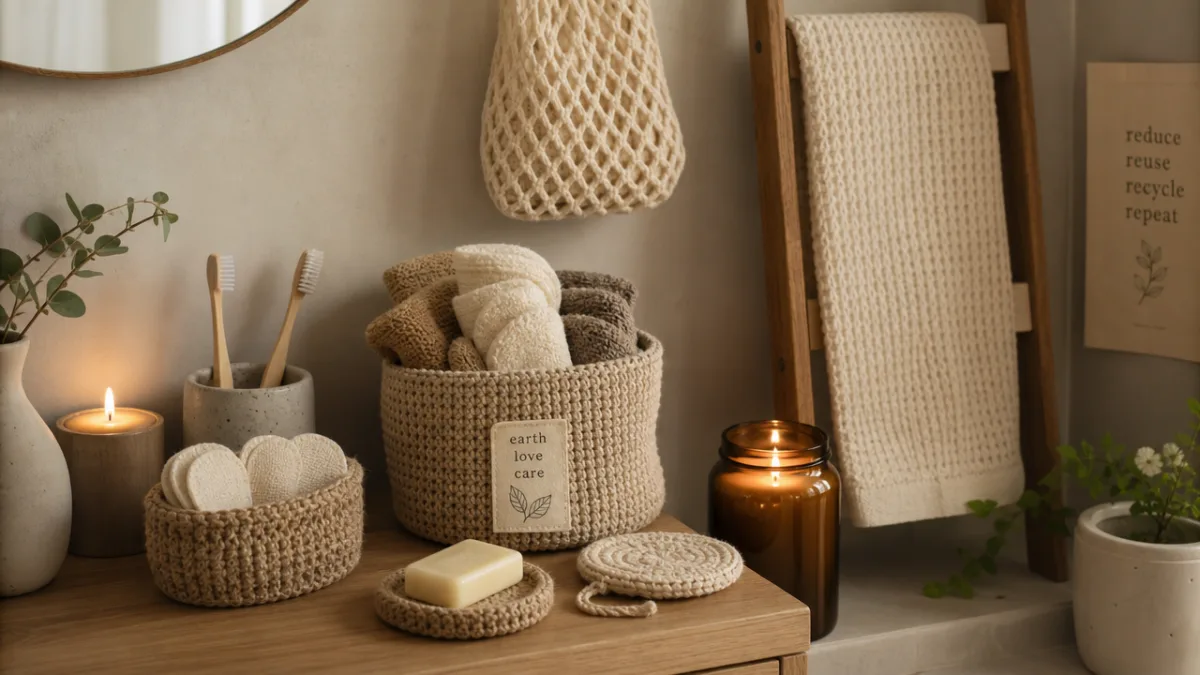
A good collection of eco-friendly bath knits can quietly replace nearly every single-use plastic and disposable item in a typical bathroom. Beyond the obvious candidates like washcloths, mitts, and facial pads, you can also knit spa headbands to keep hair back during skincare routines, small pouches for holding solid shampoo and conditioner bars, and even sturdy trivet-style pads for resting candles or warm bottles safely on tile. Every new project that bumps out a disposable alternative adds to the cumulative benefit in a way that really does add up.
The financial case for building a sustainable knit bathroom is also stronger than it might look at first glance. Quality sustainable yarn costs more upfront than a pack of disposable washcloths, no question. But a single skein of organic cotton at around twelve to fifteen dollars can yield four to six washcloths or a whole soap saver collection — items that will collectively outlast dozens of their disposable equivalents and do it more comfortably. Spread the math over five years and the cost per use of handknitted bath accessories comes out to a fraction of any throwaway alternative.
More than the money, though, there’s something that shifts when you’ve made the things you use every day. You notice them differently. You take better care of them, appreciate their qualities more, and feel a quiet satisfaction every time you reach for one. That shift from passive consuming to active, intentional making is really at the core of the sustainable living movement. And the bathroom — somewhere you visit multiple times a day — is a perfect place to practice it. Reaching for a hand-knitted washcloth instead of a disposable wipe is a small choice, but it’s one that reflects something bigger about how you want to live.
Finding Patterns, Community, and Inspiration
The online knitting community has put out an incredible amount of free and affordable sustainable bath knit patterns, so there’s really no shortage of places to start. Ravelry is the obvious first stop — it hosts thousands of patterns tagged for bath and spa use, many of them free and tested by large numbers of knitters who’ve already worked out the kinks. Filtering by fiber type (cotton, linen, and so on) quickly narrows things down to patterns that are actually designed around the properties of sustainable materials, which saves a lot of guesswork if you’re newer to working with these fibers.
Pinterest is still one of the best places to get visually inspired, with whole boards dedicated to eco-friendly crafting that pull together patterns, finished project photos, and material recommendations in one easy-to-browse place. Following designers who specialize in sustainable textiles connects you to people who are actively sharing tips, sourcing finds, and general encouragement on a regular basis. Instagram and YouTube are great too — whether you want a quick technique clip or a long, satisfying process video that follows a project from yarn winding all the way to the finished, beautifully lit photograph.
Don’t overlook local yarn stores and fiber festivals if you have access to them. Being able to feel a fiber before you commit to it is genuinely valuable, and a good yarn shop staff member can tell you things about specific materials that you’d never find in a product description. Many independent yarn stores have made sustainable and naturally dyed fibers a real priority, stocking GOTS-certified cotton, ethically sourced linen, and small-batch hemp yarns you simply won’t find at a big-box craft chain. Shopping there is its own kind of sustainable choice — keeping money in local economies and helping ensure that quality, responsibly sourced fiber options stay available for the whole knitting community, now and down the road.








What do you think?
It is nice to know your opinion. Leave a comment.