










Mason Jar Fence Lighting: Transform Your Outdoor Space with Rustic Charm
The Timeless Appeal of Mason Jar Lighting
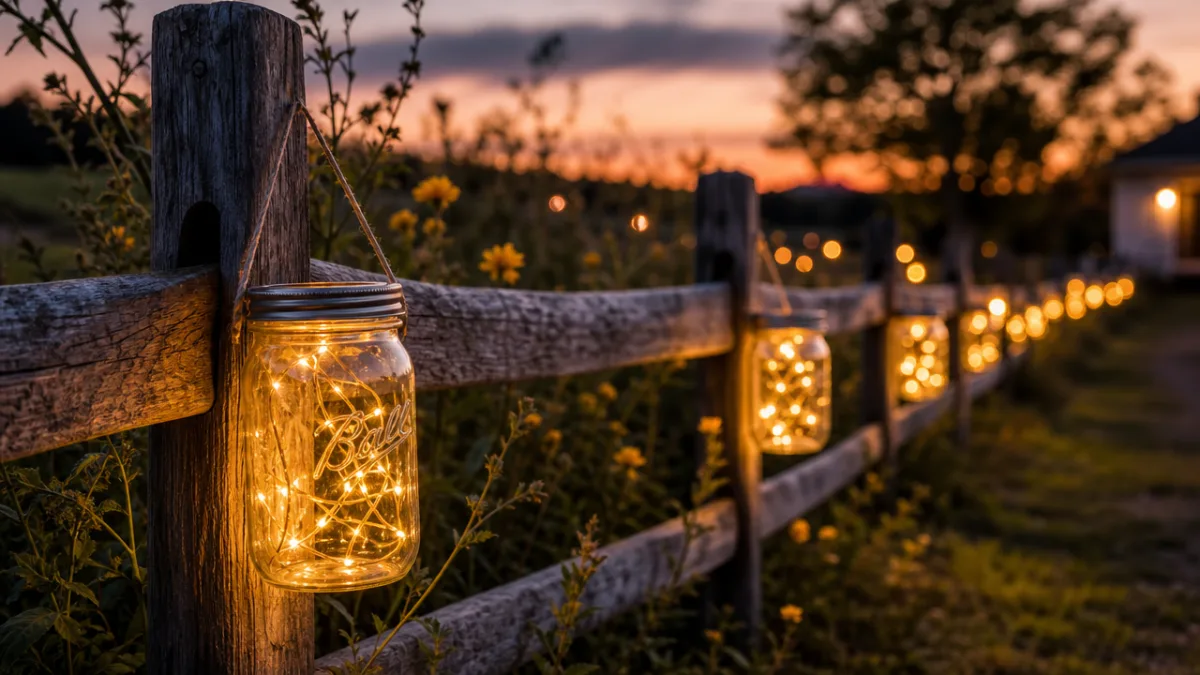
There is something undeniably magical about the warm, golden glow that emanates from a mason jar filled with soft light. These humble glass vessels, once used solely for preserving jams and vegetables, have found a second life as one of the most beloved decorative elements in modern outdoor design. Mason jar fence lighting has captured the imagination of homeowners, DIY enthusiasts, and professional landscapers alike, offering a perfect blend of nostalgia, function, and rustic elegance that few other lighting solutions can match.
The popularity of mason jar lighting has surged dramatically over the past decade, driven in large part by the broader farmhouse aesthetic movement that swept through interior and exterior design. What began as a trend in wedding decor and event styling has firmly planted itself in backyard culture, where fences serve as the perfect canvas for stringing, mounting, or weaving clusters of illuminated jars. Whether your fence is made of weathered wood, painted picket boards, or modern horizontal slats, mason jars adapt beautifully to virtually every architectural style.
Beyond their visual appeal, mason jar lights offer a deeply personal quality that mass-produced lighting fixtures simply cannot replicate. Each jar carries a sense of handmade authenticity, and the slight imperfections in the glass create organic patterns of light and shadow that feel alive and warm. For homeowners who want their outdoor spaces to feel like an extension of their personality rather than a showroom display, mason jar fence lighting represents an ideal choice that is both accessible and deeply satisfying to create.
Choosing the Right Mason Jars and Hardware
The foundation of any successful mason jar lighting project lies in selecting the right materials from the start. Not all mason jars are created equal, and the choices you make at the hardware store or craft shop will significantly influence the final look and longevity of your installation. Wide-mouth quart jars are the most popular choice for fence lighting because they accommodate a variety of bulb sizes and styles while providing a generous opening that makes assembly considerably easier. Pint jars offer a more delicate, clustered look when grouped together, while half-gallon jars create bold, dramatic focal points.
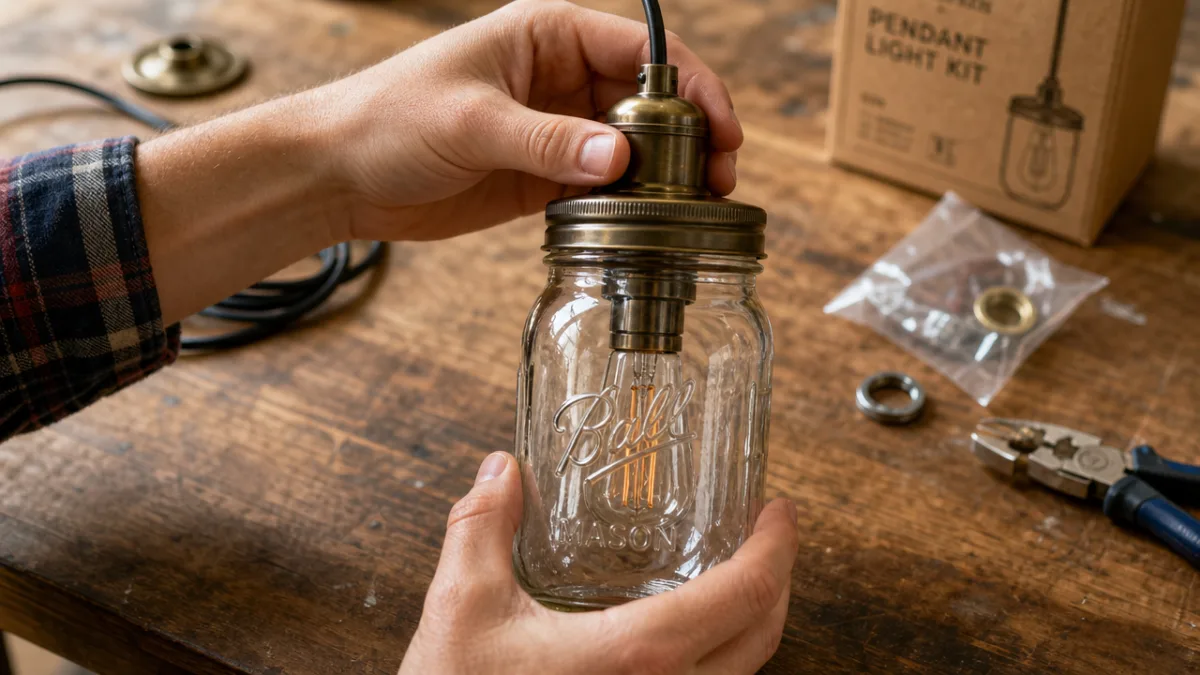
When it comes to the lids, you have several options depending on how you plan to mount or hang your jars. Many DIYers drill a hole through the center of a standard two-piece metal lid to thread a pendant socket through, creating a clean, professional finish. Others opt for pre-made mason jar pendant kits available at most home improvement and craft stores, which include a fitted lid with a built-in socket, a length of cord, and often a canopy for ceiling or overhead mounting. For fence applications specifically, pipe flange mounts and U-bolt brackets are popular hardware choices that allow jars to be secured directly to fence rails or posts with impressive stability.
The color and finish of your jars also deserve careful consideration. Classic clear glass produces the brightest, most versatile light and works well with both warm Edison bulbs and cool LED options. Vintage blue-tinted Ball jars cast a subtle, romantic hue that feels especially enchanting at dusk. Frosted or etched jars diffuse the light more evenly, minimizing glare and creating a softer ambient glow. Whatever your preference, it is worth purchasing a few test jars before committing to a large quantity, as the difference between jar types becomes most apparent once the bulbs are switched on in the evening light.
- Wide-mouth quart jars for easy bulb installation and maximum light output
- Pint jars for delicate, clustered arrangements along fence rails
- Half-gallon jars as statement pieces at fence corners or gate posts
- Clear glass for maximum brightness and versatility with any bulb color
- Vintage blue glass for a romantic, antique atmosphere
- Frosted jars for soft, diffused ambient lighting without harsh glare
Planning Your Lighting Layout and Electrical Setup
Before you purchase a single bulb or drill a single hole, investing time in thoughtful planning will save you considerable frustration and expense down the line. Begin by measuring the total length of your fence and identifying the sections where lighting will have the greatest visual and practical impact. Most homeowners find that lighting every fence post creates a rhythmic, lantern-like effect that defines the boundary of the space, while clustering jars in groups of three or five at key points such as gate entrances, seating areas, or garden beds creates organic focal points that draw the eye and anchor the design.
Electrical planning is arguably the most critical step in the entire process, and it is one where safety must take absolute precedence over aesthetics. For a permanent installation, you will need an outdoor-rated circuit with weatherproof outlets positioned at strategic intervals along the fence. If you are not comfortable working with electrical wiring, hiring a licensed electrician for this portion of the project is strongly recommended. Many homeowners, however, successfully use outdoor-rated extension cords routed through conduit along the fence base, which provides a more flexible and budget-friendly solution without compromising safety when done correctly.
Solar-powered and battery-operated alternatives have improved dramatically in recent years and represent an excellent option for homeowners who want to avoid electrical work entirely. Modern solar mason jar lights use high-efficiency LED elements and improved battery storage to deliver several hours of consistent illumination after a full day of sunlight exposure. These units require zero wiring, can be mounted anywhere along the fence regardless of proximity to an outlet, and automatically switch on at dusk and off at dawn. The initial investment is slightly higher per unit, but the long-term energy savings and installation simplicity make them an increasingly popular choice.
When planning the spacing of your lights, consider the purpose each section of fence serves. Jars placed 12 to 18 inches apart along a garden fence create a gentle, continuous wash of ambient light ideal for evening entertaining. Jars spaced further apart, at 24 to 36 inches, create a more dramatic, punctuated effect that emphasizes the fence structure itself rather than illuminating the surrounding area. Mixing jar sizes within a single installation adds visual depth and rhythm, breaking the monotony that can result from perfectly uniform spacing across a long fence run.
Step-by-Step Installation Guide
With your materials gathered and your layout planned, the installation process itself is one of the most enjoyable parts of the entire project. Begin by preparing each mason jar lid by marking the center point with a permanent marker and using a drill fitted with a stepped drill bit to create a clean hole sized appropriately for your pendant socket or cord grip. Work slowly and apply steady, even pressure to avoid cracking the metal lid or creating jagged edges. Once drilled, smooth the edges of each hole with a small metal file to prevent the cord from chafing over time, which could eventually compromise the electrical insulation.
Thread your pendant socket cord through the lid hole from below, feeding it upward until the socket body rests snugly against the inside of the lid. Secure the cord with a strain relief connector or cord grip tightened firmly against the underside of the lid, ensuring the connection cannot be pulled loose by wind or accidental tugging. Screw the appropriate bulb into the socket — Edison-style filament bulbs in the 40 to 60 watt equivalent range are perennial favorites for their warm, amber glow — and then gently lower the lit assembly into the jar before hand-tightening the lid. Test each unit before mounting to confirm the bulb is functioning and the connection is secure.
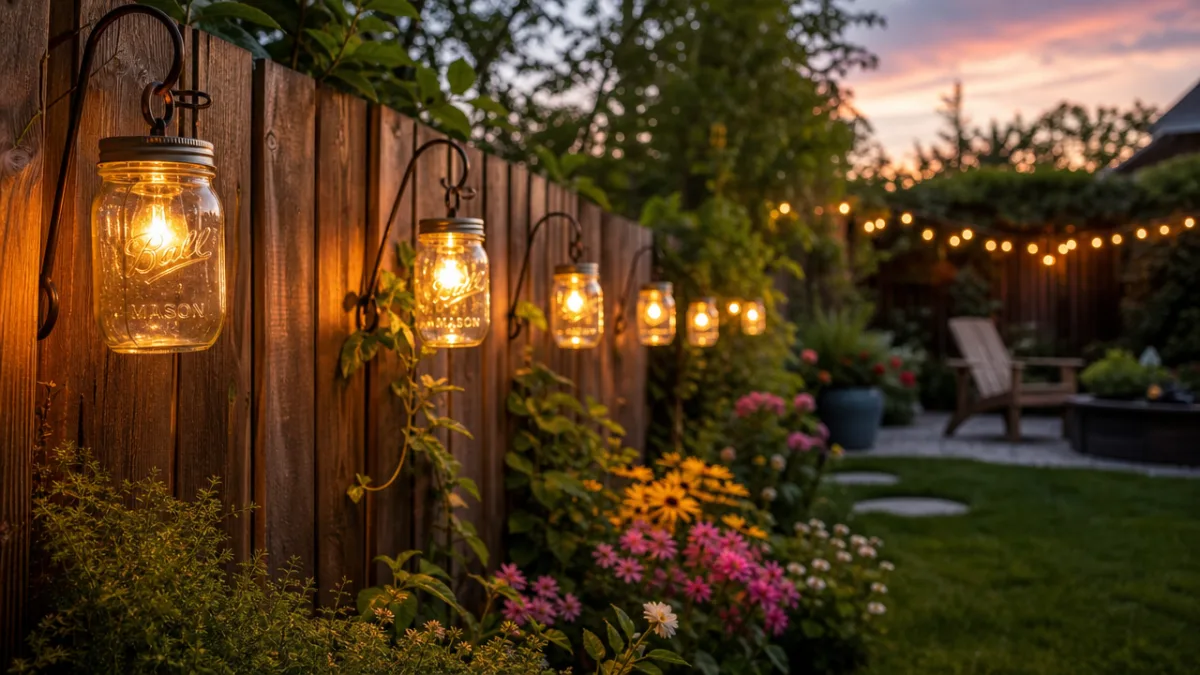
Mounting the jars to the fence can be accomplished through several methods depending on your fence style and how permanent you want the installation to be. Pipe flanges screwed directly into wooden fence posts create an extremely secure mount and position the jar perpendicular to the fence, giving each light a torch-like presence. U-bolt brackets allow jars to hang vertically from fence rails, swaying gently in the breeze for a more organic, lantern-like effect. For a non-permanent option, mason jar holders with S-hooks looped over the top of fence rails allow you to reposition or remove lights entirely without leaving marks in the wood.
- Measure and mark the fence for even light spacing before drilling any holes
- Drill lid holes using a stepped bit and smooth edges with a metal file
- Thread pendant cord through lid and secure with a cord grip connector
- Install the chosen bulb and test the unit before mounting
- Attach mounting hardware to the fence posts or rails
- Secure each jar assembly to its mount and route cords neatly to the power source
- Connect to power and make final adjustments to jar positioning and angle
Routing and concealing the electrical cords is the final step that separates a professional-looking installation from an amateur one. Outdoor-rated wire clips or staples can secure cords neatly along the top or bottom rail of the fence, keeping them flat and inconspicuous. For painted fences, selecting cord colors that match the fence finish — black cord on a dark fence, white on a light one — helps the wiring disappear visually. Where cords must cross open ground to reach an outlet, running them through a length of rigid conduit buried a few inches below the soil surface protects against lawn mower damage and accidental tripping hazards.
Design Variations and Creative Styling Ideas
One of the greatest joys of mason jar fence lighting is the nearly limitless creative freedom the format affords. Once you have mastered the basic installation, a world of design variations opens up that allows you to customize your outdoor lighting to perfectly reflect your personal taste and the character of your property. Seasonal adaptations are among the most popular creative approaches, with homeowners swapping out simple Edison bulbs for string lights coiled inside the jars during the holidays, or filling jars with a mixture of fairy lights and decorative elements such as pine cones, dried citrus slices, or sprigs of fresh rosemary that perfume the air as the jars warm up during an evening gathering.
Color can be introduced into a mason jar lighting scheme in several compelling ways. Tinted glass jars in amber, green, or cobalt blue naturally filter the light source into rich, jewel-tone hues that create a stained glass effect particularly stunning at dusk. Alternatively, you can paint the interior or exterior of clear jars with translucent glass paint in any color imaginable, creating custom shades that perfectly complement your outdoor furniture or garden plantings. Some designers wrap the exterior of jars with natural twine, strips of burlap, or even strips of reclaimed wood veneer to create textured, layered looks that bridge the gap between rustic and contemporary aesthetics.
For garden-adjacent fence sections, consider integrating living elements with your mason jar lighting. Small trailing plants like string of pearls, ivy, or sweet potato vine can be tucked into jars alongside battery-operated fairy lights to create living luminaries that evolve and grow throughout the season. Herbs such as thyme or creeping rosemary also work beautifully in this application, adding fragrance to the visual display. This combination of light and living material creates a deeply organic, lush atmosphere that feels miles removed from anything achievable with conventional outdoor fixtures, and it becomes a genuine conversation piece whenever guests gather in the space.
Grouping and layering multiple jars at varying heights creates installations with real visual drama and depth. Consider mounting a trio of jars at different heights on a single fence post using brackets at staggered positions, creating a cascading cluster that draws the eye upward and makes the fence post itself a sculptural element. Along longer fence runs, alternating between upright-mounted jars and hanging jars creates a playful rhythm that prevents the eye from growing bored as it travels the length of the fence. Pairing fence-mounted jars with complementary string lights woven through lattice above or climbing plants trained along the fence creates a layered lighting scheme with remarkable depth and warmth.
Maintenance, Safety, and Seasonal Care
A mason jar fence lighting installation, like any outdoor feature, requires modest but consistent attention to remain safe, beautiful, and functional across seasons and years. Fortunately, the maintenance demands are refreshingly simple compared to more complex landscape lighting systems. The most frequent task is simply cleaning the jars themselves, which accumulate dust, pollen, cobwebs, and occasionally water spots from rain or irrigation spray. A quick wipe with a damp cloth every few weeks during active use keeps the glass clear and ensures you are getting the maximum light output from each bulb. For more stubborn mineral deposits, a solution of equal parts white vinegar and water applied with a soft cloth will restore crystal clarity without scratching the glass.
Bulb replacement is an inevitable aspect of maintenance, though the frequency depends heavily on the type of bulb you have chosen. Traditional incandescent filament bulbs typically last between 1,000 and 2,000 hours, meaning a jar that burns for four hours each evening will need a new bulb roughly every eight to fourteen months. LED filament bulbs, which offer an almost identical aesthetic to traditional Edison bulbs, last dramatically longer — often 15,000 hours or more — making them the more economical and environmentally responsible long-term choice. Keep a small stock of replacement bulbs on hand so a burnt-out jar can be refreshed immediately rather than leaving a gap in your lighting arrangement.
Weatherproofing deserves serious ongoing attention, particularly in climates that experience harsh winters, heavy rainfall, or extreme temperature swings. While mason jars themselves are quite durable, the metal lids are vulnerable to rust when moisture becomes trapped between the lid and the jar rim. Applying a thin coat of clear outdoor sealant to the exterior of each assembled lid at installation, and refreshing it annually, creates a reliable moisture barrier that dramatically extends the life of the hardware. Electrical connections should be inspected at the beginning of each outdoor season for signs of corrosion, fraying, or insulation damage, and any compromised cords or sockets should be replaced immediately before returning the installation to service.
In regions where temperatures regularly fall below freezing, winterizing your mason jar lights is strongly advisable. Glass that contains trapped moisture can crack when that water freezes and expands, and repeated freeze-thaw cycles stress the metal hardware considerably. The simplest approach is to remove the jars from their mounts in late autumn, store them in a dry indoor location through the coldest months, and reinstall them in spring. If you prefer to leave the installation in place year-round, ensure the jars are thoroughly dry before freezing temperatures arrive, and consider wrapping particularly exposed installations with burlap or landscape fabric during periods of severe cold to provide additional insulation for the hardware.
- Clean jars with a damp cloth every few weeks during active use
- Use a vinegar and water solution to remove mineral deposits from the glass
- Choose LED filament bulbs for dramatically extended bulb life and lower energy consumption
- Apply clear outdoor sealant to lid exteriors annually to prevent rust formation
- Inspect all electrical connections at the start of each outdoor season
- Remove and store jars indoors during periods of sustained freezing temperatures
The Lasting Value of Handcrafted Outdoor Lighting
In an era dominated by mass-produced goods and algorithm-driven design trends, there is something genuinely meaningful about creating a lighting installation with your own hands using materials as simple and honest as glass jars and wire. Mason jar fence lighting occupies a unique space in the landscape of outdoor decor precisely because it manages to feel simultaneously humble and beautiful, practical and poetic. The time you invest in planning, building, and installing your lights becomes embedded in the finished result in a way that no store-bought fixture can replicate, and that sense of ownership and pride transforms the experience of spending time in your outdoor space.
From a financial perspective, mason jar fence lighting offers exceptional value relative to its visual impact. A complete installation covering a thirty-foot section of fence, including jars, hardware, bulbs, cord, and mounting supplies, can typically be completed for a fraction of the cost of comparable commercial outdoor lighting systems. The materials are widely available, the tools required are basic, and the skills involved are accessible to anyone willing to invest a weekend afternoon in the project. For homeowners on a budget who nonetheless want their outdoor spaces to feel polished and intentional, mason jar lighting represents one of the highest return-on-investment projects available in the DIY landscape.
The community aspect of mason jar lighting is worth acknowledging as well. Few outdoor features generate as much genuine admiration and curiosity from neighbors, guests, and passersby as a beautifully executed mason jar fence installation. People are drawn to the warmth and approachability of the aesthetic, and the handmade quality inevitably sparks conversation and inspires others to attempt their own versions. Sharing your process, your material choices, and your design decisions through social media or neighborhood groups creates connections and fosters a culture of creativity and craft that extends far beyond your own backyard, contributing something genuinely positive to the wider community of makers and home enthusiasts.
Ultimately, mason jar fence lighting endures as a beloved DIY tradition because it succeeds on every level that matters most in outdoor design: it creates warmth, defines space, invites lingering, and transforms an ordinary boundary into something worth looking at and gathering around. Whether you install a modest row of six jars along a garden gate or create an elaborate, multi-layered arrangement spanning your entire property perimeter, the effect is always the same — a space that feels more alive, more welcoming, and more distinctly yours after dark than it did before. That transformation, achieved with glass, light, and a few hours of weekend effort, is the enduring promise and the enduring pleasure of mason jar fence lighting.








What do you think?
It is nice to know your opinion. Leave a comment.